D’OH! Vatniks receive ‘bonuses' for retrieving UKR drones. Knowing this, an FPV operator lands his drone in front of a Russian position. He waits for a Russian genius to run out, grab it and drag it into the bunker. Before you can say Blyat... BANG!
🇪🇺 Today Airbus announced it will lead a truly European 6th-gen fighter jet project. Built on the success of the eurofighter. No more Dassault CEOs mentally stuck in the 19th century! Build and buy European
Today in St. Petersburg, Putin showed the whole world just how advanced Russian robots are. 😂😂😂😂😂😂😂😂
They tried to stage a robot duel at SPIEF, but something went wrong.
sample of my new book.
Chapter 14
The Bunny Ears — Amateurs Look at Tactics
I want to start with a line I have used for years that this battle proved better than any other in this war.
Amateurs look at tactics. Experts look at logistics.
Keep that in mind while I describe what happened near Dobropillia in early August 2025, because everything about the Battle of the Bunny Ears comes back to logistics — the absence of it on the Russian side, the presence of it on the Ukrainian side, and the complete failure of a portion of the analyst community to understand why that difference was decisive before a single shot was fired.
What It Looked Like on the Map
In early August 2025, Russian forces launched a two-pronged attack near Dobropillia in Donetsk Oblast. On a map, the two advance corridors looked exactly like what people started calling them almost immediately — bunny ears. Two narrow prongs pushing forward approximately fifteen to twenty kilometres, sticking up from the main line like a rabbit's ears, separated by ground they did not control.
I looked at it and within a few hours I knew how it was going to end.
Not because I had special intelligence. Not because I had access to anything the public did not. Because I looked at three things: the terrain, the units, and the logistics. All three told the same story.
The terrain was low ground. Not commanding ground, not ground that offered observation over the surrounding area, not ground that provided any tactical advantage worth the effort of reaching it. Low ground, exposed on multiple sides, with limited natural protection for forces occupying it.
The units were the 1st Army Corps — the old Donetsk People's Republic forces. These are troops with a documented history of being underequipped, undersupported, and undervalued by the Russian command. When the Russian military wants to make a serious effort, it uses serious units. When it wants to fill space, create noise, or spend lives it does not particularly value, it sends the Donetsk Corps. The pattern has been consistent throughout the war.
The logistics were non-existent. Photographs coming out of the initial advance showed soldiers carrying small rucksacks. Not the equipment load of a force planning sustained operations fifteen to twenty kilometres ahead of its supply points. Small rucksacks. Some of the troops were being issued uniforms from the 1990s. Not modern combat equipment. Uniforms that had been sitting in storage for thirty years. When your forward assault force is wearing 1990s kit and carrying a day's supplies, you are not planning a campaign. You are sending men on a mission with an unclear purpose and an uncertain return.
Fifteen to twenty kilometres ahead of your supply troops in that terrain, with those units, with that equipment, might as well be a thousand kilometres. The physics of resupply do not care about the map distance. They care about what can actually move, how fast, and under what conditions.
The Motorcycle Theory
This is where I have to talk about what some of the analysts were saying, because it is the best single example in this entire war of the gap between people who understand logistics and people who are trying to find a way to make the Russians look competent.
There was a claim — made seriously, by people who present themselves as military analysts — that the Russian forces in the Bunny Ears could be resupplied by motorcycle.
Motorcycle.
A force of the size committed to this operation, pushed fifteen to twenty kilometres into contested Ukrainian-controlled territory, through terrain that Ukrainian forces could observe and strike, was going to be sustained by motorcycles driving back and forth to the rear.
I want you to think about what a military logistics chain actually looks like for a force of that size conducting offensive operations. Ammunition. Food. Water. Medical supplies. Fuel for vehicles. Replacement parts. Evacuation of casualties. Communication equipment. All of it, continuously, day and night, in quantities that keep a combat force functional rather than slowly dying in place. The motorcycle that carries this, at the necessary rate, does not exist. The road network that allows motorcycles to move freely through a contested zone under Ukrainian artillery observation does not exist. The military doctrine that treats motorcycle resupply as a viable logistics solution for a forward assault force does not exist anywhere in any professional military's planning manuals.
Analysts who made this argument were not making an error of analysis. They were making an error of basic knowledge about how armies function. And some of them were making it in public, confidently, to audiences who trusted them to explain a war they were apparently not equipped to explain.
What Russia Was Actually Trying to Do
The Bunny Ears operation was not an attempt to capture and hold significant territory. The terrain made that impossible and the forces committed made it doubly impossible. It was a diversion.
Pokrovsk — the city south of the Bunny Ears operation — had been under sustained Russian pressure throughout 2025. It is operationally significant. Russian forces had been grinding toward it for months, and the Ukrainian forces defending it were the formations that Russia most wanted to dislodge or disrupt. The logic of the Bunny Ears, as I read it from the beginning, was the same logic Ukraine had applied at Kursk thirteen months earlier: create a crisis somewhere unexpected that forces the enemy to pull forces away from the place you actually care about.
Russia was trying to do to Ukraine what Ukraine had done to Russia.
The problem was that Russia attempted this with the Donetsk Corps into low ground with no logistics rather than with a prepared combined arms force into defensible terrain with a functioning supply chain. The Kursk operation worked because Ukraine committed capable forces, maintained operational security, and selected ground that complicated Russian response. The Bunny Ears did not work because Russia committed disposable forces, made no attempt at operational security, and selected ground that complicated their own supply while simplifying Ukrainian fires.
The deeper problem was that Russia chose the Donetsk Corps for this mission at all. When you use your disposable forces for a diversion, you are telling everyone watching that you do not expect it to succeed. A diversion that uses your best available formations says: we are willing to risk real assets to create real pressure. A diversion that uses the Donetsk Corps says: we are spending lives we do not value to create the appearance of pressure. Ukraine's intelligence assessment, Ukrainian field commanders, and any honest analyst watching open sources could read that signal clearly.
What Ukraine Did — And What It Revealed
Russia's plan required Ukraine to pull forces away from Pokrovsk to deal with the Bunny Ears threat. Ukraine did not do this.
The Ukrainian command kept every Pokrovsk defender in place. The Bunny Ears were handled by other units — the 93rd Mechanized Brigade and a brigade element of what is now the Azov Corps — drawing from reserves and from formations not currently engaged in the primary defensive tasks.
This is the part of the battle that should have dominated the analysis and largely did not.
Ukraine flexed the equivalent of a corps — multiple brigade-level formations, moving rapidly, deploying effectively against an unexpected axis — without touching the units defending the objective Russia actually cared about. Russia, by contrast, was lucky if it could reposition a division during the same period. The asymmetry in operational flexibility between the two armies in August 2025 was not a marginal difference. It was a categorical one.
A year earlier — two years earlier — this would not have been possible. Ukraine's ability to maintain strategic reserves while simultaneously defending multiple critical sectors, to move large formations quickly without disrupting existing defensive commitments, to respond to a new threat without creating a new vulnerability — this is the operational maturity of an army that has been at war for three and a half years and has learned things no training programme teaches. It was, I will use the word carefully and deliberately, a genuine game-changer in terms of what it told you about the current state of Ukrainian operational capability.
And most analysts were not talking about it because they were arguing about motorcycle logistics.
The Trap
Ukraine did not rush to close the Bunny Ears as soon as the Russian advance was identified. They let it develop.
The logic is the same logic that ran through Bakhmut and every corrosive defense before it. If the enemy is walking into exposed terrain where you have observation and fires advantage, and if the enemy is committed enough to keep feeding forces into that terrain, you let them commit. You do not close the door the moment the first man crosses the threshold. You wait until enough have entered that closing the door produces maximum effect.
Ukraine held the high ground surrounding the Bunny Ears positions. Ukrainian artillery had observation and pre-registered fires across the low ground the Russian columns were occupying. Drones could observe every movement into and within the salient. The Russian forces were, from the moment they advanced into those positions, in a situation where every reinforcement and every resupply attempt was visible, targetable, and at Ukrainian discretion to strike or to let pass temporarily.
The bowl filled. Then Ukraine closed it.
The 1st Azov brigade element and the 93rd hit the flanks. The ears were cut off. The forces inside them — drawn from the 51st Guards Combined Arms Army, elements of the 5th, 56th, 110th, and 132nd brigades, parts of the 8th Guards Army and 68th Guards Army — found themselves in the position that every force in an unsupported salient eventually finds itself in: unable to advance, unable to be resupplied, unable to receive reinforcement, and under fires from multiple directions simultaneously.
Russia may have lost between ten thousand and thirty thousand troops in this operation. The 51st Combined Arms Army, as a coherent combat formation, was effectively destroyed. Not attrited. Not degraded. Destroyed. One of the permanent lessons of this war is that Russia keeps building structures — BTGs, Combined Arms Armies, named formations with proud histories — and then consuming them in operations that a competent staff would have declined to plan. The 51st joins the list.
The Analysts and the Aftermath
I want to name specifically what I saw from a portion of the analyst community during the Bunny Ears operation, because intellectual honesty requires naming it rather than gesturing at it.
One analyst, operating under the name Intel Skizo, argued that the roads into the Bunny Ears were better than they appeared, that the terrain was more manageable than critics claimed, and that the motorcycle resupply concept was plausible. These arguments were not made tentatively. They were made with confidence to an audience that was trying to understand a battle in real time.
The roads were not better. The terrain was not more manageable. Motorcycles cannot resupply a committed assault force in contested territory. These are not matters of interpretation or analytical judgment. They are matters of physical reality that anyone who has studied military logistics at any level can verify.
What struck me most was not the specific claims but the pattern they represented. Throughout this war there has been a subset of the analyst community that, when confronted with obvious Russian failure, responds by finding reasons the failure was not as bad as it looked, or that the apparent failure was actually a sophisticated deception, or that the capability gap was smaller than the evidence suggested. This analytical reflex — protect the narrative of Russian competence at the cost of honest assessment — has been wrong at Hostomel, wrong at Konotop, wrong at Kharkiv, wrong at Kherson, wrong at Bakhmut, wrong at the counteroffensive, wrong at Avdiivka, wrong at Kursk, and wrong at the Bunny Ears.
The satisfying part — and I say this not out of bitterness but out of professional observation — is that operations eventually end and the evidence eventually speaks for itself. The analysts who defended the Bunny Ears as a serious operation had to explain the destruction of the 51st Combined Arms Army afterward. Some of them did. Some moved on to the next operation and began the same cycle again. The audience that pays attention learns over time who is giving them analysis and who is giving them something else.
What It Means
The Battle of the Bunny Ears is not a turning point. I am not going to use that phrase. This war has produced too many claimed turning points from too many analysts too many times for the phrase to mean anything anymore.
What it is, is a data point. And the data it provides is consistent with the data from every other battle in this book. Russia is a shattered army doing increasingly desperate things to accumulate land because land is the only metric its political leadership has communicated to its military leadership. Take ground. Show progress. Produce maps that move in the right direction. Do this regardless of whether the ground taken can be held, whether the cost of taking it is sustainable, or whether the units assigned to take it are capable of doing so.
The Donetsk Corps in the Bunny Ears was wearing 1990s uniforms and carrying small rucksacks into low ground fifteen kilometres from their supply points. Whatever the analysts who called this a masterful stroke thought they were seeing, they were not looking at the soldiers. The soldiers told you everything.
Ukraine flexed a corps without touching its primary defensive commitments. Russia destroyed a Combined Arms Army trying to pull a brigade away from Pokrovsk. The operation achieved the opposite of its stated purpose, consumed irreplaceable experienced forces, and provided Ukraine with a demonstration of operational flexibility that should have received far more analytical attention than it did.
Amateurs look at tactics. Experts look at logistics. The soldiers in 1990s uniforms carrying small rucksacks into a bowl surrounded by Ukrainian artillery were the logistics analysis. Everything else was commentary.
🇺🇦🧐News from the front suggests that the land corridor may be cut.
We believe in the Armed Forces of Ukraine 🇺🇦
P.S. If that happens, it will already be too late for Putin to announce mobilization.
@jeffb198712@ZelenskyyUa Immigrants in Europe = clear sign of someone's brainwashing.
I thought americans ar better than this. They're not. Dumbness is skyrocketing.
Europe IS involved. US is not.
Russia is a China ally, both are trying to demolsh US.
Trump's zero help to Ukraine helps Iran&China&Russia.
There is not enough anti-ballistic missile production in the United States and this could lead to a crisis in different parts of the world. Russia is ramping up its internal production of ballistic missiles. I sent a letter to the White House and to the U.S. Congress. I hope they will understand and respond.
60–65 anti-ballistic missiles per month, compared to current challenges, is nothing. It is no secret and Russia knows this. We need to expand the production. I asked the previous U.S. administration, and I am asking today’s administration to give Ukraine licenses to produce Patriot missiles.
We can increase the production of Patriot missiles. This will help us. This will help the Middle East and any other country that the United States decides to help. Until we produce a European anti-ballistic system, we will need support from the United States.
From an interview with Face the Nation. (2/5)
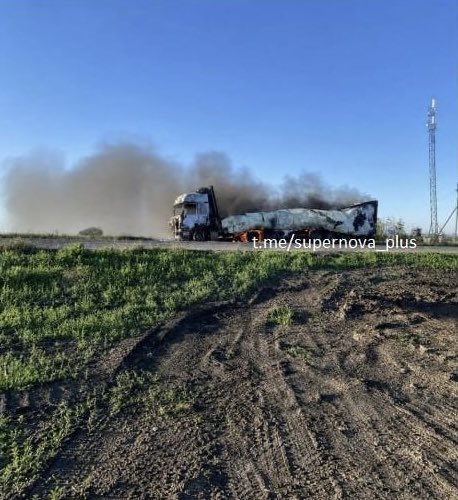
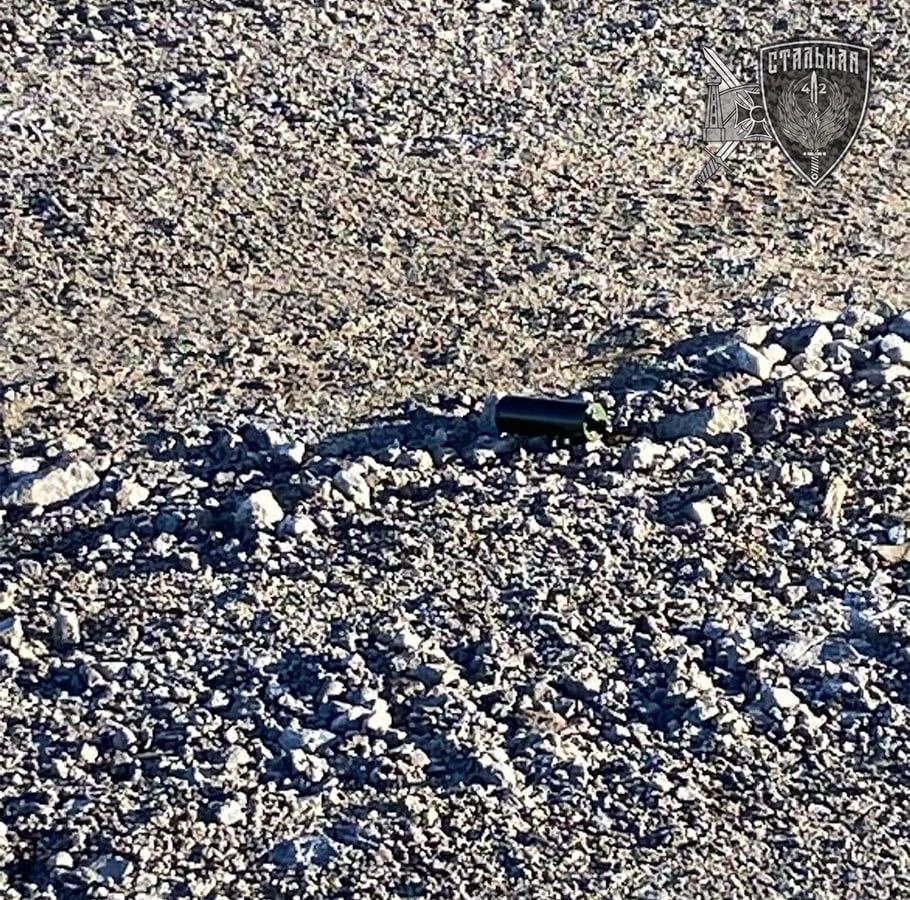
Russian sources report the use of drone-based remote mining systems against Russian logistics routes, with mines being deployed as far as 100–150 km behind the front line.
The systems use aerial dispensers carrying either 10 or 48 mines. The mines come in both small (~400–500 g) and larger variants, feature tilt-sensitive fuzes, arm after deployment, and can remain active for up to 90 days before self-destructing.
Russian sources are reporting the beginning of mine-laying operations along sections of the land corridor to Crimea, particularly on the Mariupol–Melitopol highway.
If implemented on a larger scale, such mining could significantly reduce the speed and density of military traffic moving through the corridor. Combined with ongoing drone strikes, it would force Russian forces to contend not only with threats from the air, but also with the constant risk of mines on the ground, further complicating logistics and movement.