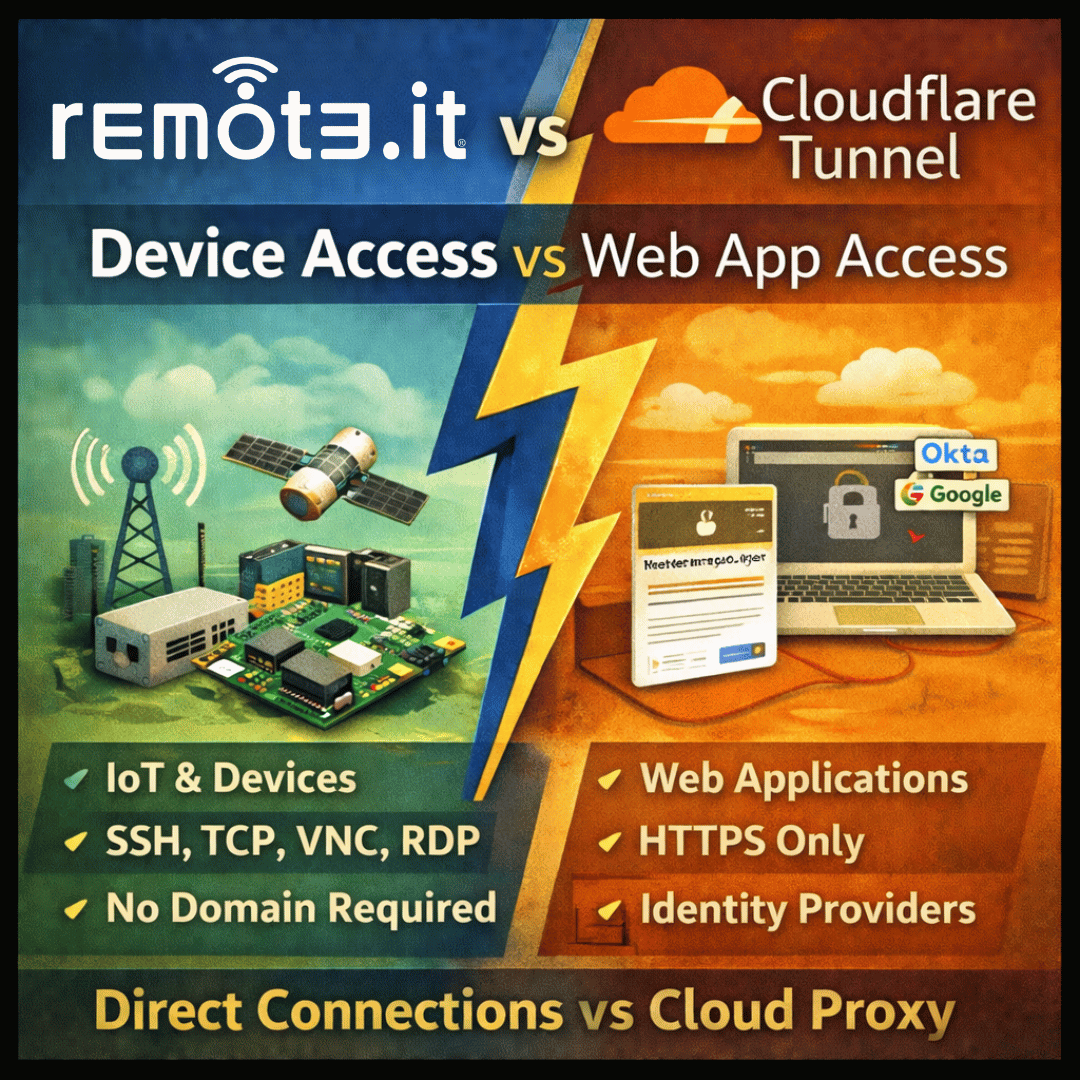
Cloudflare Tunnel is HTTP only.
No SSH. No VNC. No RDP. And every device needs a Cloudflare-managed domain.
If you need terminal access to a server or IoT device, #Remote.It covers what Cloudflare Tunnel does not. Full comparison:
https://t.co/VgGBuANcRL
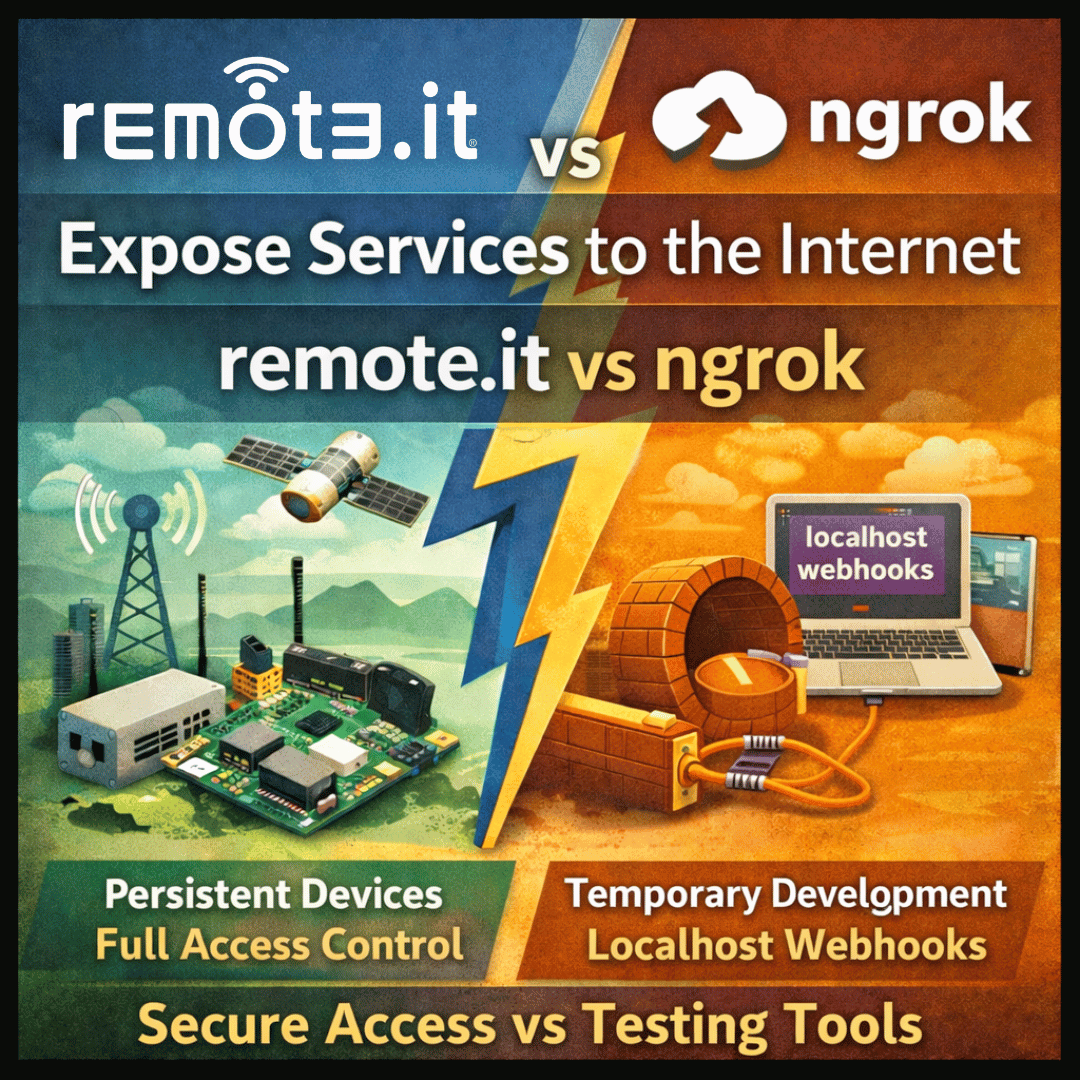
ngrok free now caps sessions at 2 hours and shows a warning page to every visitor.
If you need persistent SSH or device access, that doesn't work.
#Remote.It free plan has no session limits. Full comparison:
https://t.co/xwTMSbQ2bX
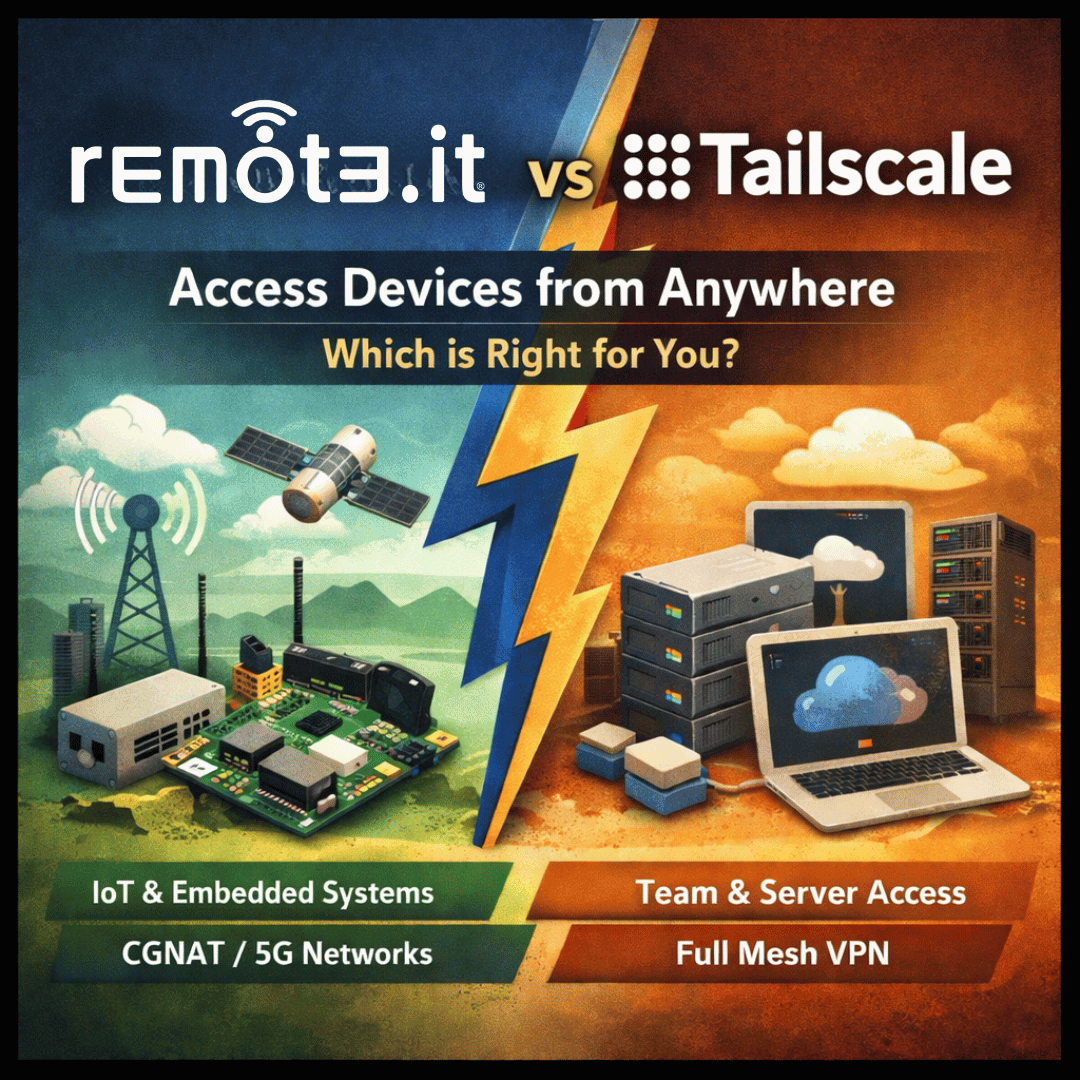
Tailscale = great for team access to shared servers.
#Remote.It = built for IoT fleets, CGNAT networks, and devices with no public IP.
Different tools for different problems. Full comparison here:
https://t.co/uQPQMEUBXh
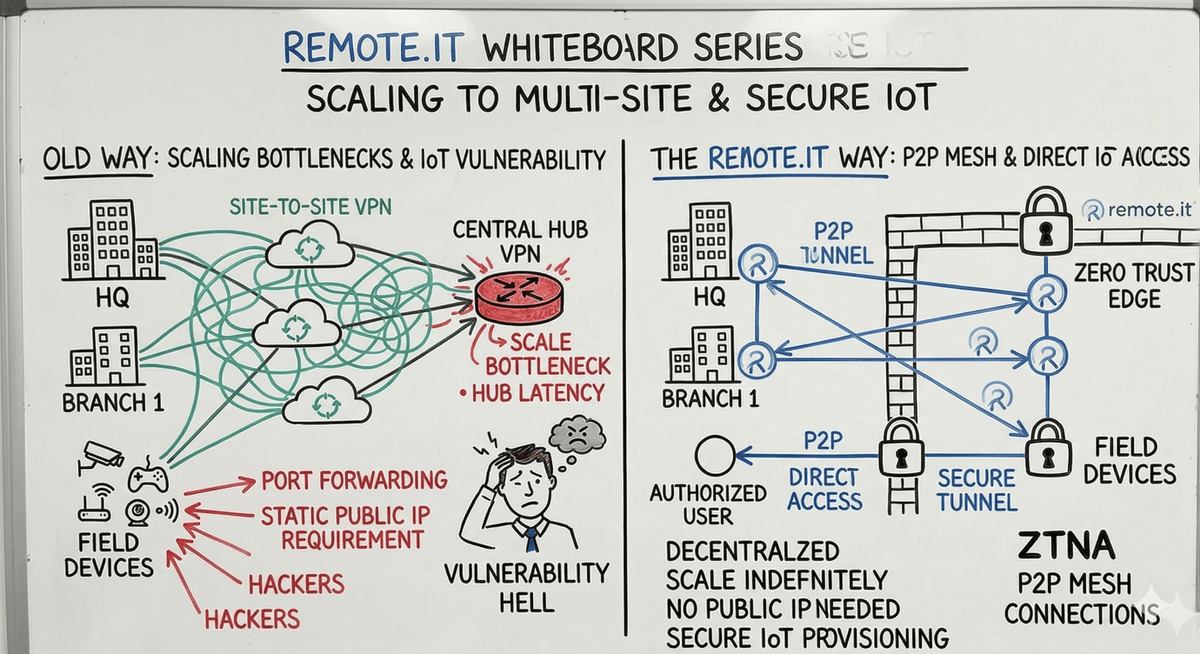
VPN hubs are the ultimate bottleneck.
Don't use a central hub that adds latency and creates a single point of failure.
#RemoteIt uses a decentralized P2P mesh to:
🚀Eliminate bottlenecks
🚀Secure field devices
🚀Scale to infinity
The future of the Edge is peer-to-peer. 🌐
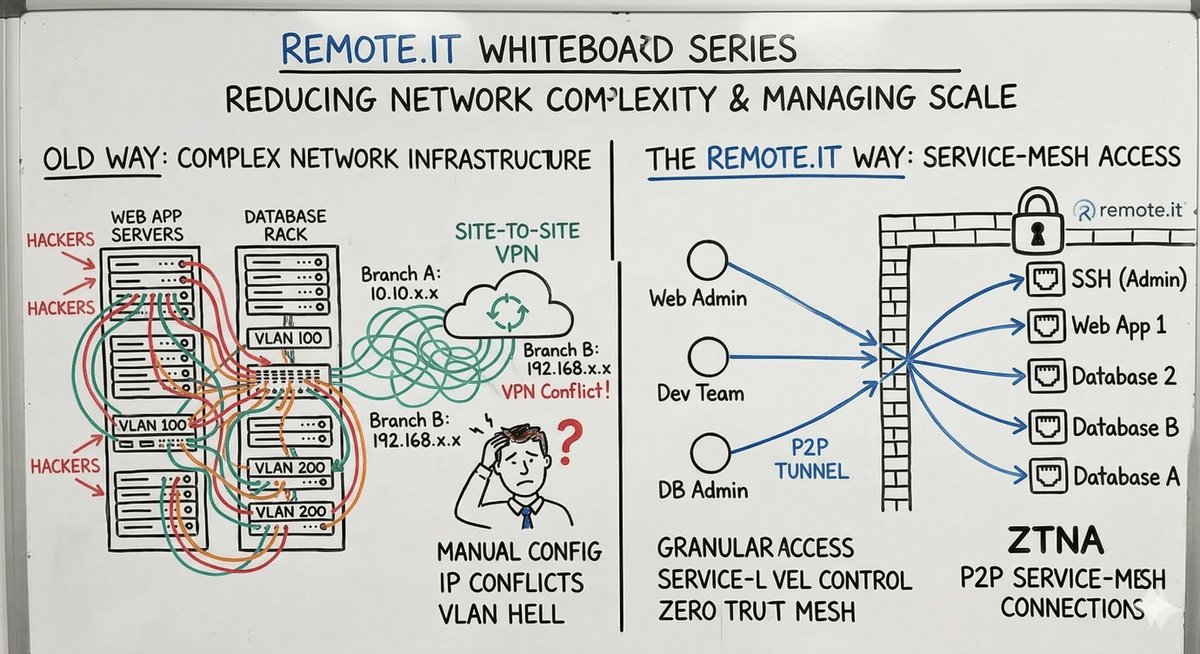
Stop living in VLAN Hell. 🔥
Why give a contractor access to your whole network when they only need one SSH port?
With #RemoteIt, you get:
✅ Service-level control
✅ No IP conflicts
✅ Instant P2P Mesh
Don't build a bigger network. Build a smarter one. 🧠
#DevOps#NetEng
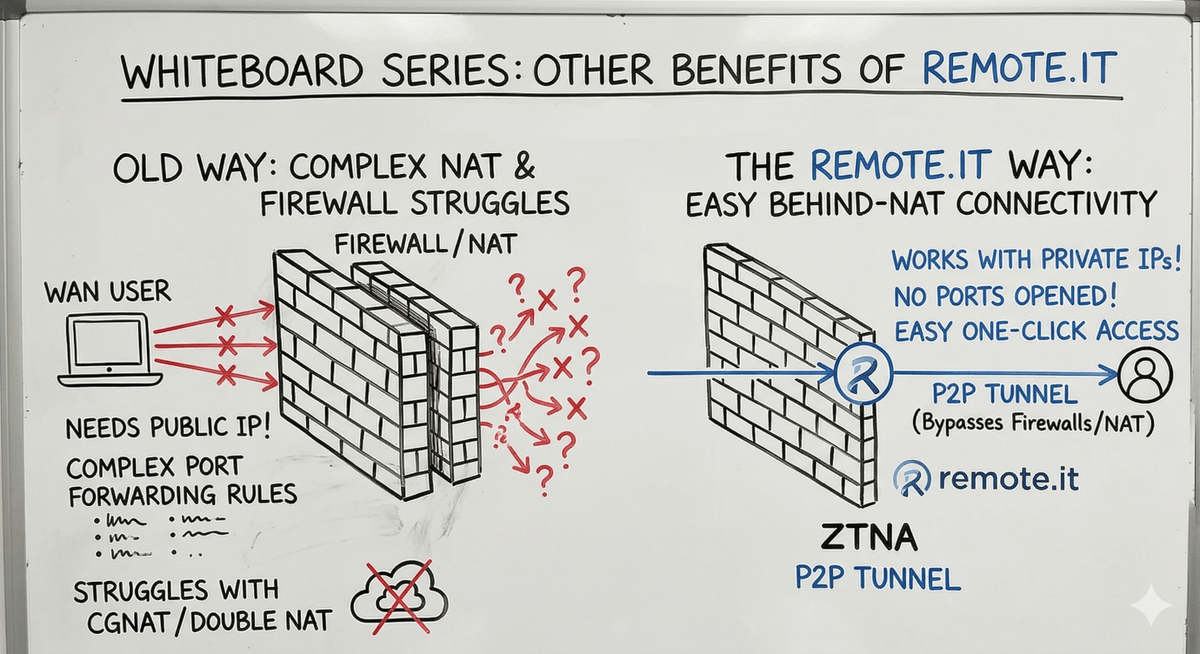
Stuck behind a Double NAT or CGNAT?
The "Old Way" requires static IPs and complex port forwarding. The #RemoteIt way just works.
🚀No port forwarding
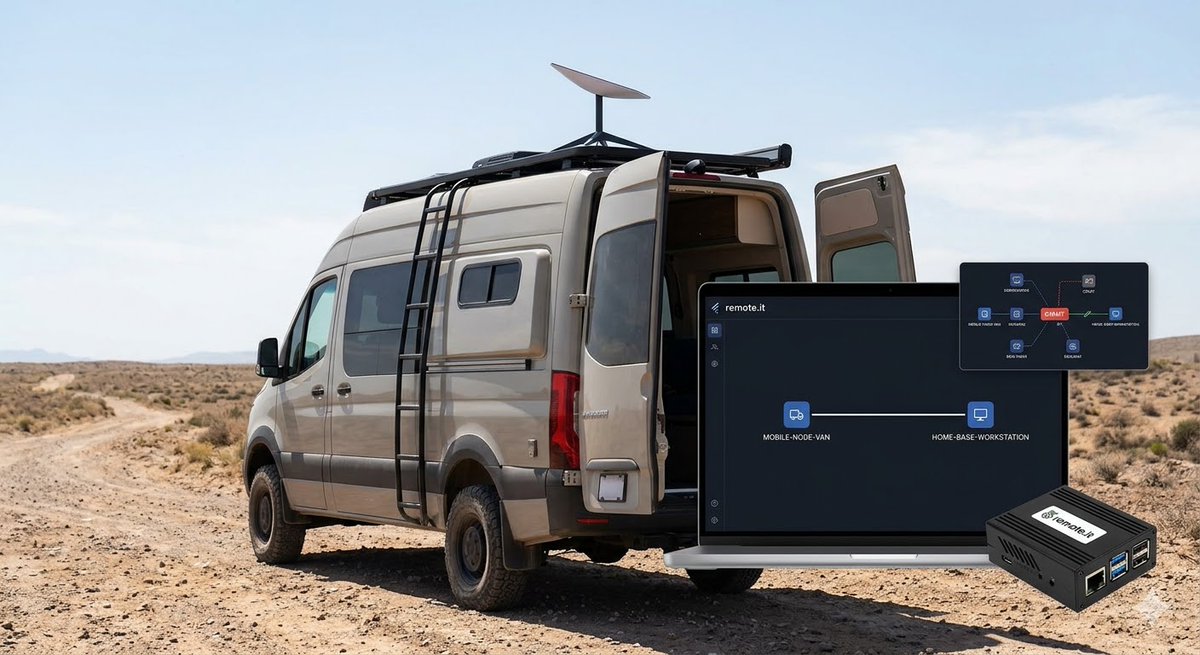
🚀Works on cellular/Starlink
🚀Zero-config connectivity
Connect to anything, from anywhere, in one click. ⚡
#IoT#DevOps
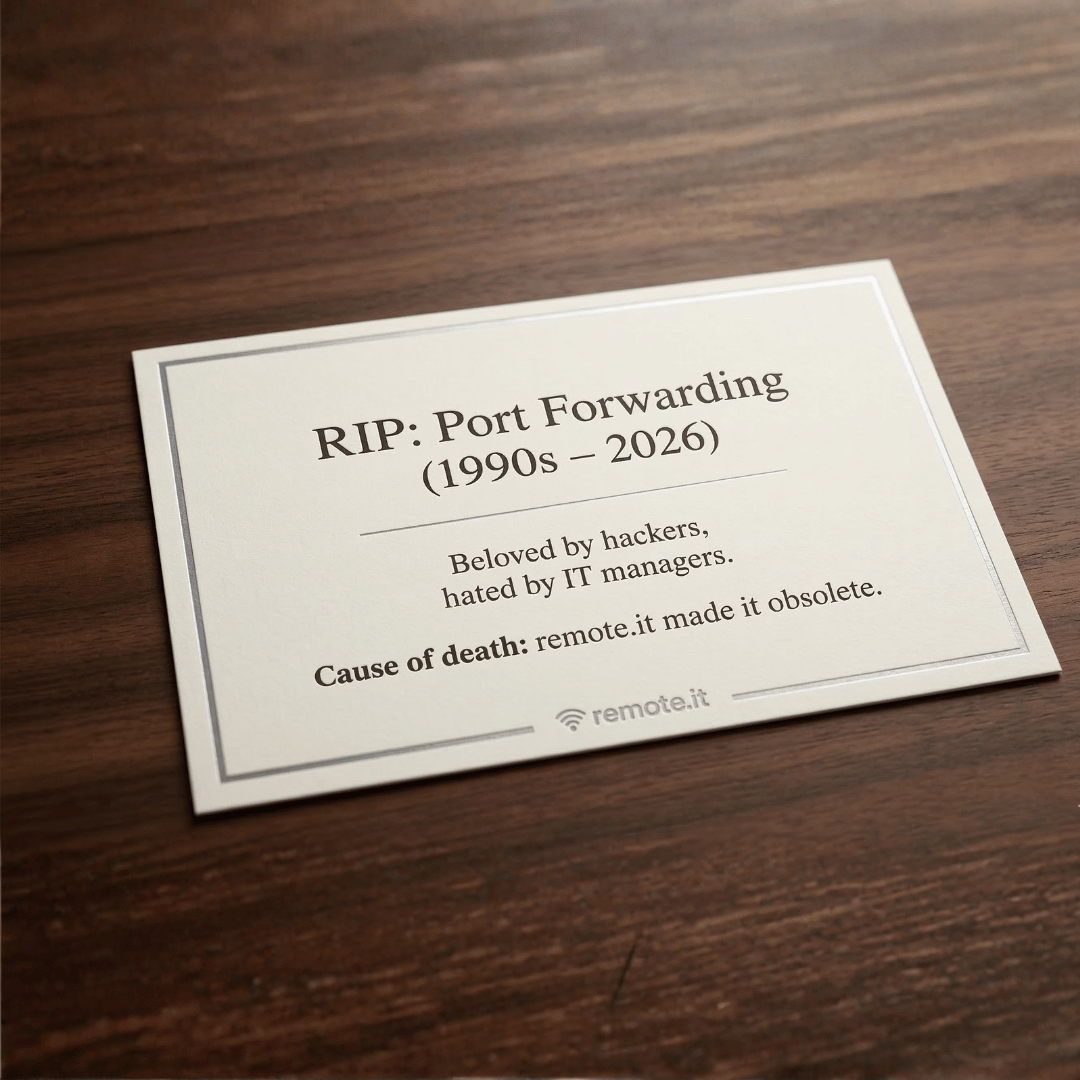
Join us in celebrating the end of "Checking the Router Settings" and "Is the Port Open?"
We’re moving to a world where connectivity is based on Who you are, not Where your device is. Leave a 🪦 in the comments if you’re ready to delete your firewall's NAT rules forever.
#Remote.It treats networking like an app. Our app creates a peer-to-peer encrypted tunnel. It doesn't care if your IP changes every 5 minutes. If you have outbound internet, you have a secure inbound path.
Traditional networking requires a "Global IP" or a complex VPN mesh. If you’re on Starlink, 5G, or a hotel Wi-Fi, you’re usually stuck behind a CGNAT. You’re reachable to no one.
just accessed a Raspberry Pi sitting behind a Starlink NAT, inside a moving van, from 5,000 miles away. 🛰️🚐
I didn't touch a single router setting. I didn't use a Static IP.
Here’s how the "Death of the Public IP" is changing IoT: (1/5)
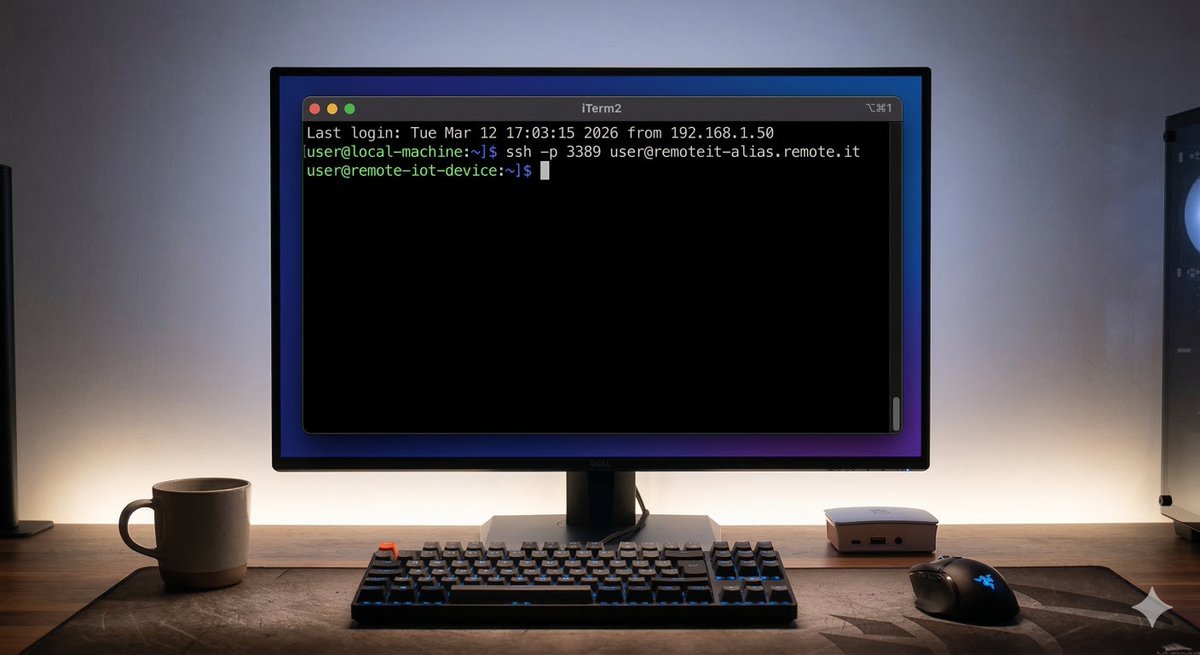
You don't need to install remote viewing client.
ScreenView is the best remote viewing solution because it provides instant, secure, portless access to any device with no VPNs, open ports, or complex setup required. All from your browser.
Would you still use a pager to stay connected? Or a floppy disk to save your work? 📟💾☎️
Then why rely on outdated remote access methods like VPNs and port forwarding?
Some things belong in the 80s. #Remote.It is built for today.
#Networking#CyberSecurity#ZeroTrust
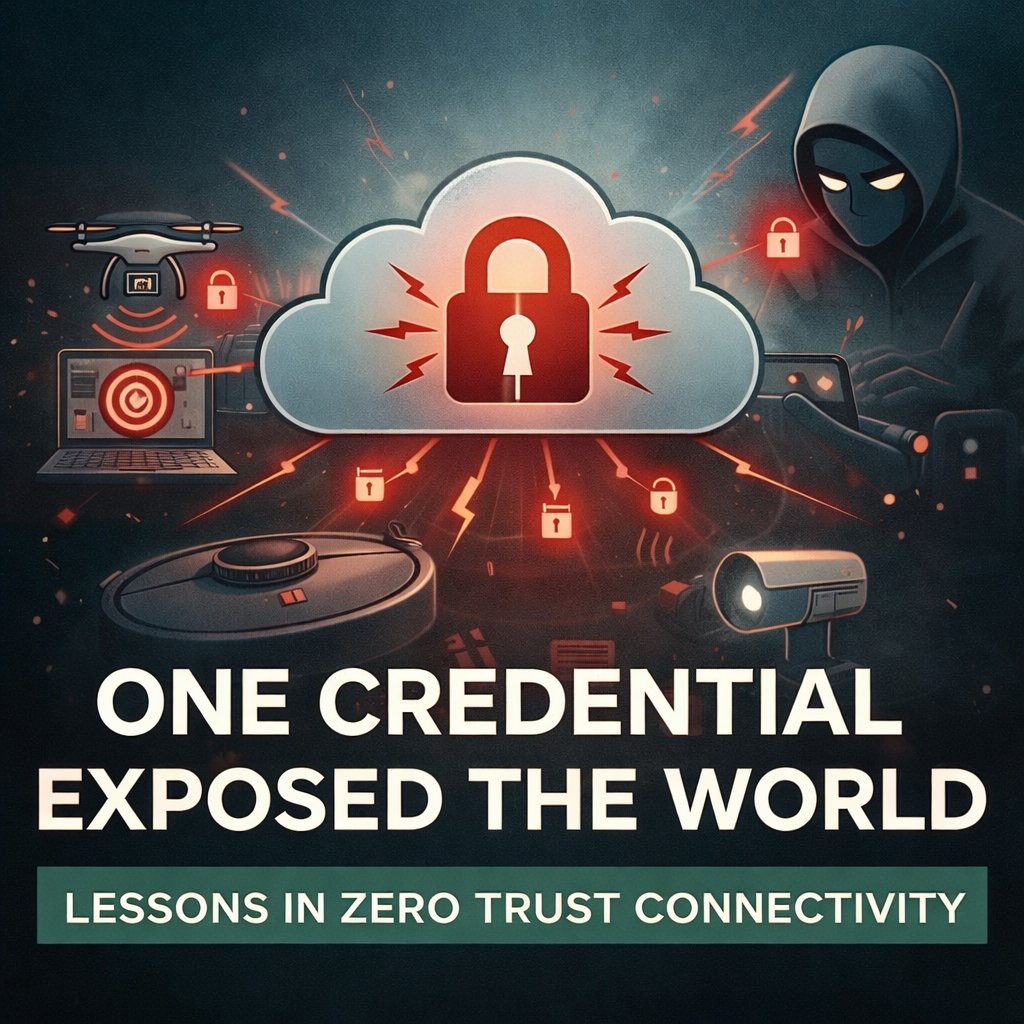
The recent DJI vacuum incident shows how centralized cloud control planes can amplify small authentication mistakes into global security events.
This was an architectural failure:
If you build or operate IoT, edge, or industrial systems, read this:
https://t.co/bxpsP0SwWZ
The real problem in the DJI IoT incident was the architecture.
When thousands of devices sit behind a centralized cloud broker, one auth flaw becomes a fleet-wide event.
No public IPs.
No open ports.
No subnet-level trust.
Full breakdown here:
https://t.co/aOzfPUL8rJ
The DJI vacuum incident highlights a bigger issue: centralized cloud control planes amplify blast radius.We break down what went wrong and why zero trust, service-level connectivity changes the game. If you build IoT or edge systems, read this.
https://t.co/m14o4KJoAg
VPNs extend your network perimeter to every connected user.
That model increases lateral movement and raises the cost of mistakes.
Modern access removes exposed ports and shared trust.
It is time to retire VPNs and port forwarding for good.
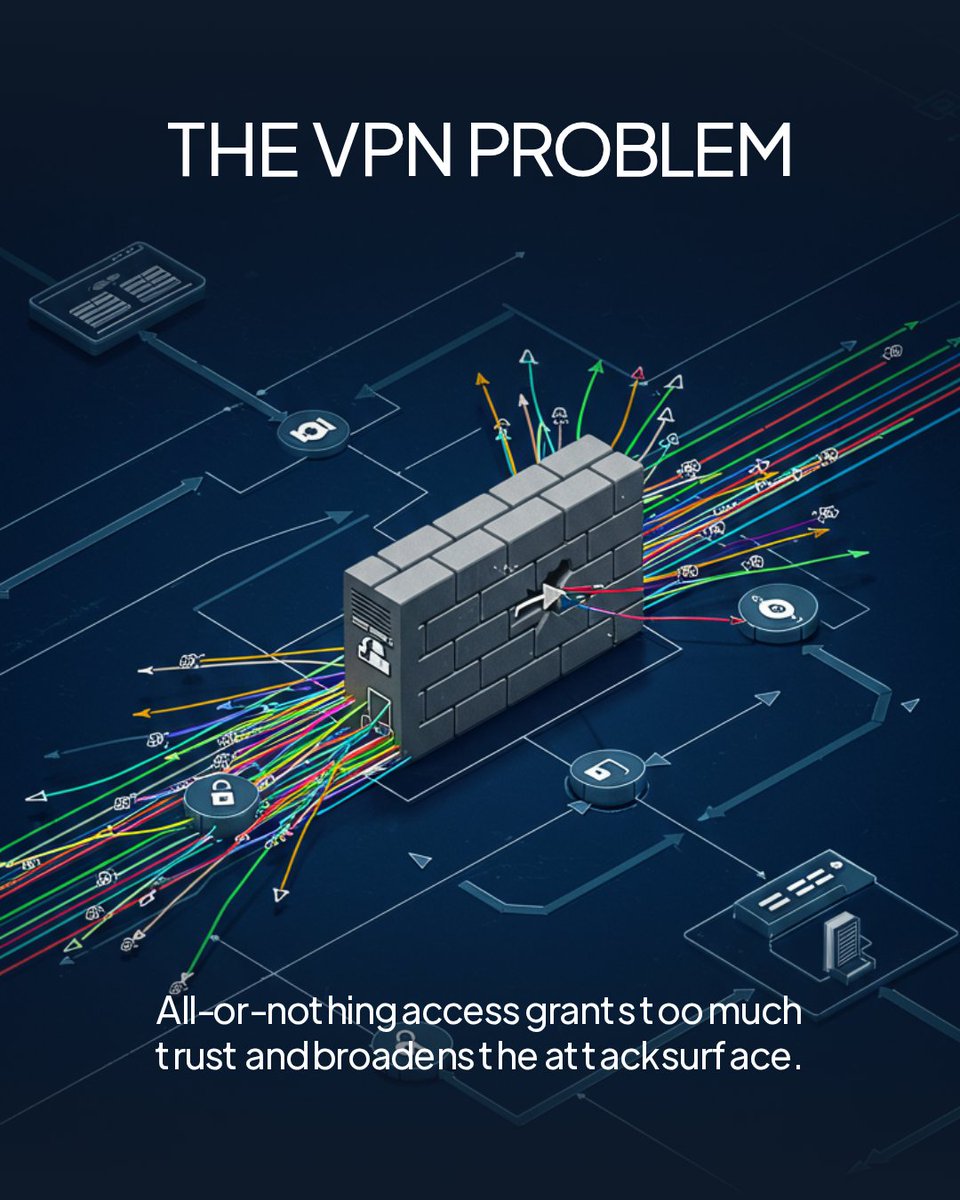
VPNs rely on implicit trust and broad network access.
Once connected, users often reach far more than they should.
This all-or-nothing model expands the attack surface and increases risk.
Modern access needs precision, not perimeter trust.
SOCKS proxies help you reach devices anywhere, but they also introduce complexity and risk if misused.
Learn how to use SOCKS proxies securely without exposing ports or touching firewall rules.
Read the guide: https://t.co/eJUWKO5MJk