AMD ACABA DE MATAR LAS SUSCRIPCIONES DE IA
La CEO de AMD Lisa Su presento oficialmente una PC del tamaño de una lonchera y ejecuto en vivo un modelo de 235 mil millones de parametros
Sin centro de datos. Sin nube. Sin GPU alquiladas
El chip en su interior es el AMD Ryzen AI Max+ 395
Es el primer chip x86 en el que la CPU y la GPU comparten el mismo bloque de memoria
Hasta 128 GB de memoria unificada
Una RTX 5090 te ofrece 32 GB de memoria de video
Una 4090 te da 24 GB
Pero esta pequeña maquina te ofrece mas de tres veces la memoria de cualquiera de ellas
Y cabe en una mochila
En inferencia con DeepSeek R1 le gano a una RTX 5080 por 3x
Una desktop del tamaño de un libro grueso superando una tarjeta grafica de mas de mil dolares en una carga de trabajo real de IA
Ahora haz las cuentas de tus suscripciones
Claude Code Max: $200 al mes
ChatGPT Pro: $200
Cursor: $20
Gemini: $20
Son $5,280 al año antes de construir una sola cosa
La version de 128GB de esta maquina cuesta entre $1,800 y $2,500
A ese ritmo se paga sola en menos de un año
Y despues corre sin costes adicionales, GRATIS
> Instalas Ollama
> Bajas Qwen3 235B
> Apuntas Claude Code a localhost
> La misma interfaz que ya usas
> Nada sale de tu maquina
> Nada cuesta por request
> Sin limitaciones a las 3am cuando por fin tienes tiempo para construir
Los abogados dejan de preocuparse por lo que OpenAI hace con sus archivos
Los developers dejan de ver el contador de tokens
Los founders dejan de matar prototipos porque la factura de la nube los asusta
La IA local ya no es solo una opcion mas economica
Es la unica IA que nadie puede quitarte
Y la pregunta ya no es si la IA local es lo suficientemente buena
Esta claro que si lo es
La verdadera pregunta es por que seguir pagando suscripciones cada mes cuando puedes correrla tu mismo
Esto es espectacular como se movió Marruecos defensivamente. Esto se entrena. No es aleatorio. Tremendo bloque corto defensivo. Imposible de entrar sin alguna magia o pase filtrado con extrema exactitud. Por eso Brasil se la pasó lateralizando.
BREAKING: China is pressuring Iran to reopen the Strait of Hormuz.
There is one problem. Iran did not close it.
Seven insurance companies in London did.
China buys 80% of Iran’s shipped oil. Beijing has a $400 billion, 25-year cooperation agreement with Tehran. China is Iran’s economic lifeline. If any country on earth has leverage over Iran, it is China. And China is now using that leverage to demand the Strait reopens.
But the Strait was not closed by a sovereign decision. It was closed by the withdrawal of reinsurance capacity from five to ten firms, mostly in London, backstopping twelve P&I clubs that cover 90% of global tonnage. Iran did not order those firms to withdraw. Iran cannot order them to reinstate. Neither can China.
Even if Tehran capitulates entirely tonight and the IRGC stands down, not a single reinsurer reinstates Gulf war risk coverage on a phone call from Beijing. Reinstatement requires rebuilt risk models, voyage-by-voyage re-underwriting, repriced treaty capacity, and a threat environment that actuaries can quantify. None of that exists while 440.9 kilograms of weapons-grade uranium remains unaccounted for and the IRGC is still launching drones at Oman.
China has leverage over Iran. China has zero leverage over Lloyd’s of London.
This is the part nobody is modelling. The country with the most to lose and the most leverage over the belligerent cannot fix the mechanism that actually closed the Strait. Because the mechanism is not geopolitical. It is actuarial. And actuaries do not take calls from the Politburo.
https://t.co/ULBgEzZ3A8
A new era of AI video starts here!
Produce cinematic 8K videos up to 60 seconds with HDR and advanced hybrid intelligence.
Less friction. More speed. Hollywood-style results.
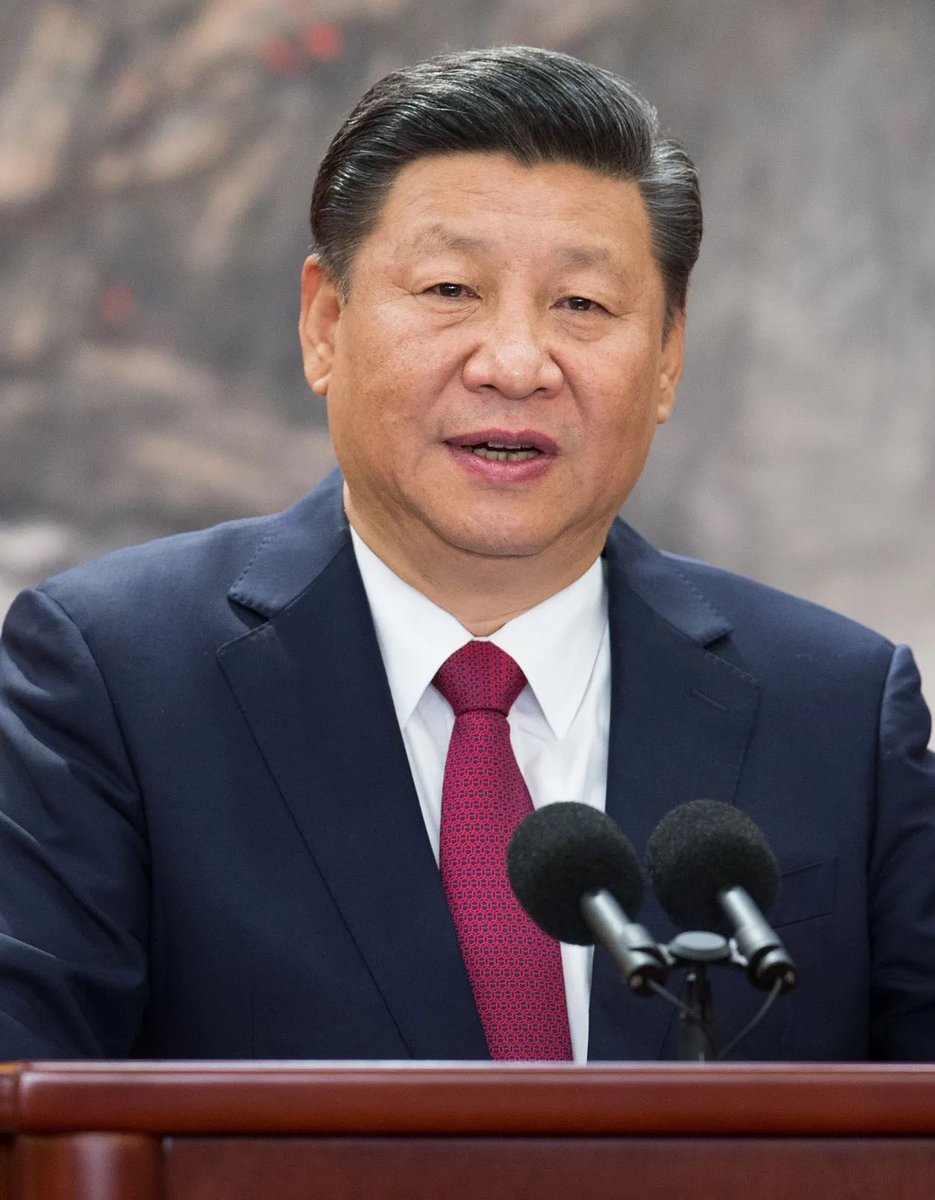
Story of Xi Jinping very few people know.📜
When Xi Jinping was 14, he lived through the most tumultuous years of the Cultural Revolution.
His father was jailed for "betraying the revolution" then banished to work in a tractor factory.
At school, Xi along with 2 other close friends, who were also children of high ranking officials were the black sheep. They were often targeted by Red Guards at the school, Xi being larger than the average teen would win most of the fights.
When the Red Guards can't get to him physically, they would yell at him: "you are the child of a counterrevolutionary gangster, you should be executed 100 times."
Xi would later jest, what is the difference between being executed 100 times and 1 time? So what's so scary about being executed 100 times? He was 14 at the time.
As the Cultural Revolution intensified, even Xi's mother was forced to distance herself from him to protect his siblings. This was partly because Xi was extremely stubborn, and refused to join the Red Guard and refused to admit he's a "counterrevolutionary".
This indominable spirit would later shape his leadership style.
When 1968 rolled around, Mao was extremely concerned even regretting letting loose the young rumbustious Red Guards. So he initiated the Sent-Down youth program, where youngsters were encouraged to go to the country-side to learn from the peasantry on real life skills. This broke up the Red Guards and relative peace returned to the cities.
Xi Jinping was among the millions of teens sent to rural China. Most other youngsters were crying and saying goodbye to their parents.
Xi, 15 years old was the only one with a wide smile (pictured below), when asked why was he so happy, he said: "If I stayed I'm not even sure how long I can stay alive."
The other reason for him to smile, was that his mother secretly gave him a hand sawn bag with the character "Mother's heart" on it. Because of this, he knew his estranged family still loved him, and everything will be fine if the can reforge himself in rural China.
From 15 to 22, Xi Jinping lived in a cave in rural China, he did farm work during the day and read Marx, Victor Hugo and Chinese classics late into the night.
When the Cultural Revolution ended, he was able to attend university and then moved into politics, for 30 years he worked from a Village Party Secretary all the way to the General Secretary of the Communist Party of China.
Press Statement
For Immediate Release
October 11, 2025
ASEAN Stakeholder Engagement on Myanmar: Addressing the Five-Point Consensus, Upholding Democracy and Rejecting the Military’s Sham Elections
Throughout Malaysia’s 2025 ASEAN Chairmanship, a series of Stakeholder Engagement Meetings on Myanmar (SEMs) were convened by the Special Envoy of the ASEAN Chair on Myanmar, bringing together key stakeholders - including representatives from the National Unity Government (NUG), the National Unity Consultative Council (NUCC), Committee Representing Pyidaungsu Hluttaw (CRPH), Ethnic Resistance Organisations (EROs), Consultative Councils, Federal Units and various other representative bodies.
These engagements have served as an inclusive platform to discuss the ongoing crisis in Myanmar, develop strategies and recommendations on the effective implementation of ASEAN’s Five-Point Consensus including on cessation of violence, humanitarian assistance, and inclusive political dialogue, and to address the junta’s planned sham elections.
Stakeholders at the SEMs reiterated grave concern over the deteriorating situation in Myanmar since the military coup of February 2021 and reaffirmed their shared commitment to restoring democracy and upholding human rights. While acknowledging ASEAN’s adoption of the Five-Point Consensus, stakeholders expressed alarm over its limited implementation amid the military’s continued violence against civilians and blatant disregard for democratic norms including the principles enshrined in the ASEAN Charter.
Key outcomes of the meeting included:
Rejection of the Military’s Sham Elections – Stakeholders unanimously condemned the junta’s planned elections as a façade designed to entrench military rule under the guise of democratic reform. These elections are also in direct defiance of ASEAN Five-Point Consensus, which prioritizes cessation of violence, inclusive political dialogue, and unhindered humanitarian assistance to all in need. Proceeding with unilateral elections amid ongoing violence, denial of aid, and exclusion of key stakeholders is illegitimate and a direct assault on ASEAN's mandate and credibility. Stakeholders stand united in rejecting the junta’s attempts to manipulate ASEAN to legitimize its own authority and road-map even while remaining in blatant non-compliance with the Five-Point Consensus.
Unity Among the Revolutionary Forces – The meeting underscored the importance of solidarity among all forces in advancing a shared vision for a federal democratic Myanmar.
Call for Decisive ASEAN Action – Stakeholders urged ASEAN to translate the Five-Point Consensus into tangible, time-bound measures that can meaningfully end violence, protect civilians, advance inclusive political dialogue and bring peace and stability to Myanmar.
Humanitarian Imperative – Stakeholders called for immediate and sustained humanitarian support, emphasizing the importance of cross-border delivery mechanisms and partnerships with local and community-based organizations to ensure aid reaches those most in need - particularly in conflict zones.
Inclusive Political Dialogue – The meetings reaffirmed that durable peace can only emerge from an inclusive political process involving all legitimate stakeholders - including the NUG, NUCC, EROs, and various representatives entities committed to six political objectives of federal democracy and system change. ASEAN’s engagement efforts must reflect this inclusivity to achieve sustainable peace through a meaningful and participatory approach.
Regional Stability – Stakeholders highlighted that the military junta’s attempted coup and indiscriminate attacks on civilians have caused Myanmar’s crisis with deep regional implications, threatening cross-border security, migration stability, and economic integrity. A strong and unified ASEAN response is essential to prevent further deterioration of Southeast Asia’s collective peace and credibility.
In closing, stakeholders expressed deep appreciation to Malaysia for its leadership as ASEAN Chair and to the Special Envoy of the ASEAN Chair on Myanmar, HE Tan Sri Othman Hashim, for advancing an inclusive, principled approach to resolving the Myanmar crisis.
The meeting concluded with a clear message: There is no path forward that legitimizes military rule. Any political or humanitarian framework must be rooted in the will and aspirations of the Myanmar people for peace, justice, democracy, and a federal union that guarantees equality for all.
We call upon the ASEAN Chair and all ASEAN Member States to uphold the integrity of the Five-Point Consensus and to reject any process that violates its core principles. ASEAN’s leadership and credibility depend on standing firmly with the people of Myanmar — not with those who have defied international norms, committed atrocities, and obstructed humanitarian aid.
We reaffirm our commitment to work constructively with ASEAN, the United Nations, and international partners to advance a genuine political transition rooted in justice, inclusion, and federal democracy. Only through a process that ends violence, ensures humanitarian access, and includes all communities in a genuine political dialogue can Myanmar move towards lasting peace and stability and become a responsible member of the ASEAN family.
Call for action
Reject and refuse recognition of any elections organized by the military junta, as such elections have no legitimacy under the Five-Point Consensus or international norms.
Take immediate measures to protect civilians from violence, including by halting aerial and artillery attacks, strengthening monitoring and reporting mechanisms, and supporting local and cross-border humanitarian protection networks.
End the silence on the junta’s ongoing atrocities, including systematic airstrikes, mass killings, and attacks on civilian populations and humanitarian workers, which constitute serious violations of international humanitarian and human rights law.
Demand the immediate and unconditional release of all political prisoners, including President Win Myint, State Counsellor Daw Aung San Suu Kyi, journalists, activists, and community leaders unlawfully detained.
Hold the junta accountable for its continued non-compliance and defiance of the ASEAN Five-Point Consensus, through diplomatic measures, suspension from ASEAN meetings, and coordinated international actions that reinforce compliance and accountability.
We hope that Malaysia, as ASEAN Chair in 2025, will continue to lead decisively in reaffirming ASEAN’s principles and ensuring that the region’s commitment to peace, justice, and the rule of law is not compromised. Only through principled and collective action can ASEAN and the international community help end the violence against Myanmar’s civilians and open the path toward a peaceful, inclusive, and federal democratic future.
For further inquiries; please contact HE Zin Mar Aung ([email protected])
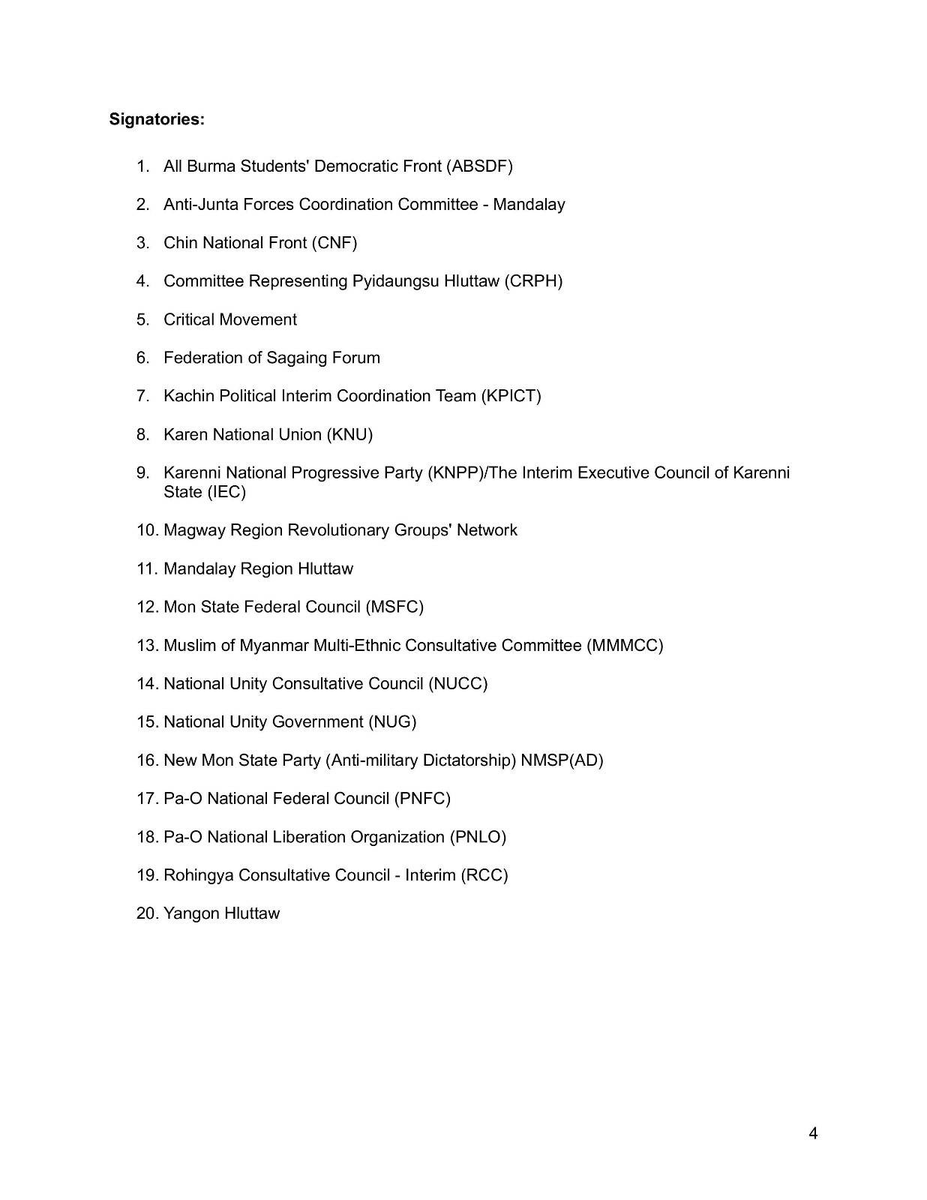
Signatories:
1) All Burma Students' Democratic Front (ABSDF)
2) Anti-Junta Forces Coordination Committee - Mandalay
3) Chin National Front (CNF)
4) Committee Representing Pyidaungsu Hluttaw (CRPH)
5) Critical Movement
6) Federation of Sagaing Forum
7) Kachin Political Interim Coordination Team (KPICT)
8) Karen National Union (KNU)
9) Karenni National Progressive Party (KNPP)/The Interim Executive Council of Karenni State (IEC)
10) Magway Region Revolutionary Groups' Network
11) Mandalay Region Hluttaw
12) Mon State Federal Council (MSFC)
13) Muslim of Myanmar Multi-Ethnic Consultative Committee (MMMCC)
14) National Unity Consultative Council (NUCC)
15) National Unity Government (NUG)
16) New Mon State Party (Anti-military Dictatorship) NMSP(AD)
17) Pa-O National Federal Council (PNFC)
18) Pa-O National Liberation Organization (PNLO)
19) Rohingya Consultative Council - Interim (RCC)
20) Yangon Hluttaw
#Malaysia #ASEAN
#WhatsHappeningInMyanmar
We (The United States) 🇺🇸 hold the ‘Trump’ card in the war with China. We can remove them from the USD system all together. China uses USD to import 13million barrels of crude, 9 bcf of LNG, and 40% of their food daily. Xi has made a grave mistake. #China@globaltimesnews
Rare Earth Elements and the War Machine
The U.S. is at a crossroads, just like the West, but they find themselves there due to lack of planning.
With China's control over rare earths, how will the U.S. produce its arsenal?
An F-35 consumes over 400kg of rare minerals, while an Arleigh Burke destroyer uses 2,600kg, and a Virginia-class submarine consumes 4,600kg.
I'll go further and say that the upcoming Constellation frigate will require no less than 2,000kg of rare minerals to be launched.
And it doesn’t stop there,each Patriot missile or other modern American missile will consume at least 0.5-1kg of rare minerals for unit.
Radars, space projects,everything requires rare earth minerals.
The U.S.’s lack of planning is enormous, but Europe's is even worse because it relies heavily on American dependence.
The solution is to do what the Chinese do: invest in global infrastructure, rebuild ties with nations, and restore the global supply chain.
This would boost the competitiveness of American industry, which has the resources to fund huge energy projects that can lower energy costs to almost nothing, just like subsidizing wages.
But for that to happen, the West needs to shut down the mafias that hinder development.
No one in China questions national sovereignty for the sake of profits from selling expensive energy. If someone doesn’t fit into the framework of a competitive, state-driven system, they’re out of the game.
Trump Imposes New Tariffs on China.
The US will impose a 100% tariff on many Chinese goods starting November 1 or earlier.
The US lost $1.65 trillion in stocks following Trump's threats of new tariffs against China. Experts predict that the decline could increase significantly after their introduction.
The tariff wars continue.
China’s Export Controls Mirror U.S. Strategy, and Washington Shouldn’t Cry Foul
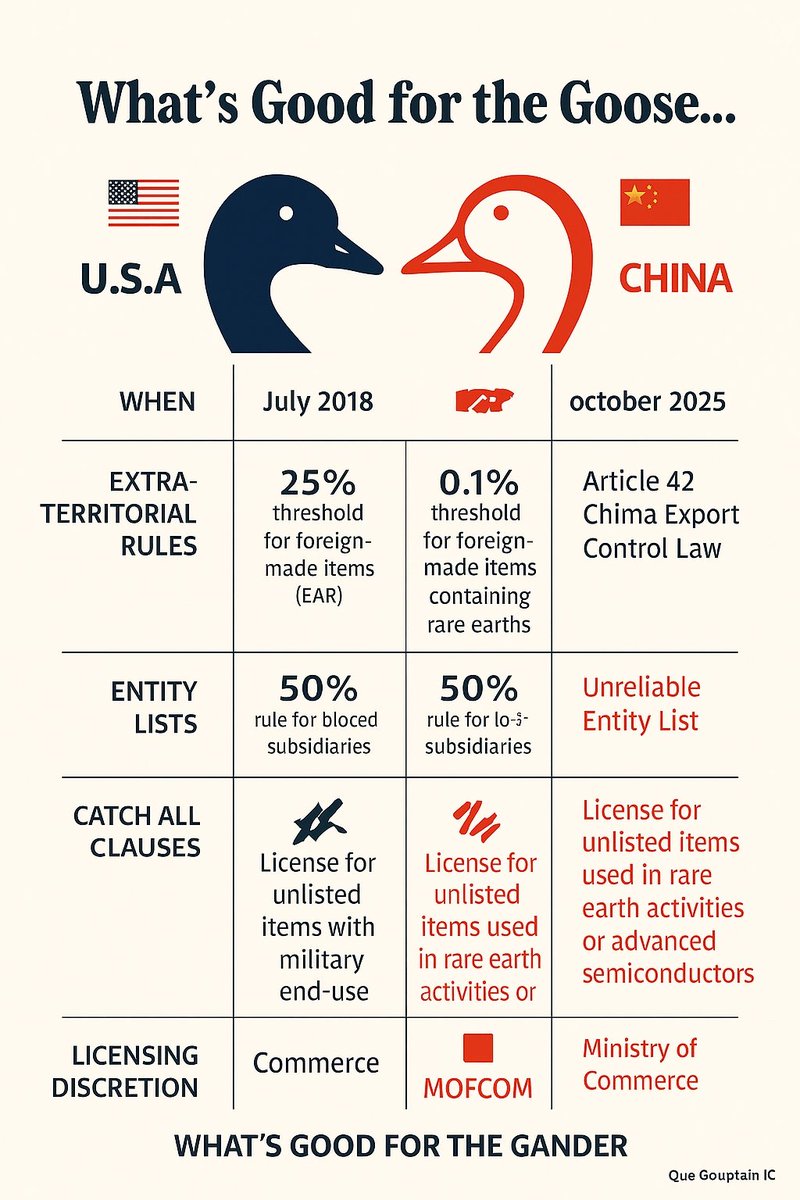
What’s Good for the Goose, is Good for the Gander! If you cannot take punches - don't jump into the ring.
On October 9, 2025, China unveiled sweeping new export control rules targeting rare earths, semiconductors, and AI technologies. The move sent tremors through global supply chains and triggered predictable outrage from Washington. But let’s be clear: this is not a rogue maneuver—it’s a mirror. China is playing by the very rulebook the United States wrote.
For years, the U.S. has wielded export controls as a strategic weapon to contain China’s technological rise. From blacklisting Huawei and SMIC to blocking access to advanced chipmaking tools, Washington has used its dominance in semiconductor equipment and IP to choke off Chinese innovation. Now, Beijing is returning the favor—with precision.
🪞 A Strategic Echo of U.S. Controls
China’s new rules are not just reactive—they’re reflective. Consider the parallels:
- Extraterritorial reach: The U.S. Export Administration Regulations (EAR) apply to foreign-made items with ≥25% U.S. content. China’s new rules apply to foreign-made products with just ≥0.1% Chinese-origin rare earths or tech. That’s not just mimicry—it’s escalation.
- Entity-based restrictions: The U.S. “50% rule” blocks subsidiaries of blacklisted firms. China now applies the same logic to its own controlled entities. If a firm is on Beijing’s watchlist, its subsidiaries are automatically denied licenses.
- Catch-all clauses: The U.S. catch-all rule blocks exports not explicitly listed if they’re destined for military use. China’s version now covers any item—even consulting services or IP licensing—if it relates to rare earth production or AI with military potential.
- Licensing discretion: Just like the U.S. Commerce Department, China’s Ministry of Commerce (MOFCOM) now reviews sensitive exports case-by-case, with broad authority to deny.
🪶 What’s Good for the Goose…
There’s an old proverb: “What’s good for the goose is good for the gander.” If Washington believes it has the sovereign right to weaponize supply chains in the name of national security, then Beijing has the same right. Export controls are no longer a one-way street—they’re a geopolitical norm.
The U.S. cannot cry foul when China uses the same tools to protect its strategic interests. Complaining about Chinese restrictions on rare earths while maintaining bans on chipmaking tools is not just hypocritical—it’s strategically incoherent.
🔄 The New Normal: Reciprocal Containment
This is the era of reciprocal containment. The U.S. controls lithography machines; China controls rare earth magnets. The U.S. blocks AI chips; China blocks AI algorithms. The symmetry is striking—and it’s here to stay.
Rather than lamenting China’s assertiveness, Washington should recognize the new reality: export controls are now mutual leverage points. The question is not whether they’re fair—it’s whether they’re effective. And whether both sides are prepared for the long-term consequences of a fragmented tech ecosystem.
🧭 Strategic Clarity, Not Strategic Whining
If the U.S. wants to maintain technological leadership, it must invest in domestic capacity, diversify supply chains, and engage allies—not just complain when China plays the same game. Export controls are a double-edged sword. When wielded wisely, they protect national interests. When wielded hypocritically, they erode credibility.
China’s October 9 rules are not a provocation—they’re a reflection. And if the goose can dish it out, the gander should be ready to take it.