Assistant Professor of Finance @CEIBS. Ph.D. Columbia GSB, ex-AQR, COATUE and Robeco. Doing research on financial markets, interested in Chinese markets.
📢Join us online for the next session of the Virtual Seminar on Monetary Economics (VSME)
🎙️ Eric Swanson @UCIrv will present “The Kalshi Prediction Market and the ‘Fed Information Effect”
🗓️ 5 March 2026 | 16:00 GMT / 17:00 CET
🔗 https://t.co/PzwMjgMWgj
I believe all causality statements in (at least) social sciences are (implicitly/explicitly) based on a model. One may only choose to prefer one over the other.
The statistical relationship between variables does not tell you the causal relationship without further assumptions.
BUT: knowing the correct causal model of the world helps you predict. This is why LLMs (and humans?) can learn causal relationships.
Arrived NYC. Cab driver who barely speaks English asked me how I expect the trade negotiation would last -- said he needed to know when to buy it at the dip so he can use the money to invest in his own business. I think America will be fine.
Many foreign investors left the onshore market after COVID, which created much information asymmetry compared to people on-the-ground. Knowing this information asymmetry leads to uncertainty and volatility, or risk premium.
Growing up the news cycle had always been centered around U.S. it's been changing since I started to live in New York. It's kinda surreal nowadays top headlines from major news outlets almost all about China. Living in Shanghai now feels like the center of happening.
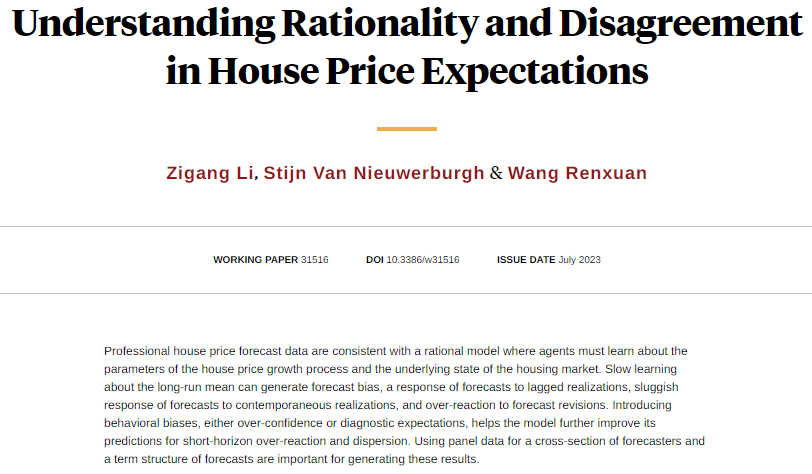
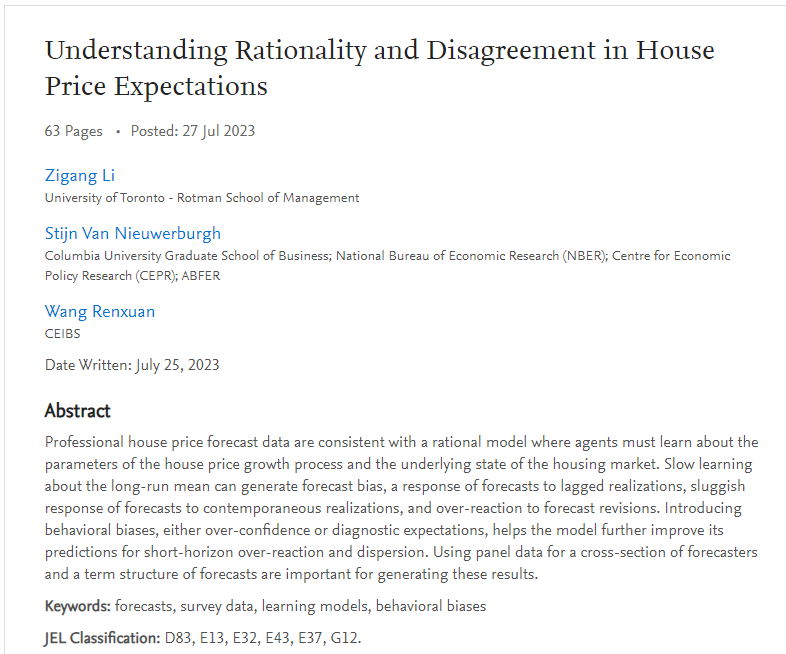
A model in which agents learn about long-run mean house- price growth goes a long way towards explaining many forecast anomalies in the time series and cross-section, from Zigang Li, @SVNieuwerburgh, and Wang Renxuan https://t.co/Kl9JkIkQl9
@DonnieDoesWorld This video is hella positive about you -- talking about you being the "foreign hero with the balls that unmatched by local Shark fans".
This year will see a reversal of China's catch-up with the United States in USD terms. Due to low real growth in China, modest inflation and sharp depreciation of the RMB, the gap between China and US GDP will jump from USD 5.3 Trillion in 2021 to an estimated USD 8.3 Trillion.
@TomZ_Econ and I just finished a review of “Publication Bias in Asset Pricing Research.” (https://t.co/Fsfqe0WkcR). Rather than list methods, @JohnHCochrane's reviews inspired us to focus on stylized facts. Here are 4 facts from meta-studies of hundreds of market anomalies 🧵