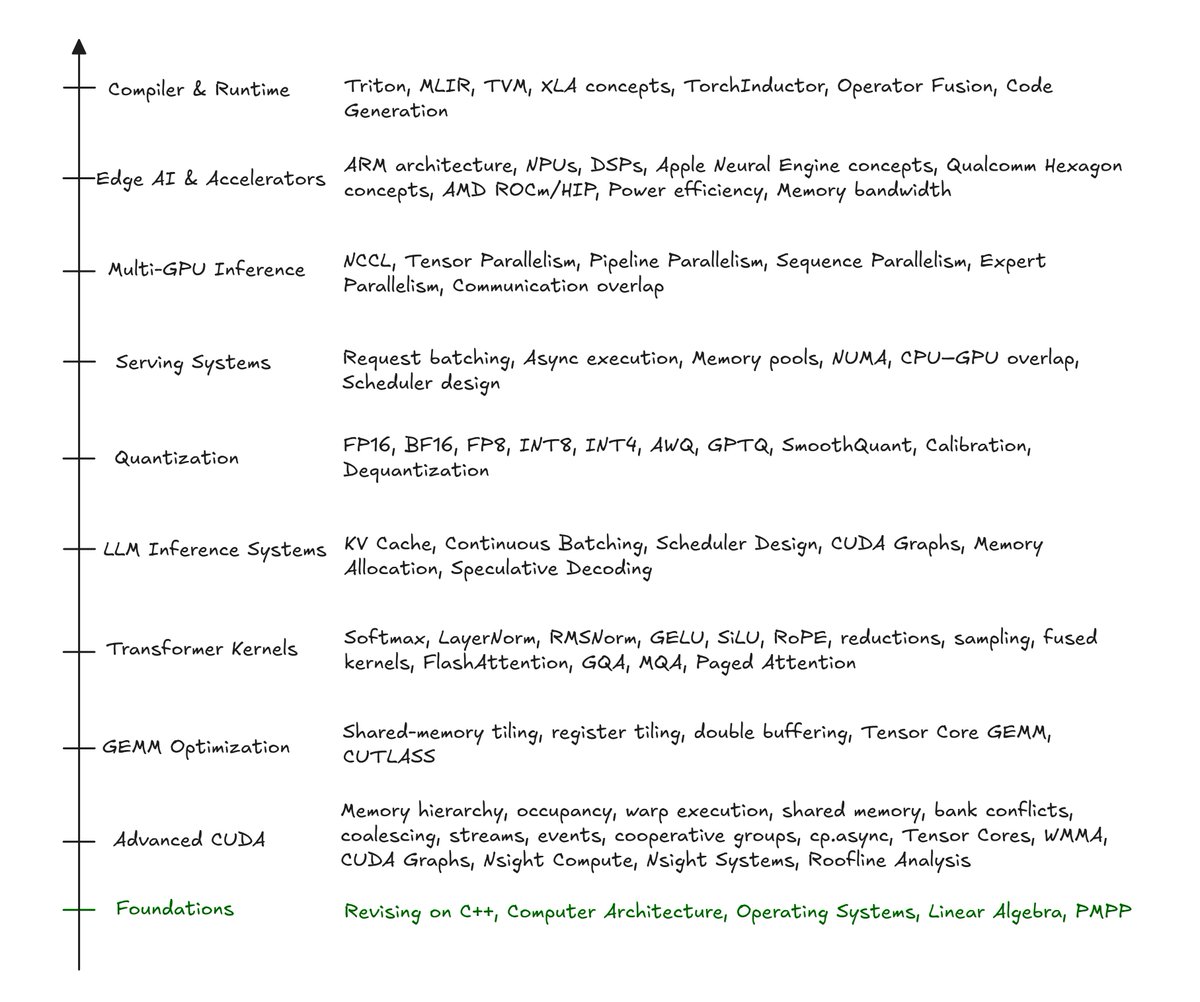
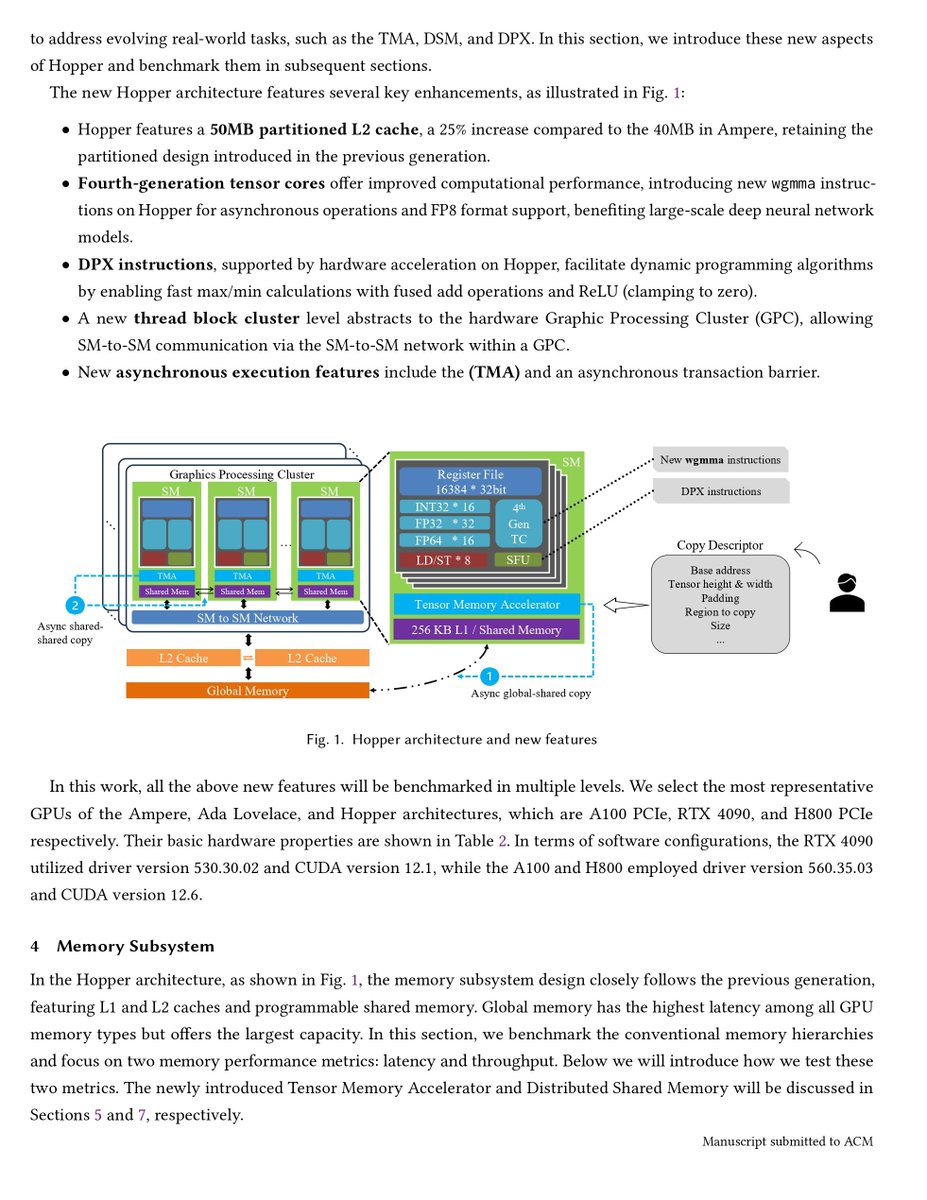
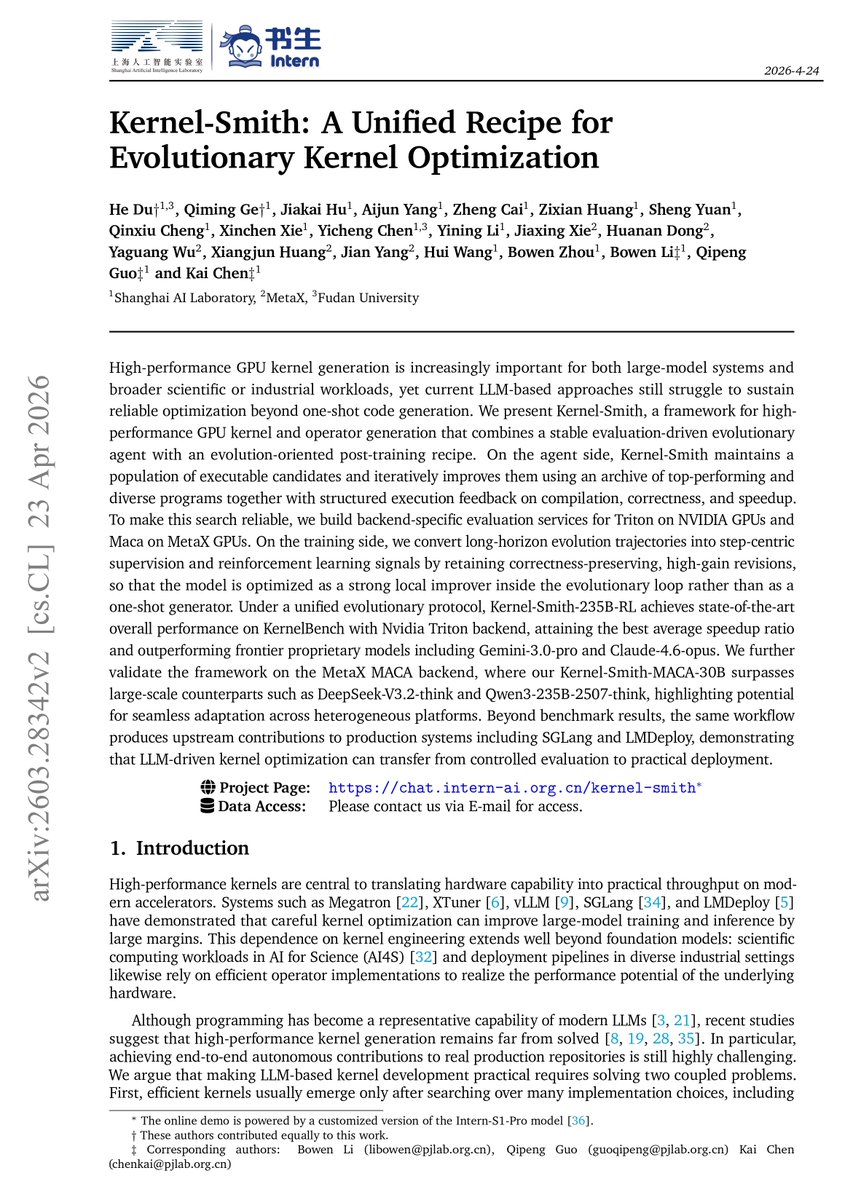
This is the roadmap I've put together for the next few months. While I already have a background in ML, I've never really explored the performance engineering or CUDA side of things. It should be an interesting few months ahead.
i can understand the intent behind it, but the current version of chatgpt, where it loads visuals in addition to text (it should have always been text), takes noticeable time to load, making the UI look buggy/laggy
Metas one more thing moment - they unveiled hardware for Meta Muse (beating OpenAI to an AI hardware device unveil)
Always on w/fingerprint sensor “by far the fastest way to talk to your muse” shipping in time for the holidays
I think OpenAI can one up this but we will see 👀
@AscendNoosphere yeah bookmarks usually end up becoming a graveyard :D
I had thought of making a list but lost enthusiasm along the way. But hopefully soon. haha
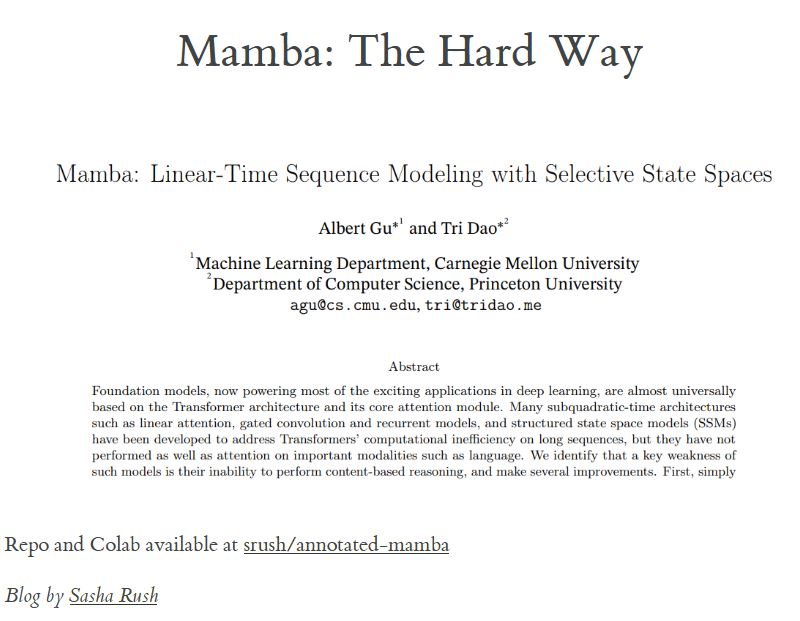
interesting read. it provides a thorough walkthrough of triton, starting from the basics and building all the way up to a full implementation of the mamba algorithm.
https://t.co/b16t9tnJ4Y
We Must Pace the Frontier: I’ve written a new essay on why the AI industry should slow down, with a three-part plan for doing so.
Anthropic is unilaterally committing to the first of these steps. We’ll provide third-party evaluators with permanent, employee-level access to our systems, so that they can verify adherence to our safety measures, report on incidents, and assess models’ alignment during training.
You can read the full post here: https://t.co/OGyPb7yaYt
🚀 Introducing DeepSeek-V4.1-Flash: smarter, faster, more efficient.
🔹 Introducing the smallest model in our new architecture family, with native visual understanding.
🔹 Designed for greater capability, faster inference, higher throughput, and scaling to larger models.
1/6
We’re sharing a solution to the Navier-Stokes Millennium Prize Problem, one of the deepest problems at the frontier of mathematics.
The proof was produced by a group of agents, using an OpenAI next-generation model significantly more capable than GPT-6 Astra.
The problem concerns whether the description of smooth three-dimensional fluid motion modeled by the Navier-Stokes equations can break down. It has remained unresolved for roughly 90 years.