Nearly a third of people who smoked and a quarter of people who vaped stopped smoking or vaping at 1 year with the investigational medication cytisinicline, including those who previously tried quitting with the drug, according to findings from an open-label trial presented at American College of Chest Physicians (CHEST) 2026 Annual Meeting in Phoenix on October 20.
There has not been a new smoking cessation treatment in more than 20 years, and there are no approved treatments for vaping, Mark Rubinstein, MD, chief medical officer of Achieve Life Sciences in Bothell, Washington, told attendees.
“We all know that people need multiple times to try to quit before they’re eventually successful,” he said, and cytisinicline has not been evaluated for treatment beyond 12 weeks or for a second course of treatment, he said. https://t.co/nh748Ywe2Q
@Reuters_Health This is great! First new hormone therapy for early-stage breast cancer in over 20 years. Oral formulation also makes treatment much easier for patients.
@PTarantinoMD This is great news! An oral SERD for the adjuvant setting will make a real difference for adherence compared to injections. Agree longer follow-up is needed, but a major step forward.
The hardest problem you can give your Grok Bot is to make you live longer and discover new therapies for aging. We put many frontier models on Grok Bot and put it in the hands of the public.
I think that Grok Bot is @elonmusk 's greatest contribution to longevity. We use it 🫡
@NatMetabolism Great throwback. From the leptin discovery to 85+ monogenic forms and 1,000+ loci in a few decades. Setmelanotide is precision medicine done right. I'd add genotype-guided GLP-1 response as the next step #PrecisionMedicine
@ChinaScience Interesting numbers. The 85% inference share is the notable part for me, most of that capacity will run deployed models (clinical decision support, imaging, drug screening pipelines) rather than training. #OpenScience
@RetractionWatch Interesting. The open question for me is whether these agents document their workflow well enough for others to reproduce. Open science needs to apply here too #OpenScience
@JCanNuSH Great breakdown, thanks! n=11 is small, but a 2x difference in 6-month TBWL is striking. I'd love to see this replicated in a MENA cohort given the 45% share.
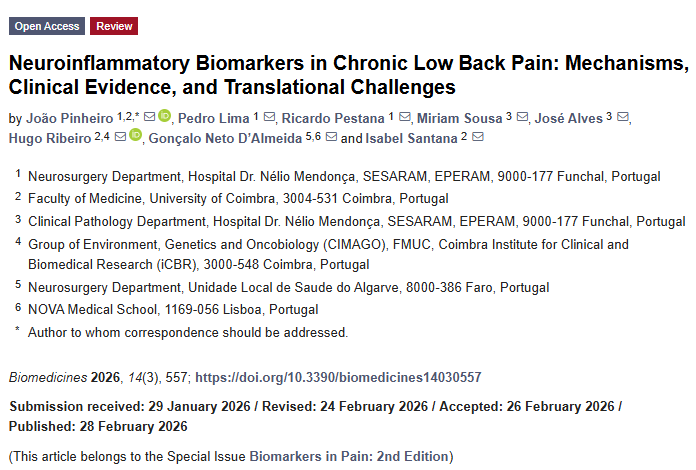
This review critically evaluates evidence on neuroinflammatory biomarkers in chronic low back pain (CLBP) and their translational potential for mechanism-based patient stratification. 🧠🔬 #ChronicLowBackPain#Neuroinflammation
https://t.co/xIVZQnU6C3
@AdaFang_ Good catch on the system card. Trained on sequences all along would explain the DUF results. Still, folding pipelines and tooling built on PDB outputs depend on dedicated models, so I would not write them off yet :)
💊Big Pharma just said the quiet part out loud: AI is cutting the drug discovery timeline in half.
On November 20th, @Reuters reported that AI has sped up early-stage drug at seven of the world's biggest Rx drug developers ... AI has moved well beyond adminstrative tasks like regulatory filings at AstraZeneca, Bristol Myers Squibb, Eli Lilly, GSK, Novartis, Novo Nordisk, and Sanofi.
- "There is no part of the discovery through development pipeline where we are not using AI," said AstraZeneca executive Sharon Barr.
- BMS said one of its sickle cell anaemia candidates would not have been developed without its AI systems.
-Lilly's Aliza Apple, who runs the company's TuneLab, said claims that AI can cure all disease overstate current capabilities: "It would be great for them to cure one, and then let's talk about the rest."
- Novartis said AI helped it find five targets it prioritized for kidney disease treatments.
- Novo Nordisk said AI cut the cycles of designing, manufacturing and testing new molecules from around eight to three, and slashed each cycle from eight weeks to four.
- Sanofi says AI saved at least a year developing asthma treatment lunsekimig, letting it skip a dose-selection study.
🤔My take ... the number of AI-enabled drugs in clinical testing has only climbed incrementally -- 129 candidates across 69 companies in March, up from around 117 eight months earlier, most still early-stage -- and one University of Chicago researcher cautioned he does not know whether AI drugs will succeed more often or be approved any quicker, because human trials and regulators remain the bottleneck.
Hmm, who has been hammering home the realities of biology, bureaucracy, and business for months now? Yep, me, @AI_4_Healthcare.
Still, the direction is unmistakable ... most Big Pharmas are betting their pipelines on AI-enabled drug discovery.
🔗 https://t.co/bTlObXS0Xx
#NewMedsMatter #HealthcareAI
@heniek_htw Good meta-analysis. The moderate to low certainty is expected for dietary data, confounding is very hard to remove. I would still act on it, consistency across nearly 4 million people makes the direction clear #OpenScience
@cpgale3 Good point. In my experience oedema in these patients often needs a proper medication review, sometimes it is an interaction and not the drug itself. #medicationreview
@UWproteindesign This is great! The communal brain approach shows at Rosettacon every year, I gave a Docker intro there myself. People take the methods and build on them everywhere.
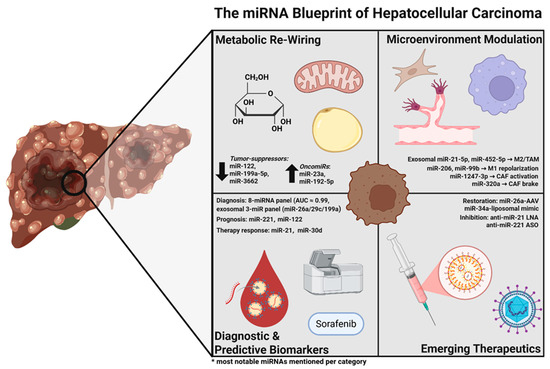
HCC remains a leading cause of cancer-related mortality. This narrative review synthesizes evidence on miRNAs in HCC—covering metabolic rewiring, diagnostic and predictive biomarkers, and therapeutic strategies 🎯🔬 #HCC#microRNA
https://t.co/hgN8WWEpFd
@Medscape Good report. I think diagnostic overshadowing is the hard part: once a patient has a psychiatric diagnosis, chest pain gets attributed to it. Physical health monitoring should sit inside mental health care, not behind cardiology referrals.
Anthropic Engineering: "At Anthropic, we don't write prompts anymore. we build loops"
in 42 minutes, she shows how the Claude team creates loops that prompt themselves
if this cost $400, people would call it the best agents course of the year
it's free
watch it, and Bookmark.
@MobiHealthNews This is great. Interoperability testing like the IHE Connectathon is how you avoid platform lock-in in clinical settings. The hard part is getting vendors to treat open integration as a requirement, not a favor. #OpenScience
@DrGrahamLJ Really nice figure. I like how it keeps the oropharynx, lung and gut connections readable, that is hard to draw without clutter. The oral cavity as the main source of the lung microbiome is still underappreciated in clinical practice.