📚 A Literature Gap = what existing studies have missed
🔍 It could be:
• unanswered questions
• unexplored areas
• conflicting findings
👉 Your research fills that gap
#LiteratureReview#ResearchGaps#AcademicResearch
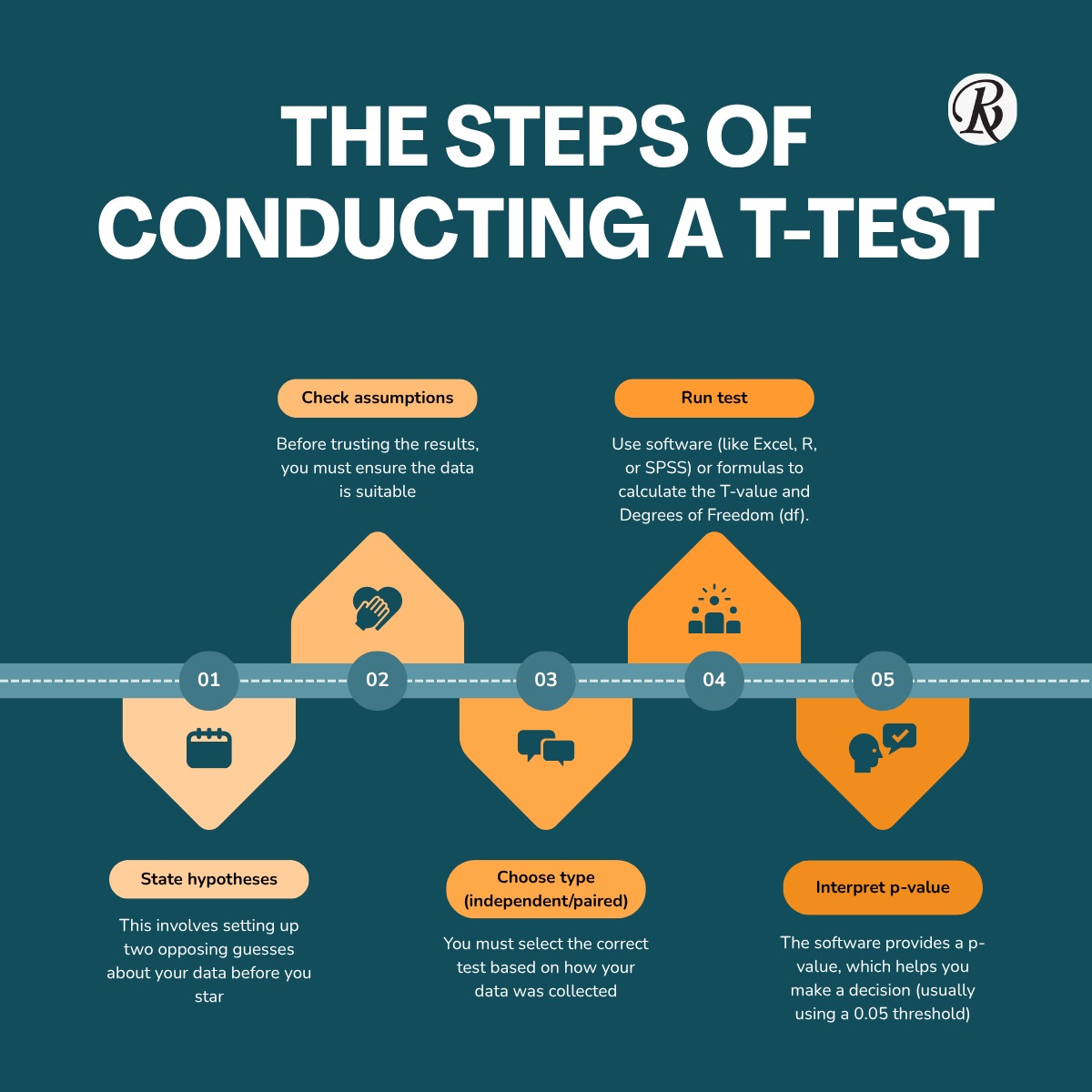
📊 Running a T-Test? Follow these steps:
1️⃣ State hypotheses
2️⃣ Check assumptions
3️⃣ Choose test type
4️⃣ Run test
5️⃣ Interpret p-value
Simple steps = accurate results ✔️
#TTest#DataAnalysis#Statistics#ResearchMethods
📊 Running an ANOVA? Follow these steps:
1️⃣ Define groups
2️⃣ Check assumptions
3️⃣ Run ANOVA
4️⃣ Post-hoc tests
5️⃣ Interpret results
More than 2 groups? ANOVA is your go-to 🔥
#ANOVA#Statistics#DataAnalysis#ResearchMethods
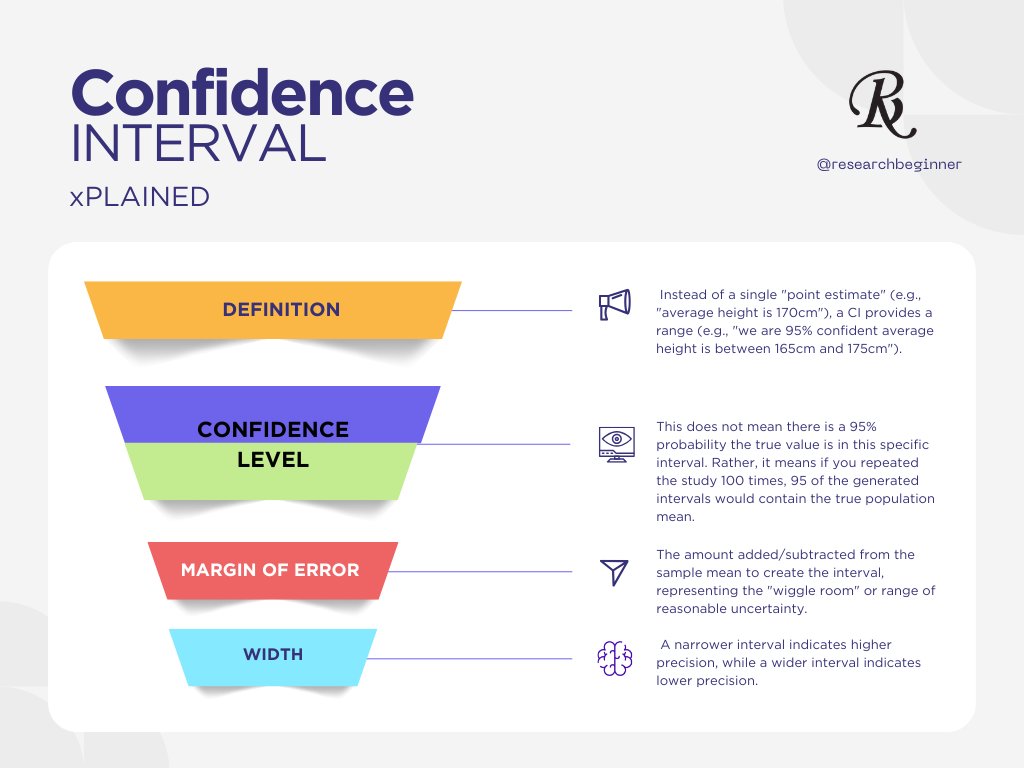
📊 Confidence Interval (CI) = range where the true value likely falls
Example: 95% CI → you’re 95% confident the value lies in that range
#ConfidenceInterval#Statistics#DataAnalysis
📏 Effect Size shows how strong a relationship or difference is not just if it exists.
Big difference ≠ always meaningful
#EffectSize#Statistics#ResearchBeginner
📉 p-value = probability your result is due to chance
✔ p < 0.05 → significant
✔ p > 0.05 → not significant
Don’t just report it understand it!
#PValue#Statistics#ResearchBeginner
📊 Types of T-Tests
🔹 Independent T-Test → compares 2 different groups
🔹 Paired T-Test → compares same group (before vs after)
Choose wisely — it affects your results!
#TTest#Statistics#DataAnalysis#ResearchMethods