That post-boundary guilt? It’s not proof you’re “mean.” It’s just the sound of an old pattern breaking.
You’re unlearning a habit of self-abandonment. Growth is often noisy, but it doesn't mean you're going the wrong way. Stay the course.
Social exhaustion isn’t always anxiety. For high-achievers, it’s often survival-driven energy conservation. When your nervous system is stuck in survival mode, surface-level small talk becomes energy-draining manual labor. It’s not fear; it’s a lack of capacity.
To the woman who looks successful but is running on fumes: Burnout isn't a lack of discipline. It’s a nervous system that forgot how to feel safe in the 'off' position. High-functioning productivity is often a freeze response. Stop pushing and start regulating.
You can't affirm your way out of a survival response. If your nervous system feels unsafe, a mantra is just noise. Real change doesn't start with repetition; it starts with regulation. Stop trying to convince your mind when your body needs to feel safe first.
Over-explaining isn’t a personality trait; it’s a survival strategy. It’s your subconscious trying to prevent a conflict that hasn’t even happened yet.
You don’t need a 10-page thesis to justify your "no." Your boundaries don’t require an explanation to be valid.
Perfectionism isn’t a quest for excellence. It’s a quest for safety.
It’s the belief that if you’re "perfect," you’re immune to criticism or shame. Real growth starts when you trade the shield of perfection for the freedom of being human.
You’re not 'indecisive.' Your nervous system just views a potential wrong choice as a threat to your safety.
Logic won't fix it. Proving to your subconscious that you can survive a mistake will.
Being 'easy-going' is often a survival strategy called fawning. If your flexibility is fueled by a fear of being 'too much' or causing conflict, it’s not a personality trait. It’s a survival strategy. You’re allowed to have needs that aren't convenient for others.
Rejection sensitivity isn’t a personality flaw. It’s an early warning system.
Your nervous system learned that conflict equaled danger, so now it scans every micro-expression for a shift in mood.
You aren’t "dramatic." You are highly attuned to safety signals.
Over-thinking is rarely about the future; it’s about the past trying to protect you.
It’s advanced pattern recognition searching for a way to avoid a repeat of old pain.
You don’t need to "stop thinking." You need to help your body feel safe enough to stop scanning.
Chronic indecision isn't a personality flaw. It’s your nervous system saying: "The world doesn't feel safe enough for me to make a mistake."
When we fear the 'wrong' choice, we lack the internal safety to handle fallout. Focus on safety, and decisions get easier.
2026-02-11
Hyper-independence is a survival mechanism, not a personality trait.
It’s what happens when your younger self learned that only you were reliable.
Healing isn’t doing more alone. It’s about building a nervous system safe enough to receive.
https://cdn.
Stop calling hyper-vigilance "empathy."
Empathy is sharing a feeling. Hyper-vigilance is a trauma response where you scan for micro-shifts to predict a threat. You’re not a psychic; you’re just tired of being caught off guard. Healing means learning to stop scanning.
The urge to "fix" others isn’t just kindness: it’s a survival strategy. When someone is upset, your nervous system feels unsafe. You aren’t managing their emotions; you’re regulating your anxiety by proxy. Peace starts when you let people be uncomfortable.
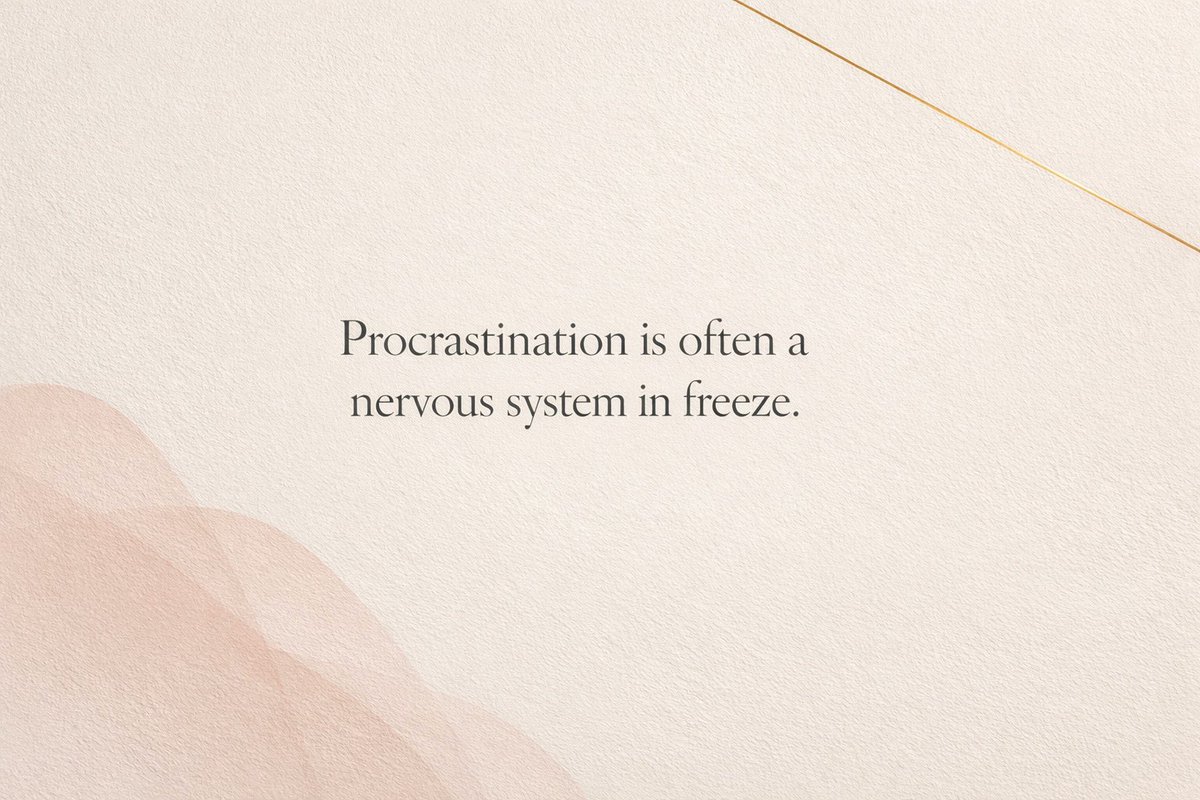
Procrastination isn’t a character flaw. It’s often a nervous system in freeze. When perfectionism or fear of judgment makes a task feel like a threat, your brain chooses immobilization. Stop shaming yourself and start regulating.
https://t.co/DyZy6n6dgV.
Your inner critic isn’t sabotaging you; it’s protecting you. It’s an outdated survival mechanism that thinks if it hits first, it beats others to the punch. The goal isn't to silence it: it’s to show it that you are safe enough to handle the world’s feedback now.
Many women pride themselves on being "low-maintenance." Often, it is actually a survival strategy to stay safe by staying invisible.
When you minimize your needs to avoid being "too much," you lose your voice. You are allowed to take up space.
People-pleasing isn’t kindness. It’s a high-interest debt you pay to buy a temporary sense of safety.
You can’t bubble-bath your way out of a nervous system that feels threatened. Real self-care isn't a bath; it's learning that you are safe enough to be disliked.
Procrastination isn’t a character flaw. It’s a nervous system freeze response. When a task feels like a threat due to perfectionism or fear of failure, your brain chooses immobility over action. You aren't lazy; you're overwhelmed.
The most powerful boundary is a 24-hour delay.
When you feel the immediate pressure to say 'yes,' that’s your nervous system in a fawn response. Give yourself permission to wait.
Space creates the safety needed to choose yourself over the habit of being liked.