Professional development for elementary and middle school educators that increases teacher effectiveness, raises student achievement, & improves school climate.
Parent participation can take many forms based on comfort levels, school and classroom needs, and families' schedules, but any level of involvement strengthens the parent-school connection, reinforces students’ sense of support, and provides assistance to teachers and the school.
For more firsthand accounts from educators and school leaders about the impact of the Responsive Classroom approach, visit our testimonials page! https://t.co/BDxhAHawu4
Two New Free Webinars! Learn About Morning Meeting From the Experts! Join Karen Poplawski as she shares insights, strategies, and practical tips.
Morning Meeting Matters
April 8, 2025, 7:00 p.m. EST
Getting the Most Out of Morning Meeting
May 6, 2025, 7:00 p.m. EST
By fostering a growth mindset in our students, we help them stretch their abilities, adopt more effective learning strategies, and actively seek out opportunities to grow.
Integrating self-assessment into daily schoolwork supports academic growth by helping students reflect on their work and recognize areas for improvement.
Happy #SELday from @ResponsiveClass and @FlyFiveSEL! 🎉 Social-emotional learning and academics go hand in hand to help students thrive—today and every day.
Research tells us that when students are taught social-emotional skills their academic performance noticeably improves. That’s why the first principle of the Responsive Classroom approach is “Teaching social and emotional skills is just as important as teaching academic content."
Responsive Classroom strategies, such as student sharing, create opportunities for students to express themselves and learn about their peers, fostering positive cultural connections and deeper understanding.
🚨 Registration Now Open!
Join us July 9–11, 2025, in Washington D.C. for the First Six Weeks of School Conference! Learn practical strategies to build safe and engaging learning communities. #FSWS25
Register early to save: https://t.co/uIbhsb4kBv
At times, it may seem like we're not reaching our students, but it's important to remember that social-emotional growth is a gradual process. By maintaining consistent structure and support, we're cultivating and nurturing the seeds of their development.
While February shines a spotlight on Black history, its actual impact is when we carry its lessons forward all year. Read more about making Black History Month a year-round celebration of learning and growth: https://t.co/0m5ExxkSwp
Music, art, and PE teachers play a crucial role in nurturing responsible, kind learners. Check out the Special Area Teachers one-day workshop to learn practices that can be tailored to the unique challenges of special area settings. View the schedule here: https://t.co/BsNsHFKS0S
Morning Meeting is a perfect time to keep the excitement of science alive in the classroom. By incorporating play—the primary way children explore and learn about the world—we give them a chance to reflect on their science lessons and practice their investigative skills.
Offering meaningful choices during lessons boosts learning and fosters a sense of ownership and motivation in the classroom. Learn more about academic choice here: https://t.co/n7AR0HybQJ
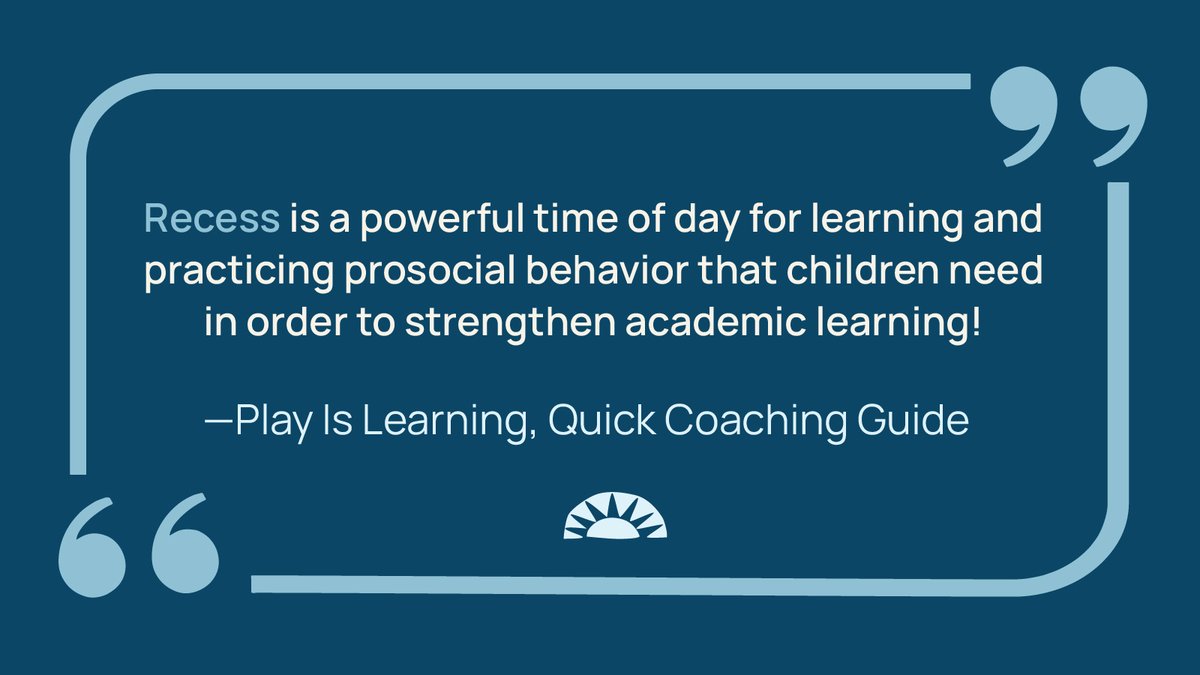
Students benefit from both organized games and free play during recess. However, students taught specific social skills for recess will be better prepared for the challenges that can arise during playtime. Check out this Quick Coaching Guide to learn more: https://t.co/MklI6hDdGL
🎉 Join us tonight @7PM EST for a FREE webinar: The Importance of Play
We'll discuss how integrating play into your classroom can boost academic learning and social-emotional development for your students.
Register here if you haven't already: https://t.co/InpAILzGml