Wallet drainer bots don't hack your wallet.
They get you to hand it over yourself.
The attack flow:
1. Fake site mimics a legitimate protocol (Uniswap, OpenSea, Coinbase)
2. User connects wallet - standard action, feels safe
3. Site requests a transaction signature, looks routine
4. Signature approves a drainer contract to move all assets
5. Wallet emptied. Funds gone. Irreversible.
Dark web discussions about drainer malware rose 135% between 2022 and 2024.
The tooling is commoditized. The barrier to launching a campaign is near zero.
The attack doesn't exploit code. It exploits the fact that users can't verify what they're actually signing.
Many AI projects are still selling a concept.
Perceptron is already running a live network:
800K+ total nodes.
100K daily active nodes.
150+ countries.
10 TB average daily bandwidth.
This is what infrastructure in motion looks like at a global scale.
What "privacy by default" actually means in practice:
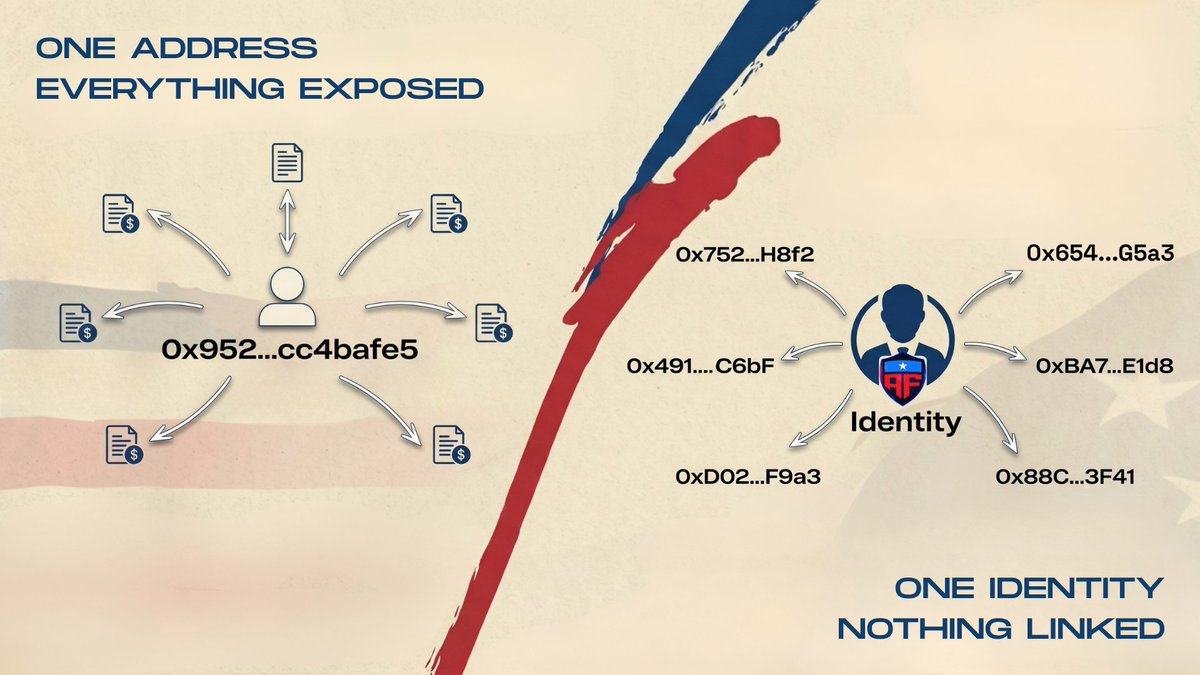
— Your wallet generates a new address for every transaction automatically
— Your balance is never visible to people you haven't transacted with
— Your transaction history can't be traced back to a single permanent identifier
— Compliance is built in, not bolted on afterward
None of this requires a separate privacy coin. None of it requires a mixer.
None of it requires the user to do anything differently than they do today.
That's what "default" means. It just works. Invisibly.
An AI agent with stale data is just an expensive autocomplete loop.
To act in the real world, agents need:
1. Live inputs.
2. Verified context.
3. Fresh signals.
4. Access beyond closed platforms.
The next agent race will be won at the data layer.
There's an attack vector most of crypto isn't tracking yet.
AI recommendation poisoning.
An attacker embeds hidden prompt instructions in a webpage.
An AI agent reads the page during its normal workflow.
The agent's memory gets silently altered, and from that point, every recommendation it makes is skewed toward whoever planted the instructions.
Microsoft documented 50 live examples across 31 companies in 14 industries in 60 days of research.
If your portfolio decisions or due diligence run through an AI assistant, assume the inputs can be manipulated.
The recommendation is only as trustworthy as what the agent read to make it.
Why isn't more institutional capital on-chain yet?
Exposure. Not regulation.
Every wallet address is a permanent public identifier, and every transaction lands on the same ledger.
Trading strategies, supplier relationships, treasury movements, anyone with a block explorer can read all of it.
No CFO signs off on broadcasting that data live.
Until on-chain transactions match the discretion of traditional banking rails, institutional liquidity stays in crypto-native venues.
The privacy gap is the adoption gap.
What 800K+ nodes means in practice:
Perceptron doesn't depend on just one source.
It has a distributed surface across 150+ countries. The ability to see the internet from every angle, all at once.
No centralized team can replicate this capability.
"The AI stack is scaling fast. But the missing layer is still data acquisition.
@sama has said that data is one of the major bottlenecks in AI development.
AI needs fresh, real-world data that can't be pulled from static training sets. That's what Perceptron is building.
The largest social engineering attack in crypto history didn't exploit a single line of smart contract code.
Months of relationship building.
One moment of misplaced trust. $285M drained from Drift Protocol.
76% of all 2026 crypto losses trace back to North Korea, and almost none of them involve a code exploit.
What this means for everyone else: the next major attack on your protocol, fund, or team won't come through your audit reports.
It'll come through a LinkedIn message, a recruiter call, or a coffee meeting that lasts six months.
Treat unsolicited contact the way you treat unsolicited code.