@villa19199@stockthoughts81 Are you guys still bullish on this name? The $CASY numbers were quite impressive. I was at first excited about the CFO jump from a larger/ successful company but it looks like he’s had short stints in several of his last seats, including Murphy.
J.D. Vance once decried Catholics who did not show “proper deference to the papacy, treating the pope as a political figure to be criticized or praised according to their whims.”
He is now one of those Catholics.
https://t.co/2DxilBT8Af
U.S. intelligence assesses that Iran still maintains a significant missile launching capability, including roughly half of its cruise and ballistic launchers, as well as thousands of one-way attack drones, despite daily strikes against military targets across Iran for the last five weeks by Israel and the United States, three sources familiar with the assessment told CNN.
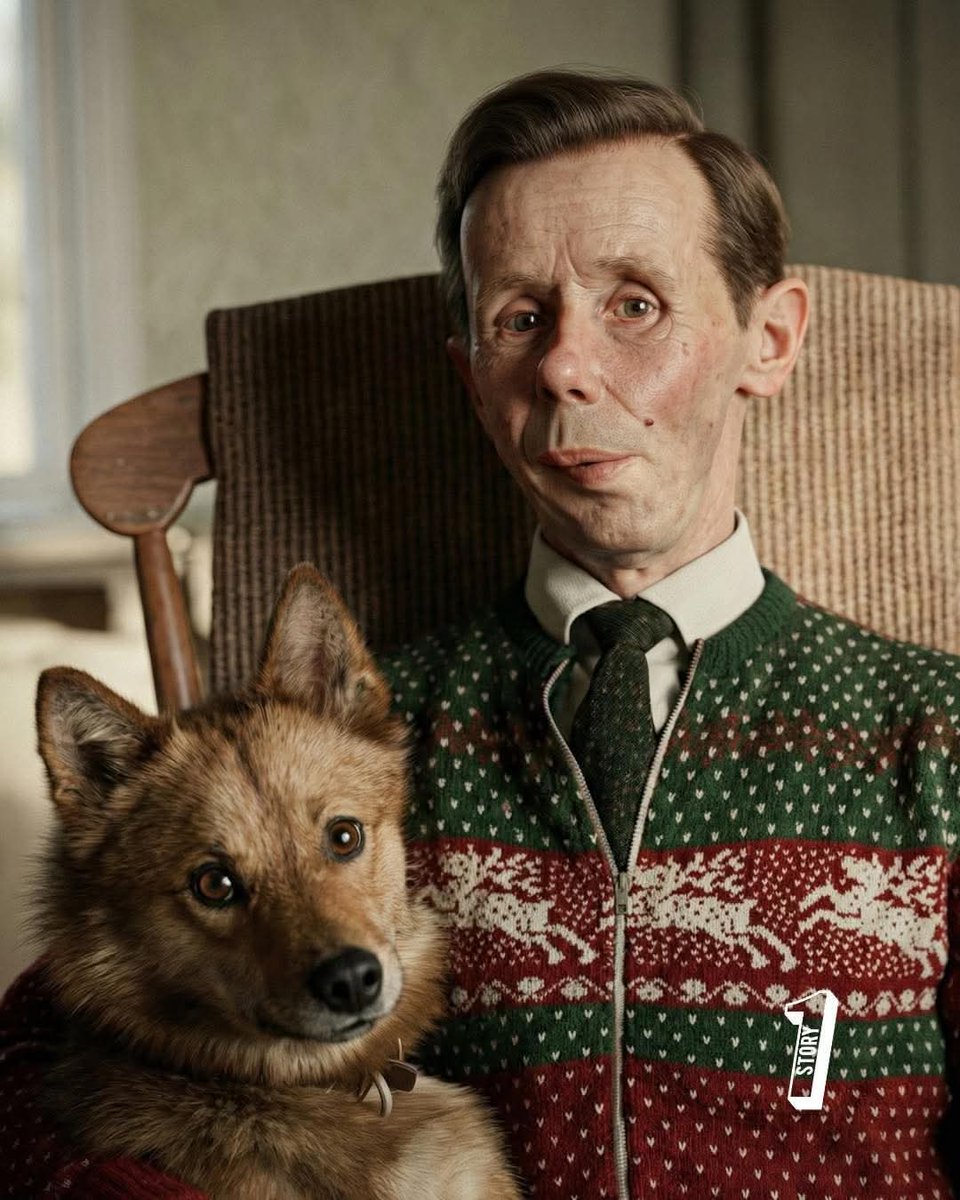
He killed 542 men in 100 days without ever looking through a scope.
Then he disappeared back into an ordinary life — so ordinary that the world nearly forgot he had ever existed.
Simo Häyhä was small in stature — five foot three — stocky and quiet. His hands were calloused from farm tools, not polished by ceremonial sabers. In the rural southeast of Finland, near the village of Rautjärvi, he was known as a dependable neighbor. He hunted. He farmed. He kept to himself.
Nothing about him suggested legend.
Then came November 30, 1939.
The Soviet Union invaded Finland, beginning what would later be known as the Winter War. Moscow expected a swift campaign. The Red Army brought roughly half a million soldiers, along with tanks, aircraft, and artillery. They outnumbered Finnish forces by nearly three to one. On paper, it looked less like a war and more like an inevitability.
But snow does not follow paper calculations.
That winter was merciless. Temperatures dropped to minus 40 degrees. Engines froze. Metal stuck to bare skin. Forests swallowed sound. The Finns knew the terrain the way farmers know their fields and hunters know animal tracks.
Simo Häyhä was one of those men.
He had grown up skiing through those forests, reading wind and shadow, standing motionless until game appeared. When he joined the Finnish Army, he did not transform into something new. He simply applied the skills he had built over years to a different purpose.
Dressed head to toe in white, he vanished into the snowfields. He packed snow in front of his rifle barrel so the muzzle blast would not kick up powder and reveal his position. He held snow in his mouth to cool his breath, reducing the visible vapor that could give him away in the cold air. He lay still for hours, sometimes entire days, letting the forest settle around him.
He did not stalk.
He waited.
What made him especially dangerous was a choice most snipers would consider illogical.
He refused to use a telescopic sight.
While others relied on scopes, Häyhä used only iron sights — the simplest aiming system available. He believed a scope could reflect sunlight like a signal mirror. It required lifting the head slightly higher, increasing visibility. In extreme cold, lenses could fog or freeze. Iron sights were lower, sturdier, and more reliable.
He trusted his rifle and his eyes.
In fewer than 100 days of combat, he recorded more than 500 confirmed kills with his rifle. Some estimates place the number at 542. That figure does not include additional enemy soldiers he killed with a submachine gun in close combat.
Five hundred men. In forests locked in ice. In a war his country was not expected to survive.
The Soviets gave him a name: the White Death.
White Death.
Sniper teams were dispatched to hunt him. Entire units were tasked with finding one farmer in a white jacket. Artillery shelled forests where scouts believed he might be hiding. Officers warned soldiers against careless movement across open ground. The idea that one man could inflict such damage deeply unsettled them.
He was no longer just a sniper.
He became winter with a trigger.
On March 6, 1940, a Soviet explosive bullet — designed to maximize damage — struck him in the face. It shattered his jaw, tore through his cheek, and disfigured the left side of his face. Comrades found him unconscious, barely recognizable, and carried him from the battlefield, assuming he would not survive.
He fell into a coma.
Seven days later, he opened his eyes.
The day he regained consciousness was the day the war ended.
Despite overwhelming odds, Finland endured. The country lost territory but retained its independence. Häyhä, disfigured and permanently changed, survived the conflict that turned him into a myth.
Then he did something almost no one expected.
He went home.
No book deals. No speeches about heroism. No attempt to turn reputation into money. He returned to Rautjärvi, to fields and forests.