One car can trigger a traffic jam involving thousands of vehicles through cascading feedback effects. You can't understand the resulting congestion by studying that car in isolation. Yet economists still think a representative household can explain an entire fucking economy.
El Salvador’daki çetelerin ortadan kaldırılması büyümeyi etkilememiş gibi görünüyor. Çok şaşırtıcı gelmedi bana ekonomik büyümeye dair bildiklerimizi düşününce: https://t.co/hQrQAdIc9V
My latest article is about El Salvador.
The country has become safe--I've rigorously documented that and shown that every objection falls flat--but will that lead to growth?
Will El Salvador become rich?
Link: https://t.co/XCOdxifZS1
Shaikh’e göre zaten model muhasebe denkliğinden ibaret. Muhasebe denklikleri teori olmadığı için çöp edecek bir şey yok ortada gerçek anlamıyla. Sorun neoklasikçilerin bunu teorik model zannetmesi ve büyümeyi açıkladığını düşünmesi.
TEORİ DEĞİL, AMPİRİK KANITLAR ÇÖP OLDU
Anwar Shaikh'in, Neoklasik Üretim Fonksiyonunu (daha spesifik olarak belirtmek gerekirse, Cobb-Douglas üretim fonksiyonunu) çöp haline getirdiği "kısmen doğrudur". Kısmen doğru diyorum, çünkü aslında Shaikh'in yaptığı, modelin cebirsel olarak yanlışlanması değil, cebirsel modelin veri seti ile olağandışı uyumunu göstermiş olmasıdır. Yani aslında Shaikh, modeli değil, ampirik kanıtları çöp haline getirdi (“Laws of Production and Laws of Algebra: The Humbug Production Function”, Review of Economics and Statistics, 1974).
Shaikh'in söylemeye çalıştığı şey aslında şudur: "Başlangıç noktanız zaten bir özdeşlik ise, ortada bir üretim fonksiyonu olmasa da yine aynı sonuçlara ulaşabilirsiniz". Nitekim Shaikh, bu iddiasını ispatlamak için uyduruk bir HUMBUG noktalarından oluşan bir fonksiyon grafiği çizdi (makalenin adı oradan geliyor). Grafik tipik bir Cobb-Douglas grafiğine çok benziyordu. Hatta neredeyse aynıydı.
Felipe ve McCombie aynı itirazı, değer verisiyle tahmin edilen CES ve translog’a da uzattı. İyi uyum, fiziksel miktar yoksa yine muhasebe özdeşliğinden gelebilir tespitini yaptılar. Shaikh'in eleştirisini genelleştirdiler.
Yani çok da uzatmayalım, aşırı teorik polemiğe de girmeyelim. Sadece bir yanlış anlamayı düzeltip toparlayalım: Shaikh ve sonrasında gelenler, neoklasik üretim fonksiyonlarını çürütmediler. Bu fonksiyonların "ampirik kanıtı" olarak ortaya konulan sonuçları tartışmaya açtılar. Ama elbette yine de büyük bir iş yaptıkları tartışmasızdır. Bilim bu şekilde ilerler...
I still can't believe the economics profession still finds supply and demand plots remotely useful.
What a bunch of retards.
On the contrary, the economy is inherently cyclical, and does not tend to an equilibrium as a basic model illustrates below.
We’re launching the Army of Robots.
In 2022, we launched the Army of Drones. Today, drones account for over 95% of battlefield strikes, and Ukraine has more than 700 UAV manufacturers.
Now we need the next technological breakthrough: the robotization of warfare.
The goal is simple — save lives. Robots should take on the most dangerous missions: evacuating the wounded, delivering ammunition, mining and demining, reconnaissance, defending positions and engaging targets.
The Army of Robots is not one company. It’s an ecosystem. We will invest in defense tech companies, launch our own technology projects, test them with the military and scale what works on the battlefield.
We’re now looking for defense tech companies and engineers working on robotic technologies — as well as a CTO / Tech Lead for the Army of Robots.
Join us: https://t.co/yPbvw0VUmV
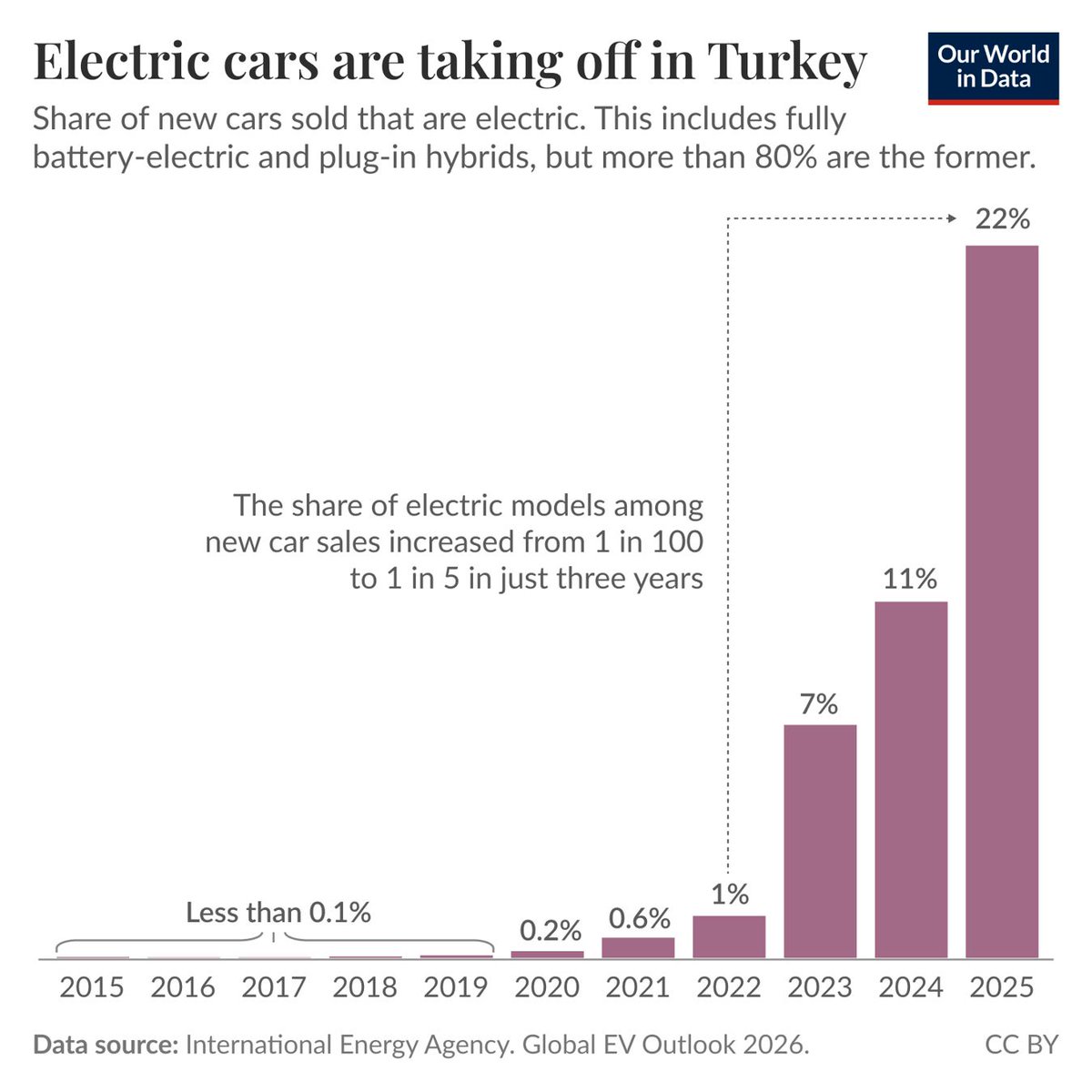
Electric car sales are growing rapidly in Turkey.
If your job was to sell cars in Turkey in 2022, selling an electric one would be an unusual day at work. Just one new car out of every 100 sales was electric.
By 2025, this had become a fairly normal day. More than one in five new cars were electric — a more than 20-fold increase in just three years. You can see this rapid takeoff in the chart.
Why did electric models become so popular? In 2023, the government introduced tax relief for electric cars, cutting the registration tax compared to petrol and diesel cars. This was timed to coincide with the launch of Turkey’s first domestic electric car manufacturer, Togg, which has quickly become the market leader. Imports of cheaper electric car models, including from China, have also made these markets more diverse and cost-competitive.
This combination of factors has made electric cars far more affordable than they were just a few years ago.
(written by @_HannahRitchie)
1’deki fikir aşırı yaygın teistler arasında da zorunlu varlığın sebep olduğu şeylerin kendisi de nasıl zorunlu olmuyor ben pek anlam veremiyorum. Olumsal olarak sebep olmuşsa o zaman bu olumsal sebep olma durumunun kendisi nereden ortaya çıkıyor.
Zorunlu varlık ve Epistemoloji Üzerine Birkaç Not:
1. Allah'ın zorunlu varlık olduğunu söylemek, O'nun var olmaması mümkün değildir demektir. Bizim gibi diğer varlıklar olumsal ya da mümkün varlıklardır. Varız ama var olmayabilirdik. Zorunlu varlık ise varlığını başka bir şeyden almaz ve yokluğu metafizik bakımdan mümkün değildir. Bu modal bir iddiadır ve Allah ezeli ve ebedi'dir demekten fazlasıdır.
2. Buradaki zorunluluk, normalde dar anlamda mantıksal zorunluluk değildir. "Allah vardır” önermesi yalnızca mantık kurallarından çıkarılan bir mantık önermesi değildir. Kastedilen daha ziyade metafizik zorunluluktur. Gerçeklik başka türlü olabilirdi ama Allah’ın hiç bulunmadığı bir gerçeklik metafizik olarak mümkün değildir. (bu mümkün dünyalar semantiğinde: "Allah'ın var olmadığı mümkün dünya yoktur" şeklinde ifade edilir.)
3. Ben dahil çağdaş teist felsefecilerin büyük çoğunluğu Allah'ın zorunlu varlık olduğunu kabul eder. Tabi buna Plantinga da dahildir. Hatta Plantinga modal mantık kullanarak belli bir genel tanımda ve tutarlılık varsayımında Allah'ın zorunlu varlık olduğunu ispatlar (bakınız Plantinga'nın modal ontolojik argümanı. Evet Plantinga Tanrı'nın varlığı ile ilgili argümanlar savunur. Hem de 2 düzine argüman! Ona fideist diyenler bilmez bunu tabi).
4. Zorunlu varlık fikri hem İslam, hem de Hristiyan düşüncede birbirinden bağımsız olarak çıkmıştır. İslam düşüncesinde bu kavramın en net ve erken formülasyonu İbn Sina'da vardır. Diğer taraftan Hristiyan düşüncede Iustinus ilk tanımı vermiş, İbn Sina'nın çağdaşı Anselmus ise ontolojik argümanında savunmuştur.
5. Allah'ın zorunlu varlık olduğu iddiası ontolojik bir iddiadır. Ama bu Allah'ın varlığı ile ilgili kimsenin inkar edemeyeceği mantıksal olarak zorunlu bir argüman ile gösterilebileceği anlamına gelmez. Argümanlar insan üretimidir ve epistemolojiktir. "Bütün çift sayılar iki asal sayının toplamı olarak yazılabilir" (Goldbah varsayımı) iddiası doğru ise mantıksal olarak zorunlu bir şekilde doğrudur. Ama bunu hala ispat edemedik.
Burada Allah'ın nasıl bir varlık olduğu ile Allah'ın var olduğunu nasıl kanıtladığımızı ayırmak gerekir. Bir kişi Allah'ın var olduğunu ve varlığının zorunlu olduğunu kabul ettiği halde, bunu kanıtlamak için öne sürülen belirli bir kozmolojik veya ontolojik argümanı başarısız bulabilir.
6. Evet İbn Sina böyle bir argüman geliştirdiğini iddia eder. Bunu savunanlar olabilir tabi. Ama çok sayıda Müslüman düşünür bu argümanı makul bulmamıştır.
Üstad Gazzali, İbn Sina’nın zorunlu–mümkün ayrımından hareket eden delilinin özellikle parçalardan bütüne geçişini sorgular. Her bir mümkün varlığın bir sebebe muhtaç olması, mümkün varlıkların toplamının da kendi dışında bir sebebe muhtaç olduğunu tek başına göstermez (benim de bir space odasında hatırlattığım gibi). Ayrıca İbn Sina başlangıçsız bir olaylar dizisini kabul edebiliyorsa, sonsuz bir sebepler dizisinin neden imkansız olduğunu ayrıca göstermeleri gerektiğini söyler. (İlginçtir kendisini Gazalici ya da kelamcı olarak niteleyen bazı dostlar bu eleştirilerin farkında değiller.)
İbn Rüşd de İbn Sina’nın delilini mevcut formuyla başarılı bulmaz. Özellikle mümkün kavramının farklı anlamlarda kullanıldığını düşünür. Mümkün bazen gerçekten var da olabilecek yok da olabilecek şey, bazen ise sadece sebebi bulunan şey anlamında kullanılmaktadır. İbn Rüşd’e göre bu anlamlar birbirine karıştırıldığında sebepler zincirinin zorunlu olarak sebepsiz bir varlıkta sona ereceği gösterilmiş olmaz.
Şehristani’nin eleştirisi ise daha radikaldir. O yalnızca delilin adımlarını değil, İbn Sina’nın Zorunlu varlık anlayışını da hedef alır. Ona göre İbni Sinacı kavramsallaştırma Allah'ın mutlak aşkınlığını yeterince koruyamaz. Allah varlık–yokluk, birlik–çokluk gibi karşıtlıkların ve insanın kavramsal kategorilerinin ötesindedir.
Buradan çıkarılacak ders belli. Bir argüman size kesin öncüllere dayanan kesin bir ispat gibi görünebilir. Ama aynı öncüllere başkası itiraz edebilir. Aslında öncüller de bu yüzden epistemik anlamda olasılıksaldır.
7. Bu teistik argümanlara özgü değildir. Ateistik argümanlar için de geçerlidir. Allah'ın var olmadığını gösteren argümanlar olduğunu, hatta bunların kesin olduğunu söyleyen ateistler olmuştur. Ama onların öncülleri de itiraza açıktır ve olasılıksaldır. Siz ben sizin olasılıksal argümanlarınız ciddiye almam çünkü bende kesin argüman var derseniz, o da size ben de sizin olasılıksal argümanlarınızı ciddiye almam çünkü bende kesin argüman var der.
8. Tanrı'nın zorunlu varlık olduğunu gösteren kanıtlar sunmak tek başına kötülük problemini çözmez. Elbette lehte ve aleyhte argümanları beraber değerlendirmek gerekir. Zaten benim savunduğum birikimsel yaklaşımın mantığı budur. Bence de Allah'ın varlığı lehinde çok ciddi argümanlar var ve bunlar ateistik argümanlara göre çok daha güçlü. Ancak bu ateistik argümanlara cevap vermek değildir. Onlara rağmen inanılabileceğini iddia etmektir. Bu iddia makuldur ama kötülük problemini çözmek değildir.
Tabi Allah'ın varlığı lehindeki argümanların ateistik argümanlardan güçlü olduğu da savunulması gereken bir pozisyondur. Bence doğrudur ve savunulabilir... Ama bunun için bu argümanlarla yüzleşmek gerekir.
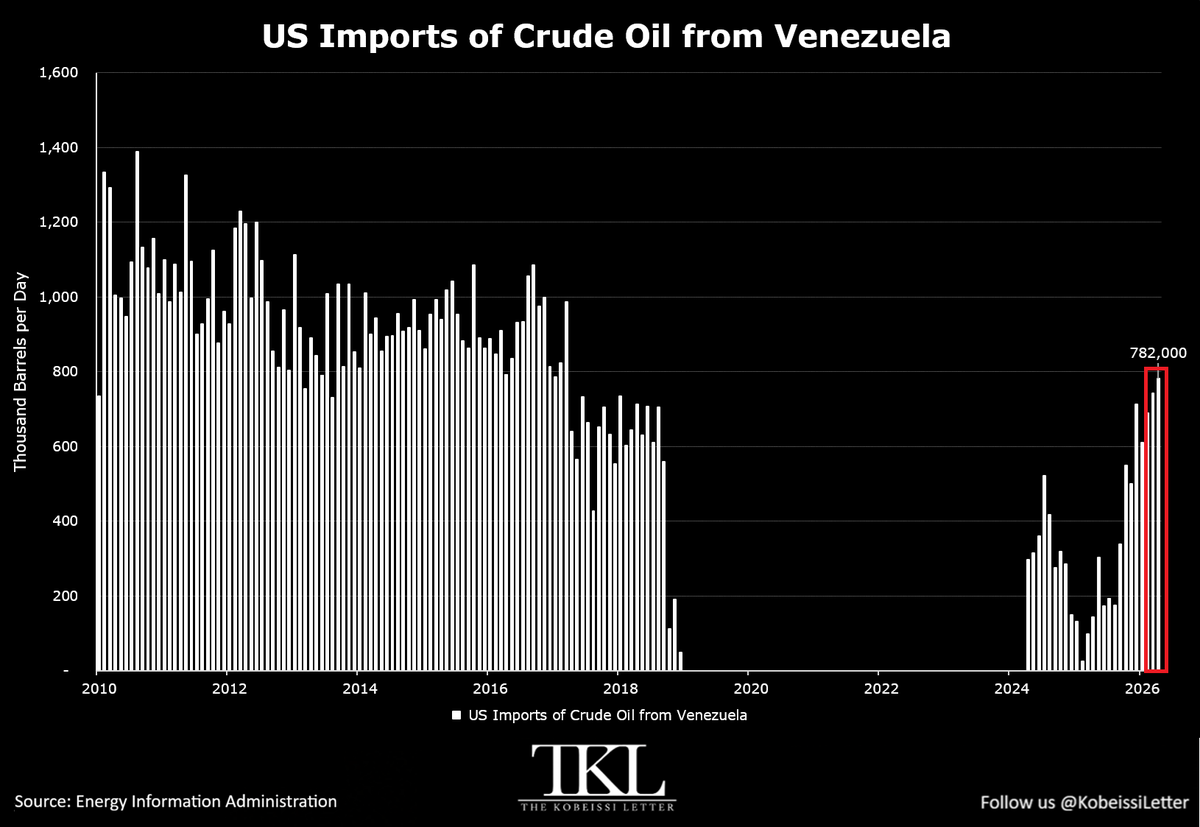
BREAKING: US imports of crude oil from Venezuela surged +183,000 barrels per day last week, to 782,000 barrels per day, the largest weekly total since August 2017.
Over the last 6 months, imports from Venezuela have surged +550,000 barrels per day, or +237%.
As a result, US imports of crude oil from Venezuela have averaged +626,000 barrels per day over the last 3 months, the largest 3-month average in 9 years.
To put this into perspective, imports were as high as 1.5 million barrels per day in 1997 and consistently averaged above 1 million barrels per day between 1995 and 2007.
The US is rapidly ramping up its consumption of Venezuelan oil.
BREAKING: US diesel prices officially rise to a record $6.20/gallon, now up +78% over the last 9 months.
This has pushed diesel prices in California to a record $8.14/gallon, with some areas seeing price approach $9.00/gallon.
The surge in prices comes as the US is officially in peak-diesel demand season with supply at historically low levels.
Inflation expectations continue to push higher as a result.