1/n Lessons from the book Super Forecasting by Phillip Tetlock a top researcher from Wharton School. This book was recommended by @GiganticRebirth one of the best traders/thinkers in #CT.
https://t.co/z0Rhx9YsWh
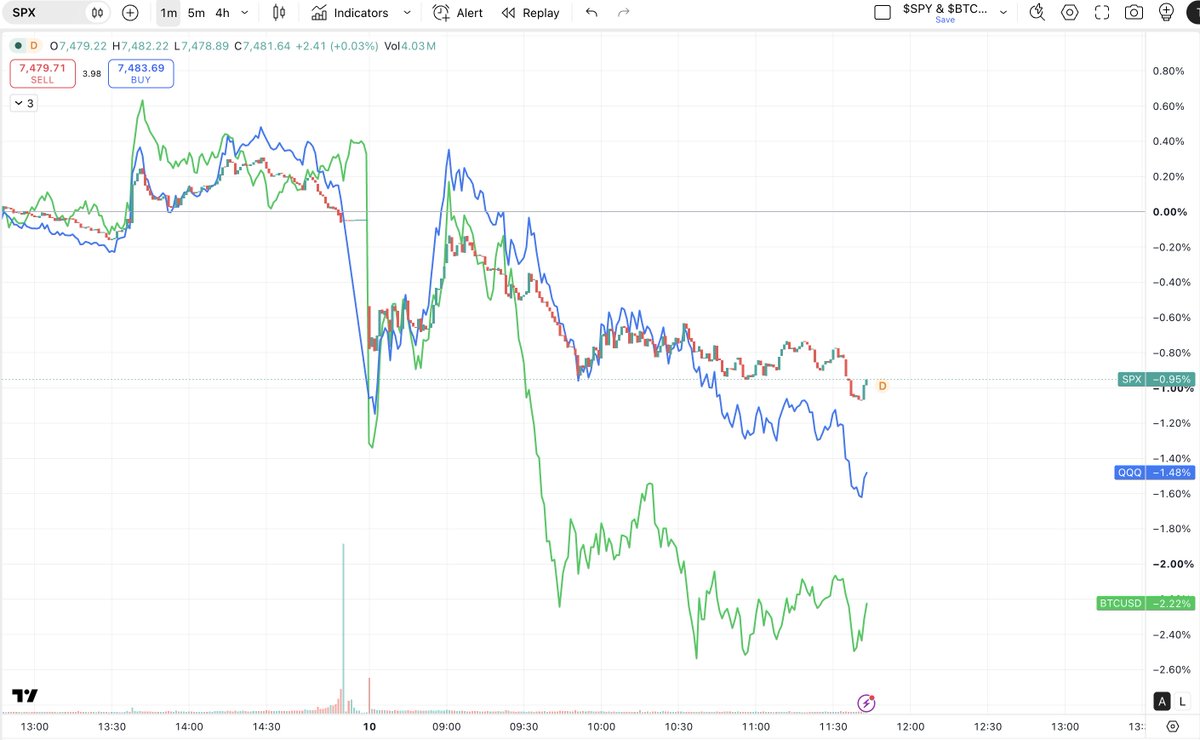
bitcoin:native is following $SPY
If $SPY does not bottoms then bitcoin:native will not either.
It is naive to try to predict bitcoin:native in isolation.
@Aliatcx Both are true,
They are definitely trying to make payouts less likely imposing consistently rules.
Yet, consistency is useful in trading.
Come on, their objetive is profits.
I just passed two @breakoutprop evaluations.
I bought four 10k evals and traded aggressively...
by aggressively I mean aiming to pass each in 3 trades.
I passed 2 and got liquidated in two.
This approach is better than buying a large one imo.
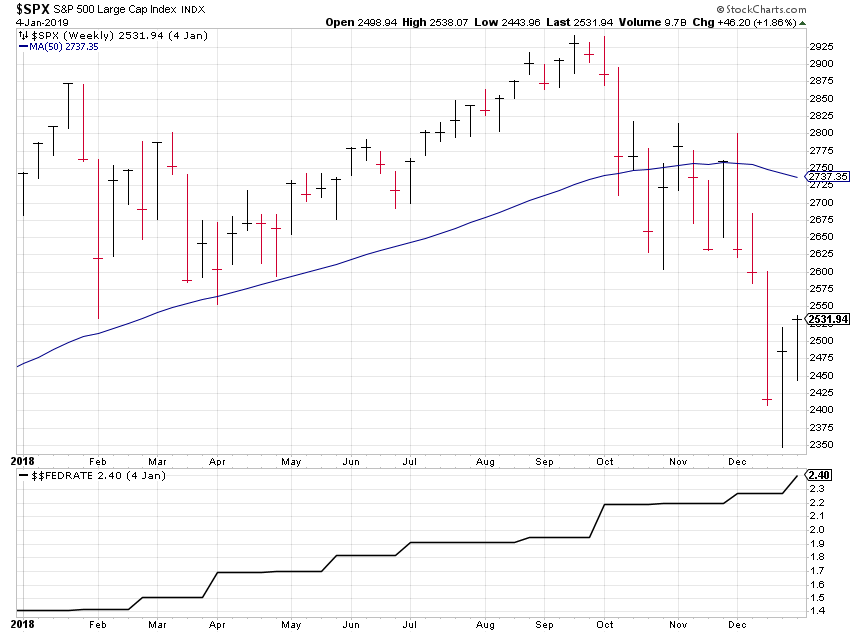
The fourth quarter, particularly November and December, is historically one of the strongest periods of the year for stocks. But 2018 is a good reminder that seasonality doesn't always win out, especially when the Fed is tightening and the market is already showing signs of deterioration.
In 2018, the Fed was already raising interest rates when the market started to come under pressure. The S&P 500 broke below its 50-day moving average and sold off hard in October. It then snapped back roughly 8%, which at the time looked like the correction might be running its course, particularly with the market heading into the seasonally strong November-December period.
But the rally failed.
The S&P rolled over and fell another roughly 16% before finally bottoming on Christmas Eve. From the September high to the December low, the decline was nearly 20%.
The point is not that 2018 is going to repeat itself. It's that you can't assume the market is going higher simply because you're entering a historically strong seasonal period. When the Fed is tightening, rates are rising and market conditions are deteriorating, those forces can overwhelm seasonality.
We always respect seasonal tendencies, but we don't trade the calendar. We trade the market in front of us. Price and volume, breadth, leadership, interest rates and, most importantly, the action of individual stocks will tell us whether the market is actually improving.
2018 is a good example of why you have to keep an open mind. Even during one of the strongest seasonal periods of the year, the market can still go down.
Good Traders think in probabilities instead of absolutes.
Gambling based thinking:
• "this is such a good support level, price has to bounce here."
Probability based thinking:
• "I've seen this pattern before, it bounced 64%~ of the time, so I'll bet on it repeating."
@dc_capitalfx Thanks for your answer. I totally agree on instant funding accounts.
However, with a decent edge (not easy to find at all!) I think 1-step evals make more sense than 2-step ones.
Again, consistent on having a decent edge.
These past days bitcoin:native has been mirroring $SPY and $QQQ
Under these conditions bitcoin:native key levels (support and resistance) tend to not work as well.
This means 2 things:
i. Trading bitcoin:native is the same as trading $SPY
ii. bitcoin:native will show weakness until equities recover some ground.
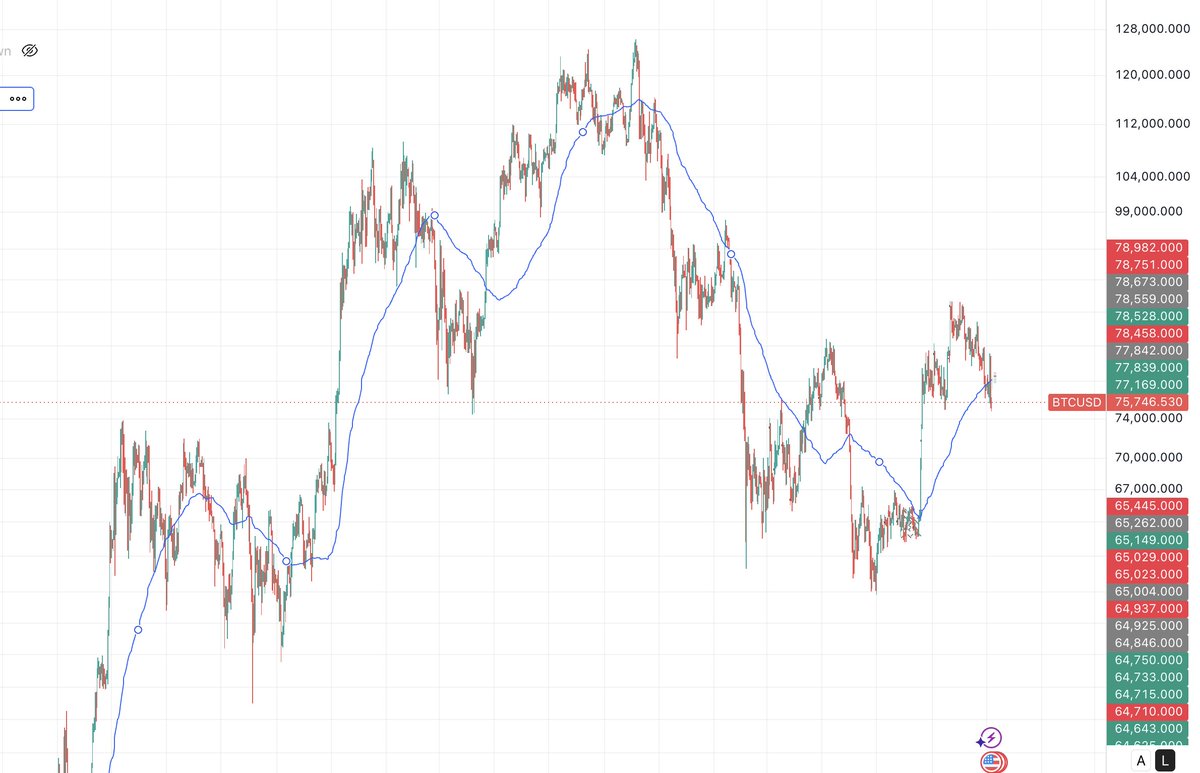
I like to use the 90 day moving average to gauge the health of the market.
bitcoin:native spot price has been below it for some days now...
I would not be surprised if we see a larger retracement.