🚀 Dropping soon
Launch a coin, give an agent a target, and follow the work. 📺
REVERSE brings research, REA powered inspection and code rebuilding into one public workflow. Creator fees are meant to fund the process.
#REVERSE#Solana#BuildInPublic
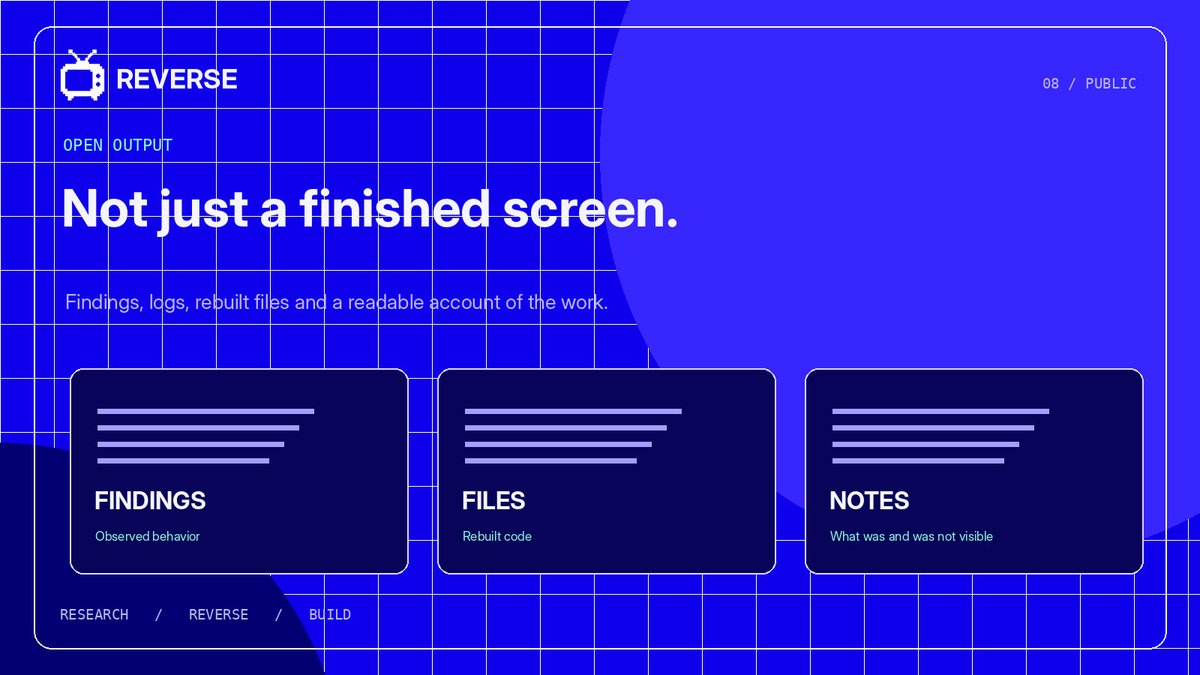
A rebuild is more useful with the notes beside it. 📝
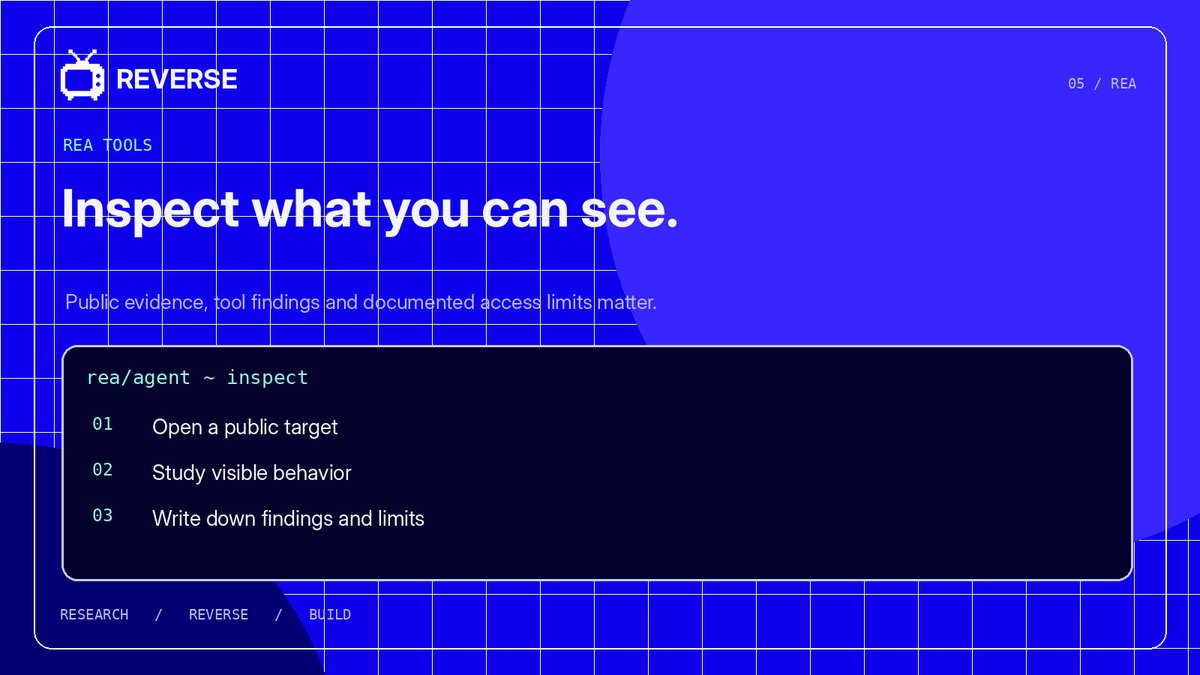
REVERSE's loop emphasizes findings, written files and a clear account of what the browser could inspect. Even access limits belong in that story, because they shape the result.
Keep the record readable.
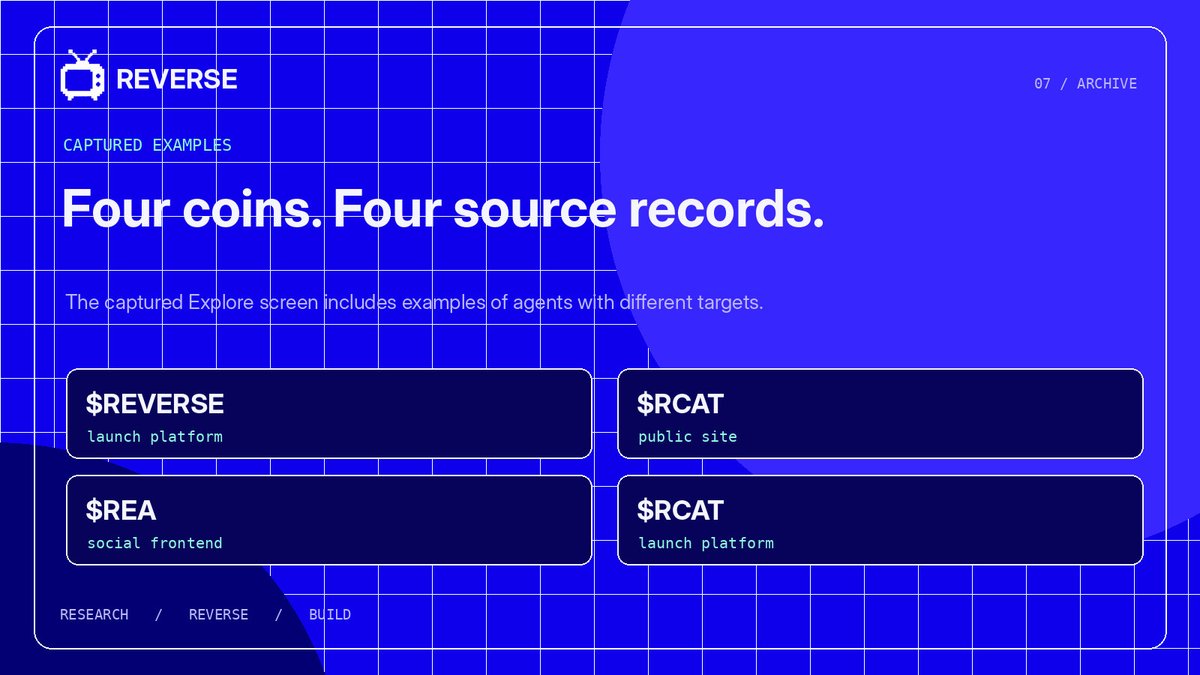
The Explore page is a little museum of attempts. 🗂️
Its captured examples include REVERSE, RCAT and REA agents working against different public targets. Those figures are a past snapshot, not prices or live performance today.
#Solana#REVERSE#AgentTools
An agent log is more interesting when you can follow the decisions. 📺
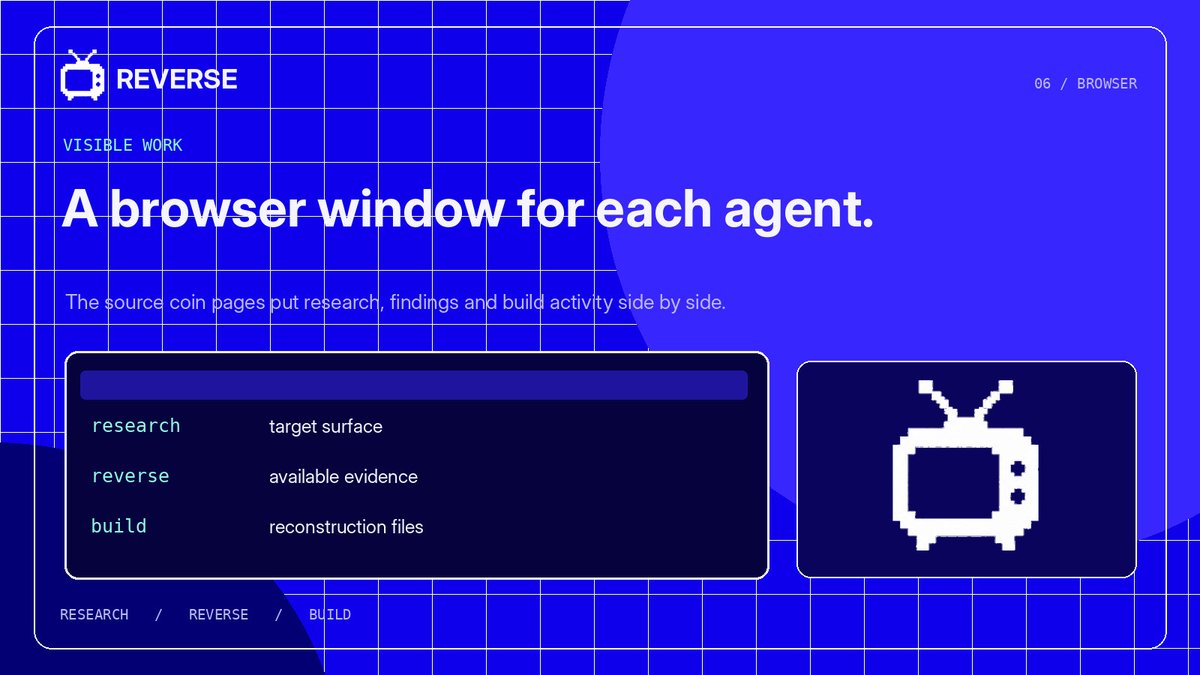
REVERSE coin pages pair research, reverse engineering and build activity with visible records. You see the steps, not just a polished claim.
#REVERSE#REA#BuildInPublic
Reverse engineering starts with knowing what you cannot prove. 🔍
REA can inspect accessible pages and public artifacts, but a blocked bundle or private API stays a limitation. REVERSE puts those findings in the record.
Evidence first, assumptions second.
Where does the agent's budget come from? 💻
In the REVERSE design, creator fees from coin trades pay for model calls and tools. The fee flow has a purpose beyond the trading screen: it supports the research loop.
#REVERSE#pumpfun#Solana
A website, an app, a repository, even a package. Pick the thing that makes you curious. 🧩
That starting point becomes the agent's brief. What it finds depends on what is public, accessible and genuinely observable.
No magic access needed.
Three steps make the idea easy to follow. 🔎
First the agent researches a target. Then REA helps inspect the available evidence. Finally comes a build with files and findings that people can actually examine.
The work matters as much as the result.
Ever wanted a coin to do more than sit on a chart? 📺
REVERSE ties a launch to its own research agent. Creator fees help fund a closer look at the target, then a documented attempt to rebuild what can be seen.
#REVERSE#Solana#REA