I’ve been harping on the disciplines and tools for using AI lately. I find them to be a very effective approach. But I don’t want to leave you with the impression that a few simple disciplines and tools is sufficient.
As the AI’s build software, you — the software engineer — need to have a good mental model of what the AI is doing. You need to apply engineering insight to correct it when it takes a path you don’t like. You have to be an active manager in the design and architecture of the system. You have to be able to “see within“ without resorting to exhaustive code reviews. You have to form suspicions about what the AI is doing, and you have to probe and experiment to verify your suspicions.
@PreslavMihaylov@ThePrimeagen I disagree. I believe those who want to learn they will learn and the others that they don't want they will just copy the code from whatever resource, doesn't matter if it is AI, stackoverflow or whatever
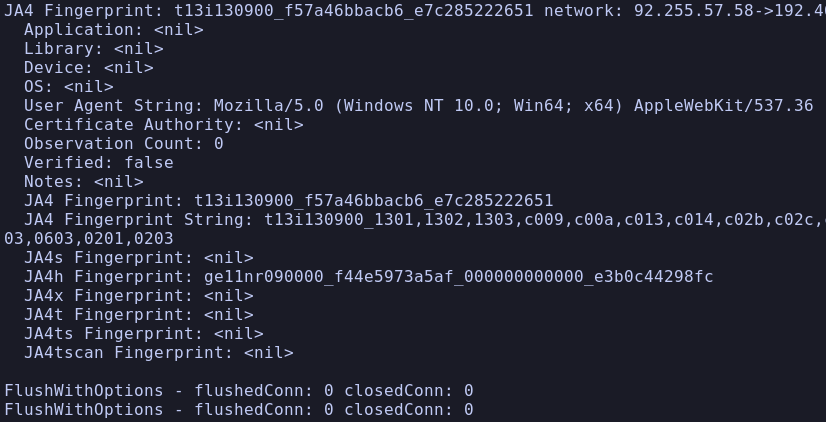
Hello all, I want to share that I’ve completed my JA4 fingerprinting project!
This tool extracts TLS Client/Server Hello fields and generates JA4 fingerprints, which you can now use alongside a JA4DB to identify packets based on this database.
https://t.co/AYuFjqwC9Q
#GoLang #CyberSecurity #JA4
@HSVSphere Well I don't know rust but the "task.await" seems that explicitly waits for each task one at a time. So even if by default Tokio is multithreaded, this code is not using parallelism, probably you need a "join"
@HSVSphere So you are saying that js is using by default multiple os threads? And that in these benchmarks you have used a thread pool to offload tasks for rust? I would like to see the code from your benchmarks