HELP NEEDED: Does anyone out there know how to run in R, Item Response Theory (IRT) models for reaction time on computerized performance tasks (e.g. N-back)? Asking for a friend... #measurementmatters
@bmwiernik@JohnSakaluk Nothing in particular. Long story made short, I’m seeing if I can use IRT to help select variables to use in a taxometric analysis. Some variables are RT-based and don’t easily conform to traditional IRT as far as I can tell. IRT is a means to an end.
@ianagutierrez From what I understand, RT isn’t exactly polytomous as most of the values are not integers due to the computerized recording. Thanks for the offer though!
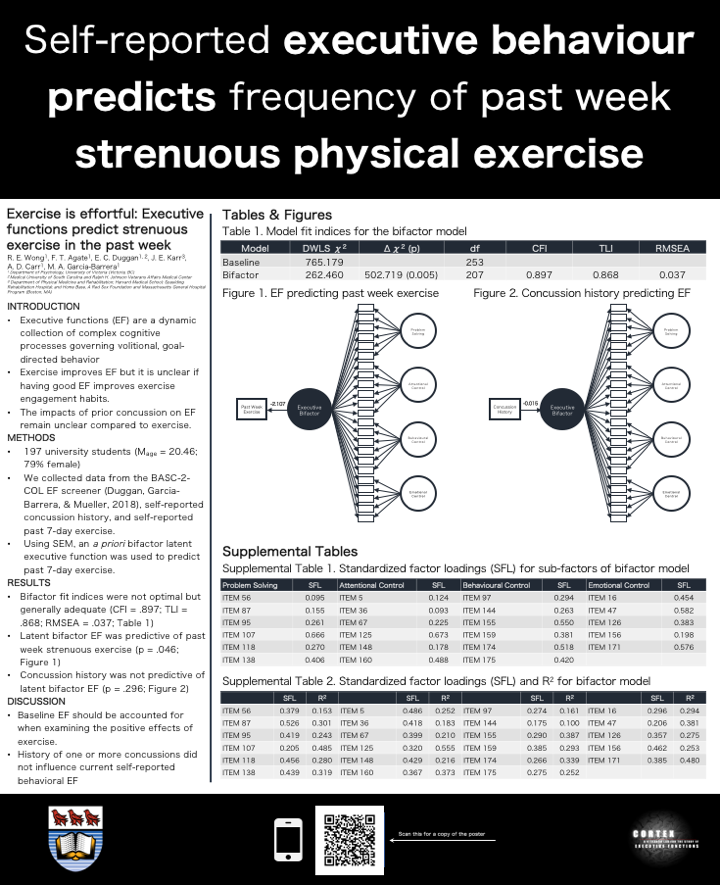
Had fun last weekend at #SNS2019 in Seattle using the #betterposter format inspired by @mikemorrison. Received a lot of compliments on the design and it was considerably easier to make! 10/10 would do again.
@JohnSakaluk@juliafstrand The best article for that is: Toplak, M. E., West, R. F., & Stanovich, K. E. (2013). Practitioner review: Do performance‐based measures and ratings of executive function assess the same construct?. Journal of Child Psychology and Psychiatry, 54(2), 131-143.
Someone get this man a megaphone and a box to stand on! Can’t wait to see how this idea evolves over time. Until then, I know how I’m making my next poster.
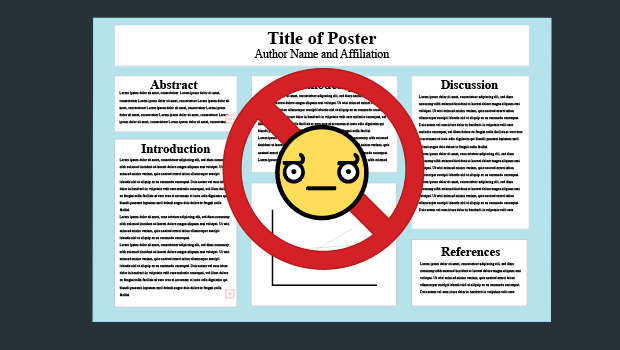
Let's fix academic posters! Prepping a poster for #SIOP19 and sick of the old "wall-of-text" poster design? Watch this cartoon to see a new, faster approach to designing research posters. Includes templates. #betterposter
https://t.co/wyXhiP5CKl
Been salivating over the pre-print of this review for a while now. An important step in improving research in clinical psychology and by extension, outcomes for those who access our services.
Dear Clinical/Replicability/#clinicalOSlist friends, stay awhile and listen about our forthcoming review of the evidential value for lit. of APA Div.12 Empirically Supported Treatments (ESTs), with colleagues @williamspsych, @kilshaw_r, and Rhyner https://t.co/GBepltXd9o 1/16