✨New: Interested in studying thermal transport in structurally disordered materials? Please check out our new featured article on how the rotational (dis)order of the oxygen molecules in NaO2 impacts thermal transport: https://t.co/4QQkpip1Ap
#ThermalTransport#LatticeDynamics
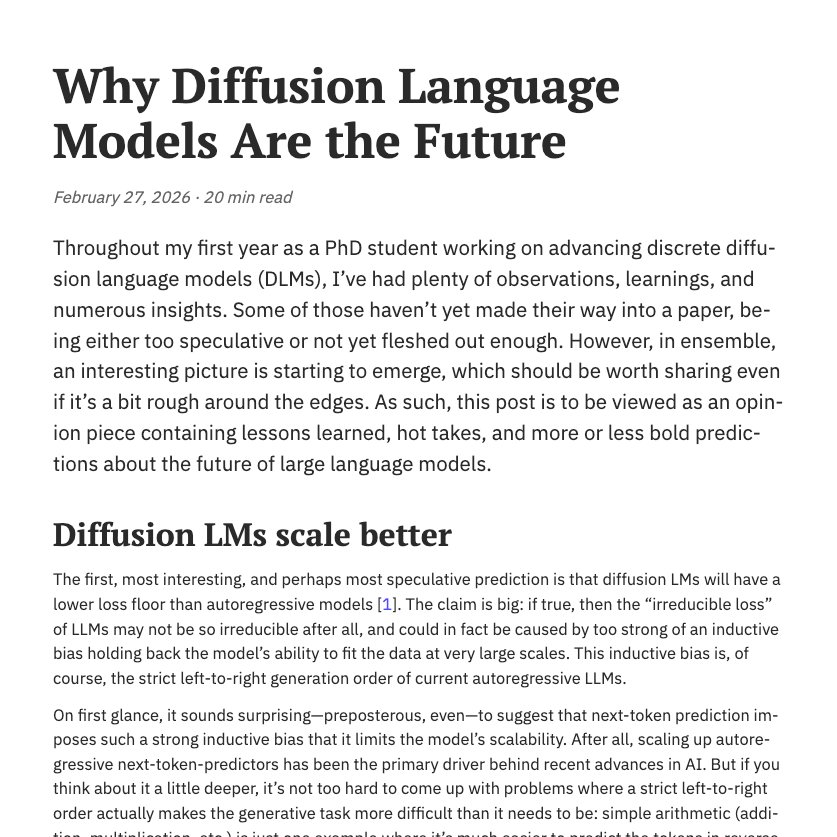
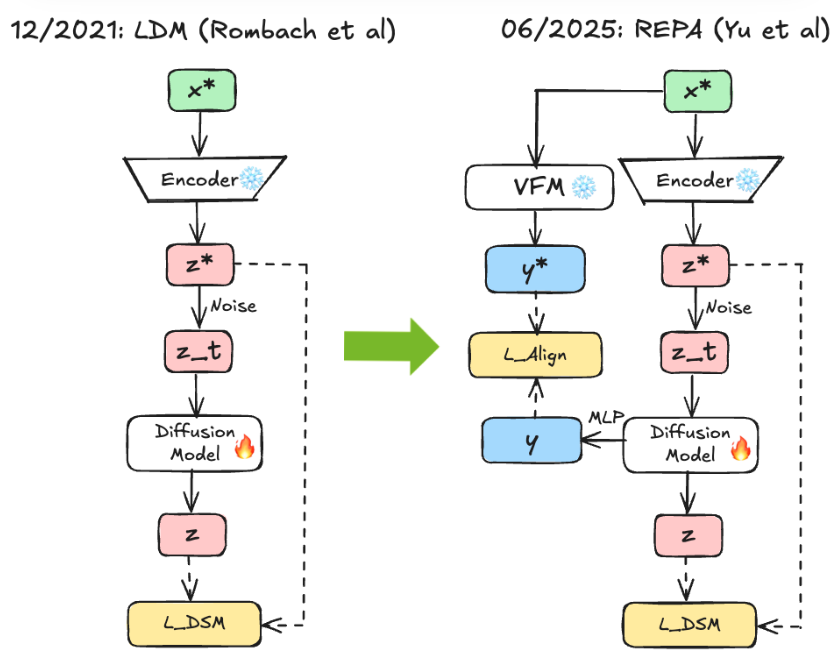
Too many REPA / RAE / representation alignment papers lately?
I was lost too, so I wrote a blog post that organizes the space into phases and zooms in on what actually matters for general/molecular ML.
Curious what folks think - link below!
🔗 Blog: https://t.co/6aJf8DCWTa
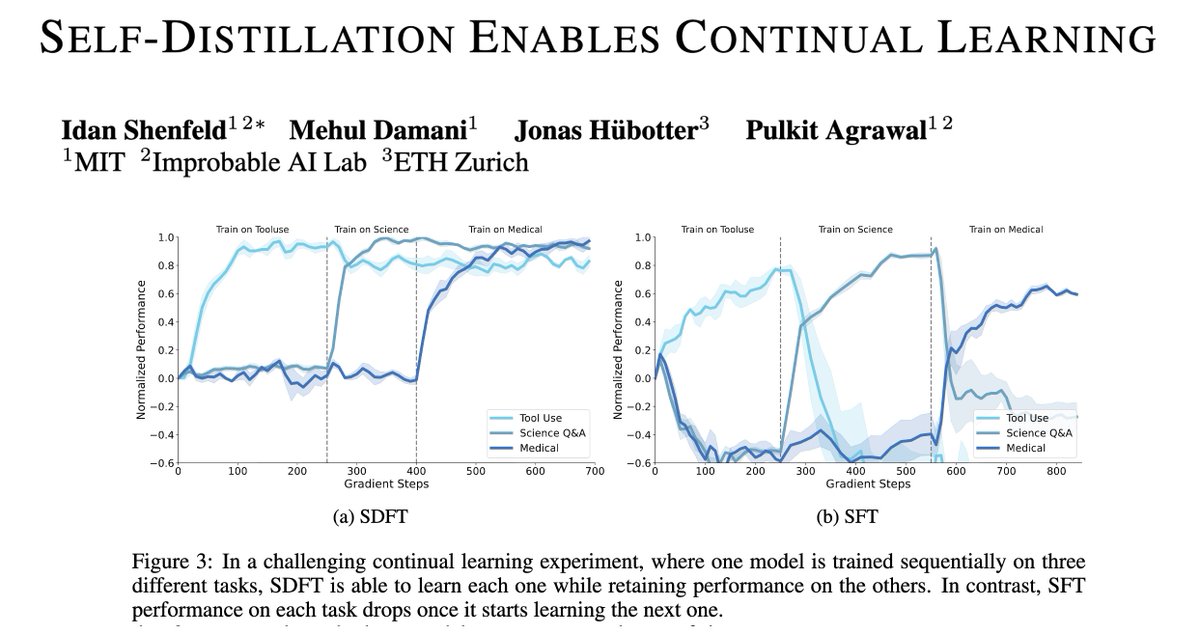
People keep saying 2026 will be the year of continual learning.
But there are still major technical challenges to making it a reality.
Today we take the next step towards that goal — a new on-policy learning algorithm, suitable for continual learning!
(1/n)
"Equivariance matters even more at larger scales" ~ https://t.co/FDJe7kRLwy
All the more reason we need scalable architectures with symmetry awareness. I know this is an obvious ask but I'm still confident that scaling and inductive bias need not be at odds.
This paper (alongside https://t.co/limCgeyhak) is convincing evidence that believing "equivariance is dead/not necessary" and "scaling is all you need" might be myopic (ofc, no one has made this *strong* claim but it still seems to be an existing "community myth" of sorts)
Stay tuned to this space – we're dropping something cool on this topic veryyy soon ;)
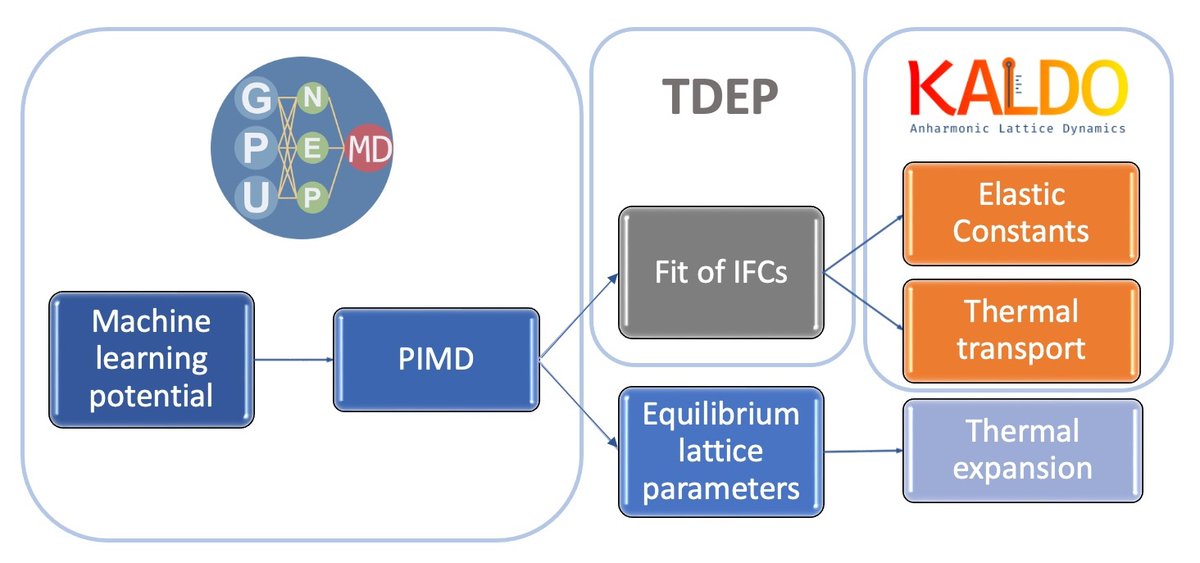
We have written a tutorial manuscript about using GPUMD, TDEP, and kALDo together to get accurate temperature-dependent thermal conductivity and elastic properties. Great work by Dylan Folkner (first paper!)
@ZNanotheory@flokno_phys@GiuseppeQuantum@Nanotheory1
📢Mingda Li and colleagues propose a virtual node graph neural network to enable the prediction of materials properties with variable output dimension. @MITEngineering@ScienceMIT@ChemistryMIT@MITEECS@mit_nse@ORNL https://t.co/geU9DyDnPY
➡️https://t.co/9UYSduwj2U
Super excited to finally release our "Hitchhiker's Guide to Geometric GNNs for 3D Atomic Systems" !🤗
Link: https://t.co/8UuxRJ8tJE
Written with @chaitjo@SimMat20@vict0rsch Santiago Miret @frank8m@TacoCohen Pietro Lio, Yoshua Bengio @mmbronstein 😍
See thread below 👇
(1/8)
Q: How to alter your training set selection if you only care about 1 prediction? A: Bias by similarity and train on the fly (basically kNN on steroids 🤩). Reaching chemical accuracy for a given query in QM9 this way implies 2 orders of magnitude less data than random training set selection. We also show how to derive density and dimensionality in chemical compound space. Very proud of our similarity based #machinelearning work with @Dom1Lemm and @ferchault #COMPCHEM
Announcing ICLR 2023 workshop on ML4Materials: from molecules to materials.
We hope to bring together the ML and materials science communities to tackle unique challenges in modeling materials, building on the success of modeling molecules and proteins.
https://t.co/zPKHqOBWEz