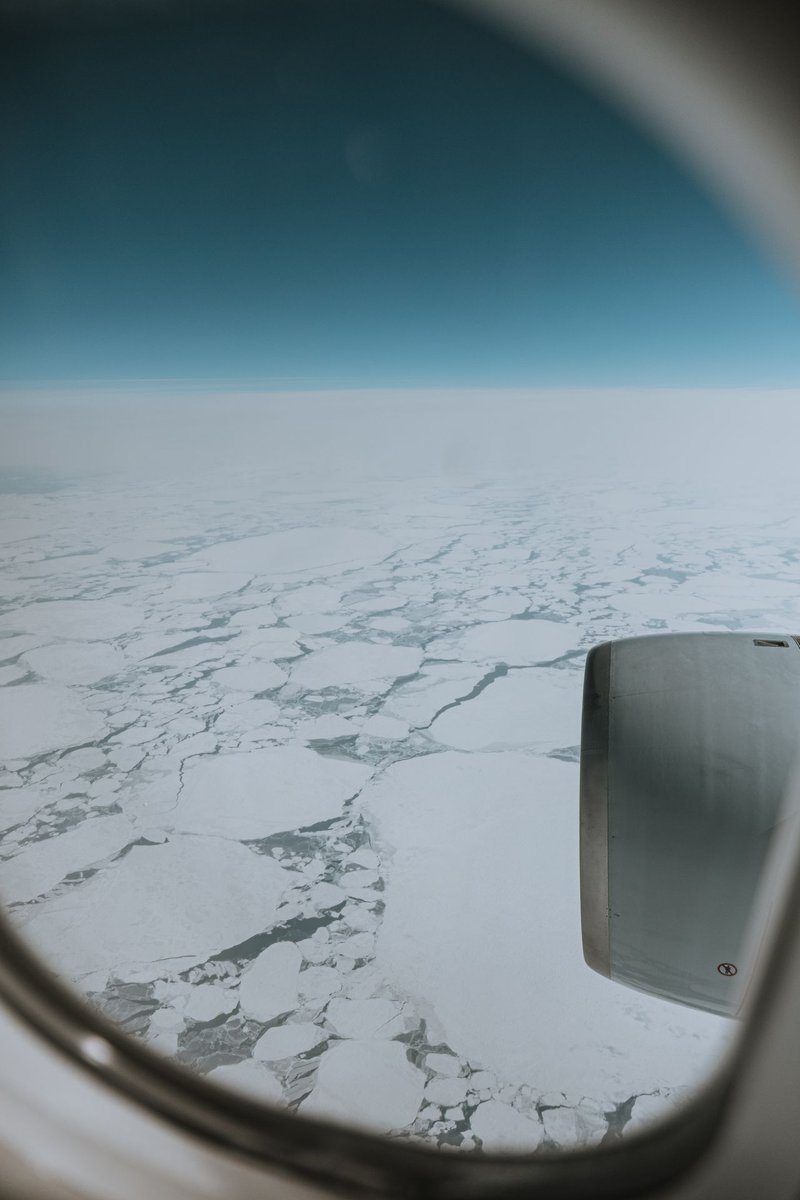
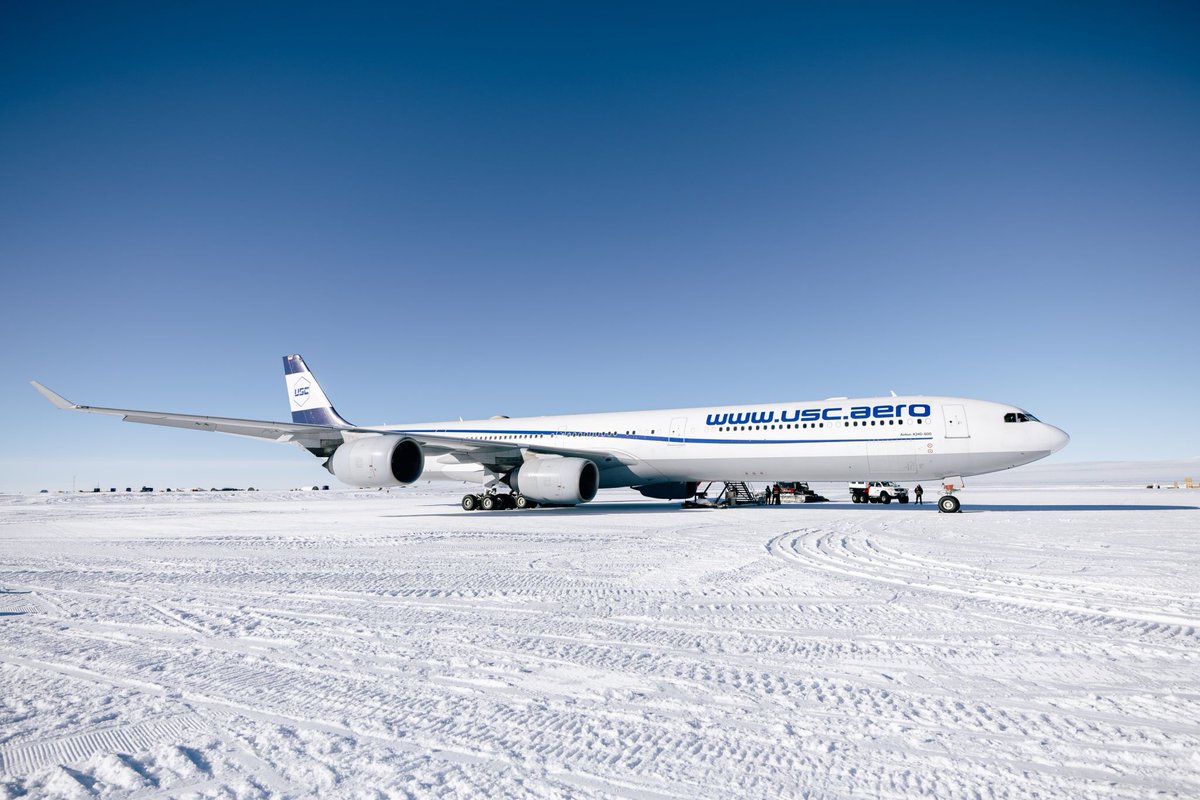
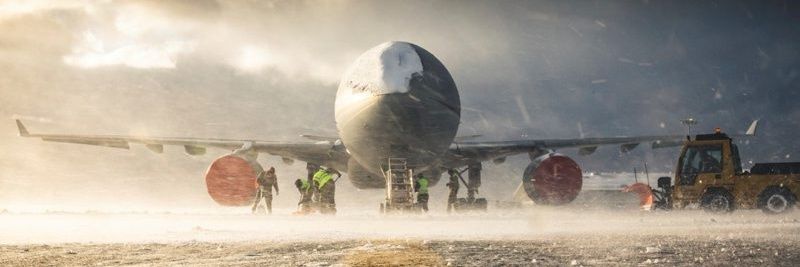
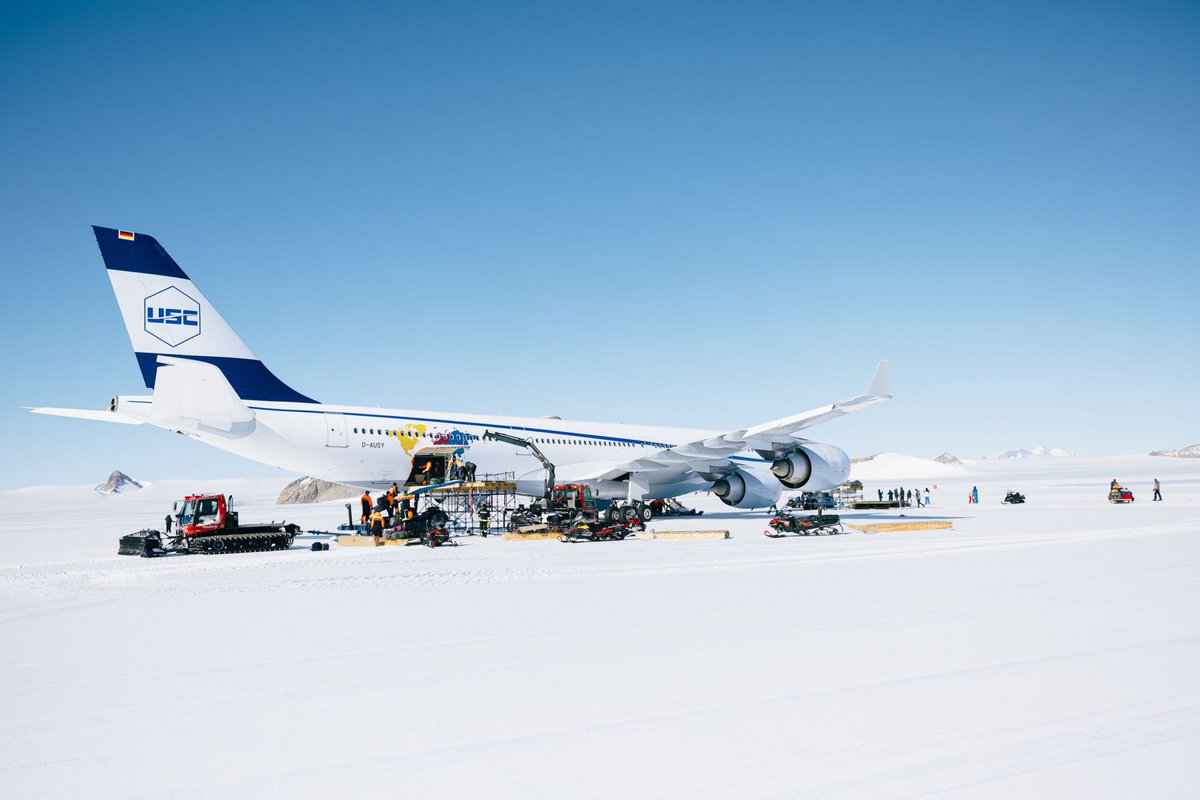
✈️ USC Airlines pose pour la première fois un Airbus A340-600 en Antarctique
La compagnie allemande USC Airlines annonce avoir réalisé son premier atterrissage sur la piste glacée de Wolf’s Fang, en Antarctique, avec un Airbus A340-600.
Cette opération marque le début d’un partenariat de cinq ans avec White Desert, spécialiste des expéditions haut de gamme sur le continent austral.
USC annonce parallèlement l’arrivée d’un A340-600 supplémentaire dans sa flotte, renforçant ses capacités long-courriers.
❄️ L’atterrissage sur une piste de glace constitue une opération particulièrement exigeante, nécessitant une préparation spécifique et une étroite coordination entre équipages et équipes au sol.
Avec cette première mission, USC rejoint le cercle restreint des opérateurs aériens desservant l’Antarctique.
#USCAirlines #AirbusA340 #Antarctica #Aviatio
191 municipios salmantinos menores de 2.000 habitantes cuentan ya con un desfibrilador externo para ayudar a salvar vidas | Noticias a Tiempo Peñaranda https://t.co/aIze4l8gjj
@dipusalamanca@jcyl
Un Chinook haciendo cosas de Chinook.
Vídeo de ayer, con un CH-47F en Uceda en el ejercicio Long Precision liderado por la CRAV, en el que estoy estos días y del que en breve contaré más!
Ese sonido y esa silueta son… inigualables. Un helicóptero único en el mundo.
Pull early, pull often?!
The Cirrus Airframe Parachute System was developed with BRS. This is the SR-series setup; details vary by model and generation, so the airplane's current POH is the reference, not this post.
The red T-handle sits in the ceiling between the front seats. Cover off, both hands, steady straight-down pull until it's fully extended. Cirrus says about 45 pounds of force. The cable fires a solid-propellant rocket aft of the baggage bay, which yanks a deployment bag clear so the canopy only starts inflating once the lines are taut.
A slider keeps the chute reefed at first so it doesn't slam open at speed. As it fills, the forward harness straps pull through the fuselage skin. After a timed delay, pyrotechnic cutters sever a snub line so the aft harness extends, and the airplane settles into a roughly level hang.
Cirrus quotes a descent rate below 1,700 fpm, with touchdown roughly equal to a 13-foot drop. The gear, seats, and airframe are built to absorb it, but it's no gentle-landing guarantee.
There's no fixed minimum deployment altitude in the POH, but that doesn't mean it works right off the deck. The older SR22 POH shows under 400 feet of altitude loss from level flight and 920 feet from a one-turn spin; the G5 guide lists 561 and 1,081 feet. Max demonstrated deployment speed is 133 to 140 KIAS depending on the version. Cirrus uses 2,000 feet AGL as a decision altitude, but if CAPS is the only survivable option, don't delay the pull.
Early on, Cirrus pilots died without pulling in emergencies where a timely deployment might have saved them. Critics called it a marketing gimmick that made people take more risk, and plenty of pilots felt they should keep trying to save the airplane. And yes, a pull can total it, though some have been repaired and flown again.
COPA and Cirrus changed the culture with "pull early, pull often," approach training, and celebrating saves instead of second-guessing them. AOPA reported fatal Cirrus accidents falling from 16 in 2011 to three in 2014. COPA now counts 305 survivors across 152 CAPS saves.
Airplanes are replaceable. People aren't. Would you pull, or keep flying it? https://t.co/P1Dl2jhqAD
Esto ocurría un 1 de Marzo 2009 en el estadio Vicente Calderón donde el @Atleti ganó 4-3 al @FCBarcelona con goles del Kun Agüero y Diego Forlan, ambos por partida doble ⚽⚽ ❤️🤍❤️