Postoperative delirium after major non-cardiac surgery was linked to greater 1-year functional disability, twice the odds of institutionalisation, and 16.7% vs 3.1% mortality, showing its impact extends far beyond hospital discharge.
@rodrigopoves
🔗https://t.co/pnskccH2pw
Quizás no recuerdes nuestra cara. Pero estuvimos ahí.
Mientras tú no recordabas nada, nosotros seguíamos atentos a todo.
❤️ Este 16 de octubre celebramos a quienes hacen del cuidado una vocación, incluso cuando nadie los ve.
#DíaMundialDeLaAnestesiología
#PediátricaSEDAR 📚
¿Qué medidas utilizas en las unidades de atención postanestesica pediátrica para evaluar la preparación del alta y la calidad de la recuperación temprana?
📖 Más información en esta revisión:
https://t.co/ib7ssKrrA1
#NeurocienciasSEDAR 🧠
🧬 11º Foro de Debate: manejo del paciente neurocrítico con patología mitocondrial
🗓️ 21 de octubre | 17:00h | Zoom
🌎 A propósito de pacientes con ascendencia materna venezolana. ¡No te lo pierdas!
💉Awake tracheal intubation: the drug is not the technique
Awake tracheal intubation (ATI) remains a gold standard for the anticipated severely difficult airway, particularly when difficulty with both intubation and ventilation or oxygenation is expected. Yet it remains underused, partly because of limited training, perceived complexity and concerns about patient discomfort.
A 2026 review by Paternò and colleagues provides an important reminder: successful ATI is not achieved by simply choosing the “best” sedative.
More than 30 sedation regimens have been described, but no single regimen has demonstrated clear superiority. The objective is not deep sedation. It is a cooperative patient who continues to breathe spontaneously while the airway is secured.
This changes how we should think about pharmacology.
Topicalization comes first.
Sedation cannot compensate for an inadequately anesthetized airway. Lidocaine remains the principal local anesthetic, with the review recommending a maximum of 9 mg/kg lean body weight, accounting for every route and preparation used.
Dexmedetomidine probably has the most complete single-agent profile. It combines anxiolysis, sedation, some amnesia, antisialagogue and antitussive effects with relatively little respiratory depression. Bradycardia and hemodynamic effects, however, remain important.
Remifentanil offers excellent titratability, analgesia and cough suppression, particularly with target-controlled infusion, but respiratory depression, bradycardia, hypotension and even chest-wall rigidity remain dose-dependent hazards.
Remimazolam is particularly interesting. Its rapid esterase metabolism, short context-sensitive half-life and reversibility with flumazenil make it an attractive emerging option, although the evidence base is still developing.
Perhaps the most clinically important message is that the safest pharmacological strategy may be less about the molecule and more about titration.
Oversedation can convert an awake airway strategy into exactly the situation ATI was intended to prevent: airway collapse, apnea, loss of spontaneous ventilation and ultimately loss of the airway.
Combination regimens may reduce individual drug doses through pharmacological synergy. Target-controlled infusion, appropriate monitoring, clear role allocation and having a separate clinician manage sedation may therefore matter more than declaring one sedative universally superior.
Reference 📚
Paternò DS, La Via L, Lo Giudice EC, Sorbello M. 2026. Pharmacological approach to awake tracheal intubation. Current Opinion in Anaesthesiology, 39:461–468.
https://t.co/qs3We0G1UC
#AirwayManagement #AwakeIntubation #DifficultAirway #Anesthesiology #CriticalCare #EmergencyMedicine #Dexmedetomidine #Remifentanil #Remimazolam #PatientSafety
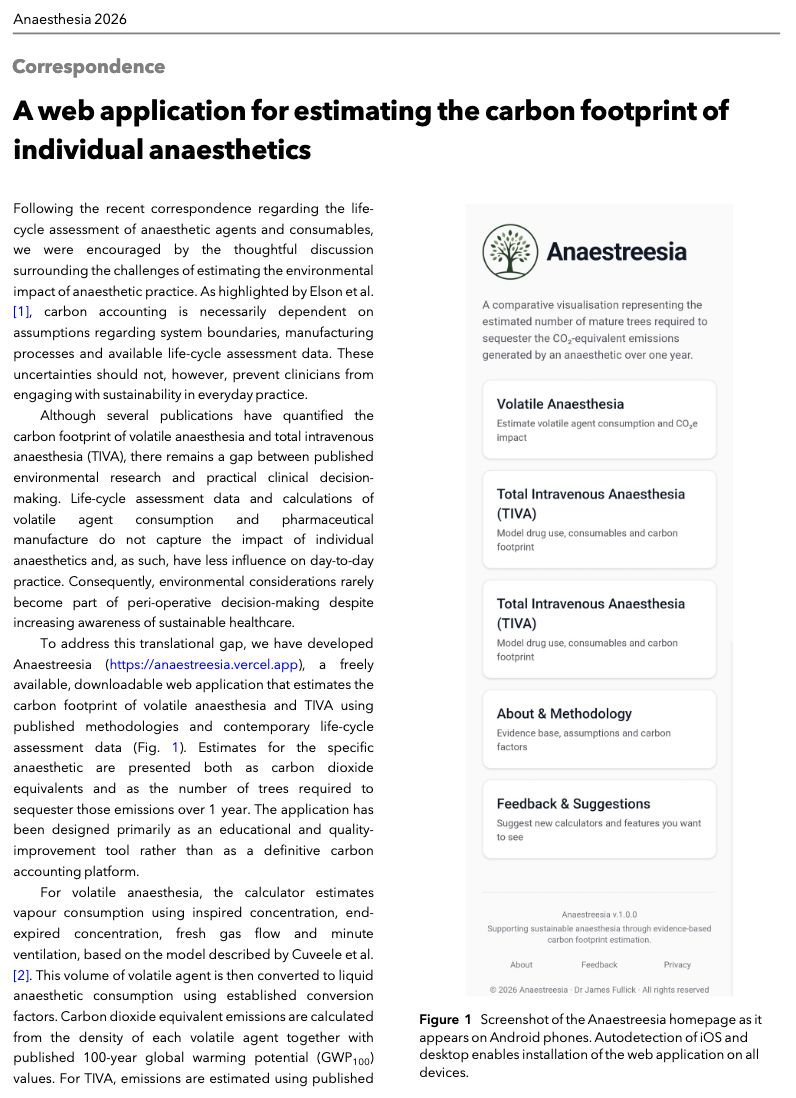
Have you heard of Anaestreesia?
It's a freely available, downloadable web application that estimates the carbon footprint of volatile anaesthesia and TIVA using published methodologies and contemporary life-cycle assessment data.
https://t.co/YufXud3Wbt
#anaesthesia#climate #MedTwitter #MedX
https://t.co/hXGYISbZ5W
Sugammadex vs. neostigmine: the train-of-four counts too
"The appropriate clinical response to these data is therefore not ‘to switch to sugammadex’ but rather ‘to monitor quantitatively and choose the antagonist drug and dose accordingly’."
#anaesthesia#MedTwitter#MedX
https://t.co/3iDrHFFLB8
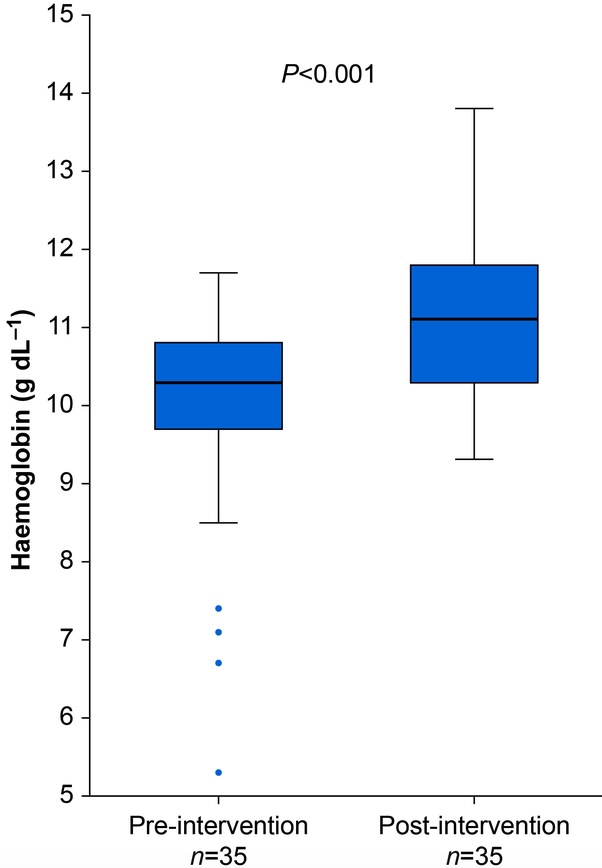
#Anaemia correction programme in #children presenting for surgery by Meyer et al. #Oral iron therapy led to an increase in #haemoglobin of 1g/dl, with high adherence, good follow-up and minimal side effects.
https://t.co/JXs6OOTsVb
Can we safely recycle #blood during #liver#transplantation?
In this study of patients undergoing liver transplantation for HCC, intraoperative blood salvage was not associated with increased recurrence or worse overall survival. 🩸
https://t.co/ltfDh5KiqE
An @_Anesthesiology “Clinical Focus Review” summarizes diagnosis and treatment of vasospasm and delayed cerebral ischemia after aneurysmal subarachnoid hemorrhage, emphasizing endovascular therapy and anesthetic management.
Learn more: https://t.co/se6sIc1tLQ
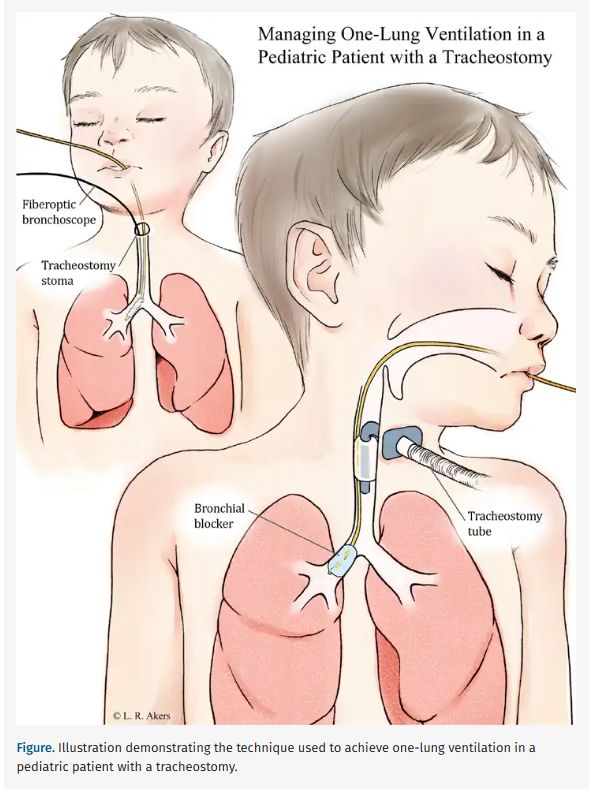
One lung. One tracheostomy. One big airway challenge.
How do you achieve lung isolation in a ventilator-dependent child with a tracheostomy? This case offers a novel approach to pediatric OLV. 🫁👶
#PedsAnes#OneLungVentilation#Airway#ThoracicAnesthesia#Anesthesiology
https://t.co/55ZieOe1Gf
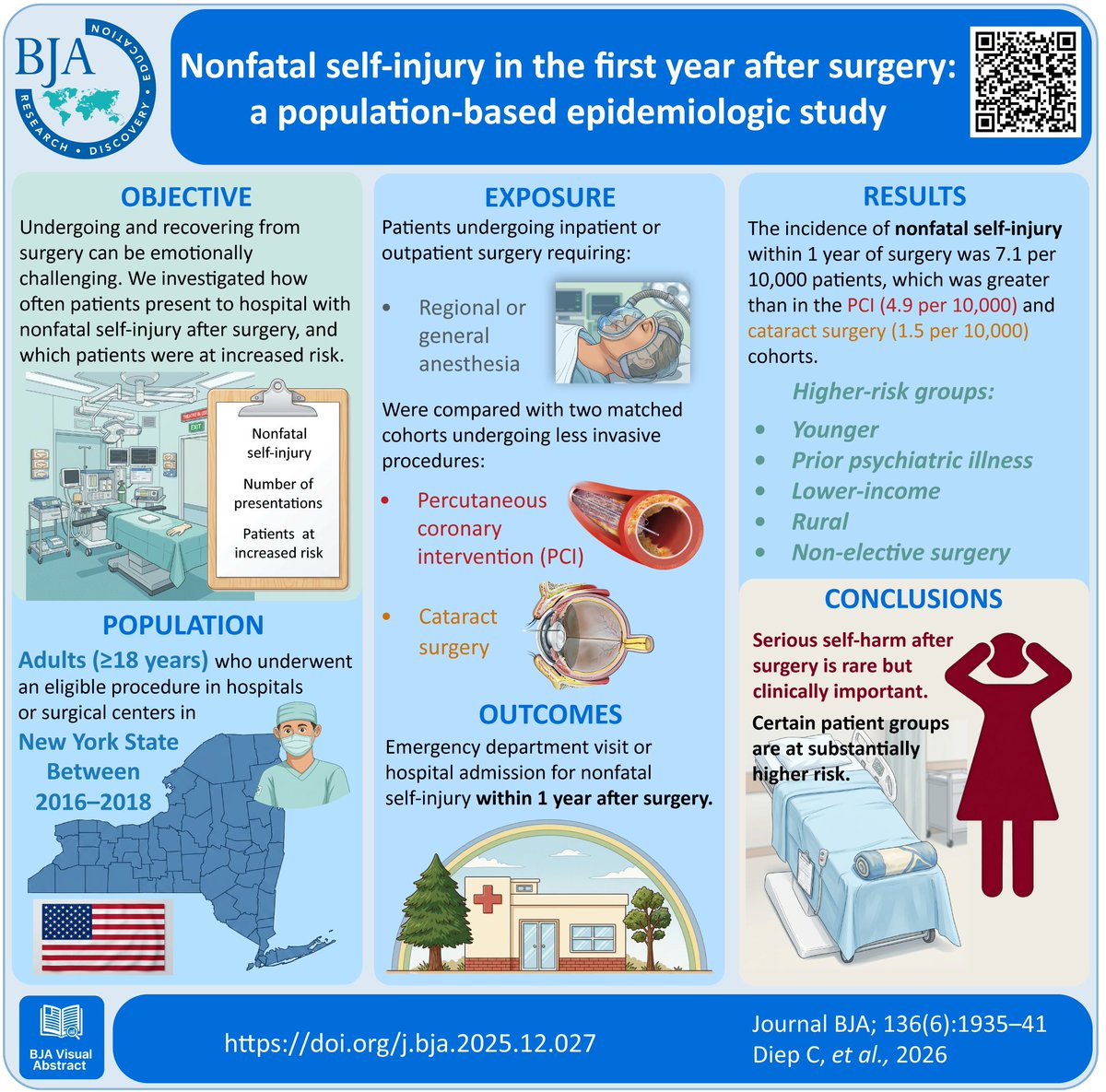
Which patient group is most susceptible to nonfatal self-injury in the first year after surgery, a psychologically challenging period of time?
https://t.co/tyd77w3DC0
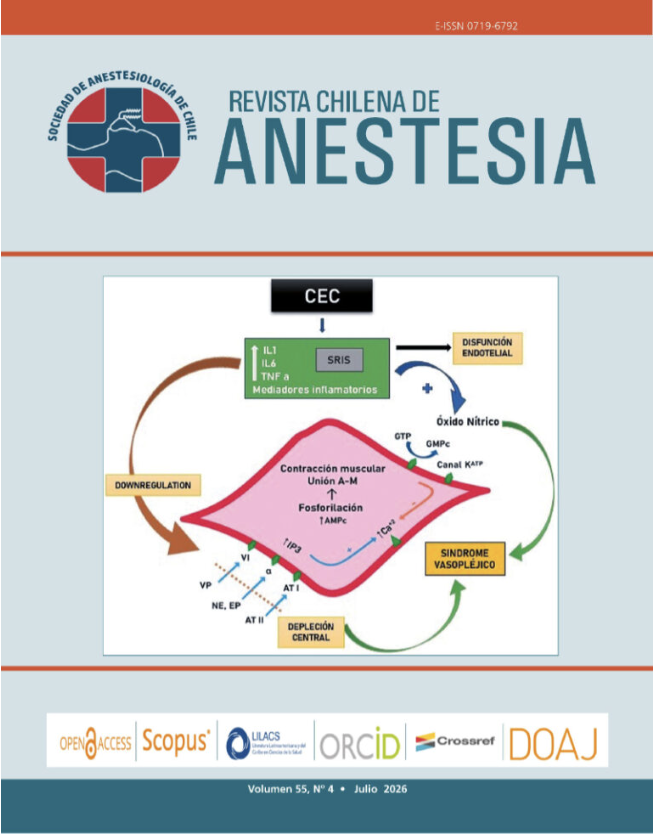
Número de julio 2026 !! ya publicado en https://t.co/wLmpHXEKzx tiene contenidos bastante interesantes y diversos, es un número muy completo les va a encantar!!! 🤓🤓🤓🤓🤓
🫁 Early extubation after paediatric liver transplant is increasingly adopted in major centres. Reintubation rates are low (0–4.4%) and it’s linked to shorter PICU and hospital stays in uncomplicated cases.
Read more: https://t.co/5cvLdOfwMO
Anesthesiologists around the world have become aware of a rare genetic variant found in some patients of Venezuelan lineage, which can result in severe neurologic complications after general anesthesia.
Find up-to-date information here: https://t.co/i31cjGrJtu
Adding ketamine to #propofol#TIVA raises BIS values, shifting toward a peak-max pattern of phase–amplitude coupling (PAC). This reflects altered EEG dynamics, supporting PAC metrics in depth-of-anaesthesia monitoring #bjaopen
https://t.co/E5zFU7abbR
Remote-site, dim lighting, complex ASA 3–4 children needing urgent procedures… welcome to the IR suite🩻
Our #BJAEd article this month highlights why meticulous preassessment, the right investigations and tight team communication are non-negotiable. 🤝🧒
https://t.co/f07V8BBpXu
🌍 ¡SAVE THE DATE!
📍 Santiago de Chile será sede del 7º Congreso Mundial de Anestesia Regional y Medicina del Dolor 🇨🇱
🗓️ 10–13 marzo 2027
Un encuentro de innovación, experiencia y expertos de todo el mundo.
#AnestesiaRegional#WCRAPM2027#MedicinaDelDolor