“When work is abundant and looks alike everywhere, the work that doesn’t fit the pattern becomes the rare, valuable, and high-status thing.”
Great read.
Grow up watching your parents fight, and by age 12 your brain looks like a soldier's coming home from war. The same alarm circuits keep firing whenever someone gets angry near you. None of these kids were diagnosed with anything. Their brains had already changed.
Scientists at University College London scanned 43 kids in 2011. Twenty had documented family violence at home. When the researchers showed them photos of angry faces, the danger-detection parts of their brains fired exactly like they do in combat soldiers. The kids' brains had quietly learned, before they could put it into words, that anger means danger and danger can come from anywhere in the room.
That study was about violence. But Martin Teicher's lab at Harvard's McLean Hospital has spent decades showing yelling alone does similar damage. Verbal abuse from parents physically changes the parts of the brain that handle language and sound. The long-term hit on adult mental health is about the same as being hit, or watching one of your parents get hit.
And this is common. In 2024, UNICEF estimated 400 million kids under 5, about 6 in 10 globally, regularly face violent discipline at home: yelling, hitting, or both. In a Portuguese study of more than 5,000 ten-year-olds, 57.7% reported a household member regularly shouting or yelling at them. It was the single most common bad thing in their lives.
Teicher's team also found that the brain's memory and stress center physically shrinks by about 6% in young adults who were maltreated as kids. Vietnam combat veterans with chronic PTSD show roughly the same drop, about 8%, in the same area.
The damage doesn't stay in the lab. The CDC's most recent youth survey linked 89% of teen suicide attempts and 85% of teen suicidal thoughts to bad experiences before age 18.
But the same brain that absorbs fear can absorb safety. Romanian orphans moved into stable foster homes recovered real ground. Across decades, Teicher's research has shown that warm, predictable parenting physically builds up the part of the brain that helps a kid stay calm, and quiets the alarm system over time.
A child remembers the fights. They also remember who came back to fix things afterward. Both leave a mark.
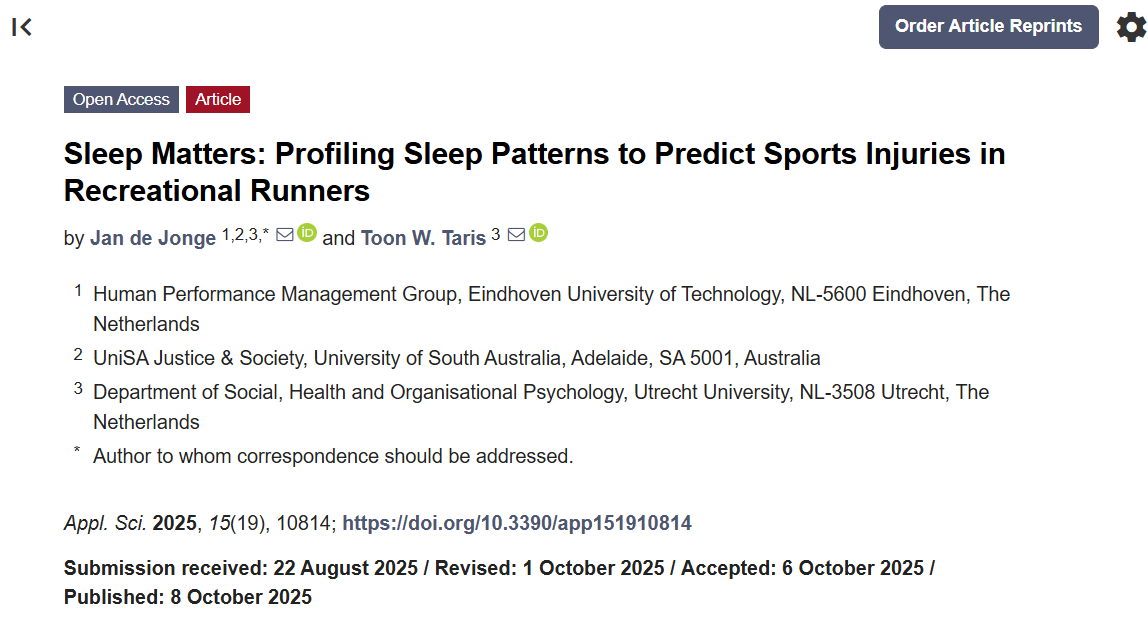
"Poor Sleepers were significantly more likely to report sports injuries than Steady Sleepers, with 68% injury probability."
Study utilized 425 recreational (novice & experienced) runners; 57% male/43% female
https://t.co/lgWwPmlEHs
WILD.
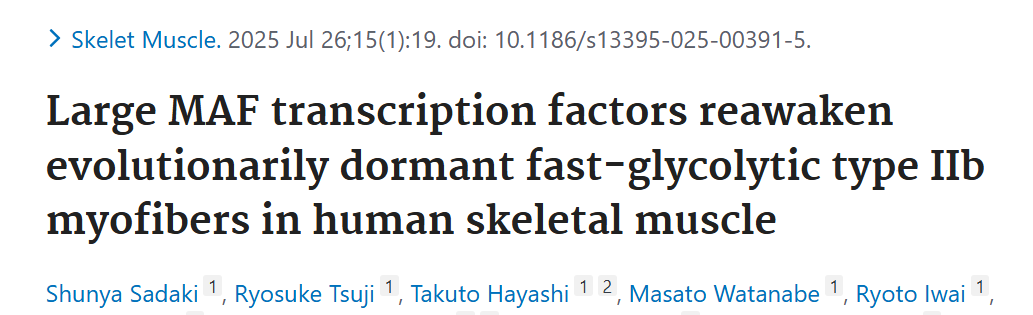
This paper suggests humans can awaken a dormant muscle fiber type (IIb) - the fastest we know of, but it is completely non-existent in humans (highly abundant in cats, cheetahs, mice, etc.).
Some quick context.
Humans have two major muscle fiber types: Slow and fast-twitch.
Slow are called "type I". Fast are subdivided into "type IIa" and "type IIx". These all exist on a spectrum; Type I generally have mitochondria and are more fatigue resistant - but as the name implies, contract with much slower speed. IIa is faster than I, but IIx is faster than IIa.
Pure IIx fibers RARELY exist in normal, healthy human muscle. It's almost always associated with poor health, aging, inactivity, etc. Confusing, I know. But it's not something you can exercise and get more of (exercise does the opposite, actually).
Type IIb fibers are even faster than IIx. Other large mammals are full of them (I've personally tested black bear and found >30% pure IIb). Big cats are the most notorious, occasionally being >80% IIb.
This is one of the many reasons these animals aren't a little faster than humans; they are a LOT faster.
What makes this recent paper so fascinating is that they are directly claiming a method to 'reawaken' the type IIb fibers in human muscle.
I have no clue if, when, how, or the reality of this. But it's incredible to think about. We've known for 40+ years that you can change your fiber type (from fast to slow and vice versa) with a range of things - from exercise to nutrition to pharmacology, and more.
But I've never seen anything that even indirectly implies you can do anything to add type IIb fibers in humans. If I had to guess, this probably never becomes reality, but shoot....you never know....
Cyberpunk is boring now.
Real life got an upgrade.
Right now, somewhere in a lab:
Human neurons are learning in real time.
No code. No training data. Just biology.
Your wearable can now run on living tissue:
It's not just genetics.
Or just lifestyle.
Disease & peak health are both just expressions of an incredibly complicated ongoing physiological mosaic.
One must account for genomics, epigenomics, transcriptomics, proteomics, phophoproteomics, and much more.
Focusing on muscle hypertrophy, this recent (open access) paper by my long-time friend @KevinMurachPhD does a great job of breakdown what this all is and how it works.
Safe to say, much is left to learn.
The greatest battle of all is with yourself—your weaknesses, your emotions, your lack of resolution in seeing things through to the end. You must declare unceasing war on yourself.
For years, there was a legit advantage from knowing how to use Google Advanced Search. Felt like a secret. Same thing is happening with AI now. People who know how to wield its power will be quasi-superheroes. But normal people won't go beyond the standard ChatGPT interface.