A Christian charity with a mission to promote the faith, protect the faithful & pray for the faithless through humanitarian, sacramental, & pastoral care.
Just Sayin’ #55 by George Knight
The Unexamined Life Is Not Worth Living
Dear Friends,
Socrates is said to have declared that “the unexamined life is not worth living.” It is a striking claim. But is it true? In a world where many grow weary, where thought itself can become a heavy burden of sorrow and despair, might the opposite sometimes feel more accurate?
The wiser path, it seems to me, lies somewhere between the two extremes. We need a kind of Goldilocks measure: not so little examination that we drift through life half-asleep, and not so much that we become paralysed by endless self-scrutiny. The difficulty is knowing where that balance lies. How do we recognise when we are examining too little or too much? And can any of us examine ourselves adequately on our own? We all have blind spots — things others can see in us more clearly than we see ourselves.
There is a further, deeper question. Who decides whether a life is “worth living”? On what authority?
Consider the person who, after public disgrace or some unbearable private suffering, concludes that life has lost its value and that ending it is a “reasonable” choice. In our time this way of thinking is no longer rare. Medically assisted death is now offered in a number of advanced democracies as a legitimate option when pain or despair becomes “unbearable.”
Pope St John Paul II recognised in such developments the signs of a “Culture of Death” — a readiness to treat human life as disposable once it no longer meets certain standards of usefulness, comfort or dignity as we define them. The Church holds a different conviction: that the Gift of Life is never solely our own to dispose of. We hold it in trust from God, the Giver of Life, and we hold it within a web of relationships — with those who care for us and those for whom we are responsible. Our lives are at once horizontal and vertical, bodily and spiritual, temporal and eternal.
None of us is merely a private individual whose worth can be calculated by ourselves or by any human tribunal. Only God can finally judge the value of a human life. And because His mercy is infinite, we are never justified in despairing of our own. Both the examined and the unexamined life remain gifts. In every circumstance we are invited to keep living, to keep becoming a better version of ourselves, and to keep speaking to the One who is always ready to listen.
We are never truly alone and there is always a good reason to hope.
Until next Tuesday — in friendship and Prayer,
God bless,
George K.
Just Sayin’ # 54 by George Knight
The Past Is A Foreign Country
Dear Friends,
There is something very profound in the saying that “The Past is a foreign country, they do things differently there.” We do things differently today that we did even five or ten years ago. Moreover we expect to be doing things very differently five / ten years from now than we do today. The truth is that we are living through an era of very rapid transformation. Arguably we are fast approaching what is referred to as the Technological Singularity whereby Artificial Intelligence will surpass that of all humanity. The past will then rapidly become even more distant. More and more we are losing contact with our past and that is not necessarily a good thing.
So it is that the question arises as to what parts of our collective as well as our own individual personal pasts should we hold on / retain and which should we be more than willing to give up?
Well the quick and glib answer to both these questions is that we should hold on to all the “good stuff” and dump all the “bad stuff”. But such an answer merely begs the question what is the “good stuff”? What is the “bad stuff”? And what is the “stuff” that is both and neither depending on the circumstances?
Now here it is probably a wise idea to recognise the very clear difference between what which is in the collective / community / societal “best interest” and that which is in the interest of the individual person. Sometimes what is good (or bad) for an individual is bad (or good) for the group community, group, society. The interests of society and those of any particular individual are rarely if ever fully congruent and not infrequently are in direct conflict.
I could give live current examples but to do so would risk being drawn into a political argument whereas I wish to focus here upon the personal, philosophical and spiritual dimensions that are at issue.
In doing so I can re-frame the question as being what values, norms and beliefs am I going to carry forward from my past and present self into my future self and (thereafter) into a rapidly transforming and transformed world?
Dear friends, today as a Christian living in a once-Christian West I live as a “stranger in a strange land”, my values, norms and beliefs which were once prevalent and mainstream are now considered fringe, anachronistic and barely tolerable. Moreover there is no small chance that in the world of tomorrow they will be found to be wholly intolerable by the “Powers that Be” and in consequence will be suppressed. This has happened before and it will happen again in some and perhaps even in many places.
So the question: what part / parts of my past do I intend to bring into the future?
My answer: All of my past, all of my differences, all of what makes me the individual person that I have become and am becoming because I recognise that this strange earthly world of ours is not our final destination, our Eternal Home: I believe in the promises of Christ.
Until next Tuesday — in friendship and Prayer,
God bless,
George K.
Just Sayin’ # 53 by George Knight
Those Who Cannot Remember The Past Are Condemned To Repeat It
Dear Friends,
We learn from experience. We learn from our successes and our failures as well as the successes and failures of others. In all of this we can broadly define “experience” as being “the past remembered”. In saying this we can note that some of us are much quicker while some of us are slower to benefit from our often hard-won life lessons.
Now such an observation, does it not, invites us to consider how come some folk are slow to learn and while others are not.
How often have we heard about friends, family and others we know who keep trying to do something in the same way which has failed them in the past claiming that “this time will be different”.
Stupidity has been defined as relentlessly doing the same thing while expecting a different result. Undoubtedly, one core aspect of Intelligence is the ability to learn from experience.
So why do people do stupid things and do so repeatedly? Is it just the case that smart / high IQ people do smart things and low IQ folk do dumb things?
Truth to tell it is easy to fall into the belief that this is the long and the short of it but this is not case and is, at best only partially true: there is a super-abundance of examples of very smart people partaking in the most stupid of adventures and in doing so inflicting any amount of harm on both themselves and others.
Being smart (as in high IQ) does not (necessarily) mean being wise. Knowing what is the right (or wrong) thing to do and actually doing (or not doing!) it are two different things. Here we need only reflect upon the many poor souls who got themselves caught up into a web of one addiction or another and are now required to really struggle to free themselves from its capture.
As I see it, at least so far as it relates to “normally” intelligent people (”mid-wits”), the issue of avoiding becoming “condemned into” / “trapped within" the past really centres upon how we choose to remember, interpret and learn from it.
· How well and how completely do we remember the past?
· Do we remember it as having been a significant threat or real opportunity? Something to avoid? Something to embrace? Something to be concerned about, watched over and carefully managed?
· What if anything of lasting importance has the past taught me and you about ourselves, about others and about the world at large?
All of which raise an even more basic issue:
· Why, in the daily course of our lives, are such questions of any practical (and immediate!) import?
My answer, for what it is worth, is: because I don’t want to be entrapped by my past failings and can see in my present self a better person today than I was yesterday all the while hoping that my future self will be better than I am today.
Like the rest of us, I am a “work-in-progress” and will remain so until “the inevitable hour” as I walk “backwards towards Heaven” along this “cool sequestered vale of life”
Until next Tuesday — in friendship and Prayer,
God bless,
George K.
Just Sayin’ # 52 by George Knight
“Perseverance Conquers All” …?
Dear Friends,
We love the idea: “Perseverance conquers all.” Keep going, never give up, push through the wall — victory is just one more try away. The stories we admire most often feature people who refused to quit: the inventor with a thousand failures, the athlete who trained through pain, the parent who never stopped believing in a lost child. From struggle comes strength, we say. And there is truth in that.
But the proverb is only half the truth. Perseverance can also lead to exhaustion, despair, or ruin. If the mountain is unclimbable, no amount of trying will get you to the top — it will only break you. If the habit is destroying you, or the relationship is toxic beyond repair, or the cause is lost, then “try, try, try again” can become a form of self-harm. “If at first you don’t succeed, try, try again” is wise — until it isn’t.
So when do you know it’s time to stop? How do you tell the difference between noble perseverance and stubborn refusal to face reality?
There is no simple formula, but there are quiet signs:
When the cost to your health, your relationships, your soul becomes greater than any possible gain.
When the struggle no longer makes you better — it only makes you bitter, weary, or numb.
When continuing means betraying something deeper — your integrity, your conscience, your duty to others.
When the path has become an idol — when you’re no longer pursuing a good, but clinging to the pursuit itself.
Getting “mugged by reality” is one teacher — the hard crash of failure, exhaustion, or loss that finally forces the question: “Is this still worth it?” But waiting for that mugging is not the only way.
Wisdom often comes earlier, in stillness:
· through honest reflection,
· through the counsel of trusted friends,
· through Prayer,
· through listening to the small voice that says, “This is enough. Let go.”
The Japanese have words for this kind of wise surrender:
· mono no aware (the gentle sadness of things passing) and
· wabi-sabi (the acceptance of imperfection and transience).
They remind us that letting go is not failure; it is part of the natural flow of life.
In the Christian tradition, one speaks of the process of discernment and understanding. There is a time to fight and a time to lay down the sword. There is a time to persevere and a time to release. Ecclesiastes reminds us: there is “a time to search and a time to give up” (3:6). Knowing which time it is — that is Wisdom.
Perseverance is a virtue, but it is not the only virtue. Sometimes the bravest thing is to stop, to accept defeat, to grieve the loss, and to walk forward empty-handed but free. Sometimes letting go is the greater conquest.
Until next Tuesday — in friendship and Prayer,
God bless,
George K.
Just Sayin’ # 51 by George Knight
“Integrity Is Doing the Right Thing When No One Is Watching”
Dear Friends,
We all nod at this one: “Integrity is doing the right thing when no one is watching.” It feels true because we know the real test of character comes in private — when there’s no applause, no punishment, no audience. That’s when the mask slips, and we see who we really are.
The saying is sharp because it cuts through excuses. It’s easy to do the right thing when eyes are on us — for praise, for approval, for fear of consequences. But when the room is empty, when the phone is off, when no one will ever know… what do we choose then?
Yet the proverb raises a quiet question: what is the right thing?
Cultures disagree. Tribes often have one rule for insiders, another for outsiders. What’s honourable in one place can be shameful in another. So whose “right thing” are we talking about when the lights are off and the mirror is the only witness?
Integrity is more than consistency. A person can be perfectly consistent — and consistently wrong. A disciplined ideologue, a charming manipulator, a loyal member of a cruel group — they may be “integrated,” but they lack integrity if their actions serve evil. True integrity means the whole self is aligned with what is good and true — not just coherent, but rightly ordered.
In the end, the test is simple and searching: Is the face I show the world the same face I see when I look in the mirror alone? No hidden compartments. No double life. No secret self that would shame the public one.
Integrity is not perfection. We all stumble. But it is the refusal to live divided — to let the private self contradict the public one. It is choosing the harder right when no one will ever know, because we know. And because something deeper than fear or applause tells us it matters, Truth matters, Goodness matters, Beauty matters.
Until next Tuesday — in friendship and Prayer,
God bless,
George K.
Restore God’s Kingdom
https://t.co/8ets2eULMo
@rgkintnl
Just Sayin’ #50 by George Knight
“Kindness Costs Nothing”
Dear Friends,
We say it easily: “Kindness costs nothing.” A smile, a kind word, holding a door, letting someone go first — small gestures, no price tag. In the moment, they feel free. And sometimes they are. But is it really true? Does Kindness really cost nothing?
Yes indeed the smallest kindnesses can cost almost nothing — a simple “thank you”. Those moments matter and can matter a lot; they lighten someone’s day without effort. Yet the deeper we look, the more we see that genuine kindness rarely comes without some cost.
· It costs time when we’re already rushed.
· It costs attention when we’re tired or distracted.
· It costs comfort when someone else’s pain is messy or inconvenient.
· It costs pride when we have to admit we were wrong, or when we have to let go of being first.
Real kindness is quite distinct from mere niceness or being polite.
· Niceness wants to be liked; it keeps things smooth, avoids conflict, stays pleasant.
· Kindness wants the other person to flourish — even when that means discomfort for us.
Kindness often arises from compassion — from feeling, even briefly, something of the other’s struggle. That feeling, that willingness to be moved, is what makes kindness costly — and what makes it real.
We don’t have to give money or undertake grand gestures to be kind. But we do have to give something of ourselves —
· a chunk of our time,
· a bit of our ego,
· a moment of vulnerability.
And sometimes kindness asks for more:
· patience when we’re at our limit,
· forgiveness when the hurt is fresh,
· courage when silence would be easier.
Kindness costs something — usually more than we first expect. But it is never wasted.
Every time we pay that price, we become a little more human, a little more alive to the truth that we are not here just for ourselves.
Until next Tuesday — in friendship and Prayer,
God bless,
George K.
Just Sayin’ #49 by George Knight
“Wisdom Comes With Age”
Dear Friends,
We’ve all heard it said — often with a knowing nod — “Wisdom comes with age.” The idea feels almost self-evident: the older you get, the more you’ve seen, the more you’ve learned, the more you understand. Grey hair and lined faces seem to carry a quiet authority, as if time itself is a teacher who never misses a lesson.
And there is truth here. Experience does teach. Years lived bring encounters with failure, loss, joy, betrayal, forgiveness, and the slow unfolding of consequences — sometimes quickly, sometimes slowly we learn what lasts and what doesn’t, who keeps their word and who doesn’t, what really matters when the proverbial hits the fan. Many of the wisest people I’ve known have been older — not because age guarantees wisdom, but because they allowed the years to teach them: they have learned from their experiences.
Yet the proverb is only half the story. Most of us I think have occasionally encountered what are frequently referred to as “silly old fools” — people who’ve had decades to learn and still repeat the same mistakes, still nurse the same grudges, still chase the same illusions, still haven’t “grown up”. Age can harden heads just as easily as it can soften hearts. Some of us grow wise as we age; others grow stubborn. Time alone is not enough.
Then there are the children — and the young — who sometimes speak with startling clarity. “Out of the mouths of babes,” we say, half in wonder. A child can see what adults have learned to ignore: honesty without calculation, wonder without cynicism, truth without agenda. Wordsworth put it memorably: “The child is father of the man.” The things we knew (or felt) as children — innocence, trust, the sense that Human Life is Sacred — often have to be relearned in adulthood, after we’ve complicated everything.
So what is Wisdom, really? And where does it come from?
Christians assert that: “The fear of the Lord is the beginning of Wisdom” (Proverbs 9:10). Not terror, but awe — the recognition that there is something — Someone — greater than ourselves.
Wisdom starts with Humility:
· that we do not know everything,
· that we are not the centre of the universe,
· that truth exists outside our opinions.
Age can bring that humility, but it is not guaranteed. A young person can have it in abundance; an old person can lack it entirely.
Wisdom in practice looks quiet and ordinary:
· the grandmother who listens without interrupting,
· the father who corrects gently,
· the friend who speaks the hard truth in love rather than in anger.
It is knowing:
· when to speak and when to be silent,
· when to hold on and when to let go,
· when to forgive and when to guard the heart.
It is seeing the long view while attending faithfully to today.
Wisdom, then, is not automatic with age. It is a GIFT — and a CHOICE. It is given to the humble, to the teachable, to those willing to learn from life’s hard lessons and from the quiet voice of Grace.
Some find it early. Some find it late. Some never find it at all.
But it is always available — to the young and the old, the broken and the whole — to anyone willing to say, “I do not know but I am open to learning.”
Until next Tuesday — in friendship and Prayer,
God bless,
George K.
Just Sayin’ #48 by George Knight
“Courage Is Not the Absence of Fear”
Dear Friends,
We tend to picture courage as fearlessness — the unflinching soldier, the calm firefighter, the person who never hesitates. But the older, wiser view is different.
“Courage is not the absence of fear,” Franklin Roosevelt said, “but rather the assessment that something else is more important than fear.”
Nelson Mandela put it even more plainly: “Courage was not the absence of fear, but the triumph over it. The brave man is not he who does not feel afraid, but he who conquers that fear.”
The word itself tells the story. Courage comes from the Latin cor — “heart.”In its oldest sense, it meant acting from the deepest part of oneself, speaking one’s heart, standing in one’s truth even when the knees are shaking.
Fear is not the enemy of courage; fear is the condition that makes courage possible. Without fear there is no need for courage — only habit or indifference.
We all know this in small ways. Such as when we feel morally obliged to speak out and expose an issue, even though silence would be easier, more convenient, and more immediately beneficial.
Every time we choose the harder right over the easier wrong, we feel the fear — and we act anyway. That is courage.
And sometimes the stakes are higher. The doctor who stays at the bedside during a plague. The whistle-blower who knows the cost. The person who forgives when every instinct says to hate. In those moments fear is loud — but something louder calls: Duty, Love, Truth, Conscience. That something is more important than the fear.
The Bible takes this even further: “The fear of the Lord is the beginning of Wisdom” (Proverbs 9:10). Not terror, but awe — the recognition that there is something greater than our own small fears. When we stand before the One who sees everything, who loves perfectly, who judges justly, our lesser fears lose their grip. Courage becomes possible because we know we are not ultimately alone.
Courage is not the absence of fear. It is the presence of something greater — a heart that has decided what truly matters. And when that decision is made, the fear doesn’t disappear; it simply stops having the last word.
Until next Tuesday — in friendship and Prayer,
God bless,
George K
Just Sayin’ #47 by George Knight
“Moderation In All Things”
Dear Friends,
We’ve all heard it: “Moderation in all things.” It sounds wise, sensible, almost self-evident. Don’t eat too much, don’t work too hard, don’t love too fiercely, don’t grieve too long — find the middle way, the balanced life. The ancient Greeks called it the Golden Mean; Aristotle said virtue lies between excess and deficiency. It’s a proverb that promises harmony, health, and a quiet kind of peace.
And yet… something in us quietly resists it. We’ve all met people who live with such careful moderation that life seems to pass them by. No great risks, no deep passions, no soaring highs or crushing lows — just a steady, safe middle. It can feel like settling, like choosing comfort over calling.
On the other hand, we’ve also seen what happens when moderation is thrown out entirely: obsession, burnout, broken relationships, health ruined in the pursuit of some ideal. The middle way is not always easy to find.
Then there are those rare souls who seem to live by a different rule. They pour everything into a vision — a mission, a truth, a cause — working 80 or 100 hours a week, sleeping little, risking everything. They chase what they call “Platonic ideals”: perfection in engineering, in exploration, in understanding the universe. They say moderation would kill the dream; obsession is the price of breakthrough. And sometimes they’re right — some of humanity’s greatest leaps came from people who refused to stop, refused to balance, refused to settle.
So which is it? Moderation or all-in pursuit? The safe middle or the fierce edge?
The Book of Ecclesiastes offers a quiet, sobering answer:
“To everything there is a season, and a time for every purpose under heaven: a time to be born and a time to die, a time to plant and a time to pluck up… a time to weep and a time to laugh, a time to mourn and a time to dance…” (Eccl 3:1–4).
There is no single rule for every moment. There is a time for measured steps and a time for wholehearted abandon. There is a season for building with steady hands and a season for pouring yourself out without reserve.
Wisdom, then, is not locking ourselves into one mode forever. It is learning to discern the season.
· When the moment calls for quiet balance, moderation is a gift.
· When the moment calls for everything — when a truth must be pursued, a wrong must be righted, a dream must be chased — then holding back might be the greater failure.
The art is knowing which time it is.
In the end, neither pure moderation nor pure obsession is the goal. The goal is fidelity — fidelity to the season, to the call, to the One who made us for both rest and striving.
We are not called to live a half-life of careful averages, nor to burn ourselves out in endless chase.
We are called to live fully in each moment, giving what that moment asks, trusting that the seasons turn and Grace carries us through them all.
Until next Tuesday — in friendship and Prayer,
God bless,
George K.
Just Sayin’ # 46 by George Knight
“Justice Delayed Is Justice Denied”
Dear Friends,
We’ve all felt it — the slow grind of waiting for justice that never quite arrives. A court case drags on for years, a wrongdoer walks free while victims wait in limbo, a whistleblower is silenced decade after decade. In those moments the old saying rings painfully true: “Justice delayed is Justice denied.” Delay doesn’t just postpone Justice; it can wound it so deeply that it feels like no Justice at all. Victims suffer twice: once from the original harm, once from the long silence that follows. Perpetrators gain confidence. Trust in the whole system frays. The proverb is not just a legal maxim — it is a cry from the heart.
Yet something in us resists accepting that as the final word. We sense that Justice, if it is real at all, cannot ultimately be frustrated by calendars or court schedules. Even when human systems fail — and they do, often and spectacularly — a deeper instinct whispers that no wrong is forgotten, no tear unseen, no hidden crime erased. We long for a justice that is not bound by time, that sees everything, remembers everything, and will set everything right.
That longing is not naïve. It is human. It is also, for those who listen closely, a quiet pointer toward something transcendent. The Christian Tradition does not deny the pain of delay — it lived the greatest injustice of all on Good Friday — but it refuses to let delay become denial. “Vengeance is mine, I will repay, says the Lord” (Romans 12:19) is not a threat; it is a promise of vindication. And Romans 8:28 adds the astonishing assurance: “All things work together for good for those who love God.” Not some things. All things — even the long wait, even the apparent defeat.
This does not make us passive. It frees us to act justly now —
to forgive where we can,
to guard the vulnerable where we must,
to seek accountability where possible
— without despairing when the wheels of earthly justice turn too slowly or not at all.
We are not required to fix the unfixable or solve the unsolvable. We are asked to be faithful in the muddle, to walk backwards to Heaven in repentance and Hope. We are asked to trust that the Judge who delayed Easter’s vindication until the third day will not delay forever.
Justice delayed is painful. Justice denied would be despair. But in the end, Justice is neither delayed nor denied — it is perfected. Until that day, we carry on with Mercy in our hearts and Prudence in our steps.
Until next Tuesday — in friendship and Prayer,
God bless,
George K.
Just Sayin’ #45 by George Knight
“Forgiveness Is Divine”
Dear Friends,
I began writing this riff just days after the funeral of my oldest brother. For over forty years we met only at funerals, spoke only a handful of times on the phone, and exchanged greetings at Christmas and on our parents’ anniversary. Without detailing what caused this decades-long rupture, let us just say it involved a breach of trust, a betrayal, and what I considered to be my brother’s incorrigible behaviour.
Although I felt that I had to keep my physical and emotional distance from him over the years truth to tell, I probably Prayed for him as much, if not more than I did for my own wife, my own children and my grandchildren. Somehow I just felt that he was in greater spiritual need than they were and so it was when he was in the Intensive Care Unit during his final hours on this earth he was constantly on my mind and in my Prayers. When word eventually came of his passing, I genuinely surprised myself by choking up, choking up — grieving for someone I had already cut off from my mortal, but never from my spiritual life.
Indeed in the days following my brother’s passing until his burial, a week to the day later, there were a number of occasions when I found it difficult but necessary to control myself — I have little or no time for emotional public outbursts as I believe that grief is a deeply private and personal burden best handled in contemplation and Prayer. All of which caused me to wonder why did I feel so deeply given that I had shared so little of my time and space with him over the previous forty years.
From the various plausible explanations I considered the most compelling one I could find was this: my brother’s final years were largely of his own making and needlessly tragic. However since we shared the same DNA, and I knew in my bones that “there but for the Grace of God go I.” My tears were therefore not only of sadness for his loss, but also of gratitude for what I have been given in life.
Now that the funeral is over and that moment has passed these tears have stopped. Yet frequently throughout the day and everyday I remember my brother and Pray:
Eternal rest grant unto my brother, O Lord,
and let perpetual light shine upon him.
May his soul and the souls of the faithfully departed,
through the Mercy of God, Rest in Peace. Amen.
Until next Tuesday — in friendship and Prayer,
God bless,
George K.
Just Sayin’ #44 by George Knight
“Humility Comes Before Honor”
Dear Friends,
Sir Winston Churchill, Britain’s Conservative Prime Minister during WWII, is today a greatly honoured figure throughout the Anglo-Saxon world and beyond. In his lifetime he was a controversial man, not known for humility but famous for his sharp wit. When a colleague described his political rival Clement Attlee as “a humble man,” Churchill is said to have replied that Attlee “had a lot to be humble about.”
Sir Winston had a way with words — he was awarded the Nobel Prize for Literature in 1953 — and he had no misgivings about his own call to greatness. He was neither humble in character nor in origin; his ancestor was the Duke of Marlborough.
By contrast, Josef Ratzinger was born into a modest lower-middle-class Catholic family in rural Bavaria. His father was a local police officer. Together with his older brother, he was ordained a priest on the same day — 29 June 1951 — in Freising Cathedral. Shortly afterwards they celebrated their first Mass together (Nachprimiz) in their home village of Rimsting, where the whole community turned out in celebration.
In his autobiography Milestones, Ratzinger recalls the occasion fondly and how he had to remind himself that the villagers were not there to honour him personally, but the calling he and his brother had received. At just 24 years old, the young priest already possessed a brilliant theological mind, and during the festivities he quietly reminded himself that the villagers’ joy was “not about me but about Him” — the Eucharistic Christ.
Throughout his long life, Josef Ratzinger never lost this profound sense of humility. There is the well-known story of the young American seminarian who, with his parents in St. Peter’s Square, spotted Cardinal Ratzinger walking to his regular Friday meeting with Pope John Paul II. The seminarian called out, camera in hand, asking for a photograph. The ever-gracious Cardinal reached for the camera, thinking the young man wanted him to take the photo rather than be in it.
Even as Prefect of the Congregation for the Doctrine of the Faith — a Prince of the Church and one of the Pope John Paul II’s closest advisers — Ratzinger showed the same humble sensitivity he had displayed decades earlier in Rimsting. This humility was rooted in his deep Faith in the Eucharist and in Ecclesia de Eucharistia.
Moreover, it is the same Humility and Faith that Ratzinger took with him when he was elevated to become Pope. It is the same Faith and Humility that pervades all of his writings and perhaps most tellingly, in his somewhat controversial decision to abdicate as Bishop of Rome and successor to the Throne of St. Peter.
As I understand events, Humility and Faith caused Josef Ratzinger to accept his calling to become Priest, Bishop, Pope and Pope Emeritus.
In all of this, I believe what we see in Josef Ratzinger is a man who placed all his trust in God. The God who revealed Himself in Jesus of Nazareth and who continues to abide Sacramentally in the Eucharist within His, sadly, often scandal-prone institutional Church.
Josef Ratzinger was widely recognised and honoured during his long life, but these earthly honors never captured or restrained him. His focus was always Godward — on the Divine and on addressing the Spiritual desertification of our contemporary world.
Future historians will honour both Sir Winston Churchill and Pope Benedict XVI as great human beings. Yet I suspect that Heaven will honour Josef Ratzinger the more, precisely because for him it was never about himself — it was always about the Man from Galilee.
Until next Tuesday — in friendship and Prayer,
God bless,
George K.
Just Sayin’ #43 by George Knight
“Discretion Is The Better Part of Valor”
Dear Friends,
“Fools rush in where angels fear to tread” is a close cousin of “Discretion is the better part of valor.” Both point to the same truth: discretion—exercising good judgment in challenging situations—is the wise companion to courage. Foolish acts, by definition, lack that good judgment.
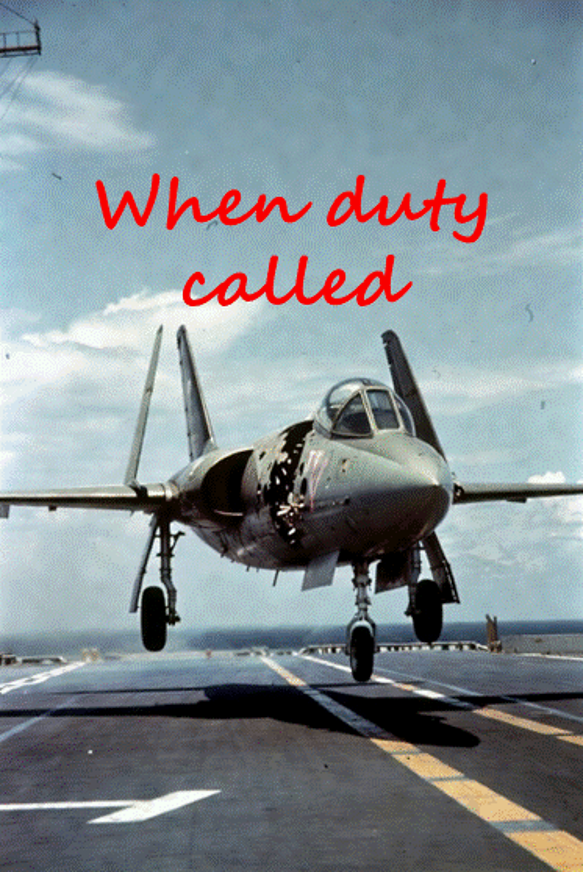
Consider Captain E. Royce Williams, the 100-year-old U.S. Navy veteran awarded the Medal of Honor in January 2026 for classified Korean War heroics.
On November 18, 1952, flying an F9F Panther from USS Oriskany, he single-handedly engaged seven Soviet MiG-15s in a 35-minute dogfight over the Sea of Japan—the longest in Navy history. He downed at least one (confirmed by later declassified Russian records), damaged others, and limped home in a riddled plane, outnumbered and outgunned.
The incident was hushed up for decades to avoid Cold War escalation. Williams embodied quiet professionalism: he obeyed orders to stay silent, never sought fame, and stands as the antithesis of stolen valor.
But the discretion displayed by Captain Williams after his now-celebrated dogfight was just one facet of the discretion he displayed throughout the events leading up, during and after his heroic acts of November 18.
Now this raises a question, does it not? Surely the only reason why we don’t think Williams actions as foolhardy is because they worked: he gambled and on this occasion he won? On another occasion … ? Viewed in this way, one could argue that discretion qua good judgment played no part in William’s great act of heroism.
I am not sure that this would be a fair interpretation because Williams on that day was a trained airman, he knew what he was facing, he knew what he was defending, he knew the risks and he knew that he had only seconds to calibrate whether to engage or flee the enemy.
He was well-prepared and fully primed to exercise good judgment under high-risk conditions that demanded immediate action. Ultimately Williams fight or flight decision came down to a test of his character, his courage to face his fear and live with the consequences.
Discretion, then, was not absent—it was exercised in the split-second calibration of risk against duty. Valor without discretion is recklessness; discretion without valor is cowardice. Williams showed both.
Discretion may well be the better part of valor, but authentic valor is ultimately rooted in character—and character is rooted in virtue.
True courage cannot spring from vice; it flows from all that is true and noble within the human heart. Captain Williams remains an outstanding —and quiet—example.
Until next Tuesday — in friendship and Prayer,
God bless,
George K.
Just Sayin’ #42 by George Knight
“Charity Begins At Home”
Dear Friends,
Most people don’t fully appreciate the maxim “Charity begins at Home”, and it is widely misquoted and misapplied. How often do you hear people objecting to helping distant causes by saying we should look after “our own” first? In this they are not entirely wrong.
Why is it sometimes easier to support a distant displaced family or a faraway homeless person than to help the needy person right in front of us? The answer is distance. The distant beneficiary is not “up close and personal.” We can give indirectly through an agency without having to get personally involved or share in the suffering.
Supporting philanthropic agencies in this way is no bad thing and should be encouraged. However, we should note that the benefactor’s generosity is bounded; it is limited to giving or raising resources. It is not “putting one’s body on the front lines” — it is not directly experiencing and sharing the pain of those we claim to help.
And fair enough — people can only do what they can do. They should not be chastised for not sacrificing themselves on someone else’s front lines, especially when they have their own crises to attend to, both known and hidden, in their own families and communities.
I have spent time on the “front lines” and in the back offices of several philanthropic agencies. Because of this, I might be forgiven for being a tad cynical about how effective many of these enterprises really are for their intended beneficiaries.
Of course we live in an imperfect world. We have to work with imperfect institutions, imperfect systems, and imperfect people — some of whom are “Bad Actors”, others “Useful Idiots” for whom charity is a business rather than a mission. Our newsfeeds are full of stories of well-known charities where the real beneficiaries were the organisers themselves.
True Charity, by definition, is not a business; it is a vocation. It is every person’s highest calling — “to love one another as God loves us.” It is also an innate drive within the human heart, and a vulnerability which can be — and is — easily exploited.
We best understand “Charity begins at home” when we realise that while we are born with a natural predisposition to being loving and generous, we learn how to love and act generously in the cradle of our own homes.
Therefore, the most authentic and vital charitable work any of us can undertake is to become a good father or mother and to support other parents in their efforts to raise the next generation with love and care.
Until next Tuesday — in friendship and Prayer,
God bless,
George K.
Just Sayin’ #41 by George Knight
“Patience Is A Virtue”
Dear Friends,
Is patience really a virtue? And why be virtuous in any case? What is the “cash value” of being virtuous in a world where time means money? Surely patience is more of a vice than a virtue.
Do you not find it strange that what was once generally understood and accepted as solid practical wisdom - rules and guidance for living a good life - can now be so easily questioned, if not turned entirely upside down and inside out? Where once we were told “four legs good, two legs bad,” we are now being told “four legs good, two legs better” - and this is called “progress”.
Progress? To where? “Four legs good, two legs better, no legs best” ? And after that?
Clearly this kind of “Progress” must stop somewhere, and from what I can see it stops with self-destruction, self-annihilation: no legs, no hands, no heart, no head, no body, no soul, no spirit. It is the Road to Nowhere.
Why does this happen? Well, it all comes down to the definition of “Progress”. If “Progress” does not move us toward a deeper understanding of the nature of Reality, the meaning of life, and the defence of every person’s right to Life, Liberty and the Pursuit of Happiness, then it is not progress at all — it is regress.
Authentic progress necessarily requires …
· an endless search for Truth,
· an ever-deepening quest for the Meaning of Life ( as in your life and mine) and
· A steadfast defence of Human Dignity.
All of which takes great patience. And this is why patience is a virtue — for one cannot live in the Truth without embracing virtue.
Until next Tuesday, in friendship and Prayer,
God bless,
George K.
Just Sayin’ #40 by George Knight
“Honesty Is the Best Policy”
Dear Friends,
From my earliest childhood I was taught that “Honesty is the Best Policy” — but honestly, I don’t know if I could convince someone else that this is true.
Let’s face it: many people have accumulated great fame, wealth, and even respect through dishonesty. I won’t name names — you can find plenty when you go looking.
Indeed, so many dishonest people seem to prosper that many now believe the only way to succeed in life is to be “economical with the truth” — or, failing that, to lie outright. In our cynical world, it’s all about winning, and “the end justifies the means.” Dishonesty and lying are simply tools to that end. I agree — they are means. But to what end?
What end can truly justify being dishonest, being untruthful, telling lies?
People often distinguish between “white lies” and “big black lies” — which always reminds me of Stalin’s chilling remark about murder: “When you slaughter one person you are a criminal; when you murder a million people you are a hero.” Size matters in our minds, but it should not matter in principle. A lie is a lie. There is truth and there is untruth.
White lies are still lies. The claim that they are “well-intentioned” is no real excuse. Who decides what counts as well-intentioned? I can justify dishonesty by appealing to my own narrow self-interest. But is acting in my narrow material interest really acting in my longer-term, greater self-interest? I don’t believe it is. Why?
I honestly don’t believe that any of us are “merely human.” We are not just intelligent animals. We are creatures made in the image and likeness of the Creator, each called forth by name to render to God some unique service that only we can undertake. We are called to live out the truth of our existence — and because of this, and this alone, “honesty is the best policy.”
For those who do not believe this — and do not believe in the promises of the Word of God — dishonesty is indeed a practical way to advance and accumulate wealth and power in this world.
For those of us who do believe: “What profit a man if he gain the whole world but suffers the loss of his soul?” (Matthew 16:26). Honesty will always be the best policy.
Until next Tuesday — in friendship and Prayer,
God bless,
George K.
Just Sayin’ #39 by George Knight
“The Early Bird Catches The Worm”
Dear Friends,
Twice a week my wife has recently started to get up at 07:00 in order to get ready for her 09:30 exercise class. She doesn’t like to rush in the mornings.
Twice a week, on the same two days, I also get up at 07:00. So twice a week I become something of an Early Bird, and I find myself wondering what real gain I derive from it. And if there were a significant gain, would it be beneficial for me to become an Early Bird not just twice a week but more often — five, six or even seven days a week?
For me this is not entirely straightforward. For the last five years or more my sleep pattern has been broken. Every night, around 03:00, I become so wide awake that I must get up, read (and often write) for 60–90 minutes or so before I can return to bed and get back to sleep.
On top of that I rarely settle down in bed before 01:00. So twice a week I am both a Night Owl and an Early Bird. Thank heavens I can - and do - take a long siesta … every day!
So back to my question: what obvious or hidden benefits do I (or can I) get from being an Early Bird at this stage of my rather long life?
Certainly there was a time, years long gone, when I delighted in getting up early. In boarding school we were awakened at 07:10 every morning with the call to “Rise and Shine” — and that’s just what we did. Later, during my working life, getting up at 07:00 was simply normal. I had a job to do and was responsible to others.
Now however I am only responsible for myself and the wifie. Our children have flown the nest. So it is that we are no longer burdened with other responsibilities bar that of not wishing to become a burden upon others.
Given this why then should I be an Early Bird at all — never mind twice a week? What “worm” will I catch? What “worm” do I catch? What “worm” do I want to catch? What “worm” is worth catching?
Well, after breakfast every morning for the past six years my wife and I play a game of Rummikub. We also play it after every lunch and — until recently — after dinner. (We now play Carcassonne in the evening). So it is that when I get up early twice a week, I don’t get to miss the happy camper routine — I just start it the two hours earlier than usual.
Until next Tuesday — in friendship and Prayer,
God bless,
George K.
Just Sayin’ #38 by George Knight
“When In Rome, Do As The Romans Do”
Dear Friends,
It is very easy to accept this piece of practical wisdom. “You have to go along to get along,” we say — and we all need to get along. When in Rome, it makes sense to respect local customs and ways of doing things.
But what if the “Rome” you find yourself in is not particularly civilised? What if its ways are actively harmful to the soul?
To illustrate without naming contentious modern examples, let us consider the ancient Biblical cities of Sodom and Gomorrah. “When in Sodom, do as the Sodomites do”? Most people would instinctively recoil at that advice. Normalising and accommodating oneself — and one’s children and grandchildren — to a morally toxic environment is not prudent or life-affirming. It is soul-destroying.
Going along to get along in such a place can lead down a dangerous road where the immediate rewards feel seductive, but the long-term cost is high.
Of course, not everyone who lives in a corrupt environment becomes corrupt. Some manage to remain good. But that usually requires strong adult guidance and very deliberate choice.
Denzel Washington’s story is instructive here. As a teenager he ran with three close friends who all got into serious trouble. All three ended up in jail before the age of thirty. Denzel alone avoided that path. The difference? He had a good father and good mother who provided a moral compass and modelled integrity. Essentially Denzel learned early in his life that you don’t have to “go along to get along.” And that you get along by doing what is good and right— even when it means standing apart.
So whether we find ourselves in Rome, Gotham, or any other place, the wiser counsel is never blind conformity but this: do what is right to do, and live YOUR life freely and fully
Until next Tuesday, in friendship,
God bless,
George K.
AMDG
Dear Friends,
This is worth remembering: All of us, can easily lose all sense of who we are.
The Ven. Fulton Sheen tells us how this can happen and what we must do to prevent it happening:
"Man loses his soul not only by committing grave sins, but also by neglecting to respond to the graces that are continually offered to him by God, to safeguard him against sin and lead him to eternal union with Him.
What drains the well of contrition and repentance if not the abandonment of meditation on the perversity of sin?
What makes meditation practically impossible if not the absence of Prayer?
What makes God seem so distant and unreal if not the failure to live in His Holy Presence?
What drags the soul toward hell if not the absence of the contrary motion, namely the effort to rise toward Heaven?"
From time to time we should take stock and reflect upon:
- The Quality of our Prayer Lives and
- What we are doing to deepen and extend the Quality of our Prayer Lives.
Remember that the only thing that we can do in this life that we can do in the next is PRAY.
None of us should underestimate the vital role that Prayer plays in allowing us to become who we are really meant to be, our true selves.
God bless,
George K.
La deriva silenziosa: come l'anima si perde senza accorgersene.
"L'uomo perde la sua anima non solo commettendo gravi peccati, ma anche trascurando di corrispondere alle grazie che gli vengono offerte continuamente da Dio, per premunirlo contro il peccato e condurlo all’unione eterna con Lui.
Cosa prosciuga il pozzo della contrizione e del pentimento se non l’abbandono della meditazione riguardo la perversità del peccato?
Cosa rende la meditazione praticamente impossibile se non l’assenza della preghiera?
Cosa fa apparire Dio così lontano ed irreale quanto il non vivere alla Sua Santa Presenza?
Cosa trascina l’anima verso l’inferno se non l’assenza del moto contrario, ossia dello sforzo di elevarsi verso il Cielo?
Lasciate che un uomo sia contento di se stesso, soddisfatto di ciò che è, allineato ai costumi del mondo, che respiri le esalazioni nocive del male raffinato, permettendo che la sua condotta morale segua le sue naturali tendenze senza controllarle e frenarle.
Egli, quasi certamente, si lascerà trasportare, con un moto dolce e tranquillo, dalla corrente del vasto fiume che conduce verso la morte eterna.
Dice San Paolo: “Come potremo noi scampare se avremo trascurato una salvezza così grande?” (Eb 2,3)."
Fulton J. Sheen, da “Il Regno di Dio è una sfida: una guida per il Cielo” edizioni Mimep.
Just Sayin’ #37 by George Knight
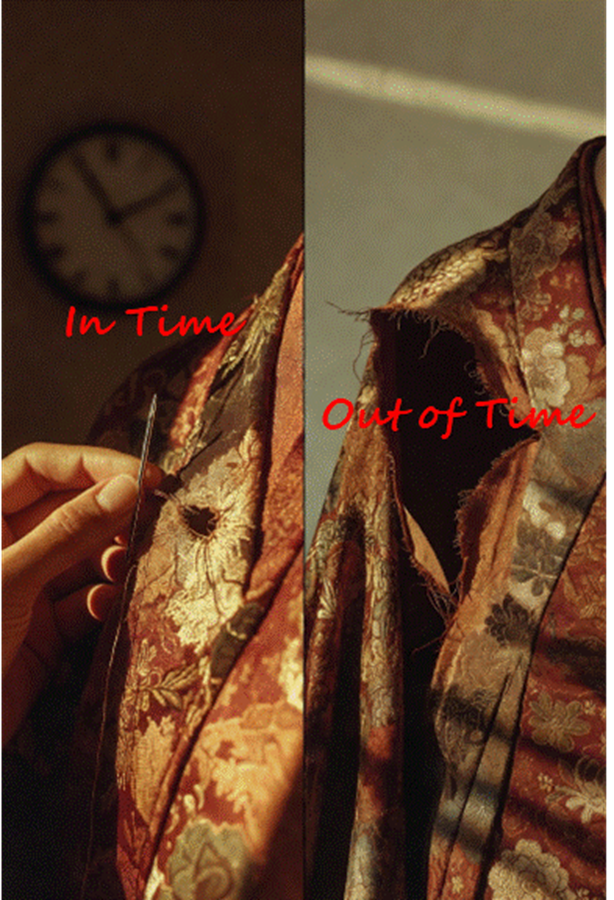
“A Stitch In Time Saves Nine”
Dear Friends,
I am not at all sure that this old saying is entirely true. Yes, there are many situations where addressing a small problem early prevents a much larger expense of time, effort, or resources later. Poor preventive maintenance has caused countless catastrophes — think of electrical faults that could have been fixed with a simple repair but instead burned down buildings.
Yet contrast this maxim with another old saying: “If it ain’t broke, don’t fix it.” How can both be true?
The answer may lie, at least partly, in how we view the world. If we generally see the world as fragile and threatening, we are highly motivated to take early, preventive action. If, however, we see the world as largely capable of sorting itself out — “this best of all possible worlds” where “all’s well that ends well” — then “leaving well enough alone” can feel like the wiser course.
So when it comes to how and when we should act, it all comes down to three things:
How we see the world,
How we see the specific situation in the context of everything else demanding our limited attention and resources, and
How we see ourselves and the kind of life we choose to live.
It also depends on honest questions:
Is this truly my problem to handle?
If it is, am I the best person to handle it?
If it is not, what should I do — or not do?
SOMETIMES the best and wisest thing any of us can do is simply this:
· DO NOTHING.
· DO NOT ENGAGE and
· LET IT BE.
Until next Tuesday — in friendship and Prayer,
God bless,
George K