New publication in the Journal of Genocide Research!
What social factors set rescuers apart from bystanders and perpetrators during genocide?
Which ones may drive people to rescue, or to kill?
https://t.co/E2sj5VFaFu
@ERC_Research & FWO
Last tickets for my Pint of Science presentation! @unilincoln@PsychLincoln@pintofscience
If you are curious about the developmental origins of our justice systems, see you at the Cardinal's Hat in Lincoln city centre tonight (20 May, 7:30-9:30pm)!
https://t.co/RFxw7PbYga
The mere possibility of invoking Colombia’s “no sea sapo” social norm, which tells people to mind their own business, does not just offset but entirely counteracts social norm enforcement through third-party punishment.
https://t.co/wVbx9J3kW7
Psychologists often draw their 'theories' from their intuitions, schooled by their personal experiences. In this new manuscript, led by @MohammadAtari90, we argue that this reliance has led to a field built around WEIRD Questions.
🚨Exciting news! We now have the first-ever complete #EEGManyLabs replication. This large-scale multi-site study revisits a key debate in EEG & reinforcement learning. A thread! 🧵👇
📄 Full paper: https://t.co/KlhpineNtI
*Oromo women in Ethiopia*
The "Siinque" is a stick that is handed down from generation to generation.
This ancient system offers protection to Oromo women in Ethiopia.
https://t.co/Ee8nzAAgAa
Disapproval by itself is not enough to maintain long-term cooperation – punishment must have tangible consequences. New paper by Adam Sparks, Tyler Burleigh and Pat Barclay @Journal_EHS | Evolutionary Human Sciences | Cambridge Core - https://t.co/dwXEnvYBpf
SAVE THE DATES: 📣
We're eager to announce that the next Annual Meeting of the Social Psychology Section will be held on 8-10 September 2025 at the University of Oxford with Lady Margaret Hall as our venue!
More information soon to follow!
Prejudice is often rooted in misperceptions: that the outgroup are lazy, unpatriotic, etc. Our new field experiment asks: to reduce misperceptions, is it better to become close with one outgroup member (deep contact), or to have brief encounters with many (broad contact)?
Intergroup contact is arguably the most studied prejudice-reduction intervention.
However, recent meta-analyses of experimental contact interventions find signs of p-hacking and file drawer problems.
In an effort to avoid such biases, this new working paper by @hmmlowe carries out a meta-analysis of 34 pre-registered contact experiments, considering only treatment effects on pre-registered primary outcomes.
He finds limited positive effects of intergroup contact of around only 5% of a standard deviation.
He also finds that contact is more effective at changing behavior and attitudes towards people that are met than toward outgroups as a whole.
Are you a social scientist working on the Mediterranean region? Join us in Crete between 6-8 April 2025
Submit your research related to the region and groups originating from the Mediterranean societies on this website: https://t.co/uM3XY01Zf0
@iaccp@easpinfo@SPSPnews
🚨Excited that our meta-analysis is out in JPSP @APA_Journals. We synthesized 6 decades (1958-2017) of empirical evidence on social dilemmas and tested which structural features (most strongly) promote cooperation:
📄https://t.co/ZviSQyZPWZ
1/10
This is next week, and it will be live-streamed! To join --> https://t.co/KUijAhgw87
I'll be presenting my research in a TED Talk-style format, covering the neuroscience of obedience and my recent work on former genocide perpetrators and rescuers.
As I've said since the late 1990s, experimental games are designed, with cues of money and anonymity, to tap "impersonal social norms" NOT dispositional preferences. Probably a long thread coming...
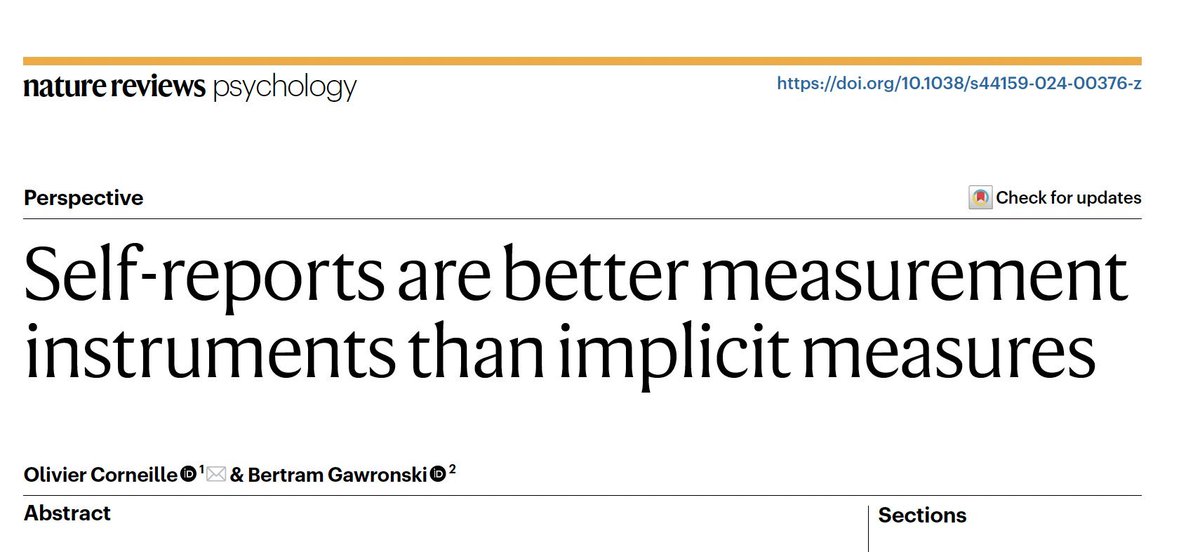
Anyone have thoughts/references regarding self-report vs. behavioral economics measurements of prosociality/trust/cooperation (e.g., public goods games) in light of this excellent new review?
https://t.co/gT4LuyKu4J
The APS Global Summit workshops will highlight new methods for quantifying cultural change, the dynamics of empowerment, initiatives to support indigenous students, and more! Register for the summit to gain access #APSGlobal#psychtwitter
https://t.co/pXUrNcDDMa