STOCKS TO CRASH IN HOURS NOT DAYS
Here's yet another way to spot the unsustainable $spy stock market. Interest rates are sky high while money printer is higher than Brittany Spears any given Thursday. This means inflation is astronomical.
When you can't afford a hamburger and you're about to get kicked out of your apartment, the first thing you sell are your stocks.
Notice what happened within days of every time interest rates peaked during a stock market new ATH.
BREAKING: TRUMP ON IRAN NEGOTIATIONS:
“Fake News Reports that the Islamic Republic of Iran, and the U.S.A., stopped speaking a few days ago are false and erroneous. The conversations between us have been going on continuously, including four days ago, three days ago, two days ago, one day ago, and today. Where they lead, one never knows, but as I told Iran, “It’s time, one way or another, for you to make a Deal. You’ve been doing this for 47 years, and it cannot be allowed to go on any longer!” President DONALD J. TRUMP”
#Silver
4-hour chart for silver shows the predicted price action is in line with expectations.
Silver is currently rising as expected after testing $73. The target for this week is $80-$82.
Let's wait and see. I will update the entry point for buying later. ❤️
Think it. Say it. Done.
The average person spends 3 hours typing + switches 1,000 tabs per day.
That ends today.
Meet Lemon: The first voice-to-action AI agent that turns your voice commands into finished tasks.
RT + Comment "Lemon" to get free access for 30 days.
(must be following so I can DM you)
Some thoughts on AI
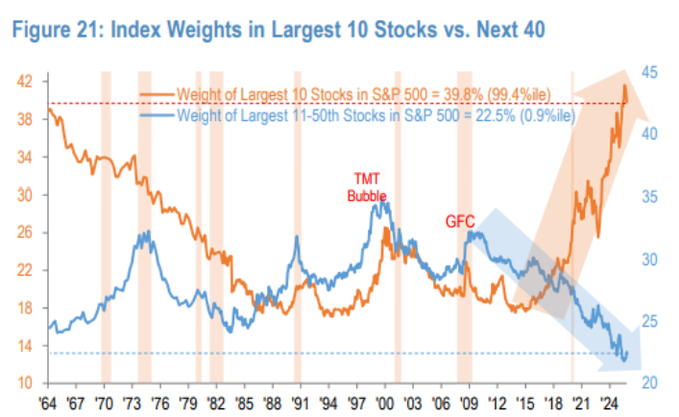
The market is increasingly splitting between those who own real infrastructure and those whose primary economic contribution is their intelligence or labor.
As AI systems scale, intelligence itself becomes abundant, cheap, and reproducible, while the truly scarce assets remain the infrastructure that deploys, coordinates, and monetizes that intelligence.
This includes physical infrastructure like energy and robotics, as well as digital infrastructure such as compute, data, networks, settlement layers, and AI systems themselves.
As intelligence and robotics symbiosis evolves and becomes commoditized, labor stops being the dominant claim on economic output.
This shift extends beyond manual work into intellectual labor: analysis, design, decision-making, and even creativity increasingly resemble capital-intensive processes rather than human ones.
Income derived from labor compresses, while income derived from ownership of infrastructure expands. The economic center of gravity moves from who works to who owns. The K-Shape economy grows exponentially.
In this environment, the likely end state is not mass unemployment but a decoupling of income from labor as we know. Nevertheless the speed of the change will create stress we can not yet fully envision.
The economy bifurcates into two broad roles: those who own and allocate productive infrastructure, and the broader population whose economic relevance is no longer tied to productivity but to participation, consumption, and legitimacy.
People are no longer paid primarily for work, they are compensated because the system is productive without them and requires social stability to function.
This creates the conditions for a dividend-based economic model. As crazy as it sounds today, it feels like there is almost no way past it.
Infrastructure owners, whether private or public, redistribute a portion of AI-driven surplus to the population, not as charity or welfare, but as a dividend derived from shared participation in the system.
The framing is critical: individuals are not compensated because they are unproductive, but because the infrastructure generates excess value at scale and depends on broad social consent and demand to sustain itself.
Work does not disappear, but it changes form.
Human activity shifts toward domains that are valuable yet poorly priced by markets dominated by machines: care, education, culture, governance, mediation, creativity, and community coordination.
These roles become socially essential but economically subsidized by surplus rather than directly compensated through wages.
As a result, income becomes less central to identity, and status, reputation, trust, and influence emerge as the primary differentiators among individuals.
The structure of ownership becomes the critical variable determining outcomes. If infrastructure is narrowly owned and governed opaquely, redistribution becomes unstable and politically contested, leading to legitimacy crises and social fragility.
If infrastructure is credibly neutral, partially shared, or governed through transparent and procedural mechanisms, redistribution is perceived as legitimate, and social cohesion becomes sustainable.
The question is not whether redistribution occurs, but whether it is forced and adversarial or structural and accepted.
This transformation reshapes the role of the state. A country increasingly becomes the sum of the infrastructure it controls and the governance applied to it.
Sovereignty shifts away from borders and labor forces toward control over energy systems, compute, data, settlement networks, and AI infrastructure.
Political power follows economic power, and economic power concentrates in the ownership and coordination of critical systems rather than in population size or workforce productivity.
In this future, humans do not disappear from the economy, but they disappear from price discovery, also partially through billions of AI agents transacting at all times for us.
Markets stop answering the question of what a human is worth, and that question moves into the realm of politics, governance, and culture.
The central conflict is no longer about jobs, but about who owns the machines, who governs them, and who holds a legitimate claim on their output.
The end game is not inherently dystopian or utopian.
It is a choice between extractive infrastructure with unstable, coerced redistribution and legitimate infrastructure with broadly accepted dividends.
The societies that navigate this transition successfully will not be those that attempt to preserve labor at all costs, but could be those that redesign ownership, governance, and participation around a world where intelligence is abundant and infrastructure is everything.
Happy to hear feedback.