@historyinmemes Did you know that Carl Jung said "good morning" to every pot and pan in his kitchen each morning at Bollingen? He told his housekeeper they understood and appreciated the greeting. 👀
@historyinmemes Max Stirner’s daily life in Berlin was incredibly simple and isolated, but he had one major indulgence he refused to give up, high-quality cigars.
@historyinmemes Oscar Wilde used to tear off and chew the corners of pages whenever a book gripped him. Surviving copies from his library still have the bite marks.
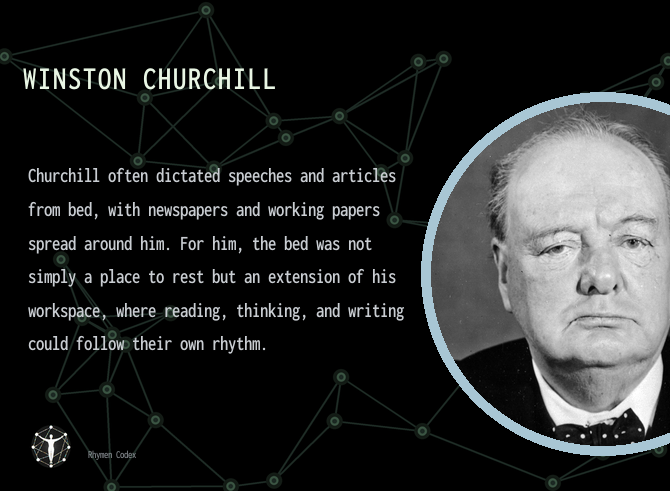
@TheEconomist Churchill's daily routine is a reminder that even the most influential figures often developed working habits that suited them rather than following convention.
@WordsnWisdom26 Churchill's daily routine is a reminder that even the most influential figures often developed working habits that suited them rather than following convention.
@SoulNotes43 Churchill's daily routine is a reminder that even the most influential figures often developed working habits that suited them rather than following convention.
Churchill's daily routine is a reminder that even the most influential figures often developed working habits that suited them rather than following convention.
Darwin's life reminds us that intellectual progress does not always follow a straight line. Sometimes, the architecture of an idea becomes visible only through years of accumulated observations, repeated questions, and the patience to leave certain things unresolved.
There is a familiar rhythm in this. We often move between questions, follow lines of inquiry that seem unrelated, and postpone presenting an idea until we feel we have gathered enough evidence to support it. From the outside, this can resemble hesitation. Look more closely, and another structure emerges: a sustained effort to understand something fully before committing it to the world.
We tend to think of persistence as the ability to pursue one idea without interruption. Darwin's life reveals a different pattern. While developing his theory of evolution, he spent years studying barnacles, orchids, and the reproduction of plants. His central idea remained unfinished, but the work surrounding it continued to grow.
@PhysInHistory Also, every night Nikola Tesla sat on the edge of his bed and curled his toes 100 times on each foot to stimulate his brain cells. A ritual he maintained all the way into his later years.