1/6 New paper alert!
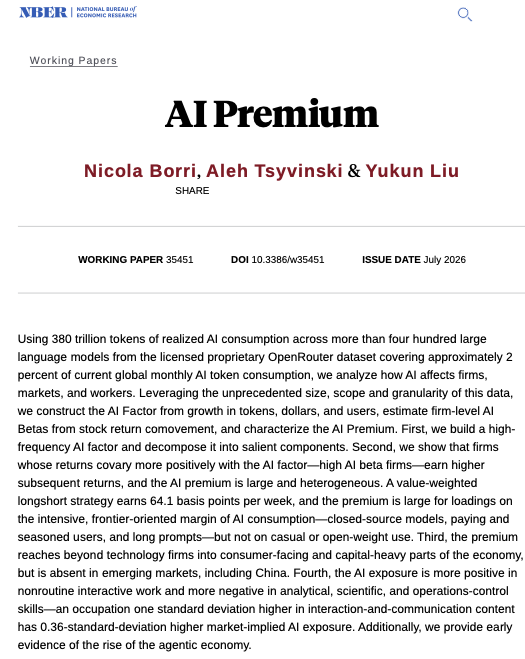
Our paper, “AI Premium,” with Yukun Liu and Aleh Tsyvinski, is now available as an @nberpubs Working Paper.
We study how #AI is already affecting financial markets, firms, and workers
🧵
Evidence from village elections in Indonesia shows that changes in leadership improve information flows between citizens and the state, revitalise bureaucracies, and improve public service delivery.
#IndustrialPolicy has never been more consequential for the world's developing economies.
Our new report reviews 183 national plans & evidence from 60+ countries, showing why targeted inputs outperform blunt tools: https://t.co/ZZcxM7emNq
It's essential that AI systems—including agents—work to support (not undermine) human autonomy.
But aligning to autonomy is hard. Our new paper shows that there are intra– as well as inter–value trade offs.
With @leonieclaude we explore a range of options...
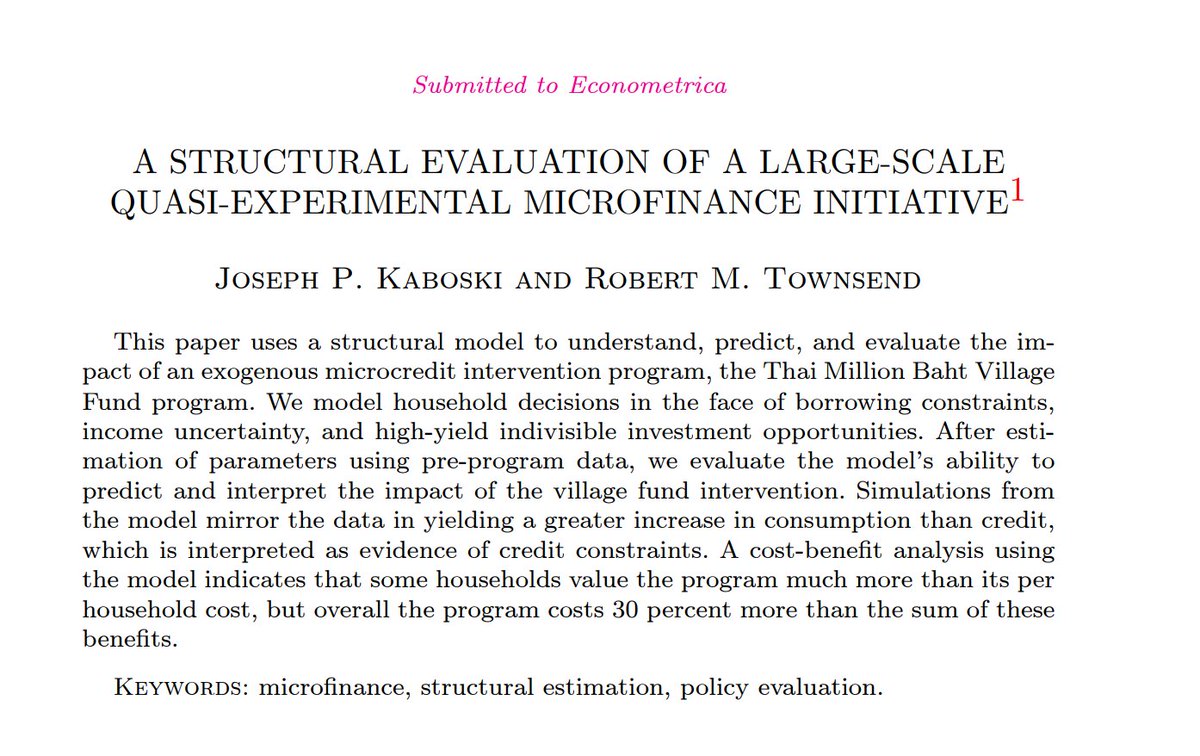
In 2001, Thailand's government unexpectedly gave every village 1 Million Baht (about $25,000) to form a village bank. The results were puzzling. The price of credit didn't change, and neither did investment. Instead, consumption rose dollar for dollar. What? Why? How? 1/
Teachers value-added depend on the value-added of the teachers that preceded them. In the May issue, by Michael Gilraine and Odhrain McCarthy. https://t.co/I8ljluOccD
Senior gue di kantor selalu dateng jam 7 pagi. Sebelum semua orang
Tasnya rapi. Mejanya bersih. Kalau briefing, dia paling detail. Paling siap
Gue kira itu karena dia ambisius. Ternyata bukan .....
In einer grossen Studie wurde untersucht, wie sich die Leistung von über 26'000 Schülern in China während 30 Monaten veränderte, wenn sie anfingen, KI-Chatbots zu nutzen.
Ihre Hausaufgaben wurden rund 20% besser.
Sie benötigten für die Hausaufgaben rund 20% weniger Zeit.
Das ist super.
Aber: Bei Prüfungen (wo KI verboten ist) wurden sie rund 20% *schlechter*. Das ist eine massive Verschlechterung.
KI kann Denkkompetenz aufbauen, wenn sie als eine Art Tutor eingesetzt wird. Dann spricht man von kognitivem Scaffolding.
Die Realität ist aber, dass die Strategie des kognitiven Offloading der Weg des geringsten Widerstands ist: Denkarbeit an Chatbots auszulagern, ist instrumentell gesehen rational. Ein Fehlanreiz.
Diese Entwicklung ruiniert Bildung. Und sie ist ein systemisches Risiko: Was passiert, wenn eine ganze Generation noch weniger als frühere Generationen lernt, eigenständig zu denken?
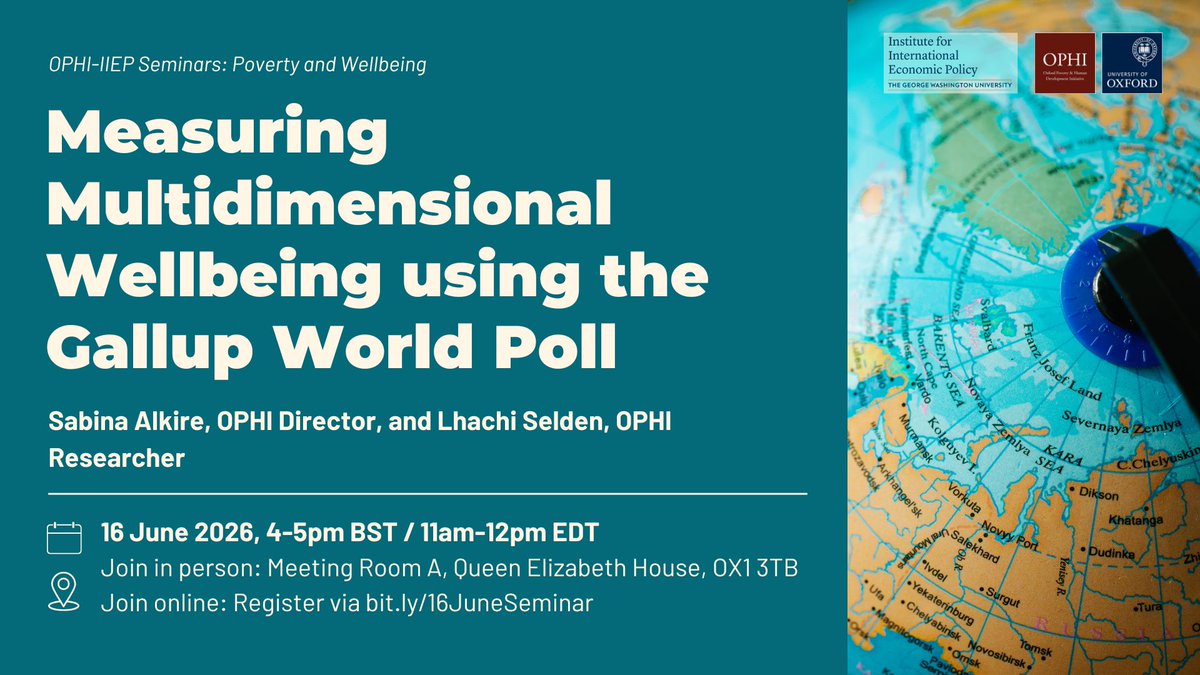
What might a truly global measure of wellbeing look like?
Tomorrow: “Measuring Multidimensional Wellbeing using the Gallup World Poll”, a seminar from OPHI’s Sabina Alkire & Lhachi Selden.
In person: Meeting Room A @ODID_QEH, OX1 3TB
Online: Register at https://t.co/tYOcrcTHZ5
What do diff-in-diff event-study designs really tell us about the employment effects of min wages?
My new paper with @NeumarkEcon tackles this using the stacked design of Cengiz-@arindube-@attilalindner-@benzipperer and the related LP-DiD design in Dube-Lindner’s HLE chapter. 🧵
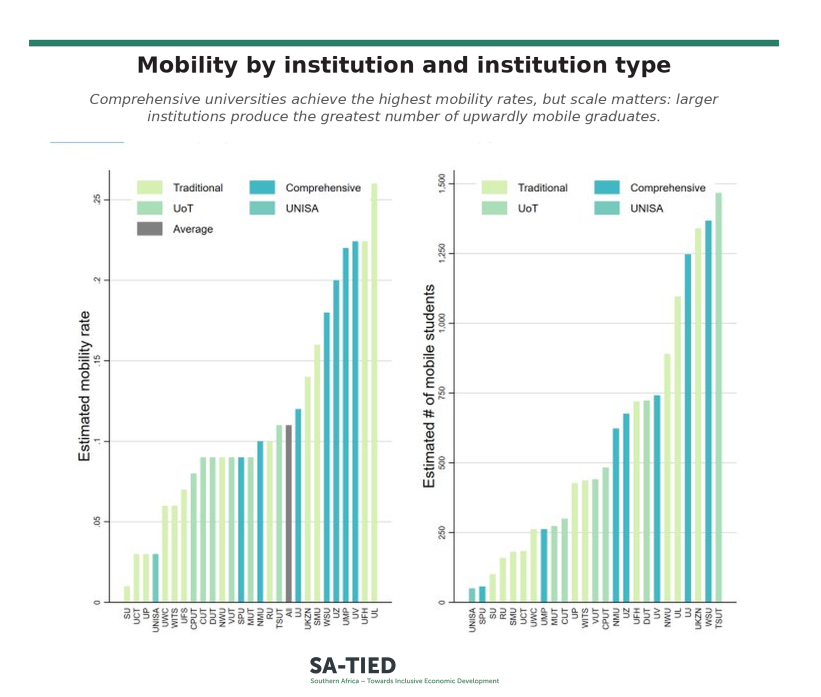
Does getting into university guarantee upward mobility?
New #SATIED research shows that in South Africa, whether a degree translates into social mobility depends just as much on who graduates on time and into which qualifications.
Learn more: https://t.co/694pEMdIjS
A meta-analysis of 122 studies finds that EdTech has a positive effect on learning in elementary schools (g=0.546) #smma#edtech https://t.co/BZ9AnH7YZW
New publication alert! 🚨
Ethical integration of generative artificial intelligence in higher education: safeguarding cognitive development and advancing innovation
Points of Departure text by Rosario Olivera, Razia Mustani & Md Mohsin
https://t.co/vMWNDRvngK
#HigherEducation
Hi #EconTwitter!
Interested in #microeconometrics & causal inference?
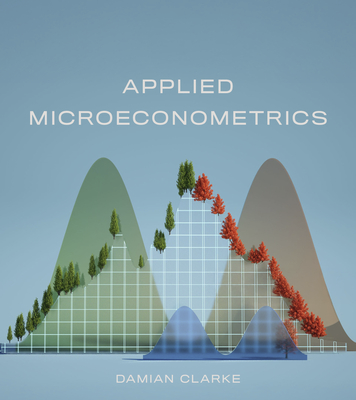
Damian Clarke's (@UniofExeter) 𝐀𝐩𝐩𝐥𝐢𝐞𝐝 𝐌𝐢𝐜𝐫𝐨𝐞𝐜𝐨𝐧𝐨𝐦𝐞𝐭𝐫𝐢𝐜𝐬 is out! The website is free, open and very cool, with lots of code/data in #R, #Python & #Stata.
Useful for grad students!
I deeply appreciate Christian Moore-Anderson's argument that education shouldn't force a choice between total teacher freedom and rigid lesson scripts. He shows how England's recent push for "consistency" actually made things worse by turning teachers into script-followers. Over time, this created a trap where teachers lost their teaching skills and became dependent on pre-written lessons.
Moore-Anderson explains the key difference between handing teachers complete lesson plans versus giving them high-quality raw materials. When everything is scripted—what to say, when to say it, which worksheets to use—teachers can't adapt to their actual students in real time. They can't have real conversations about learning because there's no room to adjust.
His recommendation: give teachers shared principles (like basic game rules) plus quality resources, then let them decide how to use them. Think of chess—simple rules but endless possibilities. Teachers keep their professional judgment, can adapt to their students' needs, and benefit from collaborating with colleagues. Everyone wins: teachers, students, and schools.
https://t.co/4owKQW57jc
School attendance problems are about more than missed lessons.
They are linked to students’ well-being, sense of belonging and long-term job outcomes.
Our new report, funded by the @europeanunion, explores why students miss school and what can be done: https://t.co/3ozck4ghwI