India's SME IPO ecosystem is at a crossroads. The biggest threat isn't regulation or market volatility. It's the declining quality of investable businesses entering the public markets.
A great business should first attract private capital. If experienced private investors with deep due diligence hesitate to invest, public investors should ask why. Public markets should be the next stage of growth, not the first source of unquestioned capital.
Too many companies are approaching SME IPOs as a valuation event instead of a commitment to public shareholders. Listing has become easier than building a truly investable business.
In many cases, reported profits don't translate into operating cash flows. Governance remains promoter-centric, independent oversight is weak, related-party transactions raise concerns, and minority shareholders often have little influence after listing.
The responsibility doesn't rest with promoters alone. Merchant bankers are the gatekeepers of the market, yet the race for mandates and fees can sometimes overshadow the responsibility of bringing only high-quality businesses to market. Auditors, valuers, advisors, and other intermediaries also play a critical role in protecting market integrity.
Regulators have strengthened the framework, but stronger preventive supervision and faster enforcement are equally important. Investor confidence is difficult to rebuild once lost.
Investors must also accept responsibility. Chasing grey market premiums, listing gains, and momentum instead of governance, cash flows, capital allocation, and management quality creates demand for businesses that may not deserve public capital.
The SME platform should be reserved for companies that are genuinely ready to be public, not simply ready to raise money.
India doesn't need more SME IPOs. It needs more investable businesses. When quality improves, private capital, public markets, and long-term investors all win. When quality declines, everyone eventually pays the price.
#smes
So according to @blinkitcares support, a product is considered “working” just because it turns on?
In the video, the blower is technically running, but it is not removing even a single bit of dust. The product is clearly not functioning as intended, yet within hours of delivery the customer is asked to contact the brand directly instead of getting a simple replacement/pickup.
This is the level of customer satisfaction now? Customers have to spend their own time proving a defective product after receiving it.
I’ve been a loyal Blinkit customer for a long time and almost never returned products before. ₹1400 is not a big amount for me, but the lack of accountability and care is disappointing.
Didn’t even ask for a refund. Just expected proper support for a defective product. After this experience, I’ll stop using Blinkit.
@letsblinkit@blinkitcares
The Game Is Played at the Port Toys and Pricing Reality -
Indian toy manufacturing did not fail on capability.
It failed when pricing stopped being decided inside factories.
The rulebook looks tough.
70 percent Basic Customs Duty
IGST
Mandatory BIS certification
For an honest importer costs almost double before the toy is sold.
That policy was meant to protect local players.
It only works when everyone plays clean.
When the gap between honest cost and evaded cost becomes large
the system bends.
China still dominates toys because of speed scale and ecosystem depth.
When legal imports stop making sense the workaround starts.
Not at factories
At ports
Customs does not see a toy first.
It sees documents
invoice
classification
declared value
Change the description
change the outcome
A toy becomes a plastic article on paper
An electronic toy becomes plastic parts
Electronics arrive separately
Assembly happens later
Officially no toy was imported
Commercially the same toy is sold
Valuation follows the same path
Prices declared do not match material reality
Once cleared they become benchmarks
Soon impossible prices look normal
Compliance fades quietly
BIS applies to finished toys
Parts and vague descriptions slip through
Testing disappears without noise
This is not smuggling
This is paper engineering
Paper engineering survives on discretion
Which file gets questioned
Which container moves fast
Which value is accepted
Silence has value
Meanwhile honest importers pay full duty full tax full testing cost
Domestic manufacturers carry the burden
The market rewards the cheapest price
not the cleanest process
That is why toy imports still break the system
because the game is still played at the port
#Toys #madeinindia #BIS #import
Why Private Equity Is Difficult in SMEs Capital Follows Stories Returns Follow Behaviour
Private equity does not struggle in SMEs because businesses lack potential. It struggles because alignment weakens over time.
Stephen Schwarzman of Blackstone has often said the most important thing in investing is getting the exit right. In SMEs, exits are the weakest link. Strategic buyers are few, secondary liquidity is thin, and IPOs depend more on market cycles than operating performance. When exit thinking is deferred, private equity quietly becomes permanent capital.
Howard Marks of Oaktree reminds investors that risk is not what you see it is what happens when things go wrong. SME deals look attractive during growth phases, but real risk appears during cash flow stress. Forecasts create confidence, but cash flows reveal truth. Valuations are agreed on projections, yet outcomes are decided on the balance sheet.
Leon Black of Apollo has repeatedly emphasised cash flow is the lifeblood of every business. In SMEs, projections are often optimistic and insufficiently stress tested. When operating cash flow underperforms, trust breaks before numbers do.
One of the most underestimated challenges is post raise behaviour. Henry Kravis of KKR once observed that capital does not change companies people do. Before fundraising, urgency and transparency are high. After the cheque is received, decision making slows, focus drifts, and accountability weakens. Many global PE managers privately admit this is where most deals start going wrong.
In SMEs, ethics matter more than contracts. Sam Zell famously said if you do not trust the people you are investing with do not do the deal. Legal agreements cannot anticipate every situation and enforcement is slow. What protects capital is promoter conduct related party discipline honest disclosures and respect for minority shareholders especially in difficult years.
Vision mismatch is another structural fault line. Investors are wired for scale governance and time bound exits. Promoters are wired for control continuity and legacy. Seth Klarman of Baupost captured this well when he said the real risk is not volatility it is permanent loss of capital. When visions diverge, capital is put at risk not by markets but by behaviour.
Exit mechanisms are not paperwork. They are protection. Put call rights buybacks drag and tag provisions and downside safeguards must be realistic and executable. Symbolic clauses offer comfort only in good times.
Howard Marks sums it up best you cannot predict but you can prepare. In SME private equity, preparation means alignment before entry and discipline until exit.
For private equity to work in SMEs, behaviour must match capital.
Investors must underwrite mindset before metrics price liquidity and governance risk honestly focus on cash flows over narratives remain engaged after investing and pursue exits with realism rather than hope.
Promoters must treat capital as fiduciary trust maintain the same intensity after fundraising separate personal comfort from business priorities respect governance and minority rights and actively support exits when the time comes.
Private equity in SMEs does not fail on spreadsheets.
It fails when alignment fades between entry and exit.
#Privateequity #Smes #Investment
Alphabet Toys: Building a Preferred Indigenous Toy Brand on a 10× Growth Path
Alphabet Baby Products, operating under its flagship brand Alphabet Toys, is a fast-growing Indian toy company with a clear ambition to scale 10× over the next few years and establish itself as one of India’s most trusted and widely distributed toy brands.
The company is promoted by Bharat Singh, a Chartered Accountant with a strong banking background, who brings deep expertise in financial discipline, risk management, compliance, and scalable business building. His vision has been to create a brand-led consumer business, where Alphabet owns the product, the brand, and the customer relationship, rather than operating as a backend or contract supplier.
Brand-First, Indigenous Manufacturing Model
Alphabet Toys follows a brand-first and indigenous manufacturing strategy. All products are designed, manufactured, and branded in India, with a strong focus on electronic toys, mechanical toys, motion-sensor toys, and die-cast toys. The company maintains full control over quality, safety, and consistency, with all products being BIS compliant and built to meet the stringent requirements of modern retail and large-scale distribution.
This integrated approach enables Alphabet Toys to deliver reliable quality, competitive pricing, and faster time-to-market, which are critical to building a scalable consumer brand.
Manufacturing Built for Scale
Alphabet Baby Products has invested significantly in in-house manufacturing capabilities, including state-of-the-art injection moulding machines, high-precision tooling, and dedicated production facilities. The manufacturing setup is deliberately designed with headroom for expansion, allowing the company to scale volumes rapidly as demand increases.
By owning its manufacturing infrastructure, Alphabet Toys reduces dependency on external suppliers, protects margins, and ensures consistency across product lines—key enablers for long-term, multi-fold growth.
Preferred Brand Across Leading Retailers
Alphabet Toys has established itself as a preferred brand with many of India’s leading modern retail, e-commerce, and quick-commerce platforms. The brand is present across Hamleys, Miniso, Mr. DIY, Avenue Supermarts (DMart), Reliance Retail, Spencer’s Retail, Vishal Mega Mart, FirstCry, Whole99yards, Amazon, Blinkit, and Zepto.
These relationships reflect strong retailer confidence in Alphabet’s product quality, compliance standards, supply reliability, and sell-through performance. As distribution continues to widen, Alphabet Toys is well positioned to deepen shelf presence and expand reach across urban and semi-urban markets.
Riding Structural Industry Tailwinds
India’s toy industry is undergoing a structural transformation driven by import substitution, higher customs duties, and mandatory BIS certification. This shift has significantly reduced sub-standard imports and created a favorable environment for compliant, indigenous manufacturers.
Alphabet Toys, having invested early in domestic manufacturing and compliance, is ideally positioned to benefit from these tailwinds and capture increasing market share as retailers and consumers shift toward trusted Indian brands.
The 10× Growth Vision
Alphabet Toys’ roadmap to 10× growth is anchored on:
Scaling manufacturing capacity in line with demand
Expanding depth within core toy categories
Strengthening brand recall and consumer preference
Deepening partnerships with leading retail and commerce platforms
Maintaining margin discipline and balance-sheet strength
With strong fundamentals, disciplined leadership under Bharat Singh, and favorable industry dynamics, Alphabet Toys is building a scalable, brand-led, indigenous toy company with the potential to become a category-defining Indian brand in the years ahead.
@Alphabettoys_
#toys #makeinindia #alphabettoys
I searched https://t.co/iVl81Om7Oi for RC DRIFT CAR and reviewed listings using ACTUAL PRODUCT LABEL DISCLOSURES such as manufacturer, importer, packer, and country of origin. I did not rely on brand names or marketing claims.
OBSERVATION
All RC DRIFT CAR listings currently available on https://t.co/v8CFp1bODH are IMPORT-LED PRODUCTS. Most follow standard CHINA-OEM RC DRIFT CAR PLATFORMS that are branded, packed, or imported by Indian trading entities. Even where Amazon displays COUNTRY OF ORIGIN: INDIA, the product label typically identifies a SELLER, IMPORTER, OR PACKER, not an Indian RC drift car manufacturing facility. Marketplace COO fields do NOT establish manufacturing origin.
SELLER DETAILS BASED ON LABEL DISCLOSURES
BESTIE TOYS
Appears as seller or importer. No Indian RC drift car manufacturing unit or factory address is disclosed.
DWH
Appears as seller or importer. Manufacturer of the RC drift car is not disclosed.
GRAPHENE (VIHAAN ENTERPRISES)
Listed as importer and packer. The Indian address relates to compliance and packaging, not RC drift car production.
VIKRIDA
Listed as seller or importer. No RC drift car manufacturing facility is mentioned.
KIDOLOGY
Appears as importer and seller. No Indian RC drift car manufacturing disclosure is present.
L.O.T TOYS
Listed as importer and seller. No RC drift car factory or production line is disclosed.
JACK ROYAL
Appears as seller or importer. No Indian RC drift car production information is provided.
SCALICON
Listed as importer or seller. No OEM RC drift car manufacturing disclosure.
HONESTUM
Appears as seller or importer. The Indian address reflects a trading entity, not an RC drift car factory.
JAMING
Appears as seller or importer. No RC drift car production or assembly disclosure is present.
Across all RC drift car listings reviewed, NO SELLER DISCLOSES AN INDIAN RC DRIFT CAR MANUFACTURING FACILITY, OEM LICENSE, OR PRODUCTION ADDRESS. The consistent pattern is IMPORT, PACK, BRAND, SELL.
IMPORTANT CONTRAST – FIRST IDENTIFIABLE INDIAN RC DRIFT CAR MANUFACTURER
The first RC drift car manufacturer I could independently identify in India is ALPHABET BABY PRODUCTS PVT LTD. Unlike marketplace sellers, Alphabet is disclosed as a MANUFACTURER, not an importer or packer. They manufacture RC drift cars in India, SOME ELECTRONIC COMPONENTS MAY BE GLOBALLY SOURCED, WHICH IS STANDARD PRACTICE, and distribute through dealers, DIY channels, and offline or alternative retail networks. Their RC drift cars are NOT CURRENTLY LISTED ON https://t.co/iVl81Om7Oi, which is why Indian RC drift car manufacturing remains largely invisible on the platform.
CONCLUSION
Amazon’s RC drift car category reflects IMPORT DOMINANCE, not lack of Indian RC drift car capability. Supporting ATMANIRBHAR BHARAT requires verifying MANUFACTURER DISCLOSURES rather than relying on marketplace COO fields, and enabling Indian RC drift car manufacturers to access large online platforms.
#RCDriftCar #Car #Toys
The deeper problem is the collapse in quality of capital
After the allocation method in the HNI category shifted from proportional to lottery, HNI behaviour changed structurally. Capital did not disappear, but it reorganised. To regain allocation certainty, money started pooling through AIF structures to access the QIB bucket.
This did not bring long-term risk capital. It brought larger, more structured arbitrage capital. HNIs do not enter SME IPOs for long-term ownership. They operate primarily on IPO versus listing price arbitrage.
As a result, HNIs have effectively become QIBs in structure, but without risk appetite. QIB money in SMEs is largely short-term, either playing listing gains or deploying capital like lending money with defined exits.
True risk capital in SMEs has become rare. Even after listing, when prices trade below IPO levels, there is little buying interest. That clearly shows lack of conviction.
At the same time, grey market activity has increased sharply. Informal funding, off-book arrangements and pre-listing signals have distorted price discovery.
The SME market did not weaken due to sentiment. It weakened because the quality of capital deteriorated.
#smes #bse #NSE
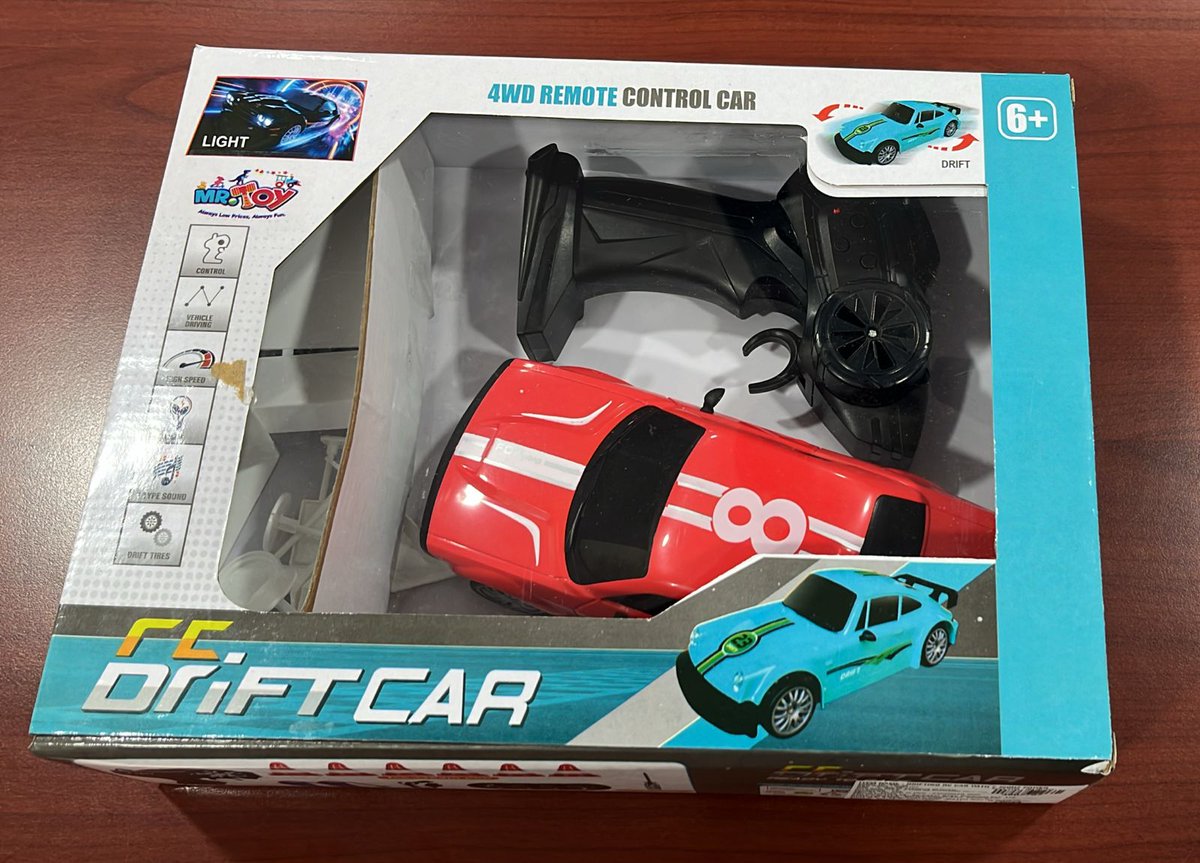
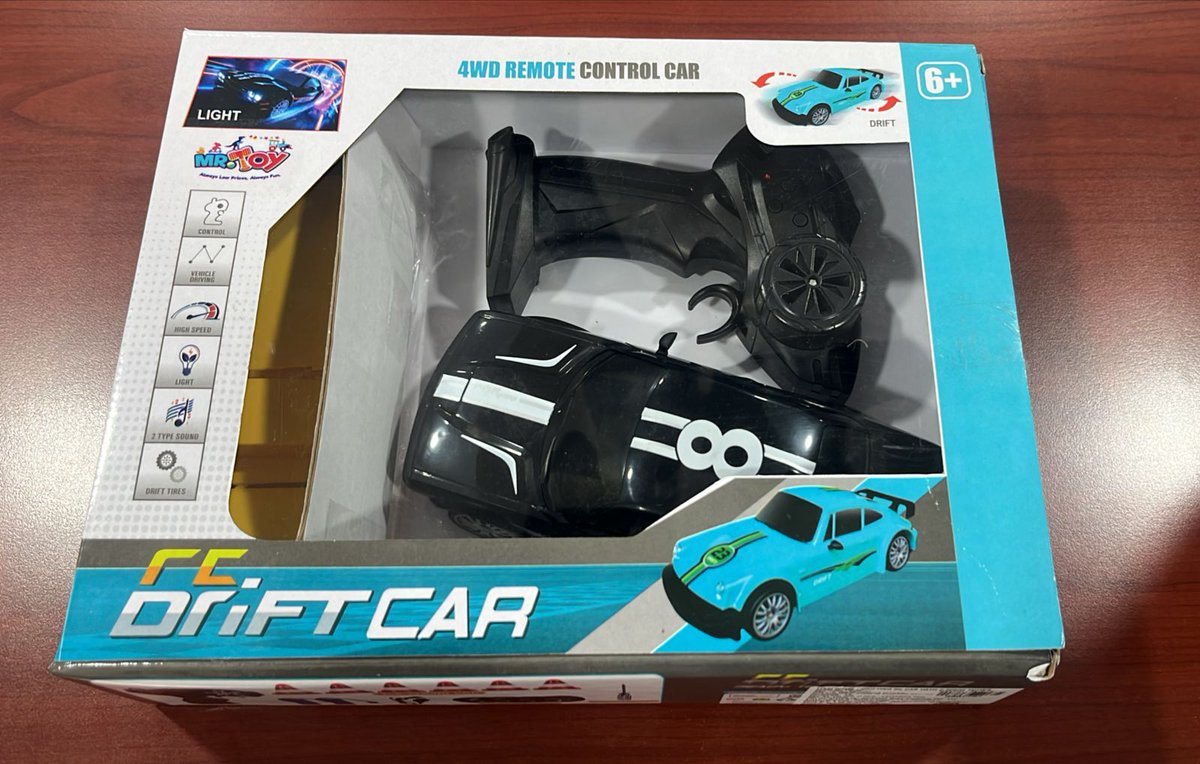
Alphabet Toys launches its indigenously made Drift RC Car , proudly designed and developed in India.
Built for fun with stylish racing looks, smooth drifting action, and easy controls, it delivers exciting play for kids at home or outdoors.
A Made-in-India toy bringing speed, style, and joy to everyday play.
Follow on - https://t.co/LvLnjfdo0D
#Toys #Drift #RC #Cars
Before the IPO, KV Toys India LTD gave FY26 sales guidance of 185 crs in roadshow via "Sunday investing" youtube channel and circulated publicly.
This is a breach of SEBI ICDR Regulation 25, which prohibits projections or forward-looking financial guidance outside the offer document.
Liability is not limited to the company:
• Promoters / management for making the disclosure
• Lead manager (BRLM) for failure of due diligence and control over roadshow communications
• Interviewers / media platforms if they facilitate or amplify unpublished forward-looking guidance during the offer period
SEBI has powers under the ICDR Regulations and SEBI Act to impose monetary penalties, issue corrective directions, suspend intermediaries, and debar responsible parties.
Roadshows and interviews are meant to explain disclosed facts, not to guide future numbers or shape investor expectations.
For reference sharing full video link - (27:22-28:00) timestamp
https://t.co/SIaqEQ7KDw
#Kvtoys #BSE
As an investor, here’s an uncomfortable truth about the SME ecosystem that people don’t like hearing.
The ecosystem doesn’t get damaged by questions or criticism. It gets damaged when incentives are misaligned and honesty disappears. Many SME stocks are held for a few days, sometimes even hours, but spoken about as if they are decade-long compounding stories. Trading isn’t the problem. Pretending a trade is a long-term investment is.
SME liquidity is thin by nature. Market making is temporary. Price discovery is weak and easily distorted. In such markets, timelines matter far more than narratives. A position that works for three days can completely break if someone is forced to hold it for three weeks.
Recently, questioning fundamentals has been labelled as negativity or ecosystem damage. That’s convenient, but incorrect. Moral positioning doesn’t fix structural weaknesses. Markets don’t respond to speeches. They respond to cash flows, governance quality, working capital discipline, inventory realism, and disclosures.
As an investor, I look at things like cash generation versus reported profits, inventory quality, markdown and scrap risk, receivable ageing, and consistency in disclosures. When these are discussed using publicly available documents, it isn’t bashing. It’s basic due diligence.
If you are trading, say you are trading. Don’t wrap it in long-term conviction language. That mismatch is what destroys trust, especially for retail investors who believe someone is still holding when the exit has already happened.
The SME ecosystem doesn’t need heroes or saviours. It needs clarity of intent, accountability, and honest communication. Once trust erodes, liquidity dries up. And when liquidity disappears, no amount of moral superiority can protect the market.
This isn’t an attack on any company or individual. It’s a reality check from an investor who wants the SME market to survive, not just look good on social media.
#SME #Bse #nseindia
Interesting to see,
Big claims in interview regarding moulds true or not.
If i prove wrong will apologize in public.
I am 100% sure company will ditch the topic & will hide behind regulations.
India SME IPOs from FY12 to FY26
Year wise listing count, funds raised and market capacity analysis
BSE SME and NSE Emerge combined
FY12 to FY16
Total companies listed: around 35 to 45 per year
Funds raised: below ₹500 crore per year
Average issue size: ₹5 to 10 crore
Market was in an experimentation phase with limited investor participation and low liquidity.
FY17
Total companies listed: around 70
Funds raised: around ₹1,500 crore
Average issue size: around ₹12 to 14 crore
Early acceptance of SME platform begins.
FY18
Total companies listed: around 135
Funds raised: around ₹2,400 crore
Average issue size: around ₹15 to 18 crore
First meaningful expansion year for SME capital markets.
FY19
Total companies listed: around 80 to 90
Funds raised: around ₹1,000 to 1,500 crore
Average issue size: around ₹14 to 16 crore
Market shows signs of saturation at prevailing liquidity levels.
FY20
Total companies listed: around 55
Funds raised: around ₹600 crore
Average issue size: around ₹12 to 14 crore
Risk appetite weakens even before the pandemic.
FY21
Total companies listed: around 28
Funds raised: around ₹244 crore
Average issue size: around ₹8 to 10 crore
Structural stress test for the SME ecosystem.
FY22
Total companies listed: around 60
Funds raised: around ₹800 crore
Average issue size: around ₹15 to 18 crore
Recovery driven by excess liquidity and retail participation.
FY23
Total companies listed: around 120 to 130
Funds raised: around ₹1,800 to 2,000 crore
Average issue size: around ₹22 to 25 crore
Liquidity improves but depth remains limited.
FY24
Total companies listed: around 190 to 200
Funds raised: around ₹8,700 to 9,000 crore
Average issue size: around ₹38 to 45 crore
Clear liquidity surge. Supply of IPOs rises sharply.
FY25
Total companies listed: around 155 to 165
Funds raised: around ₹6,800 to 7,100 crore
Average issue size: around ₹35 to 42 crore
Sustained flow but early signs of crowding visible.
FY26 till date
Total companies listed: around 130 to 140
Funds raised: around ₹5,700 to 6,000 crore
Average issue size
NSE Emerge around ₹49 crore
BSE SME around ₹34 crore
Market capacity analysis
India’s SME market has expanded faster than its ability to absorb supply.
Liquidity is shallow, investor base is narrow, and holding power remains limited.
Most volumes are concentrated in a small set of stocks while a large tail remains illiquid.
Rising average issue size without proportional institutional depth increases volatility risk.
Conclusion
The SME market can handle quality listings but not unlimited supply.
Without stronger disclosures, market makers, and long-term capital, excessive listings risk turning the SME segment into a short-term trading ecosystem rather than a capital formation platform.
#smes
#bse
#nseindia
Sought clarification on K V Toys India’s proprietary mould and manufacturing claims.
Response addressed process and platform, but provided no evidence or disclosure on mould ownership or accounting.
As expected, no proof on books.
#SMEIPO#Disclosure
Sought exchange clarification on K V Toys India Ltd (SME) regarding manufacturing & mould ownership claims vs customs import data and asset disclosures.
#NSEIndia#SMEIPO
KV Toys Real Manufacturer or Noise!!!
-Analysis is based on customs import data, HS code classification and tooling economics.
-Entities reviewed include K V Impex and K V Toys India Ltd, benchmarked against a green-highlighted manufacturing peer.
-Both reviewed entities source almost 100 percent of imports from China.
-Geography is not the issue; product composition is.
-Dominant import code across periods is HS 950300.
-HS 950300 accounts for about 68 percent of imports for K V Impex.
-HS 950300 accounts for about 88 percent of imports for K V Toys India Ltd.
-HS 950300 largely represents finished or semi-finished toys.
-True manufacturing shows higher tooling and component imports.
-The relevant mould classification is HS 848030.
-HS 848030 imports over the last three years total about 0.7–0.8 million USD.
-This equals roughly 6 crore of tooling capex.
-This is the only clear evidence of mould investment in customs data.
-Average China mould cost is about 3–4 lakh per mould.
-Implied mould count from imports is roughly 150–170 units.
-This mould base supports only about 35–40 SKUs.
-Company narratives indicate around 700 SKUs.
-Industry norms require roughly 3–4 moulds per SKU.
-700 SKUs would require close to 2800 moulds.
-Implied tooling capex would be about 100–120 crore.
-Such capex must be visible in import data.
-Even if moulds are expensed, customs still records physical imports.
-No surge is visible in HS 848030 to support such scale.
-Cash flow and asset data do not show heavy tooling investment.
-Reported profit after tax remains around 5 percent.
-Full in-house manufacturing typically delivers 18–22 percent margins.
-Own moulds with OEM outsourcing typically deliver 10–13 percent margins.
-Observed margins align with assembly or trading models.
-Industry benchmark suggests 10,000 sq ft supports about 1 crore monthly revenue if fully manufacturing.
-Claimed 80,000 sq ft warehouse and assembly implies far higher output than reported.
-Claims of 11 OEM facilities imply outsourced production dependence.
-Proprietary SKUs should still show corresponding tooling ownership.
-Import data does not support large proprietary mould ownership.
-The green-highlighted peer shows consistently high HS 848030 imports.
-For the peer, tooling capex dominates over finished toy imports.
-SKU expansion at the peer correlates with mould investment.
-Peer margins and assets align with manufacturing economics.
-In contrast, reviewed entities show dominance of finished toy imports.
-Import mix indicates assembly-heavy, not manufacturing-led operations.
-Customs data and capex math clearly contradict large-scale manufacturing claims.
#Toys #BSE #NSE #KVToys