Award-Winning Environmental Thought Leader | Where Environment Meets Justice | Author | Optimist | Alumnus @UniOfNottingham @Harvard | All opinions are my own.
The crisis defining the next generation is not making headlines.
It moves through rivers. Hides in water that looks clean. Turns our medicines into failures.
Antimicrobial resistance begins long before anyone gets sick.
More than a million die every year (https://t.co/UnjTYwoAWm).
Without action, 39 million by 2050 (https://t.co/F5N3HlFkgm).
The connection most miss? Water systems breed resistance. Fertilizer runoff. Pharmaceutical waste.
I remember sitting with my grandmother by the stream in Kom. She watched the water before anyone fetched it.
"Why watch so long?" I asked.
"The water tells you what the land is doing. Listen, it warns you before harm arrives."
She described early warning before we had that name.
Climate action is not only about carbon. It is about nitrogen.
Nitrous oxide from synthetic fertilizers is 273 times more potent than CO2 (https://t.co/cKTc3FARam).
It damages aquatic life. It enters our food chain. It comes back to us.
One-third of rivers polluted (https://t.co/JS5RW0HnQu).
1.4 million die annually (https://t.co/Mo193gXrJ0).
Every $1 invested returns $5.50
(https://t.co/DHXSOUYqf3).
This is why early warning systems must expand.
Not just for weather events but for pollution patterns. Not just for what we can see but for what accumulates silently.
The solutions cascade when we think in systems.
Choose sustainable fertilizers. Reduce nitrous oxide. Protect rivers. Preserve aquatic life. Slow antimicrobial resistance. Improve human health.
One decision. Six outcomes.
My grandmother was not a scientist. But she knew the water remembers what we put into it, even when we forget.
If there is anything I have said that you should remember, let it be this:
The crisis that does not announce itself harms us most. Early warning is not just about storms. It is about the silent damage we create and can prevent.
For years we have pictured waste moving one way, from wealthy countries to poorer ones that cannot refuse it. The data from our newest report tells a stranger story.
This week @UNODC@UNODC_BMB@UNODC_ENV released its first WasteNet Trendspotting Alert, mapping plastic waste between Europe and Southeast Asia. Two findings stopped me.
The same ports often receive and send the same waste, so shipments enter through one gate and leave through another, and the question of who is accountable quietly disappears. And when Thailand closed its doors completely, recording zero plastic imports in 2025, the regional total did not fall. It rose. The waste simply bent toward the next border, into Malaysia, Indonesia and Viet Nam.
Here is what too few will say. A ban moves waste. It does not end the trade. When the European Union's full export ban takes effect this November, the real test will not be the words in the regulation. It will be whether enforcement, traceability and detection travel with it.
My grandmother used to say you cannot stop a river by blocking one bend, for it will always find another way down to the valley.
If there is anything I have said that you should remember, let it be this. Conventions are laws without a justice system. We build the justice system.
With gratitude to Ioana Cotutiu, Tanya Wyatt and the WasteNet team, and to the European Union, whose support made this work possible.
#endENVcrime #CrimesAffectingEnvironment #WasteNet
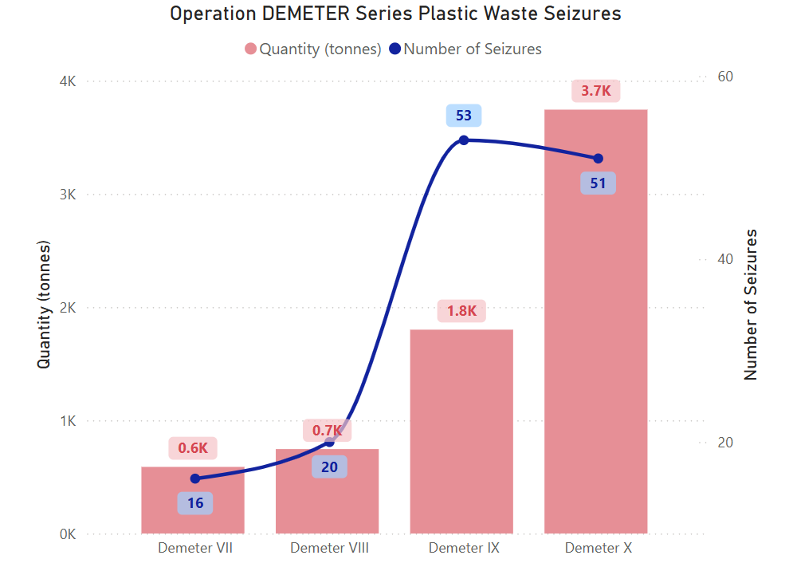
Plastic waste flows to the @ASEAN region from Europe have more than doubled.
Illegal traffic persists, but countries are tightening regulations and increasing detection and enforcement actions.
Learn more in our 1st Trendspotting Alert: https://t.co/UH2BMMa9Ne #WasteNet
Inspired by my mentor @RichardMunang (Dr),whose work continues to show that climate action can create jobs& opportunities,in line with the SDGs.His leadership motivates young Africans like me to turn challenges into solutions& drive positive change.
#RichardMunang#ClimateAction
Thank you @NWOKOCHASMITHC for these generous words. But let me turn the light back to where it belongs, on you.
What moves me is not that you were inspired, it is what you are doing with that inspiration. You are out there initiating, mentoring, writing, and rallying others toward climate action. That is leadership in motion, and it is entirely your own.
Never forget this. A mentor only lights a path. It is the mentee who chooses to walk it, and you are walking it with courage and conviction.
Africa does not need young people waiting to be saved. It needs young people like you, ready to build. You already are one of them. Keep converting challenges into opportunities. Keep lifting others as you climb.
The future you describe will not be handed to Africa. It will be built by people exactly like you.
Keep rising, Smith. I am proud of you.
Inspired by my mentor @RichardMunang (Dr),whose work continues to show that climate action can create jobs& opportunities,in line with the SDGs.His leadership motivates young Africans like me to turn challenges into solutions& drive positive change.
#RichardMunang#ClimateAction
Happy Father's Day to every father, grandfather, uncle, mentor, and every man quietly shaping lives through love, sacrifice, wisdom, and integrity. May your example continue to inspire generations. The greatest legacy is not what you own, but the lives you help build.
We have become very good at seeing crime at sea. The real question is: what happens next?
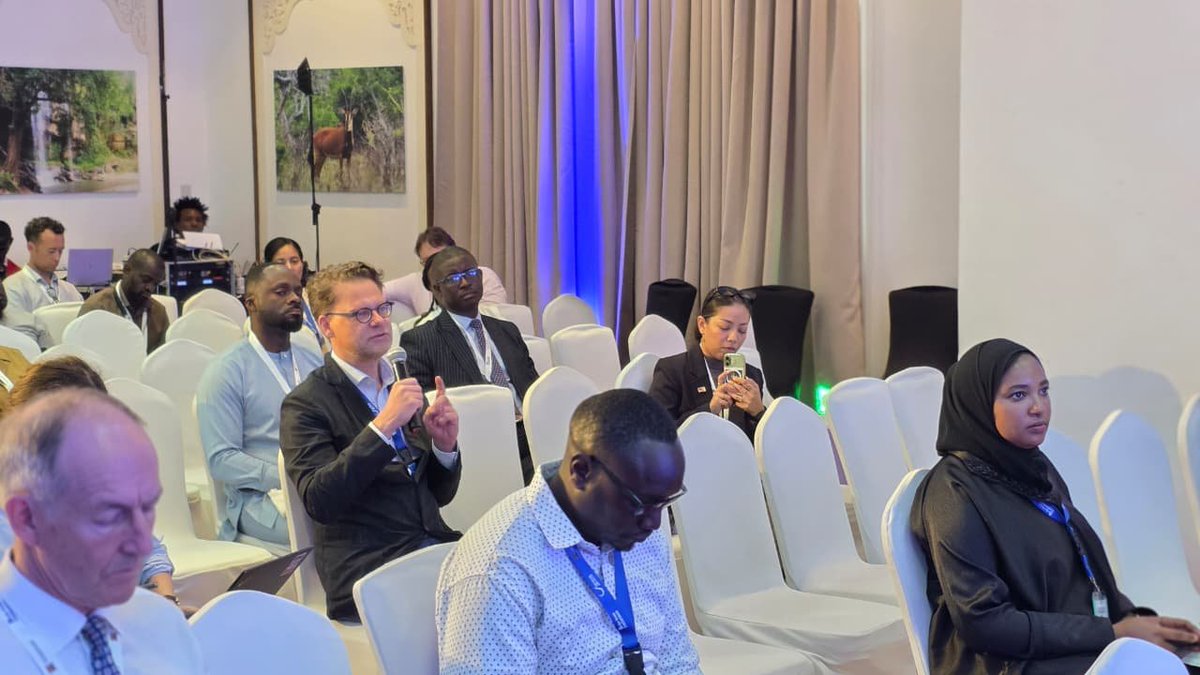
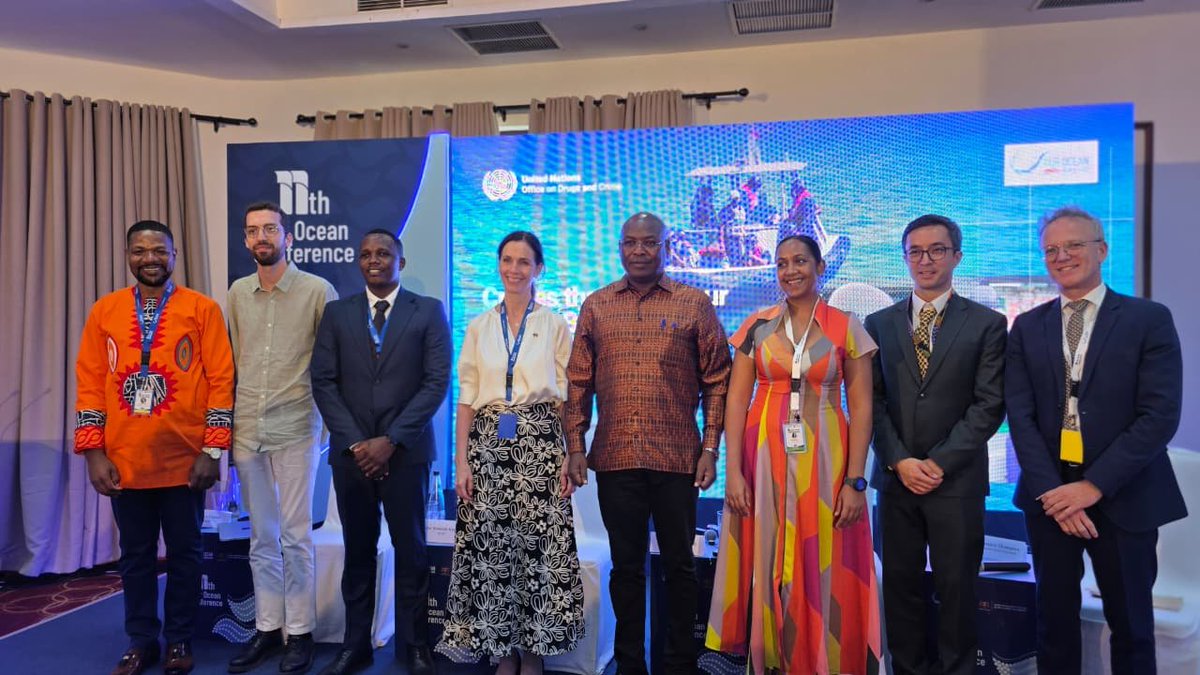
That was the powerful conversation I had the privilege of moderating during the Our Ocean Conference @UNODC side event on "Crimes that Affect Our Ocean: Bridging Maritime Security and Ocean Protection."
An outstanding panel reminded us that protecting our oceans is no longer only about fish. It is about justice, livelihoods, food security and stronger institutions. We explored how technology, regional cooperation, evidence, prosecution and integrity must work together if we are to stop organised crime at sea.
My sincere appreciation goes to every panellist for bringing practical experience, thoughtful leadership and inspiring solutions to the discussion.
I hope this conversation encourages many more people to see our oceans not simply as water, but as a shared responsibility worth protecting.
#OurOcean2026 #OceanAction #MaritimeSecurity #BlueEconomy #EnvironmentalJustice @UNODC_ENV@UNODCEastAfrica@UNODC_BMB
We have become very good at seeing crime at sea. The real question is: what happens next?
That was the powerful conversation I had the privilege of moderating during the Our Ocean Conference, @UNODC side event on "Crimes that Affect Our #Ocean: Bridging Maritime Security and Ocean Protection."
An outstanding panel reminded us that protecting our oceans is no longer only about fish. It is about justice, livelihoods, food security and stronger institutions. We explored how technology, regional cooperation, evidence, prosecution and integrity must work together if we are to stop organised crime at sea.
My sincere appreciation goes to every panellist for bringing practical experience, thoughtful leadership and inspiring solutions to the discussion.
I hope this conversation encourages many more people to see our oceans not simply as water, but as a shared responsibility worth protecting.
#OurOcean2026 #OceanAction #MaritimeSecurity #BlueEconomy #EnvironmentalJustice @UNODC_ENV@UNODCEastAfrica@UNODC_BMB
For years, when trafficked wildlife or timber was seized at an African border, the photograph at the end of the story was always the same. A warehouse of confiscated ivory. A pile of seized scales. A closed file.
The seizure was the end of the story. The network behind it walked away.
That is changing.
In Yaounde, from 2 to 4 June, judges, prosecutors, customs officers, investigators, police and eco-guards from 11 African countries sat in one room for a regional workshop on post-seizure investigations. The question on the table was simple and overdue. After the seizure, who follows the trail?
Working through evidence handling, chain of custody and real case scenarios, the room turned to one goal, building cases that reach beyond the courier to the organised criminal networks behind wildlife and timber trafficking, networks that cross borders and do not stop at any one country's line.
And here is the lesson worth carrying far beyond that room. A post-seizure investigation produces more than a case file. It produces a map. It shows where networks recruit, which communities depend on illegal wages, where crimes that affect the environment are quietly bleeding economies, unpaid taxes, stolen resources, young people pulled into illicit work. The same evidence that convicts a trafficker is also evidence for policy and investment. It tells governments and partners exactly where the legal economy must be built, the cooperative, the legal enterprise, the livelihoods that make a recruiter's offer worthless. Opportunity itself becomes deterrence.
Participants also called for deeper, lasting cooperation among Africa's investigators, prosecutors and judges on crimes that affect the environment. If that call travels its full distance, the continent's response will no longer stop at the border, because the networks never did.
None of this would exist without Cameroon's welcome as host, the institutions of the 11 countries in the room, and the @UNODC_ENV@UNODC_BMB@UNODC teams who carry this work day after day.
My grandmother used to say: "The wise hunter does not celebrate at the trap. He follows the tracks back to the den."
That is what the room in Yaounde was about.
If there is anything I have said that you should remember, let it be this. A seizure ends a shipment. Justice ends the network. Opportunity makes sure it never comes back.
#endENVcrime #CriminalJustice #CrimesAffectingEnvironment #Africa
One of the greatest gifts you can give yourself is the courage to be yourself. The moment you begin living to impress everyone, you start chasing the wind instead of your purpose.
Today, I had the privilege of representing @UNODC@UNODC_ENV@UNODC_BMB@UNODCEastAfrica at the Our #Ocean Conference high-level plenary on Building National and Global Capacity for Effective Maritime Domain Awareness. My message was simple: the future of ocean protection lies not only in detecting crime at sea, but in turning detection into justice.
For years, we believed the greatest challenge in protecting our oceans was that we could not see what was happening beyond the horizon.
Today, I believe that is no longer true.
Speaking at the Our #Ocean Conference plenary on Building National and Global Capacity for Effective Maritime Domain Awareness,
I shared a simple message.
The greatest gap is no longer technology.
It is what happens after technology has done its job.
Today, satellites, artificial intelligence and vessel tracking systems can detect suspicious activity faster than ever before. But a vessel that is detected and never investigated, prosecuted or convicted teaches criminal networks one dangerous lesson: the system can see, but it cannot stop them.
That is why I argued that maritime awareness must become a criminal justice chain.
We have seen this in practice. In one operation, what appeared to be an illegal fishing vessel was intercepted only for authorities to discover more than 300 kilograms of heroin and methamphetamine on board. One detection uncovered illegal fishing, drug trafficking and organised crime operating through the same vessel.
This is exactly why our work goes beyond technology.
Through @UNODC #FishNET work, we have brought fisheries authorities, coast guards, investigators, prosecutors and judicial actors into the same room, helping transform maritime awareness into coordinated criminal justice action. We supported the development of Kenya's first Fisheries Corruption Prevention Policy, strengthened maritime coordination mechanisms, and helped build the capacities of more than 3,000 practitioners to investigate and prosecute crimes that affect our oceans.
But perhaps the idea that generated the greatest discussion was the third.
Enforcement data should not stop in an operations room.
The same information that helps identify criminal networks can also show governments where revenues are being lost, where coastal communities are most vulnerable, and where investments in jobs and livelihoods can reduce the conditions that allow organised crime to flourish.
That is where I believe the future lies.
Not simply in seeing more.
But in connecting what we see to justice, stronger institutions and better development decisions.
My grandmother often reminded me, "A fence is not built to be admired. It is built to hold."
The same is true of technology.
Its greatest value is not that it helps us see crime.
Its greatest value is that it helps us stop it.
#OurOcean2026 #OceanAction #BlueEconomy #MaritimeSecurity #CriminalJustice #UNODC #FishNET @UNODC_ENV@UNODCEastAfrica@UNODC_BMB
At #OurOcean2026 in Mombasa, UNODC convened the side event, Crimes that Affect Our Ocean.
The strongest takeaway: protecting our oceans is no longer just about seeing crime at sea. It is about turning detection into justice.
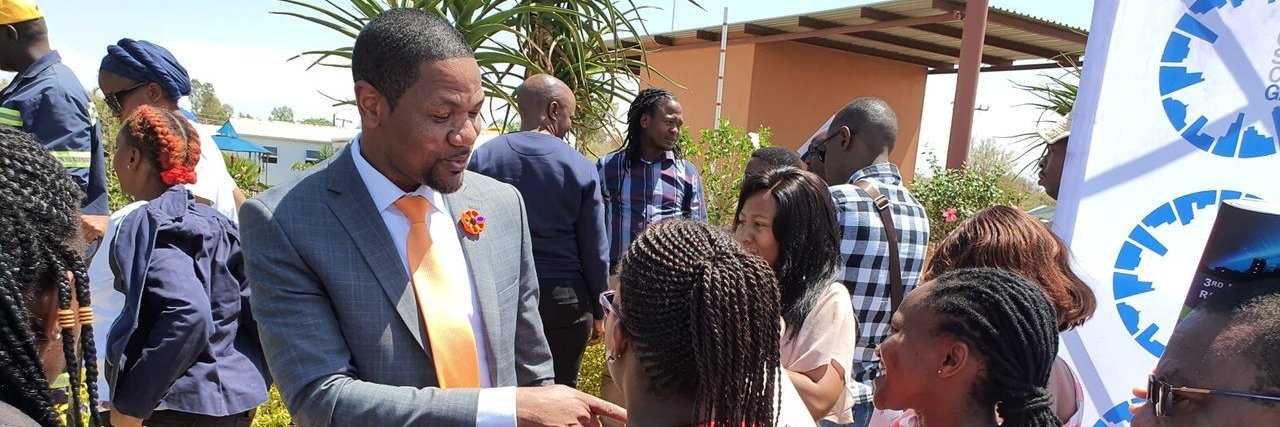
Always inspiring to connect with young Cameroonians and the young at heart across Africa and world. Today, they sought out to meet me , and I remain humbled that they find value in the work I do. If my journey reminds even one young person that their dreams are valid and possible, then it is all worthwhile. Thank you all.
For too long, crimes at sea disappeared beyond the horizon.
Today at #OurOcean2026 in Mombasa, I had the privilege of moderating the @UNODC side event: "Crimes that Affect Our Ocean: Bridging Maritime Security and Ocean Protection."
Together with partners from Norway, with the Ambassador of #Norway to Kenya @NorwayAmbKenya Skylight, IUCN, the Environmental Justice Foundation, regional coordination actors and the Government of Kenya, one message emerged clearly:
Detection without justice is only observation.
Technology can find suspicious vessels. Regional cooperation can track them. Inspectors can board them. But protecting oceans requires evidence, accountability and convictions.
Because behind illegal fishing often sit corruption, trafficking, forced labour and other organized crimes.
Protecting our oceans is not only an environmental imperative.
It is a justice, development and security imperative.
#UNODC #OurOcean2026 #BlueEconomy #EnvironmentalJustice #FishNET @UNODC_ENV
Many people think the biggest challenge facing our oceans is what we cannot see.
As the Our Ocean Conference opened today in #Mombasa, I spent time with colleagues and partners preparing for two important conversations this week.
Tomorrow, at our UNODC side event, we will explore how crimes affecting our oceans go far beyond illegal fishing. Behind a single suspicious vessel can lie corruption, fraud, trafficking, money laundering and the theft of livelihoods from coastal communities.
On Thursday, during the High-Level Plenary on Marine Domain Awareness and Maritime Security, we will examine a critical question: once technology detects suspicious activity at sea, how do we turn that information into investigations, prosecutions, convictions and ultimately deterrence?
Because a watchman who sees a thief but never raises the alarm is not protecting the village.
Likewise, detection alone does not protect our oceans.
Action does.
Join us tomorrow . Wednesday 17 June, 13:00, Shimba Room, PrideInn Paradise.
Up to $23 billion of fish is stolen from the ocean every year.
This week in #Mombasa, everyone is asking how to protect the ocean. @UNODC is the one room asking a harder question. Who answers when it is robbed?
I will moderate this side event, "Crimes that Affect our Ocean: Bridging Maritime Security and Ocean Protection." For too long the ocean has been a crime scene with no one to answer for it. That is the gap @UNODC exists to close.
We do this with member states and in this side event Kenya, with Norway, and with partners who live this work, Skylight, the Regional Coordination Operations Centre, the Environmental Justice Foundation and IUCN.
My grandmother used to say, a fishing ground is a shared granary, and the one who empties it in the night leaves the whole village hungry by morning. The ocean is that granary. This week, in #Mombasa, we begin to guard it.
If there is anything I have said that you should remember, let it be this. The ocean is not just a policy issue. It is a justice issue.
Join us. Wednesday 17 June, 13:00, Simba Room, PrideInn Paradise.
#OurOcean #endENVcrime #CrimesAffectingEnvironment #Kenya @UNODC_ENV@UNODCEastAfrica
🌊 Are you attending @OurOceanOOC in Kenya this week?
Join @UNODC & partners on 17 June at 13:00 in the Simba Room for a discussion on strengthening the link between maritime security and ocean conservation by addressing crimes that affect the marine environment.
Afu started learning about innovative volunteerism at age two.
Today, she confidently explains ideas that connect service, innovation, and problem-solving.
This reminds me that young people are not leaders of tomorrow; they are solution creators today.
Imagine millions of African youth applying AI, science, and innovation to unlock opportunities from our natural resources, reduce waste, strengthen circular economies, and create jobs.
The greatest resource in Africa is not beneath the ground.
It is the potential inside our young people.
Invest early. Mentor intentionally.
The future responds to those prepared to shape it.
Crimes that affect the environment cross borders and are often linked to organized crime & corruption.
At the @UN General Assembly High-level Debate, countries discussed how to strengthen criminal justice responses and int'l cooperation.
📰https://t.co/3rT24QcbGE
#endENVcrime
Crimes in the fisheries sector extend far beyond illegal fishing - fraud, corruption, money laundering, trafficking in persons.
Through the #FishNET project, @UNODC works with law enforcement and prosecutors across Africa and Asia to detect, investigate and prosecute the full range of organised crime in the fisheries sector.
#WorldOceansDay ℹ️https://t.co/sHJ7PBXkfx