Was genuinely impressed that Giza remembered me as an early open source contributor. They’re not just blazing trails in AI and blockchain, they’re also continuing to give back to the their supporters. It's an inspiring team!
Season 1 of the $GIZA airdrop is LIVE: 13.8 M tokens are on their way to 15,882 qualified members who helped pioneer our vision of intelligent markets.
It’s the first wave of ownership in agent‑driven finance and if you are reading this, Season 2 has already begun.
https://t.co/wumkRFu4Ah
Scheduled to visit Rome for just one day, and it happened to be today.
Struck by the contrast of a simple wood coffin with no flowers, amidst central Rome’s everything.
@Chazzym22 Nearby, yeah. I’d never been to Rome though. And the northerners always downplayed the south, so my expectations were way too low. Rome blew us away. Even the kids didn’t mind 12 hours of sightseeing. (I have to partly credit Gladiator, that movie got them fully amped for Rome.)
There's a shocking fact about AI that nobody tells you: You can catch up to the public AI research frontier in just 2 weeks. Yes, really.
I've built a $150M annual revenue startup over the last 8 years and If I were to start a company today, I’d drop everything and go all-in on AI.
But like many busy software builders, I felt lost—overwhelmed by the noisy, crowded and fast-moving modern AI landscape. And I wasn’t alone.
So I spent my entire holiday diving deep into AI research—reading 30+ papers, watching hours of lectures, analyzing trends, and catching up to the research frontier.
✨ Here’s what I learned:
- You don’t need months (or years) to catch up.
- You don’t need a PhD or decades of ML experience.
- You need fewer than 20 papers and 2 weeks to understand the major breakthroughs shaping AI today.
It's because the technology is extremely nascent and most techniques that came before are no longer relevant:
- ChatGPT is barely 2 years old and Transformers are only 7 years old.
- Most game-changing discoveries happened within the last 4 years, driven by a few breakthrough ideas, scaling laws, and efficient matrix multiplication.
The biggest secret?
Many groundbreaking AI papers with thousands of citations are surprisingly simple and applied, like adding "let's think step by step" to the prompt, or simply asking the LLM over and over again to improve its answer (Self-Refine).
I realized there are tons of founders and builders in the same boat—wanting to dive deeper into AI but unsure where to start.
I've created an essential AI Guide that helped me catch up, in just 2 weeks, to the frontier of public AI research to figure out where the next opportunities and gaps were:
- Curated list of only the most important papers
- Simple explanations of key concepts
- Clear pathway to understanding the frontier of modern AI
It’s perfect for:
- Founders expanding into AI
- Builders wanting to innovate at the frontier of AI
- Investors looking to separate the signal from the noise
👇 Want the full guide?
- Like and Share this post
- Comment "AI Guide"
- I'll send you the complete guide
(ps, I’m also teaming up with @VishalVasishth, co-founder of @obviousvc with @ev (focused on large-scale societal impact companies like Twitter, Medium, Beyond Meat), to host a small meetup to discuss what's working and needs to be solved in the AI stack in SF. Message me if you're interested)
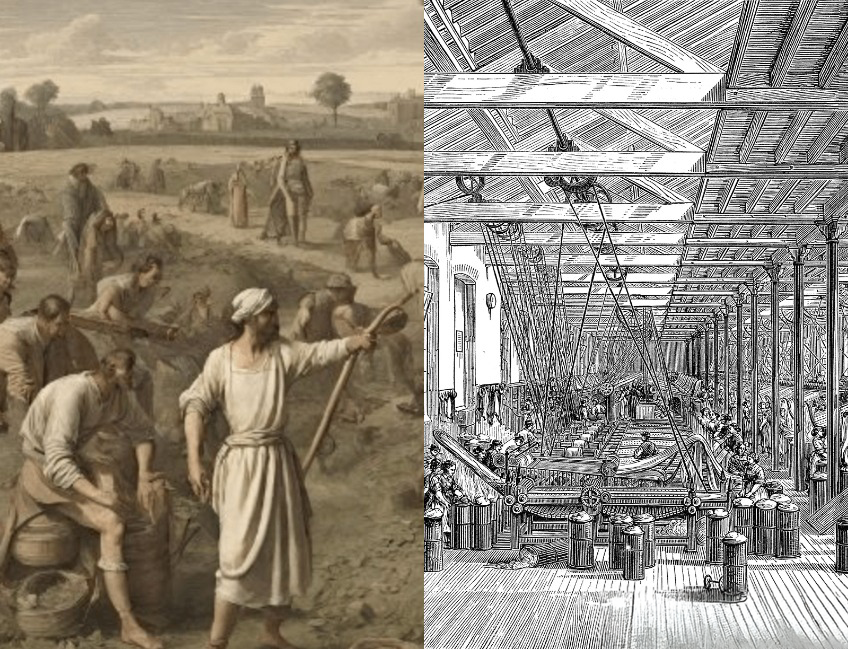
We're witnessing a fundamental shift in technology.
Just as computers revolutionized paper processes...
Programmable cryptography is transforming computerized systems.
Here's why this could be just as important as the Industrial Revolution: