Peak ridiculousness. He is making himself so easy to tune out. In pretty much every corner of the world, people are just laughing at the latest baloney from him and his various Secretaries of Bluster. The lamest of lame ducks.
Trump: "If we were playing hardball, all we'd do is say we're going to do no trading with Canada. If we did no trading with Canada would save $90 billion."
Roy knows whereof he speaks...he could likely add a first-hand account of the profound bad faith regarding the Gordie Howe agreement as well. None of this treatment of partners and allies should be normalized.
Let’s dispense w/ this patronizing “best deal in the world” nonsense. US,CDA&MX entered into a legally binding trade agreement in 2020(driven & praised by Pres Trump). He then blew up that agreement early in his 2nd term) - an agreement which all 3 parties had respected until then. the tariffs introduced against CDA were illegal - and remain so. Consistent with provisions in USMCA-CUSMCA, CDA retaliated, legally. US threatened more tariffs. CDA was prepared to accept that some of the USA’s illegal tariffs would endure, but at a reduced rate. Then the US got greedy, wanting to kill truck assembly in CDA (as a precursor to killing the whole CDN auto sector). The US made other offensive demands, including signalling that CDA should refrain from pursuing alternatives to this abusive relationship we now find ourselves in. The US reserves the right, on any overnight Presidential whim, to breach any new agreement w/ CDA - and CDA is supposed to suck it up and forswear any retaliation in the event.. The other countries, that got worse agreements from the US didn’t have legally binding trade agreements in place w/ the US in the first place. CDA does (did?). It wasn’t CDA that chose to blow up CUSMA-USMCA (described by Pres Trump at the time as the best trade agreement in history). It was the US - which, in the 2nd Trump Admin, has decided the US isn’t bound by its own (Congressionally ratified) laws. The US has decided it no longer wishes to be bound by any trade laws it has previously negotiated (including by Pres Trump), and has the gall to lecture CDA for having insisted on a win/win ‘Deal’ that would respect CDN sovereignty and that the US would commit to honouring. What kind of fools do you take us for?
@PDeplorabo@paulvieira Sorry, Mr Deplorabo, your data are wrong.
Gold exports actually declined in July. Canada's July export surge in July was led by aircraft and food exports.
More good (great) 🇨🇦 news:
"...exports of aircraft were up 80.1% and contributed the most to the increase in the product section...exports of farm, fishing and intermediate food products also increased, rising 5.5% to their highest level since March 2023. Exports of canola increased 43.2%, mainly on higher shipments to China, Pakistan and Japan. Canola exports were up 32.2% in the first seven months of 2026 compared with the same period in 2025..."
Canadian exports to the US fell 6.6% in July, the biggest % decrease since April 2025. Canadian exports to non-US markets rose 7.4% in July, a third consecutive monthly increase and marking a record high of C$25.6 billion. https://t.co/LAEqMskO6k
@jkenney doing great public service tracing the interlinking and overlap between Maple MAGA influencers, CPC and the American MAGA mothership.
"The Hegseth post followed a similar pattern. Right wing Canadian quisling posts mockery of Canada, it ricochets around the US online right, gets on the radar screen of a social media staffer in the Trump Administration, and voila: a post from the Secretary of War body shaming young cadets in Vernon, BC. High fives all round!
In this case the US traction came from the "Pleb Reporter" account of libertarian live streamer Nick Belanger, who was one of the Maga North / Alberta separatist content producers given free red carpet treatment at the @CPC_HQ Convention earlier this year."
This whole sordid incident highlights a big problem for Canadian conservatives.
The trolling and mockery of people at a Canadian cadet camp (including a teenager) by Hegseth started with posts from alt right Canadian "influencers," following a now familiar pattern.
It doesn't take these anger merchants of the Canadian right very long to figure out that there is a *much* bigger market for their bile in the United States.
The US is 8x our population, but polling suggests that the percentage of Americans who are tuned into MAGA style populism is at least 4 times greater than Canada.
So by producing content that appeals to the MAGA base, right wing Canadian content producers have a huge incentive to speak to an adjacent American market that is orders of magnitude larger than their accessible audience in Canada. That gets monetized through higher engagement numbers, and if they're really lucky, invitations to appear on MAGA media outlets that build their brand.
One way of doing so is content that mocks Canada. That appeals both to the small cohort of perennially angry hard right populists in Canada, plus the much larger number of Americans prone to believe that Canada is a socialist dystopia under the thrall of the Chinese Communist Party, etc.
The Hegseth post followed a similar pattern. Right wing Canadian quisling posts mockery of Canada, it ricochets around the US online right, gets on the radar screen of a social media staffer in the Trump Administration, and voila: a post from the Secretary of War body shaming young cadets in Vernon, BC. High fives all round!
In this case the US traction came from the "Pleb Reporter" account of libertarian live streamer Nick Belanger, who was one of the Maga North / Alberta separatist content producers given free red carpet treatment at the @CPC_HQ Convention earlier this year.
One prominent Conservative MP (who should know better) said he was "proud to welcome these content creators, these citizen journalists who serve to uphold the truth" to the Convention.
If that is really the attitude of the Conservative Party towards these unpatriotic anger merchants, it should get used to a very, very long run in opposition.
Fortunately, it doesn't have to be this way. A positive, patriotic conservatism that focuses on the concerns of the broad mainstream rather than these marginal voices of division can win back the confidence of Canadians.
Lipstick on a pig and other fantasies from the Maple Maga squad.
"Politics" is not what stands in the way of a healthy Canada-US trade relationship. Trump is. America First is. The chickenhearts in the Congressional GOP.
Meanwhile, most Americans, and their politicians, and most states are supportive of Canadian trade. They know what Trump denies: to most of the USA Canada is America's best customer. As we know they have been our best customer.
But not Trump, Vance, Lutnick, Navarro, MAGA et al. Nor the compliant Washington GOP.
Don’t let politics get in the way—it’s time to finalize the Canada-U.S. trade deal
We end the week seemingly further from resolving the Canada-U.S. trade impasse than at virtually any point over the past 18 months, even as the basic contours of a deal appear within reach. That’s the maddening contradiction of the past seven days.
Earlier this week, I questioned whether Prime Minister Mark Carney had walked away from an agreement that, on balance, might have been good for Canada. By his own account, the two sides had made important progress toward a deal that would preserve tariff-free access for the vast majority of Canadian exports and significantly reduce tariffs on steel, aluminum and autos. Businesses on both sides of the border would have gained a measure of certainty they’ve lacked for a year and a half.
Carney’s contention was that unacceptable last-minute American demands scuppered the agreement. But subsequent comments from U.S. Trade Representative Jamieson Greer have cast doubt on at least some of that account. Greer denies that Washington demanded a formal say in Canada’s future trade agreements. He also says that Canadian-content discoverability rules were never an American “red line.”
Dominic LeBlanc has responded by welcoming what he calls the American “withdrawal” of its positions on discoverability and labelling. He also says that further U.S. “clarifications” could create the possibility of a mutually beneficial agreement.
The diplomatic off-ramp is obvious enough. The so-called sticking points no longer look much like sticking points. On these questions at least, little now stands between the two sides and the broad bargain they had largely negotiated last week.
The problem, of course, is politics. President Trump’s offensive behaviour, including his latest nonsense about renaming Lake Ontario, has made it harder for any Canadian government to negotiate with him. Each new insult reinforces the fear that compromise amounts to capitulation and that no agreement with Washington can ever be trusted.
The political temperature in Canada has risen accordingly. Columnists and commentators increasingly describe the dispute in existential terms, equating retaliation with strength and negotiation with weakness. Any agreement that reflects the basic asymmetry between the two countries will now be condemned as surrender, regardless of its actual terms.
Carney has also invested heavily in the language of sovereignty and national resistance. That may have been understandable, but it has also narrowed his room to manoeuvre. Even if Washington walked away from cultural demands or trade policy constraints, returning to the broad bargain would require him to de-escalate after a week spent presenting the dispute as a test of national resolve.
So just as a path out of this stupid and costly trade war becomes visible, the president’s conduct and our own domestic politics are making it harder to take. The terms may now counterintuitively be the easier part. What’s missing in both capitals is a politics that can accommodate them.
https://t.co/jO6uGCqbs8
Scott Bessent’s comments about Canada today were arrogant, demeaning and contemptuous. The gratuitous mocking of one of America’s largest customers and closest allies was out of line. Serious disagreements deserve serious statesmanship — not cheap insults. https://t.co/WzUZb7YJ9j
I don't think this is accurate. Yes, Premier Ford's advice was sound and probably impactful. The PM does listen to the premiers.
But Premier Ford was not exercising a "veto". Nor was he alone amongst the premiers in having significant reservations about the emerging potential agreement. Most of them did and do appear to have their own jurisdictional concerns (dairy, lumber, etc) as well as overriding concerns about breaching CUSMA in accepting significant widespread tariffs, limitations on Canada's trade relations with other countries, and with the basic reliability of any agreement with Trump.
Assuming that @IvisonJ’s reporting is right, the implications are pretty big.
Prime Minister Carney was prepared to accept the deal with the administration and only leaned into the explanation about “sovereignty” and French language protections after Premier Ford refused to restore U.S. alcohol to the shelves because of the auto tariffs.
If true, it means that we walked away from what the prime minister himself believed was a good deal because the premier insisted on zero tariffs for autos.
It probably reinforces the Conservatives’ call to recall Parliament to get to the bottom of this. Canadians should know whether a deal was lost because one province refused to accept its consequences for one industry.
I have a lot of time for @Sean_Speer, and often agree with his takes. I just find it weird to see Canadian commentators presented with one detailed version of events by Canada's Prime Minister and chief negotiator versus another from America's President, chief negotiator and commerce secretary, to default over to the other country's claims.
This does strike me as an accurate description of where we are:
https://t.co/IPS4qulvo1
I was referring to the mythologies in which Maple MAGA revels, and their reflexive preference for Trump Administration narratives over those of our own representatives.
Mark Carney and Janice Charette have provided a ton of information regarding the significant shortcomings of the negotiations. Accepting tariffs high enough to strangle our auto and steel industries. Eroding CUSMA Canadian content exemptions. Agreeing to tariffs in areas tariff-free under CUSMA. Limitations on Canadian agreements with other countries. I don't believe we were, or are, close to an agreement. And clearly not one which provides certainty.
People are free to dismiss those in favour of the claims offered by Trump's negotiators. I don't.
If protecting CUSMA, restoring freer trade, ending Trump's tariffs, and getting back to business had been on the table, we'd have an agreement. But none of those things were.
What was on the table was undermining CUSMA and free trade, accepting tariffs on many sectors, interference with replacing American trade with other other trade relationships, and continuing uncertainty in an unchecked stream of future punitive actions.
@BenWoodfinden Heretofore accurate, but susceptibility to Trump Administration talking points suggests otherwise. Perhaps a momentary lapse, but there was a lot in those negotistions to walk away from.
@LynetteCorbett Always enjoy dinner with @jkenney whenever the opportunity presents itself.
Much less interested in the Maple Maga, anti-vax, racist, separatist cohort, thanks. Fortunatrky, while noisy, that is a small, self-absorbed and ineffectual faction.
Unfortunate, but an accurate description of Trump's North America in 2026. Also applies in most NATO countries, although not as urgently as it does in Canada.
Fmr U.S. Ambassador Susan Rice: "If you're sitting in Canada, whether you're a farmer or a citizen or in the PM's office, the only rational conclusion is that Canada has to reduce its reliance on the US. It's got to diversify its economic partnerships, its security relationships. It's got to look out for its own interests, and it can no longer count on a mutually beneficial, enduring relationship with the US."
On August 27, U.S. President Donald Trump signed an executive order directing the American federal government to call Lake Ontario “Lake America.”
The order followed the breakdown of Canada–U.S. trade negotiations and an escalating tariff dispute. It directs U.S. federal agencies to adopt the new name—but it does not determine what Canada, international organizations or anyone outside the American government must call the lake.
Before Lake Ontario was an internationally recognized boundary, it already had a name.
“Ontario” comes from the Wendat word “Ontari’io”, commonly translated as “the lake is beautiful” or “the lake is great.” The name is more than 400 years old, predating both Canadian Confederation and the United States’ Declaration of Independence.
The lake’s history also shows why neither country can treat it as its own.
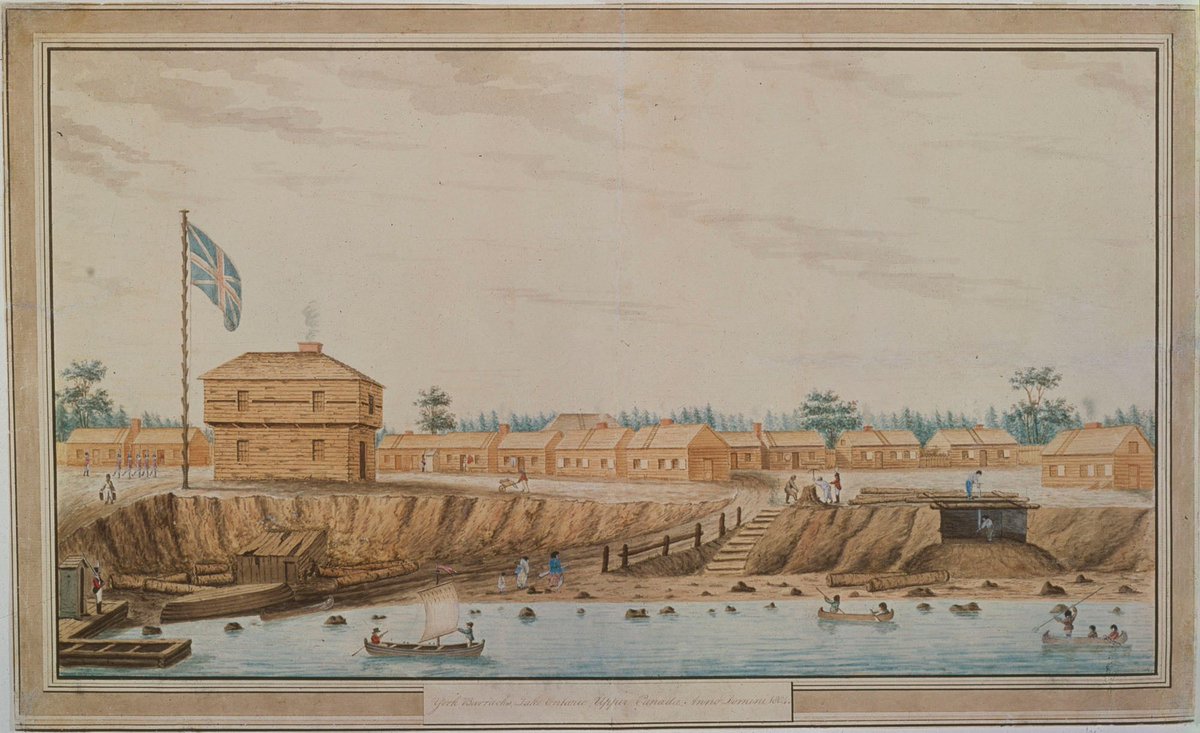
During the War of 1812, control of Lake Ontario was essential to moving troops and supplies. The British operated from Kingston, while the Americans built ships at Sackets Harbor, New York. What followed was an extraordinary freshwater naval arms race.
In 1814, British shipbuilders launched HMS St Lawrence, a massive warship carrying 112 guns. Its presence helped secure British control of the lake late in the war without it ever fighting a major battle.
But the more important development came afterward.
In 1817, Britain and the United States reached the Rush–Bagot Agreement. On Lake Ontario, each side was permitted only one small armed vessel. The fleets that had represented their struggle for control were dismantled, beginning the gradual demilitarization of the Great Lakes.
The 1909 Boundary Waters Treaty strengthened cooperation between the two countries. It protected shared navigation rights and created the International Joint Commission to help Canada and the United States prevent and resolve disputes over their boundary waters.
Lake Ontario has been a transportation route, a battlefield, an international boundary and an economic highway. Over time, it also became an example of something Canada and the United States have historically done remarkably well: managing shared geography through treaties, institutions and cooperation.
A president can change the name used on his government’s maps.
But that cannot erase the Indigenous history carried in the name Ontario or change the geographical reality that has shaped relations across the lake for centuries:
The lake is shared.
Sources: White House, Executive Order 14420, August 27, 2026; Rush–Bagot Agreement, 1817; Boundary Waters Treaty, 1909; International Joint Commission; Naval History and Heritage Command; Parks Canada, Library Archives Canada
The weakness of the opposition to Trump as he sabotages the US - the sycophancy and cowardice of Republicans, the fecklessness of Democrats, the apathy of the majority of the population who oppose him but do nothing - is what should scare us about the future of the US trajectory
"Trump can't negotiate with Iran. He can't negotiate with Canada. I went into a bookstore the other day. The 'Art of the Deal' has been moved to the humor section."