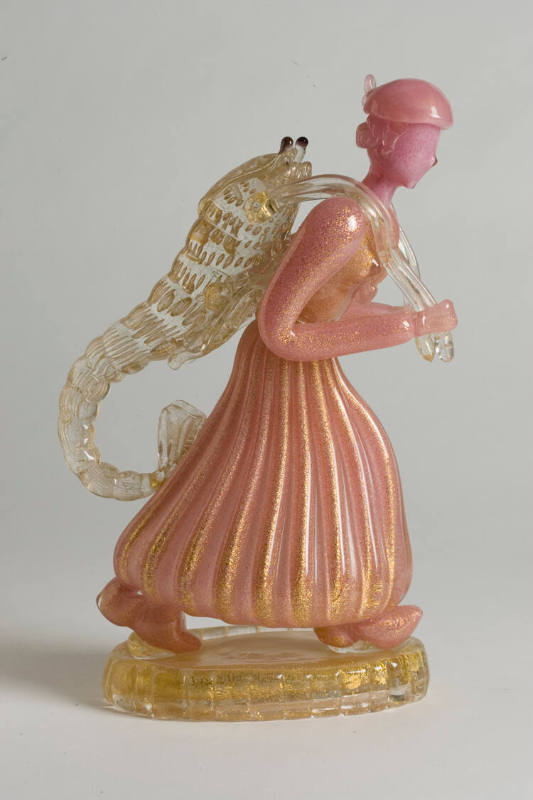
Woman With Shrimp by Ercole Barovier (Italian, 1889-1974), 1930s (approximate). Medium: Blown and solid-worked glass; gold-toned metallic particle effects. Collection: Chrysler Museum of Art, Norfolk.
Produced when Art Deco aesthetics were at their peak, this figure is completely devoid of facial features; instead, the focus is on the fluidity of the form and the material itself. The woman carries a large shrimp on her back.
The long, pleated dress she wears is shaped from a dense pink glass paste. Metallic (gold-toned) particles are trapped inside -- using a technique similar to avventurina, though I couldn't fully confirm this -- which creates a metallic shimmer on the surface.
I want to talk about the artist. Ercole Barovier wasn't actually a traditional glassblowing master, but a designer with a medical background. After his studies, he joined the family business and took over management in 1926. He approached the workbench not with the muscle memory of a craftsman, but with the analytical intelligence of a researcher.
While other masters of the period repeated centuries-old recipes, Barovier tried vastly different techniques. He experimented with metal oxides in his laboratory, developing numerous unique formulas such as "hot coloring without fusion" (colorazione a caldo senza fusione).
Bust of Maria Barberino Duglioli, Giuliano Finelli, 1627, no computers, no electric machines or nanometer-precise programs, only hammer, chisel and skills.
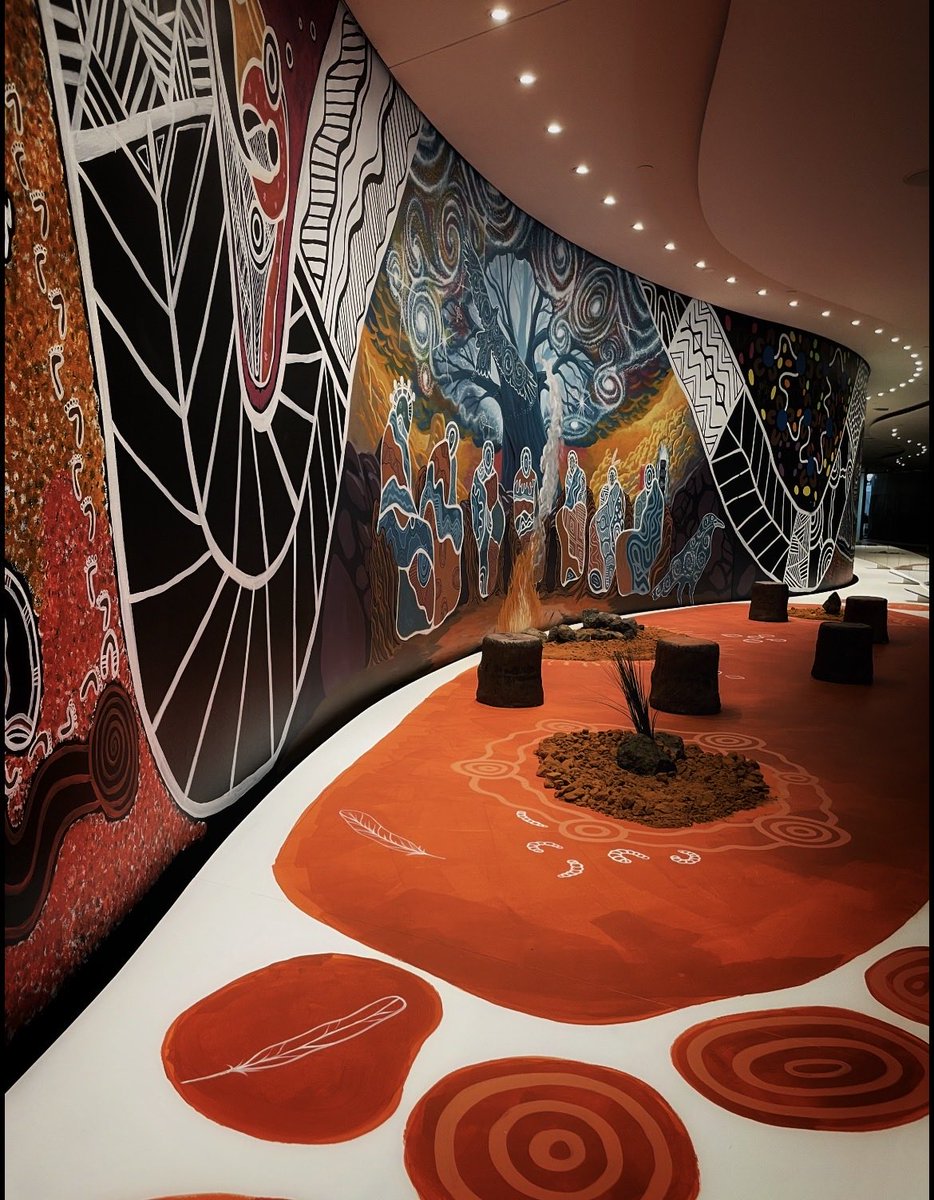
If your idol of despair is a 72 year old red head racist, then this exhibition probably isn't for you.
But for everyone else who doesn't fear culture, then there’s a new exhibition showcasing emerging First Nations artists at the Melbourne Museum.
It's beautiful. 👇🏼
The Library of Celsus
This architectural marvel is one of the few remaining examples of great libraries of the ancient world located in the Roman Empire.
The GM Futurliners were a group of custom vehicles, styled in the 1940s by Harley Earl for General Motors, and integral to the company's Parade of Progress—a North American traveling exhibition promoting future cars and technologies.
A hotel project in Antakya, Turkey accidentally unearthed a 9,000-square-foot Roman mosaic laid down in the 4th century.
Rather than covering or destroying the find, the owner changed the project plans.
The hotel was built around and above the ruins, with the structure "floating" on 66 massive columns, and now houses the archaeological site inside.
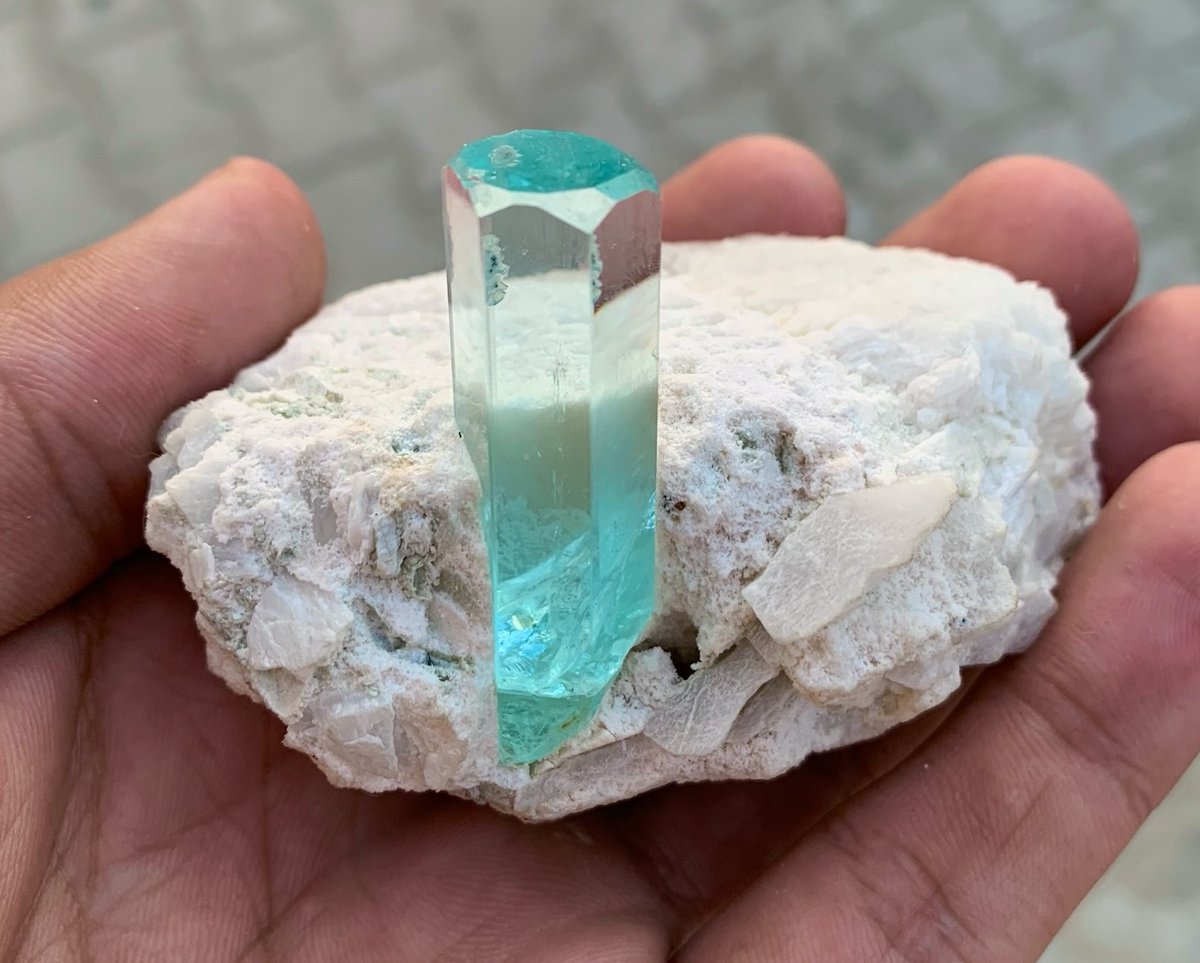
Presenting these extremely exquisite piece of Aquamarine crystal having pure clarity with complex Termination and truly rich color grown on beautiful white Albite rock
Photo: mfm.08
Haris & Hafeez