In 1977, a 15-year-old boy asked his father a question that would change both of their lives—and eventually inspire millions around the world.
The boy was Rick Hoyt.
Rick was born with cerebral palsy, a condition that affected his ability to control his muscles and speak. When he was young, doctors told his parents that he would never communicate and would likely never live an independent life.
At the time, many families were encouraged to place children with severe disabilities in institutions.
But Rick’s parents refused.
His father, Dick Hoyt, and his mother, Judy, believed their son deserved the same opportunities as any other child. They fought to keep him included in school and everyday life, even when the system often worked against them.
Years later, engineers at Tufts University helped develop a communication device that allowed Rick to type by moving his head against a switch.
For the first time, he could express his thoughts.
Then one day in 1977, Rick typed a simple request.
A classmate had been paralyzed in an accident, and a charity race was being organized to help him.
Rick turned to his father and asked:
“Dad, can we run in that race?”
Dick was 36 years old and had never been a runner.
He wasn't trained. He wasn't an athlete.
But he didn't hesitate.
He said yes.
The race was about five miles long. Rick sat in a wheelchair while Dick pushed him from behind.
They finished near the back of the field.
There were no cameras, no headlines, and no special attention.
But later that evening, Rick typed words his father would never forget.
“Dad, when I’m running, it feels like I’m not handicapped.”
For Dick, everything changed in that moment.
He realized running gave his son a feeling of freedom that everyday life rarely could.
So they kept going.
What started as one race eventually became a lifelong journey.
Over the next four decades, they became known around the world as Team Hoyt.
Together, they completed more than 1,100 races, including 32 Boston Marathons, multiple triathlons, and six Ironman competitions.
During Ironman events, Dick pulled Rick through the swim in a small raft, carried him on a specially designed bicycle during the cycling stage, and then pushed him through an entire marathon.
It required extraordinary effort.
But their story was never really about sports.
It was about possibility.
At a time when many people underestimated what individuals with disabilities could achieve, Team Hoyt challenged those assumptions every mile they traveled.
When people asked Dick how he managed such incredible physical feats, he always gave credit to his son.
“I’m just lending Rick my arms and legs. He’s the one with the heart.”
Rick had his own view.
“He was my motor,” he once said. “I was his heart.”
Together, they became far more than father and son.
They became a symbol of determination, inclusion, and unconditional love.
Dick Hoyt passed away in 2021 at the age of 80.
Rick followed in 2023 at the age of 61.
Their races eventually ended, but their message never did.
The story of Team Hoyt was never about crossing finish lines first.
It was about believing in someone so completely that you refuse to let limits define their future.
A father who became his son's strength.
A son who became his father's purpose.
And a lesson that still inspires people today:
Sometimes love is powerful enough to carry both of you forward.
The hardware store closes at 6PM.. It's 5:58 when a kid walks in. The kid can't be more than sixteen. Soaking wet and shaking from the rain...
"We're closing." Tom says.
"Please. I just need a lock. For a door."
Something in the kid's voice. Terror. Desperation.
"What kind of lock?"
"I don't know. Just one that keeps people out."
The kid's got a black eye. Fresh. The kind that's still swelling.
Tom doesn't ask. Just walks to aisle seven. Shows him the locks. The kid reaches for the cheapest one, $8.99.
"That one's garbage," Tom says, "Won't stop anyone determined."
He hands him a deadbolt. Heavy duty. $34.99.
The kid's face crumbles. "I only have twelve dollars."
They stand there. Store empty except for them.
Tom takes the deadbolt to the register. Rings it up. "Twelve dollars."
"But,"
"Sale price. Today only."
The kid knows there's no sale. Knows this old man is lying. Tries not to cry and fails.
Tom bags it. Adds a screwdriver. Free.
"You know how to install it?"
The kid shakes his head...
They drive in Tom's truck. Don't talk. The kid directs him to a rundown duplex on the east side.
Upstairs apartment. Door frame cracked. Old lock broken, hanging loose.
Tom installs the deadbolt. Takes him fifteen minutes. Tests it. Solid.
Hands the kid both keys.
"Someone tries to get in, you call 911. You hear me?"
The kid nods.
Tom's halfway to his truck when he hears it, "Why?"
He turns around. The kid's standing in the doorway, backlit, holding those keys like they're made of gold.
"Why did you help me?"
Tom thinks about his own son. Twenty years ago. Different city. Same desperate eyes. Didn't make it.
"Because you asked," Tom says simply.
He drives home. Doesn't tell his wife. Doesn't think much about it.
Three weeks pass.
A woman comes into the store. Tired eyes but smiling. "Are you Tom?"
"Yes, Ma'am."
"My son told me about you. The lock you sold him." She's crying now. "His father, my ex-husband, he's not a good man. That lock kept us safe until I could get the restraining order. Until we could breathe."
She hands Tom an envelope. "It's not much. But it's the thirty dollars we owed you, plus a little more."
Tom tries to refuse. She won't let him.
"You didn't just sell him a lock," she says. "You saw him. You saw us. When we were invisible."
After she leaves, Tom opens the envelope. Sixty dollars. And a note from the kid:
"Installed three more locks for neighbors who needed them. Taught myself how...
"Going to trade school next year. Maybe I'll work in a hardware store someday. Be someone like you. -Marcus"
Tom's manager notices him crying by the register.
"You okay?"
"Yeah," Tom says. "Just... yeah."
That night, Tom stayed two minutes past closing. Then five. Then ten.
In case someone walks in at 5:58PM. Soaking wet. Desperate. Needing more than just a lock.
Tom learned something.
The last customer of the day may be the most important one we ever serve.
It was Memorial Day at SunTrust Park in Atlanta.
The Braves were preparing to play. The crowd filled the seats. The flags hung still in the heavy spring air. And then, before the first pitch, the stadium grew quiet for the part of the day that mattered more than the game.
Near home plate stood a small white table.
A single place setting. An empty chair. A folded napkin. A glass turned upside down. A slice of lemon. A pinch of salt. A single rose.
The POW/MIA table, set the same way at military events across America. Each item carries meaning. The empty chair is for the service members who never came home. The lemon for their bitter fate. The salt for the tears of their families. The inverted glass because they cannot toast with us tonight.
That table represents the more than 81,000 American soldiers still missing, scattered across battlefields, oceans, and jungles from World War II to today.
Standing beside that table was a seventeen-year-old Junior ROTC cadet. Crisp uniform. White gloves. Posture perfect. He had volunteered for the honor of standing watch over the empty chair.
Then the sky opened.
The rain came down in sheets. Fans pulled up hoods. Players jogged for cover. Officials rushed to protect equipment.
The cadet did not move.
He stood at attention, eyes forward, hands at his sides, the rain soaking through his uniform, dripping from the brim of his cap, running down his face like tears he was too disciplined to wipe away.
He had a duty. You do not abandon the post for weather.
In the stands, one man noticed what everyone else was too busy to see. An older fan, just there to watch baseball. He looked at the boy in the rain. He looked at the empty chair beside him. And he understood something most people miss.
That cadet wasn't just standing for ceremony. He was standing for every soldier who could not stand anymore.
The man stood up.
He climbed down from his seat. He walked across the wet stadium floor. He carried a simple umbrella. And without a word, without seeking attention, without a single glance toward the cameras, he stepped beside the cadet and quietly raised the umbrella over the boy's head.
He stood there with him.
Two strangers. Two generations. One umbrella. One unspoken understanding that some things are bigger than getting wet.
The cadet never broke posture. Never turned his head. Never even smiled.
But the man stayed. Through the rest of the ceremony, through the national anthem, through every moment that mattered, he stood beside that boy and held the umbrella steady.
Someone in the crowd took a photograph.
By the next morning, it had traveled around the world. Millions of people stopped scrolling to look. Veterans wrote that it made them cry. Parents showed it to their children. Strangers shared it with strangers. In a country that often feels divided, here was an image that did not ask anyone to choose a side.
It just asked people to remember.
REMEMBER
🕯 The empty chair, and who it's for.
🌧 The boy who stood in the rain because someone had to.
☂️ The man who walked down from the stands because someone had to do that too.
We often think heroism looks like grand speeches and great battles. We look for it on stages and in headlines.
But sometimes heroism is quieter than that. Sometimes it is a teenager refusing to flinch. Sometimes it is an older man with an umbrella who decided that today, this stranger's dignity was worth getting wet for.
You do not need a uniform to honor service. You do not need a microphone to show respect. You do not need permission to do the right thing when you see it.
You just need to stand up.
Walk down the steps.
And hold the umbrella.
A pair of record setters 👏
Anna Willis places third with a new school record and her third all-American honor! Marleen Mülla earns a Division I program record seventh all-American honor!
🗞️- https://t.co/JBMkguWKTc
#GoYotes
90% of the soldiers on the first boats to hit the beach didn't live to see the end of the day. Look at those faces. Some of them never made it to 18.
Never forget that they paid the ultimate price for our freedom. We live our lives the way we do because of them.
"I'm blacked out right now this is crazy, look at our fans."
@WVUBaseball's Paul Schoenfeld soaks up the incredible atmosphere at West Virginia after his game-winning HR in the 9th 🔥
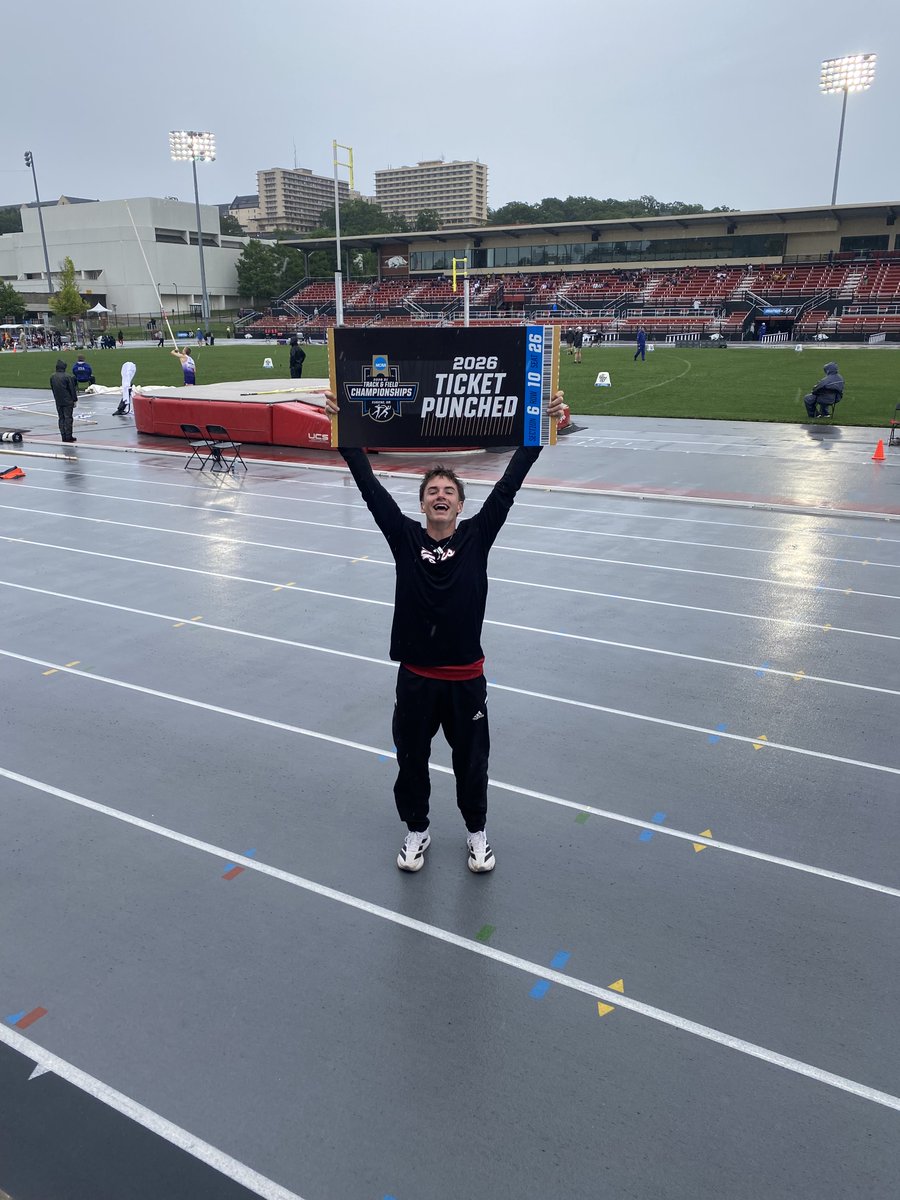
ICYMI: Three Yote vaulters are going to Eugene!
Marleen, Anna, and Caelan will represent South Dakota at the NCAA Championships June 10-13 in Eugene, Oregon.
#GoYotes
Creighton volleyball head coach Brian Rosen encouraged Trinity Shadd-Ceres to try long jumping again after quitting two years ago, despite nearly making the Olympics.
Shadd-Ceres joined the track team and just qualified for the NCAA Finals. 🤯
See you in Eugene! ✈️
Caelan Harland is making his first trip to the NCAA Championships after placing inside the top 12 in the men's pole vault at the West Regionals Thursday.
#GoYotes
Congratulations to my beautiful wife Amy @rekerlynch on her retirement from teaching! Great teacher that loved her students and had high expectations for them and herself both in and out of the classroom. Enjoy! Great job on the party @maggielynch01! Thanks to all who attended!
You would be hard pressed to find a coach that had better mentors at the start of a career than I had. I was Blessed! As a soph @ Augie, I had an internship under Leo Lorang (right) at OGHS. As a senior, I was assistant Soph BB Coach under Rich Hennies (middle) @ SFL. Great Guys!
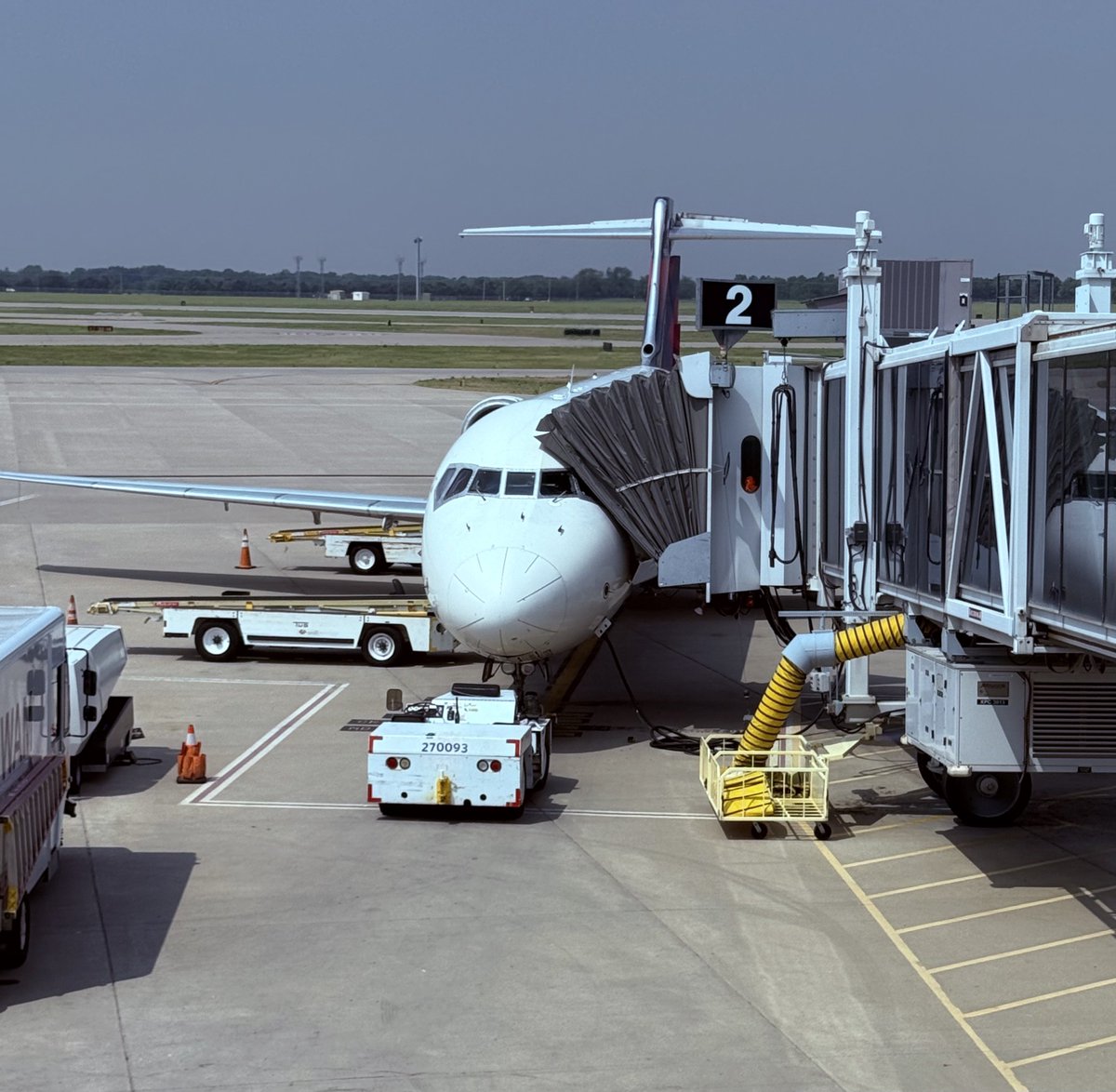
I just had the craziest experience at the airport.
We are about to board a flight to Atlanta when the pilot from the incoming plane walks out of the jetway. Guy is probably late 50s, salt and pepper hair, military look. The kind of pilot you instantly feel good about seeing on your flight.
Pilot walks over to the counter, gets on the PA system, and starts addressing everyone. “Folks, I’ve been doing this a long time. Flying one of these jets is easy. The hard part is looking at 130 people and telling them their flight is going to be delayed.”
Audible groans throughout the boarding gate. Most people here are flying to Atlanta as a layover before another flight. 130 people just had their day become a complete mess.
The pilot goes on. “I get it, trust me. But here’s the deal: During our landing, we had a small mechanical issue. I’m not your pilot for the next leg, but I don’t feel confident the jet’s safe to fly until we have a mechanical team look it over, and I don’t feel comfortable asking the next pilots to fly you guys until we get confirmation.”
He points at the agents next to him behind the counter: “Now, none of this is the agents’ fault. Please be kind to them. I’m the one who made this decision, not them, so any inconvenience you experience is my fault. Just please know that I don’t do this lightly, and I’m only doing it because I believe it’s in the best interests of everyone’s safety.”
Now this is where the story gets crazy. The pilot puts the microphone down, grabs his suitcase, and all the people in the gate…
Start clapping.
I’m not joking, everyone starts clapping for the guy. 130 people who just had their travel plans ruined give an ovation to the guy who made the decision and delivered the message.
All because he addressed them with decency and transparency, took ownership of the decision, made it clear that it was necessary, and explained why it was in everyone’s best interest.
It’s honestly one of the best examples of strong communication—of strong leadership, for that matter—that I’ve seen in a long time.
@Delta, whoever your Atlanta to Wichita pilot was this morning, he’s one of the good ones. Please tell him the delayed passengers of flight 1637 appreciate what he did.