One Nation has boycotted SA Parliament’s race-based joint sitting.
I refused to play along with the latest political charade: "Elevating one group over another on the basis of race is racism. We won’t pretend otherwise."
While the rest of the chamber sat through the First Nations Voice annual address, I visited homeless Aboriginal people in Adelaide's parklands.
One Nation stands for equal treatment, not identity politics.
Read the full article here: https://t.co/cA5JCCiNDJ
#onenation #corybernardi #paulinehanson
The Office for Women says it's focused on women's safety.
I asked a simple question: when the rights of biological women and trans women conflict, whose side are you on?
No answer.
Labor has blurred the line between women's rights and gender ideology so badly that even the Office for Women can't say who it's fighting for.
When they talk about protecting women, which women do they mean?
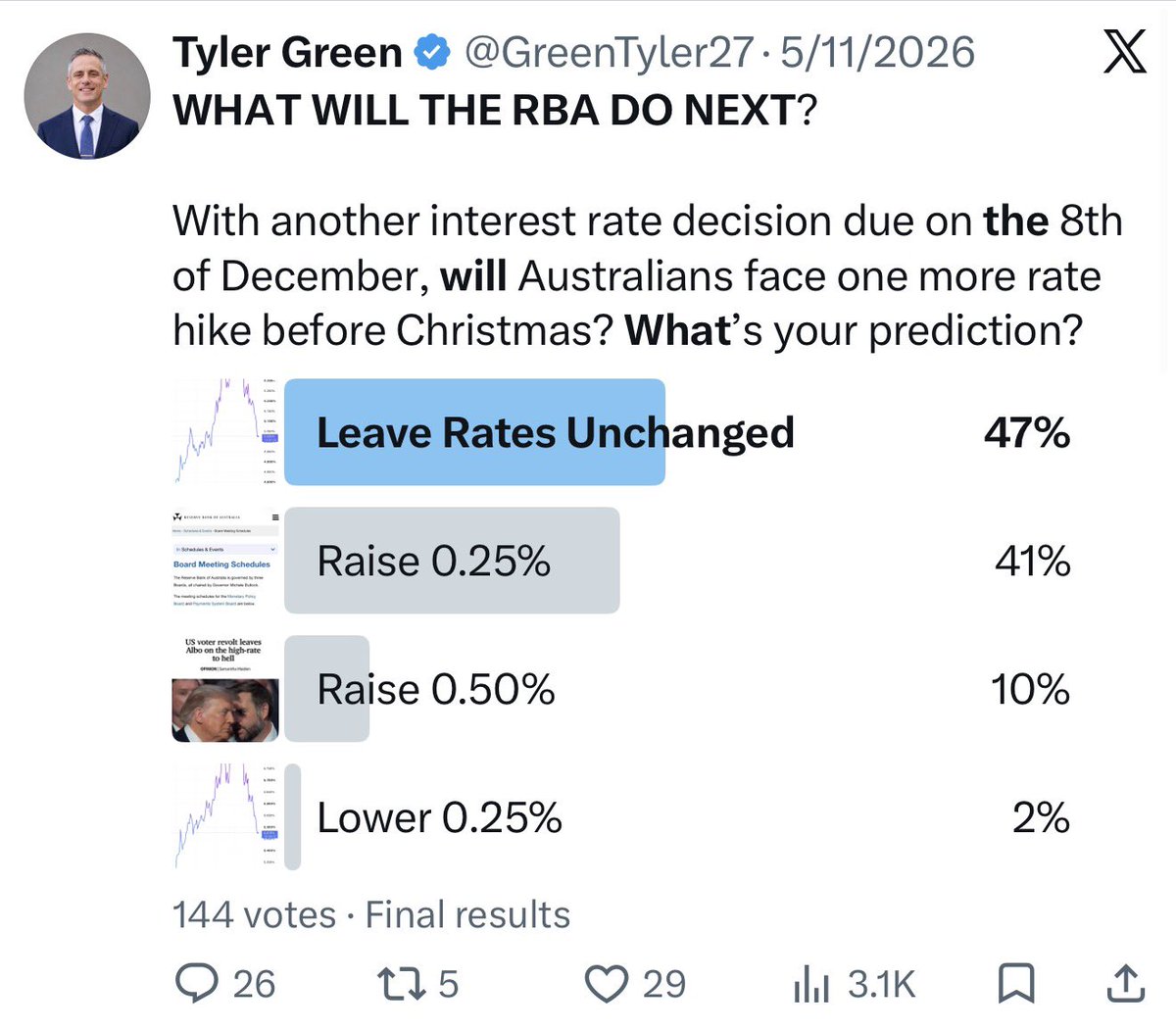
With the RBA’s next decision due on the 8th of December, I’m increasingly convinced we’ll see another 0.25 percentage point increase before Christmas, rather than a hold. Inflation remains quite stubborn and the RBA may have little choice but to tighten monetary policy further. My poll suggests Australians are quite divided, with 47% predicting a hold and 51% expecting a rise.
My prediction: another 0.25% increase. I hope I’m wrong, particularly for mortgage holders already under considerable financial pressure. I’ll run another poll 1 week out from the decision.
Why did Treasury's modelling anticipate a relatively modest effect on house prices when subsequent market conditions have involved such a pronounced contraction in investor lending? And what scenario analysis was undertaken to examine the combined effects of taxation changes, elevated interest rates and weaker housing investment? Those are reasonable accountability questions that don't require assuming Treasury caused the downturn.
Ultimately, ministers are responsible for the policy decisions. Treasury is accountable for the quality and transparency of the advice underpinning them and the scale of the current downturn makes the assumptions behind that advice worth examining publicly.
Sunday afternoon 2 pm. Electricity demand is relatively subdued, yet wholesale prices across mainland eastern Australia are sitting above $130/MWh.
🇦🇺 NSW $143
🇦🇺 SA $137.76
🇦🇺 QLD $135.11
🇦🇺 VIC $134.01
We’re repeatedly warned about the prospect of higher electricity prices in the years ahead. But here’s a question worth asking: if we’re already seeing these prices on a relatively low-demand Sunday afternoon, what happens when demand rises and generation conditions deteriorate?
Australia needs an electricity system that delivers affordable, reliable power in all conditions, not just favourable ones.
Sunday afternoon 2 pm. Electricity demand is relatively subdued, yet wholesale prices across mainland eastern Australia are sitting above $130/MWh.
🇦🇺 NSW $143
🇦🇺 SA $137.76
🇦🇺 QLD $135.11
🇦🇺 VIC $134.01
We’re repeatedly warned about the prospect of higher electricity prices in the years ahead. But here’s a question worth asking: if we’re already seeing these prices on a relatively low-demand Sunday afternoon, what happens when demand rises and generation conditions deteriorate?
Australia needs an electricity system that delivers affordable, reliable power in all conditions, not just favourable ones ☀️
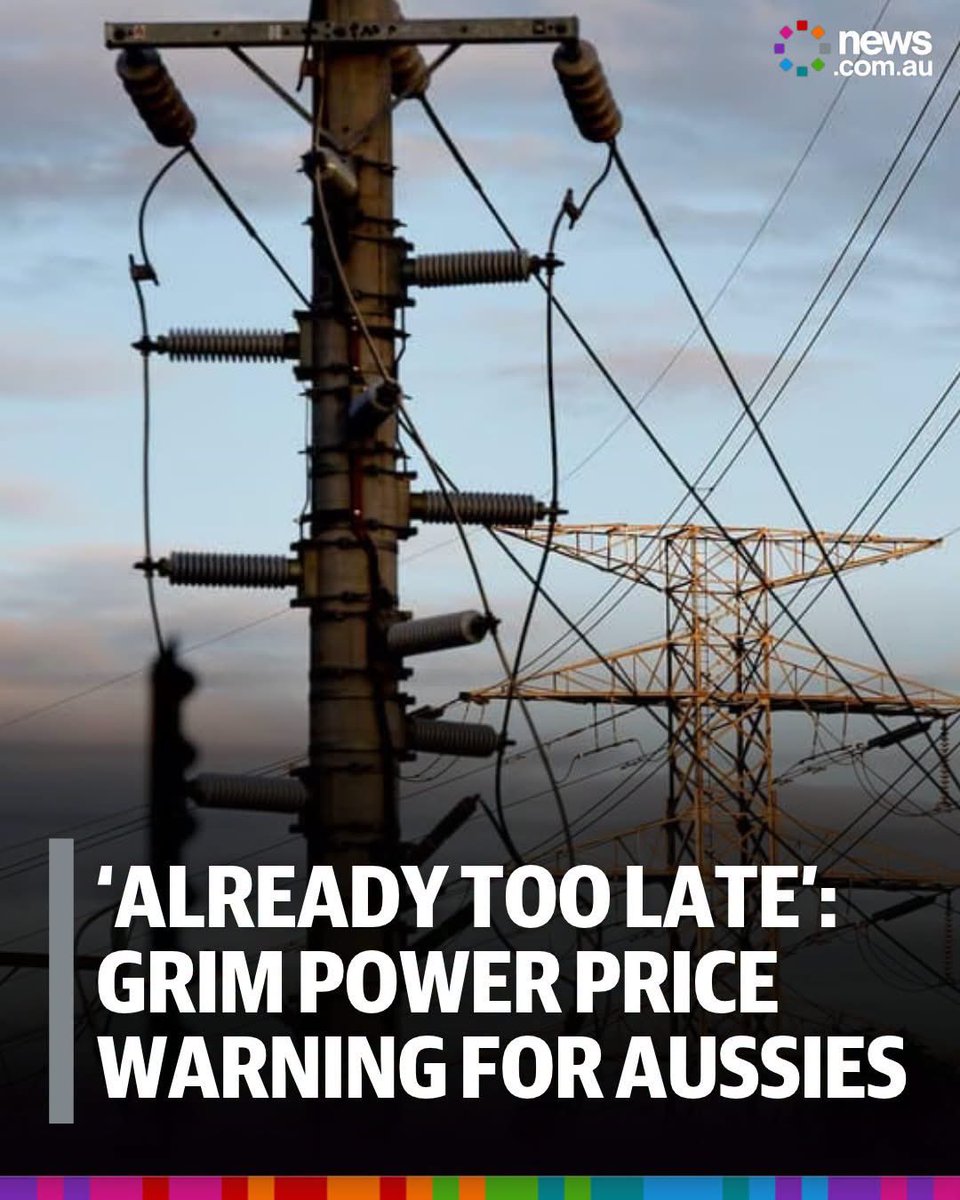
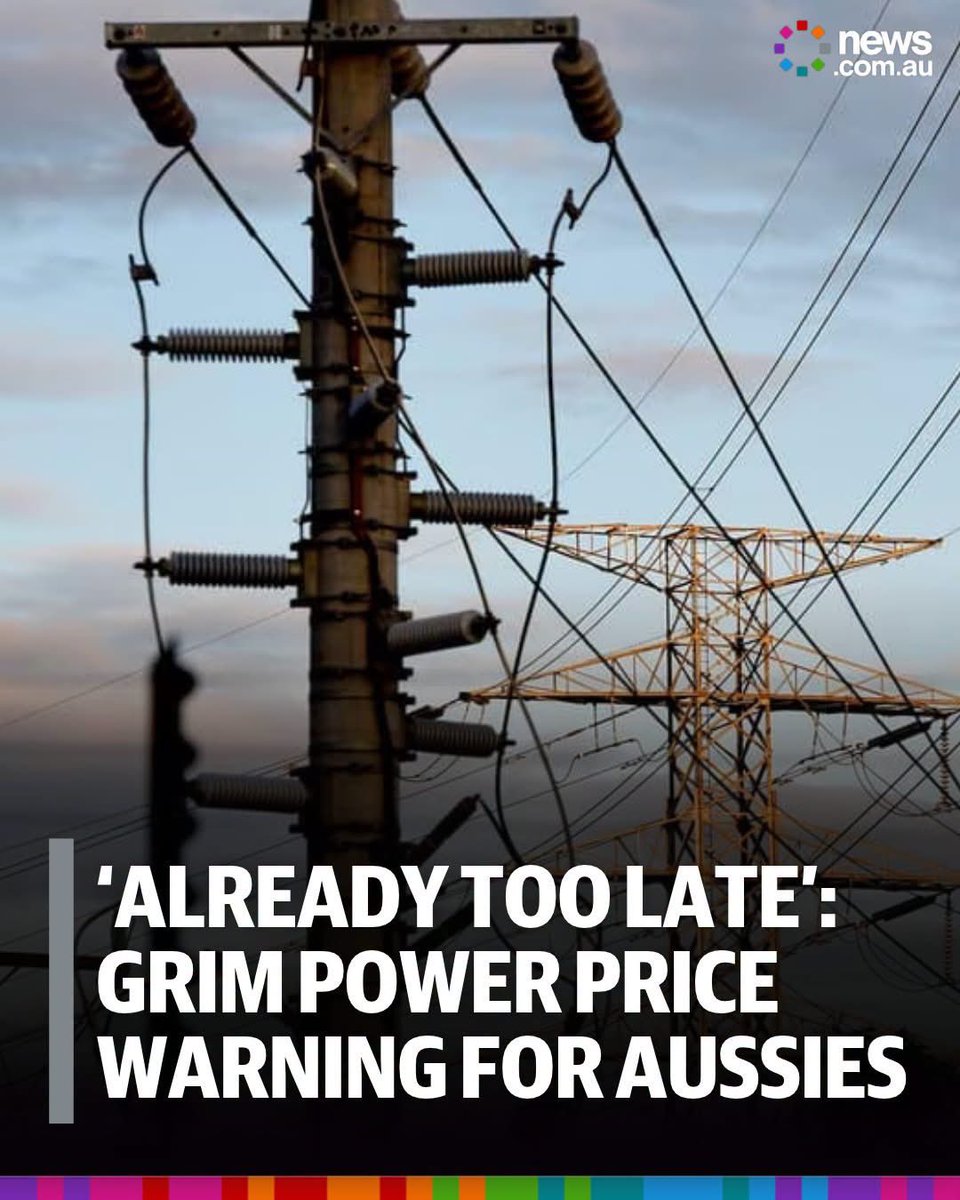
Well, well, well. Rystad Energy is now warning that Australian wholesale electricity prices could rise approximately 83% by 2029. Why? Coal-fired generation is retiring faster than sufficient replacement capacity is being delivered. Meanwhile, we’ve been watching South Australia’s wholesale market swing from negative prices to $200–$300/MWh within hours. This is what happens when energy policy must confront engineering reality. The question was never simply how cheaply we could generate a megawatt-hour when the sun shines. It was how reliably and affordably we could supply electricity every hour of every day. Are we building a genuinely competitive electricity system, or an increasingly complicated and expensive one?
If wholesale electricity is around $125–$143/MWh across the eastern states and South Australia at 2 pm on a Sunday, what does that tell us about the affordability of the generation and delivery system we're building?
I Agree 👇🏽 💯% @GreenTyler27 .. it seems this Gov’t is afraid of Australians who can think for themselves & who know that they are being manipulated, by lies & gaslighting.. the country is being run by corrupt, socialist, morons .. it’s time that they are taken to task & made to pay the consequences of their actions..
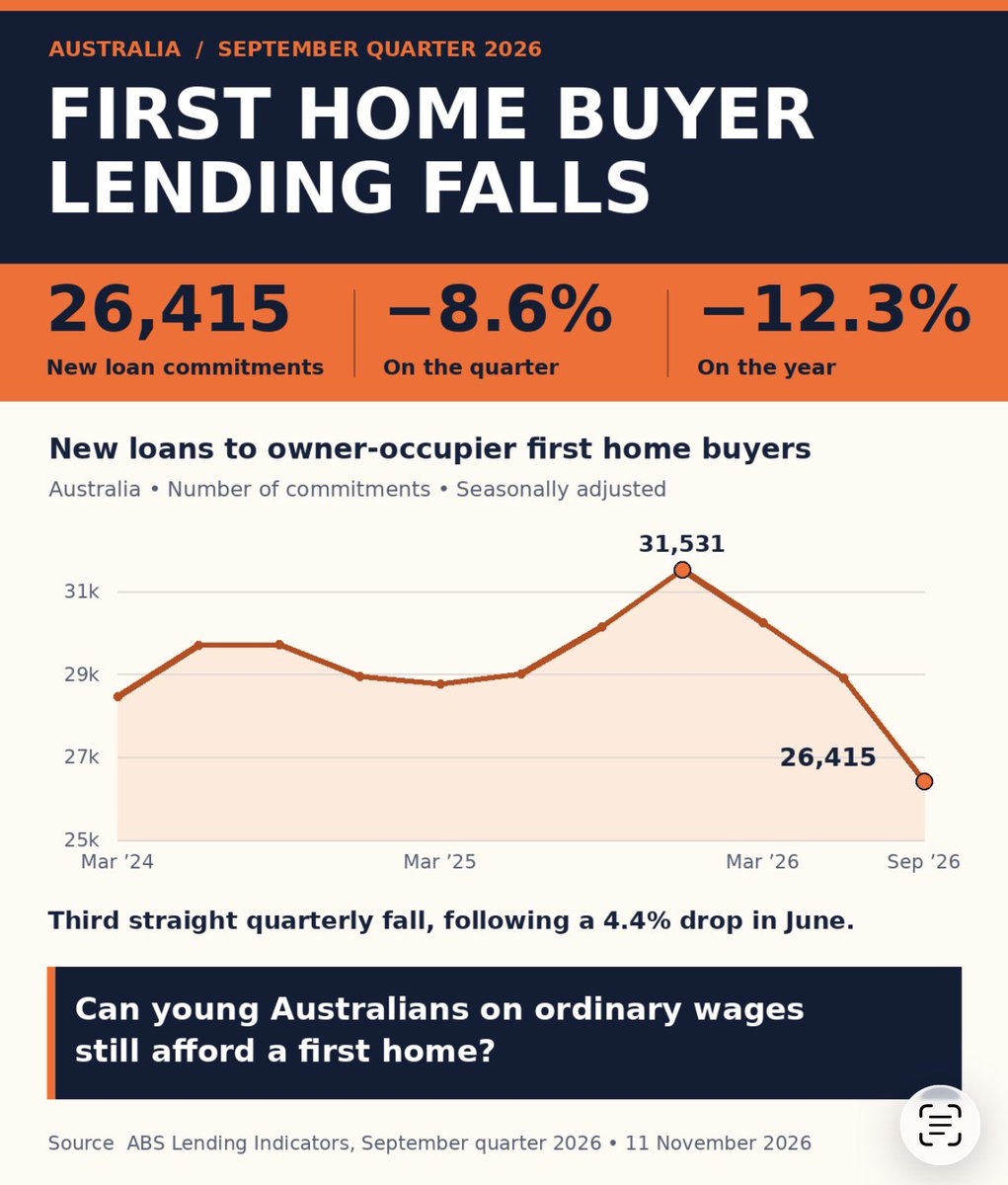
Australia’s housing lending market is weakening sharply.
Today’s ABS figures:
• Total new housing lending: DOWN 15.5%
• Investor lending: DOWN 32.3%
• First-home buyer loans: DOWN 8.6%
All in a single quarter. Higher interest rates are biting, investors are retreating quickly and credit demand is contracting.
Yet annual CPI inflation is still 4.3%. The RBA now faces the very difficult task of containing inflation without unnecessarily deepening the downturn in housing finance and construction. It’s worth watching very closely.
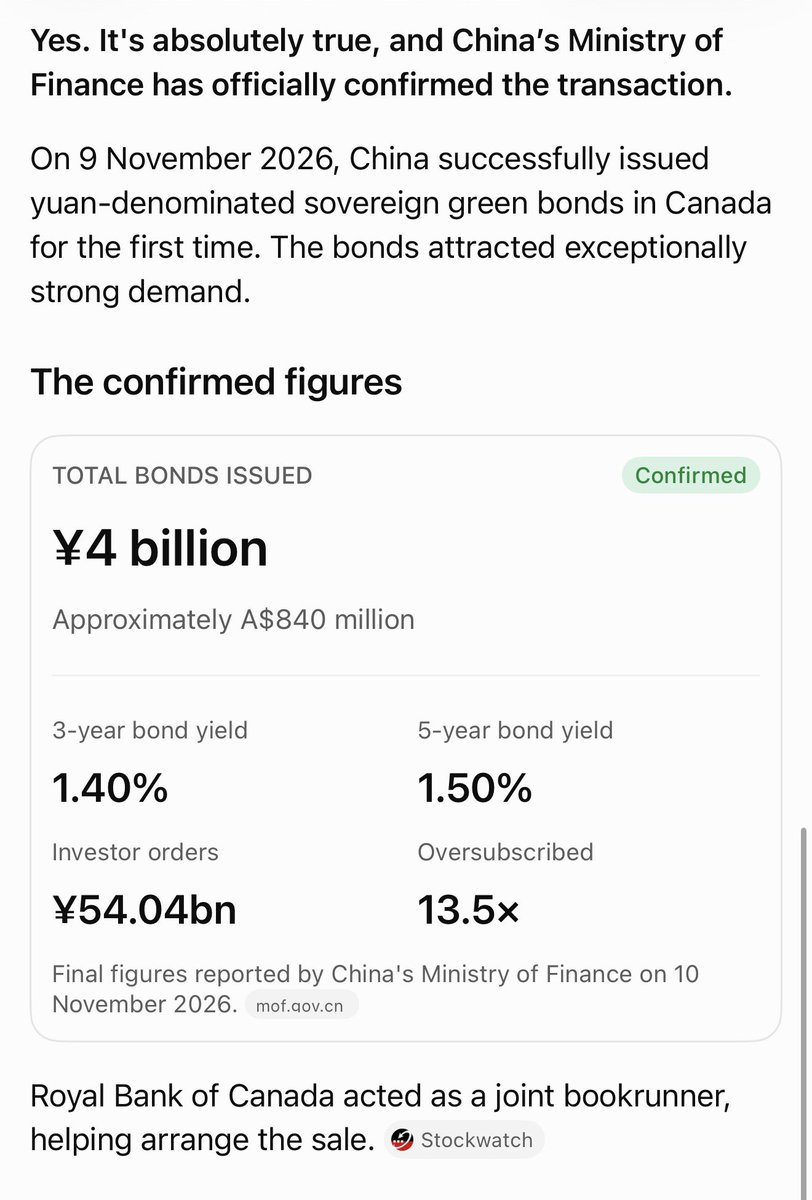
While the world focuses on America’s debt problems, China is quietly building an alternative. China has just issued ¥4 billion in yuan-denominated sovereign bonds in Canada, attracting an astonishing ¥54 billion in investor orders. That’s 13.5 times oversubscribed, with yields of just 1.4–1.5%. Think about that, international investors are showing serious interest in lending to China in Chinese currency. This doesn’t mean the US dollar is about to collapse but it does show that China is working to expand the yuan’s role in global finance.
The question Australians should be asking is simple: what happens to our economy, our borrowing costs and our dollar if the global financial system gradually becomes less dependent on the US dollar? We should be paying attention.
At what point will governments start listening to electricians, engineers and people who have actually worked in the energy industry? As a qualified electrician who has worked with solar and renewable energy, I’ve been raising concerns for years about what happens when intermittent generation is rolled out across the National Electricity Market without sufficient reliable backup.
You cannot run an industrial economy on sunshine and favourable wind conditions alone. Now Rystad Energy is warning that wholesale electricity prices could rise from $60/MWh to $110/MWh by 2029 as coal closures outpace replacement generation. Australia needs a complete energy mix: reliable generation, renewables, gas, storage and a serious discussion about nuclear. The question was never simply how cheaply we could generate electricity when the sun shines. It was how reliably and affordably we could deliver it, 24 hours a day, 365 days a year. Australian households and businesses deserve an energy system built on engineering and economics, not political deadlines. When will governments start listening to the people who actually work with electricity?
"They are Capitalists who own the means to production"
SA state employee.
LOL - fund his wage and he hates our guts and wants to put us up against the wall.
Fortunately, @JEChalmers is reinventing Capitalism.
Snowy 2.0 was originally estimated to cost $2 billion and now we’re looking at potentially $25 billion. So where does that extra $23 billion come from, what else could Australia have done with that money and how many generations of taxpayers will be paying for decisions made today?
And perhaps the most important question: if taxpayers are expected to carry the financial risk, who is actually accountable when the costs spiral out of control like this?
You can march through Geelong protesting Pauline Hanson all afternoon, but last time I checked, she’s is not the Prime Minister. If you’re concerned about the cost of living, housing affordability, energy prices or the direction of the Australian economy, shouldn’t you also be asking some serious questions of the sitting government that is actually running our country?
When a government-owned energy project goes from an original $2 billion estimate to a possible $25 billion, arrives years late and its executives still receive performance bonuses, what exactly does accountability look like?
WHAT WILL THE RBA DO NEXT?
With another interest rate decision due on the 8th of December, will Australians face one more rate hike before Christmas? What’s your prediction?