This print is not only a depiction of the Tōkaidō landscape but also a record of the final display of shogunate power in the late Edo period. Shogun Iemochi's journey to Kyoto was an attempt to revitalize the authority of the Tokugawa shogunate, but just two years later, the shogunate collapsed in the Meiji Restoration, marking the end of the Edo era. As such, Suehiro Gojūsan Tsugi is regarded as the "swan song" of ukiyo-e in its traditional subject matter.
It was precisely because of this ruling policy that the Yuan Dynasty became one of the shortest-lived unified dynasties in history, lasting less than a hundred years. Eventually, these mixed-race people were absorbed by Zhu Yuanzhang into the main ethnic group. The Hui people of Gansu are a new community made up of these mixed-race individuals.
@AfricanHub_ Africa is rich in resources and has plenty of sunshine - so what causes poverty in Africa? Historically, Africa also had many powerful empires that ruled parts of Europe.
The Jews of Kaifeng are only recorded in history. Their culture stipulated that only a person whose mother was Jewish could be considered Jewish. Children born to Jews of Kaifeng who married locals were not considered Jewish. The Northern Song Dynasty was also quite enlightened, and through education, Jews could become officials through the imperial examinations. Gradually, they assimilated into Chinese society and became part of the mainstream.
@xy_xy_xxyy @AfricanHub_ I've seen a map showing the railways built by Western countries in Africa. These railways connect mining areas and ports, not populated areas. I think that might say something.
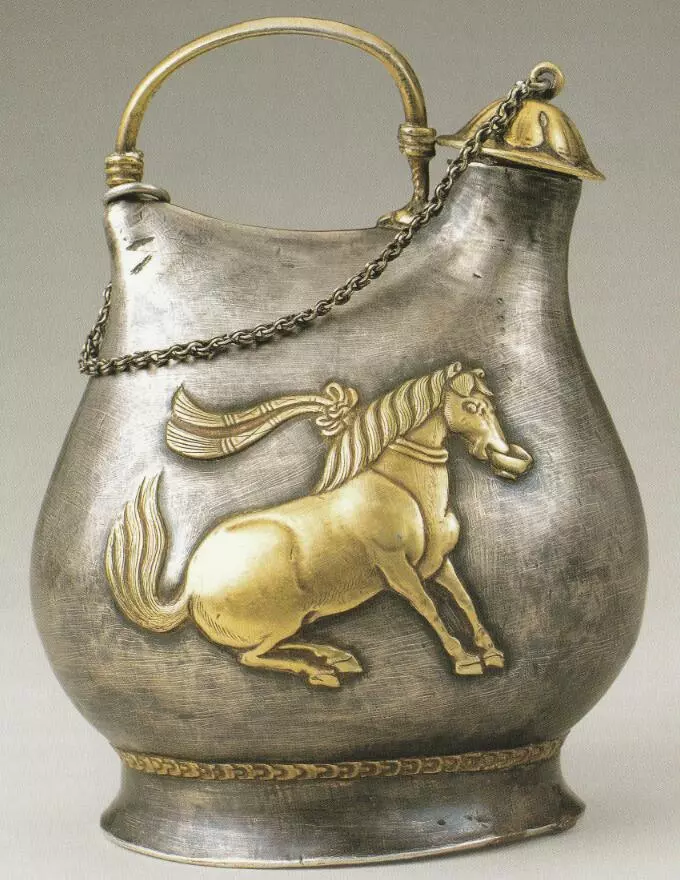
Dancing horses were a popular form of entertainment in the Tang Dynasty (618-907). On each side of this silver kettle, a gilded dancing horse is hammered in relief using a repoussé technique. The horse is strong and plump, captured in a moment of motion, with front hooves straight and firm, hind legs bent, and a wine cup grasped in its mouth. The spirited steed seems to embody the confidence and flourishing energy of the High Tang era. Collection: Shaanxi History Museum.