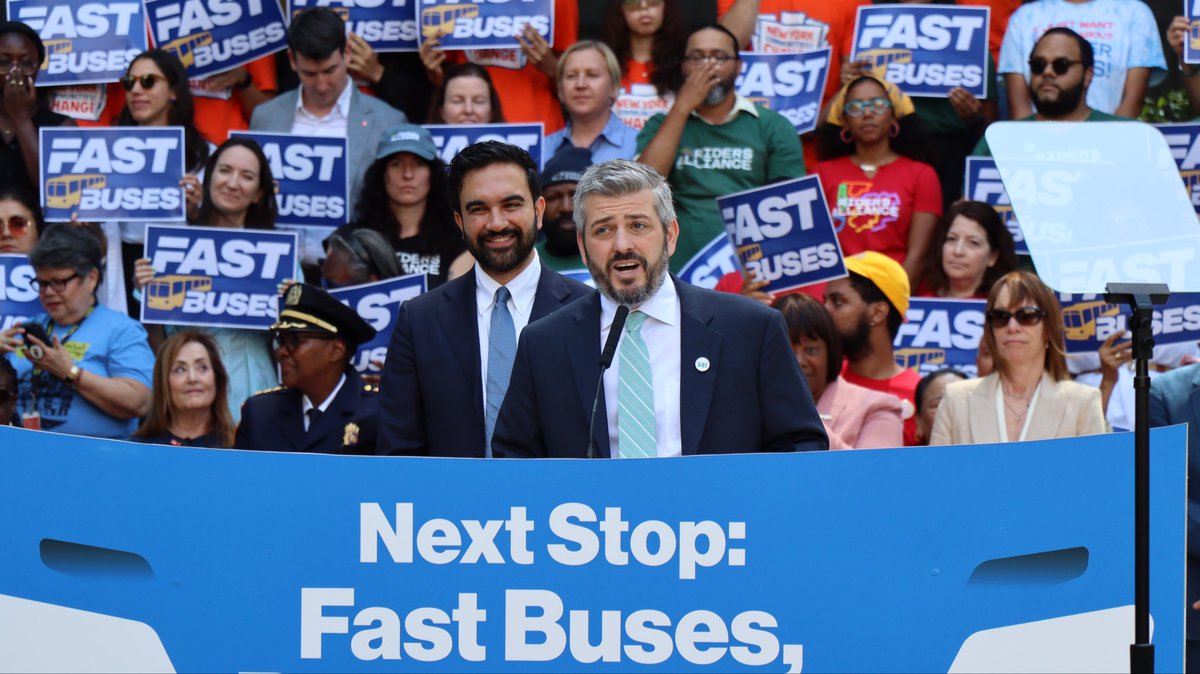
After nearly a decade of bus riders organizing to demand a comprehensive, citywide plan to speed up the nation’s slowest buses, Mayor Mamdani, Governor Hochul, NYCDOT, and MTA have put forth a sweeping, 50-corridor plan to deliver fast, reliable service to millions of riders!
Want citywide all-door boarding faster than "end of 2027"? Take a second to email you elected leaders to support bus improvements in your neighborhood! https://t.co/C0qWwdfeT3
Fun fact: better stops make buses move faster! 🚌💨
Let's talk about all-door boarding and why @MTA is finally looking to put those fancy "ENTER FRONT DOOR" signs to good use.
OMNY Cards cannot currently be refilled at vending machines, Customer Service Centers, or online. You can continue to tap and ride using your phone, debit or credit card, or a prefilled OMNY Card. There may be a delay in processing tap‑and‑ride payments.
Better bus service means shorter commutes and expanded access to jobs, schools, and healthcare for working class New Yorkers.
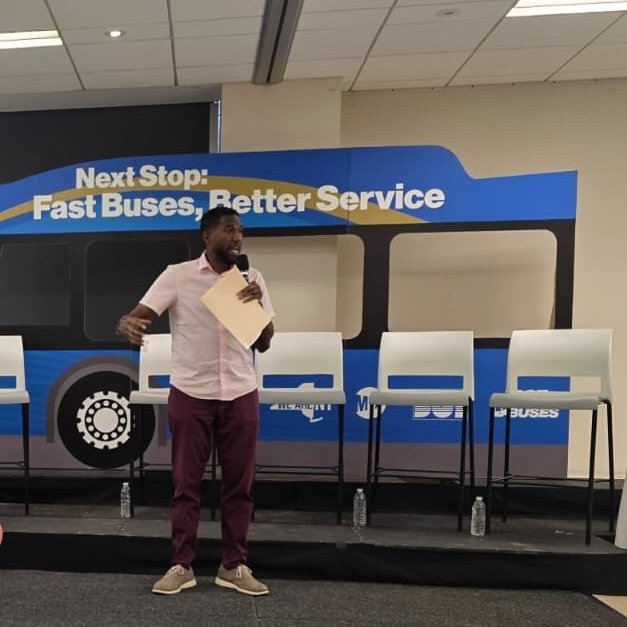
The recent Central Brooklyn Bus Riders Town Hall was a meaningful chance for neighborhood stakeholders to help shape improvements across 13 bus routes.
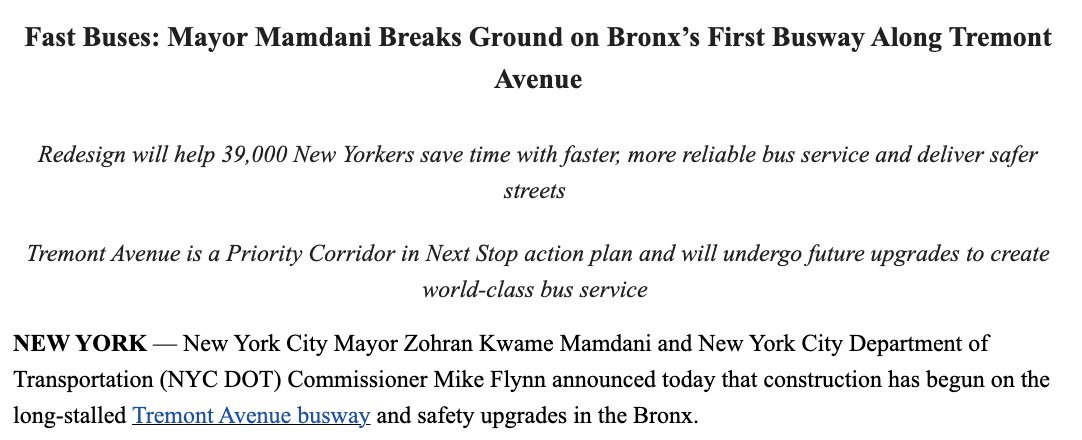
Today we broke ground on Tremont Avenue for the first busway in the Bronx!
We spoke to bus riders along Tremont about the status quo and it’s clear it isn’t working.
Slow speeds and long wait times frustrate the 39,000 daily riders who deserve better.
Quick Update: @nycmayor's Office of Mass Engagement @weorganizenyc, @nyc_dot, and @mta kicked off public outreach for the Next Stop: Faster Buses plan with a Central Brooklyn Town Hall to discuss their plans to bring Bus Rapid Transit to Flatbush, Church, and Utica Avenues! 🚌💨
Transit is the glue that binds New Yorkers together, both in NYC and increasingly throughout the state
We all deserve the freedom to get around and access basic needs and opportunities
New Yorkers need affordable transportation options, and a car is increasingly out of reach
Nearly 6 million residents in upstate New York rely on four regional bus systems when it comes to their day-to-day routines. However, as some areas face service cuts, concerns are being raised about rider equity and accessibility
https://t.co/SacevYWIj2
Central Brooklyn's Bus Rider Town Hall was an incredible exercise in community engagement done right!
We're absolutely thrilled to have a Mayor, DOT, and MTA committed to centering the needs and voices of bus riders and look forward to continuing the work alongside you. 🚌💨
When we surveyed 1,800+ B41 riders alongside @prattcenter, more than half of the people we talked with said they'd shop more on Flatbush if only bus service was faster and more reliable
People shop, not cars. That's why it's good for business to design pleasant streets that people seek out to spend their time. These streets can fit more people than any other that's filled with cars.
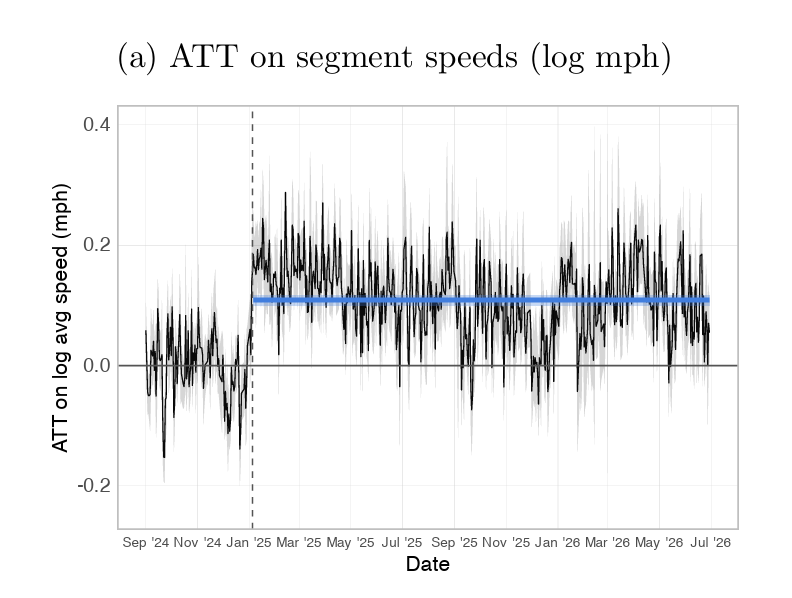
We've updated our paper on NYC congestion pricing with 1.5 yrs of post-policy data 🚗🚕🚙. Tl;dr: it's still working. Speeds in the CBD are persistently up, but the bigger story is the positive spillovers outside the CBD.
Paper link: https://t.co/kIcIbUMvcO
With the new Fair Fares expansion, it's more important than ever to adopt @CMCrystalHudson's Intro 248 and automatically enroll every eligible New Yorker
“He said he tried to sign up for the city’s Fair Fares program that provides half-priced rides to low-income residents, but had trouble navigating the system and gave up.” https://t.co/qbMYg3vj5F
Thrilled to see the DeKalb Interlocking on this list.
For years, that section of track has slowed down trains before they cross the Manhattan Bridge. The switches there date back to the Great Depression. Upgrading them will speed up commutes for countless Brooklynites.
Forcibly purging dollar vans from transit dependent communities without first thoroughly correcting the conditions that gave rise to dollar vans is, at best, a counterintuitive approach to engaging with communities who will need to trust that DOT, MTA, and Mayor Mamdani will offer them more through these bus improvement projects, not take what they've already built for themselves.
“It's part of the culture,” she said. “They do away with the dollar vans. It's almost like saying, like we're doing away with the culture.”
Building trust in communities the Next Stop plan seeks to serve means building reliable and affordable mass transit that can intuitively attract riders who currently opt for informal local alternatives—often born of and sustained by necessity.