Score de Calcio Coronario. 🔎🫀💥
🔹️El Score CAC sigue siendo una de las herramientas más potentes para la estratificación de riesgo cardiovascular en prevención primaria. La evidencia reciente reafirma su utilidad para reclasificar riesgo más allá de los calculadores tradicionales y optimizar decisiones terapéuticas. 📈❤️🔥
🔹️Un sCAC = 0 se asocia con tasas muy bajas de eventos CV a corto y mediano plazo. Permite diferir estatinas en pacientes cuidadosamente seleccionados sin potenciadores importantes de riesgo. ✔️
🔹️Un sCAC >100 generalmente identifica pacientes con riesgo CV suficiente para justificar tratamiento intensivo con estatinas. 💊‼️
🔹️CAC ≥1,000: un nuevo fenotipo de muy alto riesgo. Presentan tasas de eventos comparables a algunas cohortes de prevención secundaria. Requieren control agresivo de LDL-C y seguimiento estrecho. ⚠️🔥
🔹️Otras ventajas: estudios recientes muestran que el sCAC predice mejor eventos coronarios que los polygenic risk scores. Mejora la adherencia, visualizar las calcificaciones coronarias incrementa el apego a cambios en el estilo de vida y al tratamiento farmacológico. ✍️🏻💊
📄🆓️⤵️
DOI 10.3389/fradi.2026.1822303
https://t.co/yZSdiacTI2
Ultrasonido de la congestión venosa sistémica (VExUS) mediante ecocardiografía transesofágica (T-VExUS) en pacientes críticos: generalidades y descripción de la técnica
📗 https://t.co/RyXZCvWGT6 ◀️
Repaso a la última Revisión publicada en RETICweb
🫀 Pulmonary Vein Flow Patterns: An Important Clue to Mitral Regurgitation Severity
Pulmonary vein Doppler assessment provides valuable information about left atrial hemodynamics and the severity of mitral regurgitation (MR).
👇
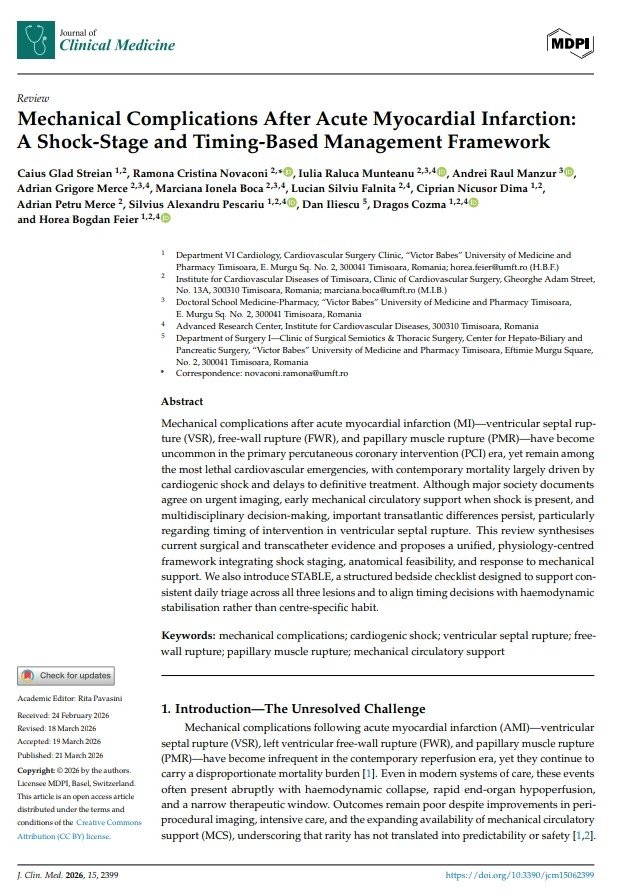
🫀Abordaje y Manejo de las Complicaciones Mecánicas Después del Infarto Agudo de Miocardio
🔰📚J. Clin. Med. 2026
https://t.co/bAyd5uhKlB
Enlace a Artículo Completo👇🏻🆓✅
https://t.co/xumUMHaxVK
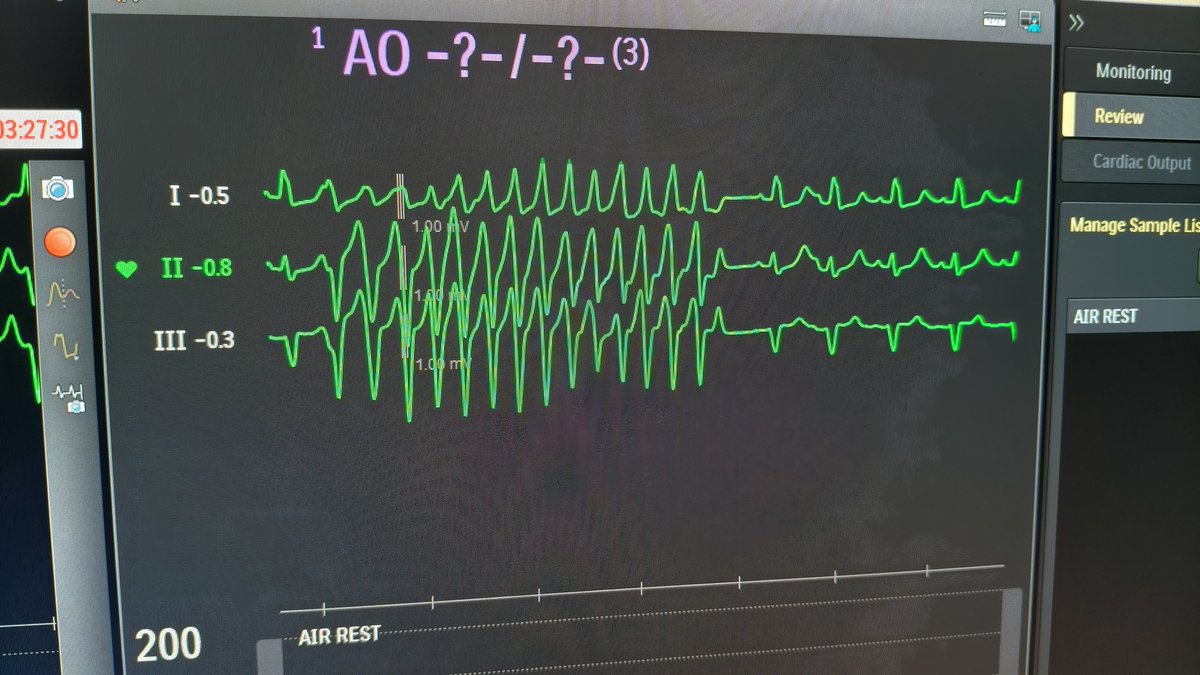
Arrhythmia study is so fascinating.
A single patient showing varied spectrum of conduction scenarios in within minutes of presentation
1 baseline at presentation in ER
2 after oral fleicanide dosing
3 after DC conversion
New paper alert 📢
A fascinating new study from the Padua group examines 40 years of sudden cardiac death (SCD) in competitive athletes due to arrhythmogenic cardiomyopathy (ACM) and highlights how the phenotype of disease is changing over time. 
Key takeaways:
🔹 ACM remains the leading cause of SCD in young competitive athletes, accounting for almost 29% of cases in this national referral centre experience. 
🔹 The incidence of ACM-related SCD in athletes has decreased significantly over time, likely reflecting improved awareness, screening strategies, and implementation of diagnostic criteria. 
🔹 A striking phenotypic shift towards left ventricular ACM (LV-ACM) was observed. After 2010, LV forms represented a much larger proportion of cases, while classic right ventricular forms became less common.  
🔹 Traditional screening tools may miss these patients:
•ECG abnormalities were present in only around half of cases.
•Echocardiography was positive in very few athletes.
•LV-ACM frequently showed normal or borderline ECG and echocardiographic findings.  
🔹 Exercise-induced ventricular arrhythmias and low QRS voltages emerged as important warning signs that should prompt further investigation. 
🔹 The study reinforces the growing role of contrast-enhanced cardiac magnetic resonance (CMR). In athletes with suspicious findings, CMR may identify myocardial fibrosis and late gadolinium enhancement even when echocardiography is normal. 
💡 Clinical message: As ACM evolves from a predominantly right ventricular disease to a more frequently recognised left ventricular phenotype, reliance on ECG and echocardiography alone may be insufficient. A high index of suspicion and timely use of CMR are essential to improve early diagnosis and prevent sudden cardiac death. 
#Cardiology #SportsCardiology #CMR #CardiacMRI #ArrhythmogenicCardiomyopathy #ACM #SuddenCardiacDeath #SportsMedicine #CardiovascularImaging #PediatricCardiology #InheritedCardiacConditions
The pulmonary valve is often considered the “forgotten valve,” and accurate cusp orientation on 3D TEE can be surprisingly difficult.
How would you label the cusps in this 3D TEE image of the native pulmonary valve? #echofirst
1️⃣2️⃣3️⃣
The rightward extension of Bachmann’s bundle
In this new #DaVinciAnatomyCorner@JACCJournals chapter, we explore its anatomy and clinical implications for physiological atrial pacing (BB pacing) @cardiac_anatomy
We hope you find it useful .
https://t.co/typfGFxizz
A 30-year-old dies suddenly and unexpectedly.
The gross cardiac specimen is shown.
What is the most likely diagnosis?
A. Arrhythmogenic right ventricular cardiomyopathy
B. Hypertrophic cardiomyopathy
C. Cardiac sarcoidosis
D. Viral myocarditis
🧑🏻🦱39 y/o with fever and chest pain! 🔥
🧪CRP=228 mg/L
#WhyCMR top row —> T2 STIR 💧
#WhyCMR bottom row—> LGE. ❤️🔥
🧲What is the Dx?
🧲How would you treat this patient and for how long?
@SCMRorg
📌 Mitral Regurgitation: Signal Density & Contour on CW Doppler
Continuous-wave (CW) Doppler assessment of the mitral regurgitation (MR) jet provides important clues about MR severity.
Follow this thread 👇
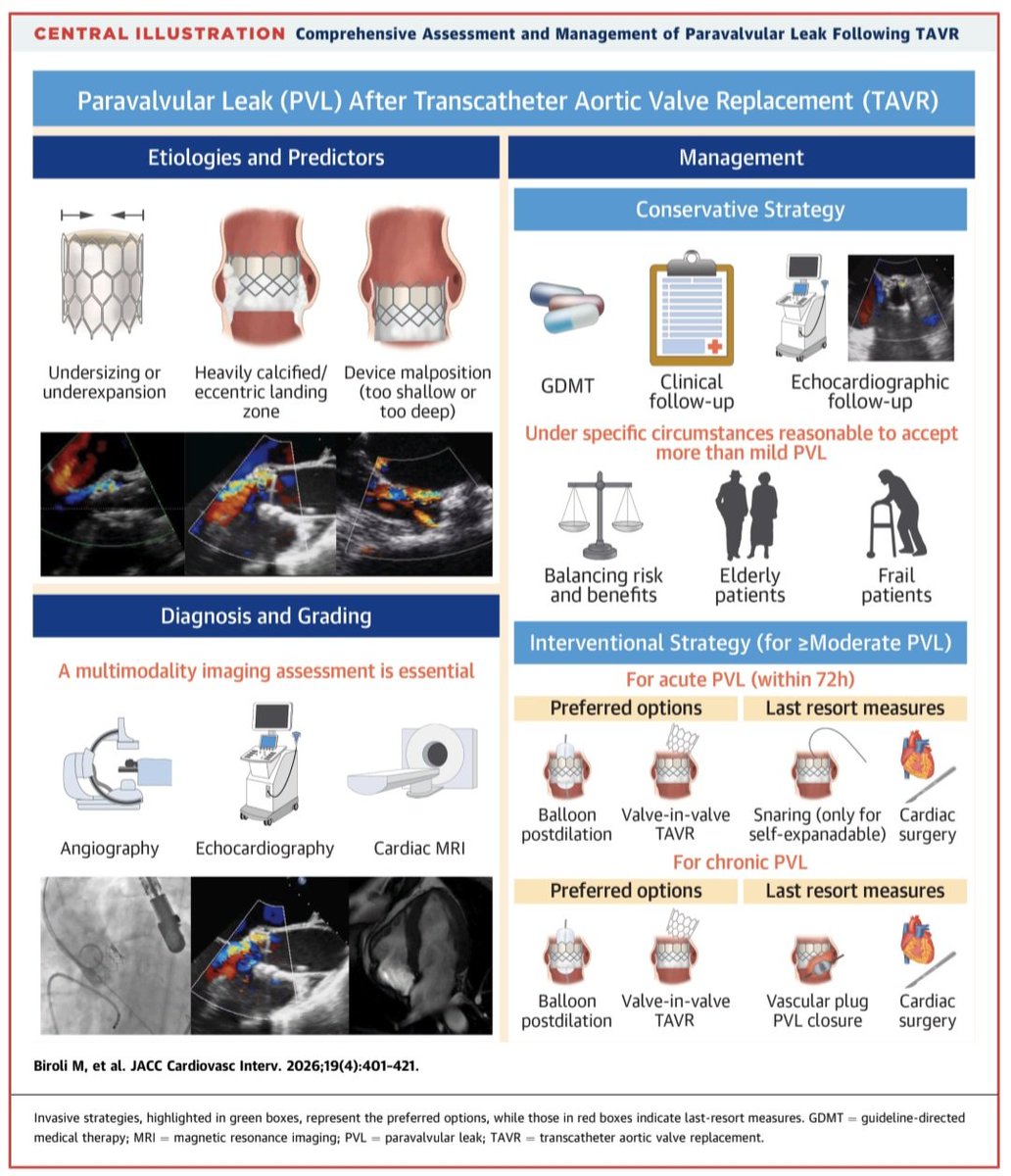
Fuga paravalvular tras TAVI. 🫀💥🩸
🔵La FPV sigue siendo una de las complicaciones más relevantes tras la TAVI. Aunque su incidencia ha disminuido (de 11.5% a <5% con las nuevas generaciones de válvulas), incluso la FPV leve se asocia con peor pronóstico clínico y mayor mortalidad al año. 🧐📈⚠️
🔵Las principales causas son: subexpansión o infra dimensionamiento de la prótesis, calcificación severa y excéntrica del anillo o del TSVI, implantación demasiado alta o demasiado baja, anatomías complejas (anillos elípticos, válvula bicúspide, calcio masivo).
⚠️🔎Factores predictivos de FPV en la TC🫀:
🔹️Alta carga de calcio valvular.
🔹️Volumen de calcio >1000 mm³ en la zona de anclaje.
🔹️Calcificación moderada-severa del TSVI.
🔹️Anillo muy excéntrico.
🔵Las plataformas balloon-expandable (BE) muestran menores tasas de FPV moderada-severa que las self-expanding (SE): 📉 SAPIEN 3: ~1.5-3.6%, 📉 Evolut: ~2.9-3.4%, 📉ACURATE Neo: ~8-10%. ✍️🏻🧐
🔵Tratamiento actual: pos dilatación con balón, Valve-in-Valve, Redo-TAVI, cierre percutáneo.
📄🆓️⤵️ State-Of-The-Art Review 2026 @JACCJournals 👌🏻
https://t.co/Iwpn5oIqVd
https://t.co/7jYs3araRO
Which intervention is contraindicated in suspected Wellens syndrome?
A. Aspirin therapy
B. Heparin administration
C. Coronary angiography
D. Exercise stress testing
🔍 Understanding PISA, Vena Contracta & the Regurgitant Jet in Mitral Regurgitation
When assessing mitral regurgitation (MR) by echocardiography, it's important to understand the relationship between three key components:
Follow the thread 👇