Ever notice how the truth hides in silence?
It’s not what people say that reveals them, it’s what they don’t.
I broke this down in my new newsletter.
Click the link and subscribe for free to read it👇
Universities should offer courses on "non-academic writing" for all academics - young, old, and aspiring - so that they are able to effectively communicate beyond scholarly circles.
Zubeen Da.
An emotion. Aspiration. Inspiration.
His songs have been my shoulder to cry upon. His songs have been my inspiration. His ideals are my aspiration.
There is no one like him. Never will be another Zubeen.
#ZGfangirlforever
This report gets microhistory wrong!
Microhistory is NOT about recovery of ‘bite-sized’ pop history missed in large-scale histories, it is more importantly about how recovery of the micro (lives, events etc) destabilise existing historical knowledge. https://t.co/By6WzDwzCe
This is from Ghy- shillong road toll plaza. I waited for a good lot of time at the toll where patience took a test of me. This is the situation of "aam admi" after paying taxes! @PMOIndia@nitin_gadkari
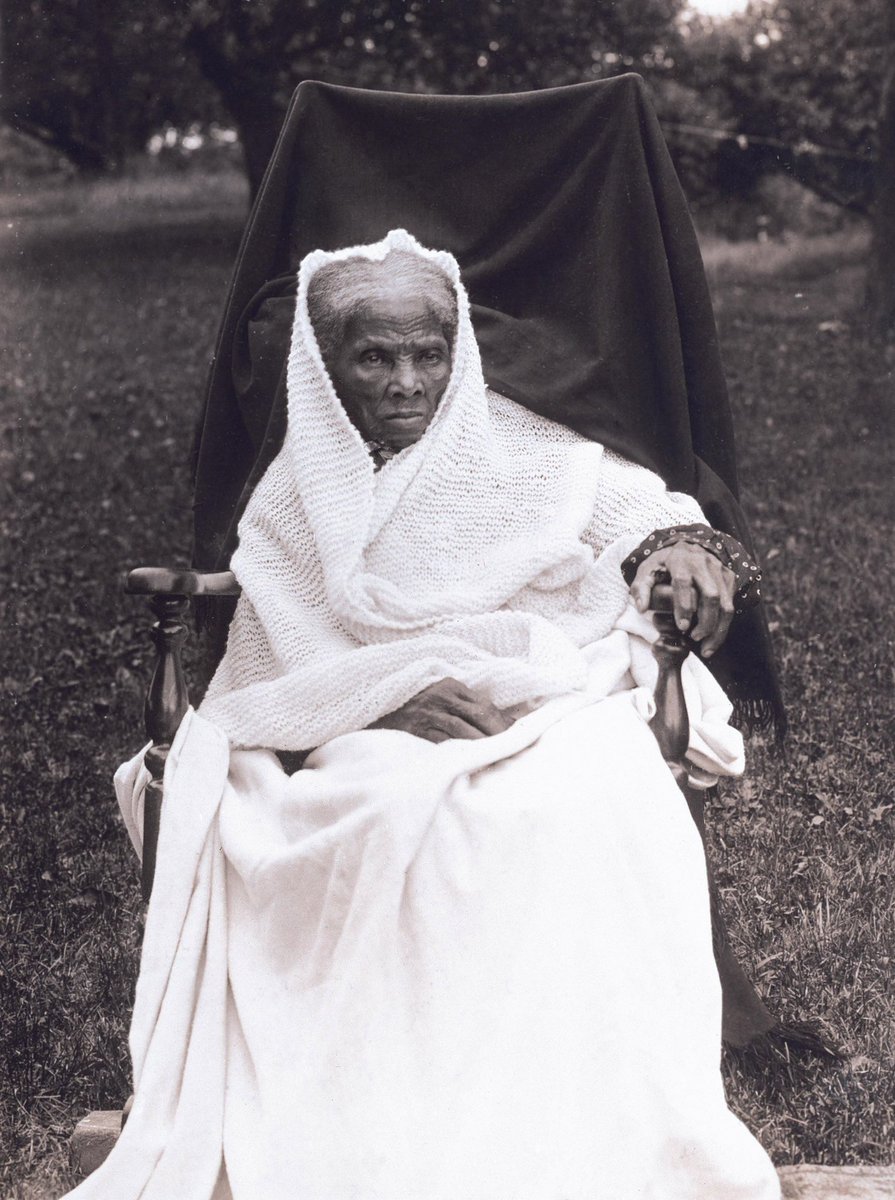
This photograph captures Harriet Tubman at her residence in Auburn, New York, in 1911, just two years prior to her passing. I only recently learned of her struggles with seizures, a result of a piece of metal lodged in her head.
As a teenager, Tubman endured a traumatic incident when a slaveowner struck her head with a 2-pound lead weight, originally intended for another fleeing slave. Tubman recalled this attack as "breaking my skull," leading to agonizing headaches and seizures that intermittently rendered her unconscious. Remarkably, despite these challenges, she remained dedicated to her work on the Underground Railroad and her service during the Civil War. Her reputation was so renowned that escaped slaves knew to wait patiently for her to regain consciousness if she ever collapsed, which she always did.
Additionally, Tubman carried a pistol, which she would wield when runaway slaves hesitated or considered giving up. With the pistol pointed, she presented them with a stark choice: continue their escape with her or face immediate death. Remarkably, she never lost anyone on the Underground Railroad.
After the Civil War, Tubman's efforts allowed her to contribute significantly to her community, aiding veterans and freed slaves. In the 1890s, she underwent brain surgery to remove the metal fragment from her skull. Surprisingly, she opted to forgo anesthesia, instead choosing to bite a bullet, emulating the Union soldiers she had seen endure amputations. In her own words, she described the procedure as the doctor "sawed open my skull, and raised it up, and now it feels more comfortable."
Years after her own escape from slavery, Tubman returned to rescue her enslaved husband, only to discover he had remarried and had no intention of leaving his new wife. Despite her initial frustration, Tubman chose not to create a scene and continued to lead numerous other enslaved individuals to freedom.
Her remarkable life came to an end in 1913, surrounded by friends and family. Her last words to those in the room were, "I go to prepare a place for you."
In the early 1990s, Brazilian photojournalist Sebastião Ribeiro Salgado was stationed in Rwanda to cover the genocide, an experience that left him traumatized.
In 1994, upon returning to his home in Minas Gerais, Brazil, Sebastião hoped to find solace in the lush green forest of his childhood. Instead, he discovered that his home had transformed into a dusty, barren land stretching for miles, devoid of any wildlife.
"The land was as sick as I was. Only about 0.5% of the land was covered in trees," he remarked.
At this time, his wife, Lélia Deluiz Wanick Salgado, proposed that they embark on the ambitious journey of replanting the entire forest. Sebastião supported the idea, and together, over the course of the next 20 years, they planted an astonishing 2.7 million trees.
Their efforts resulted in the rejuvenation of 1,500 acres of rainforest, and the site eventually became home to 293 plant species, 172 bird species, and 33 animal species, some of which were on the brink of extinction.
Let me tell you a story. In 1973, a young 22-year old topped the
list of the IAS and IFS in the UPSC Civil Services Examination. She was not from one of the elite colleges of Delhi, Bombay, Madras or Calcutta Universities (as these were called, then). She was from Marathwada University in Aurangabad, and daughter of an Army Officer who had risen from the Other Ranks. That young woman was me -a small-town girl. @ShekharGupta Pedigree, daddy’s name, BBC accent no longer golden ticket. Indi... https://t.co/2jZUdDRhDw via @YouTube
With @narendramodi reportedly enjoying the highest approval ratings of any world leader, it is worth considering the sources of his popularity, writes @ShashiTharoor. https://t.co/3DnlS6H6hZ
I’ve treated over 1000 people with neck, low back, and shoulder pain.
Many of them were limited by one common problem, poor thoracic mobility.
Here are 6 simple exercises I often used and you can do to alleviate pain and improve your posture.:
Anyone seriously interested in studying India’s foreign policy should find time to peruse and absorb this long text.
It will be a wise investment.
Several quotable quotes here.
My favourite: “Diplomacy is a business for optimistic people.” https://t.co/48uBF7YW7q
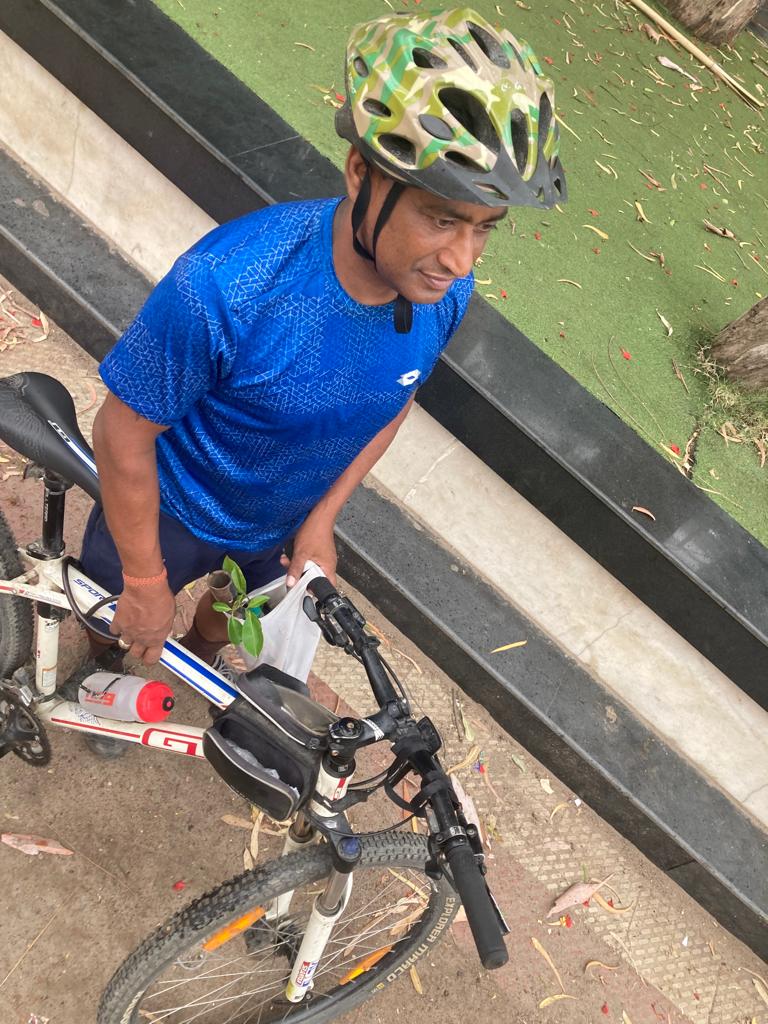
Meet Kaushik Guha of Rehabari! Every morning without fail, he cycles around the city with a sapling in his bicycle handle. Today marks his 509th consecutive day, planting yet another sapling for the city and future. #EcoWarrior#Guwahati#Inspiration
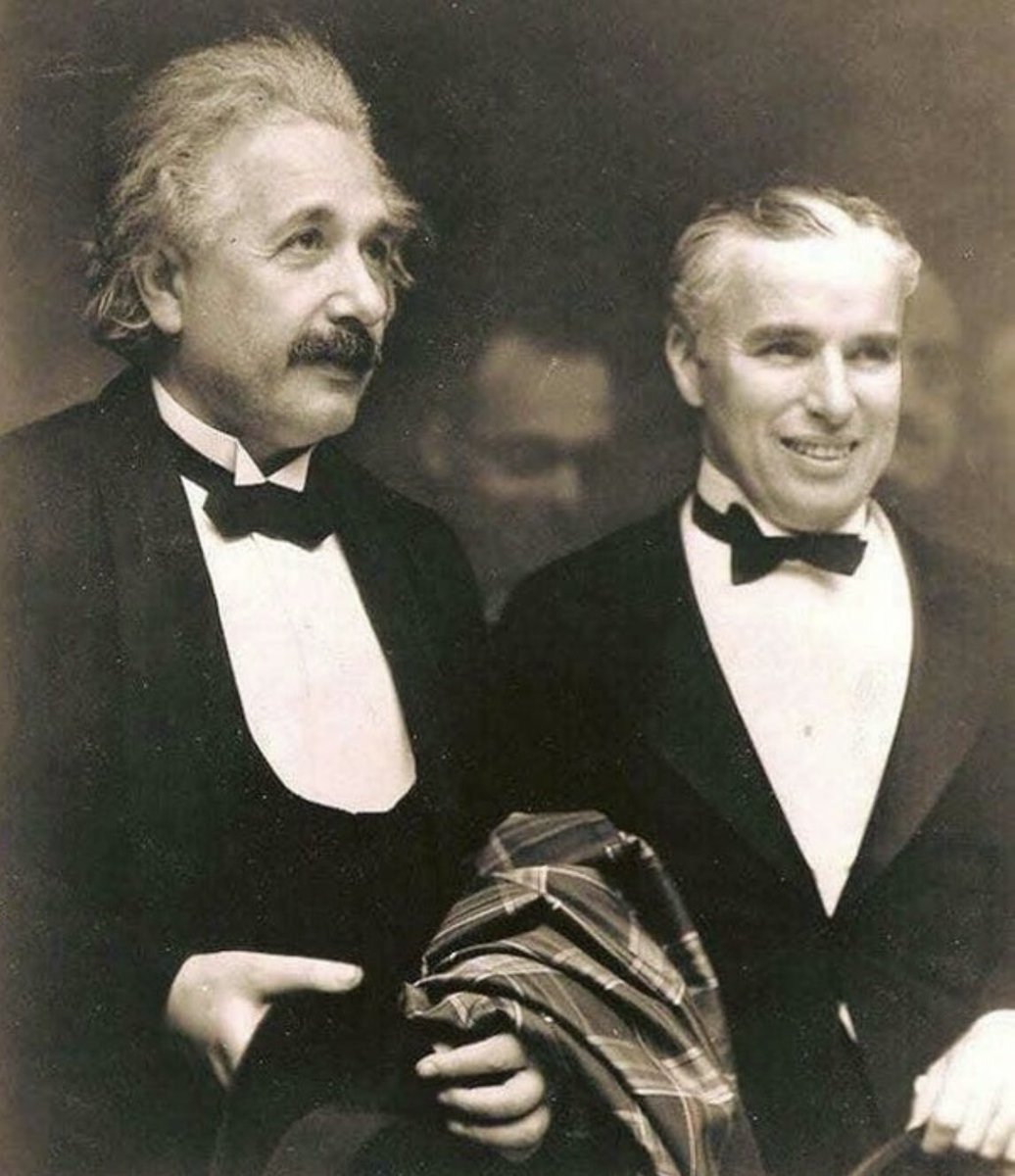
When Albert Einstein met Charlie Chaplin in 1931, Einstein said, "What I admire most about your art is its universality. You do not say a word, and yet the world understands you." "It's true." Replied Chaplin, "But your fame is even greater. The world admires you, when no one understands you."