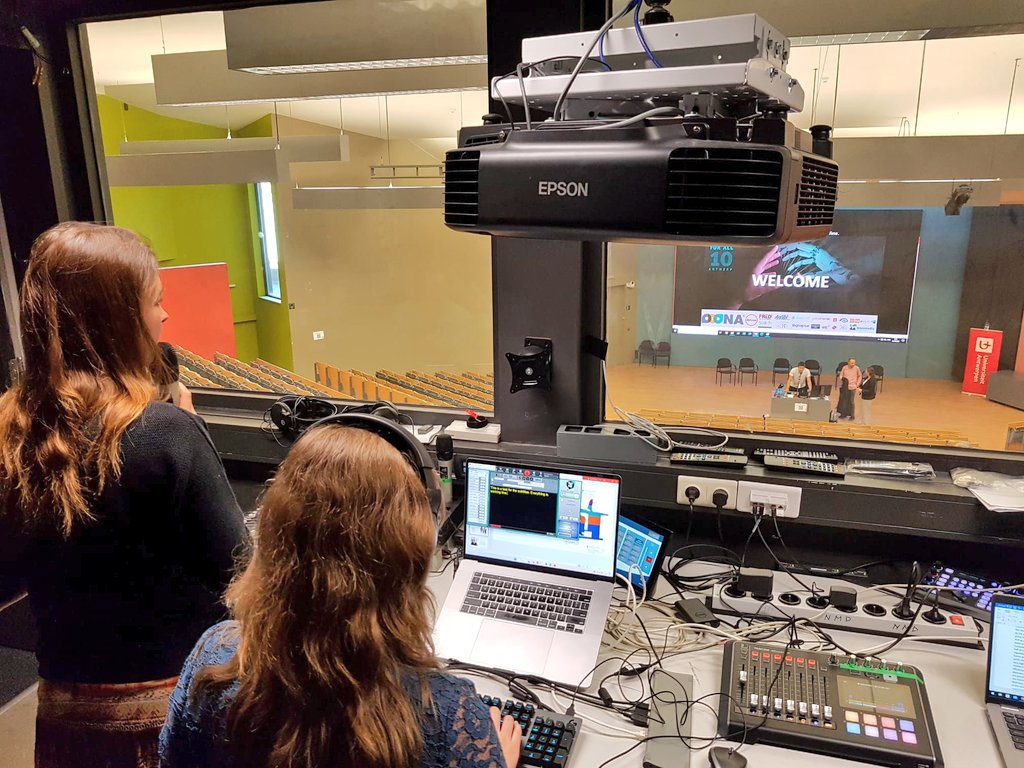
The call for papers for #NITS2024 is out! We will have the pleasure of hosting it at @UAntwerpen this year. Get your abstract in by April 12 (https://t.co/PacbP6t63a)
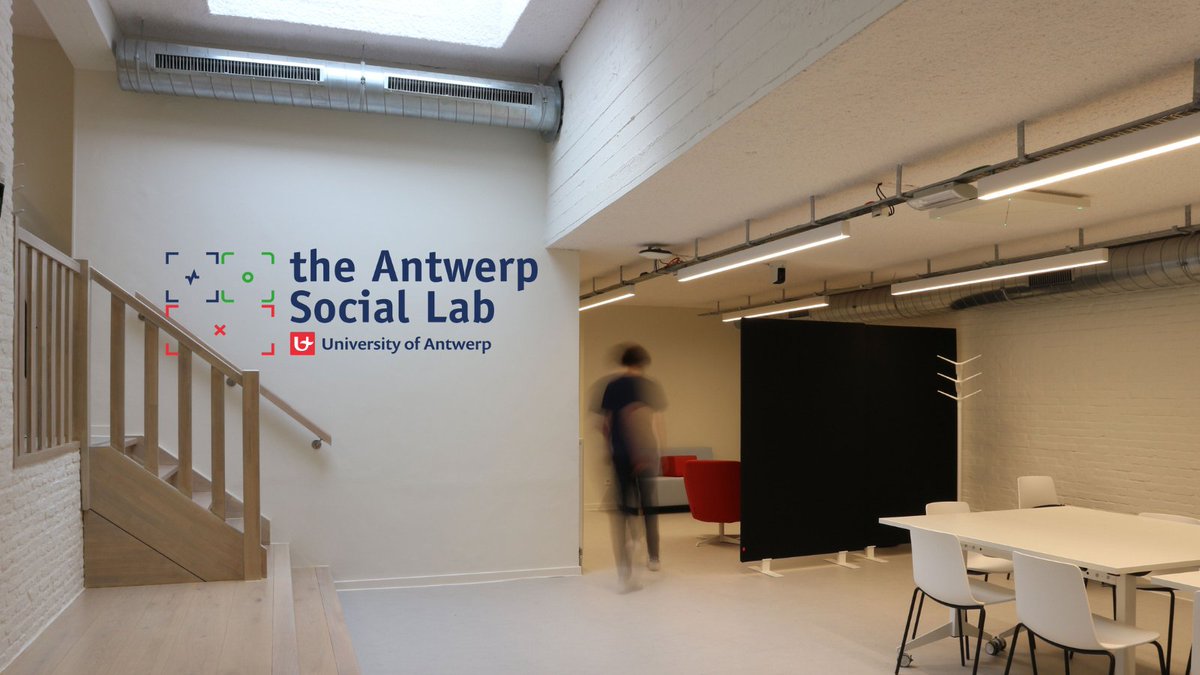
New beginnings. Sometimes you just have to leave the old place, renovate and build a new home. That is what we did with the Antwerp Social Lab. And now it is time for a party. Or at least an opening event with tours and research demo's. You are invited! https://t.co/53w6AolLyf
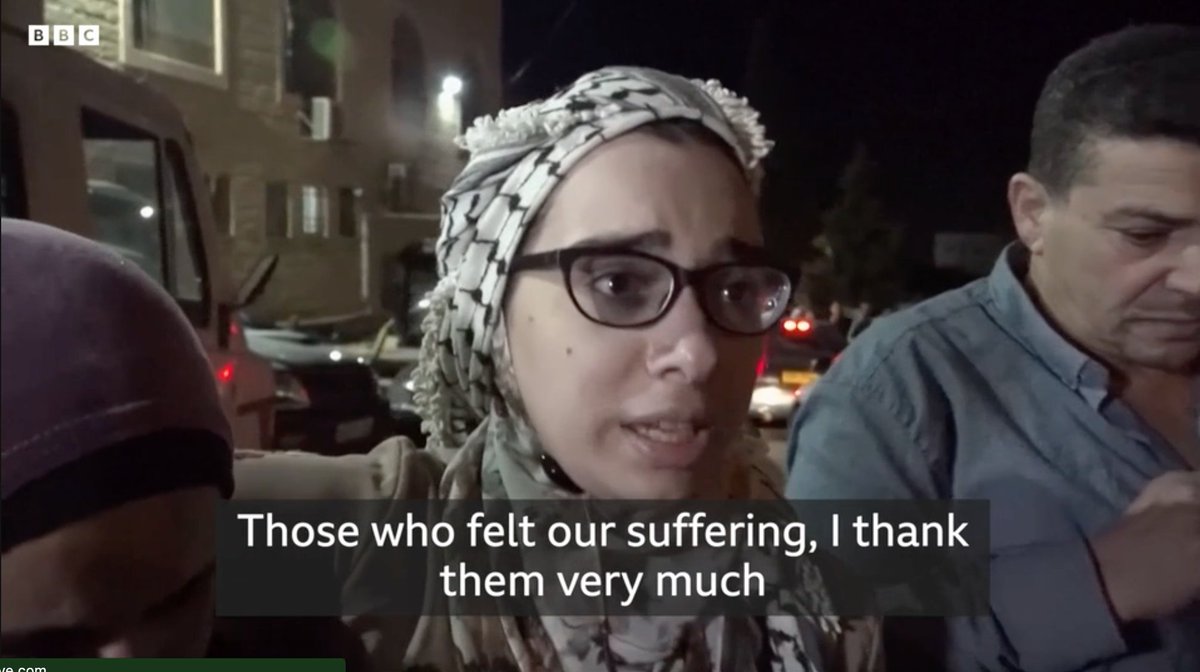
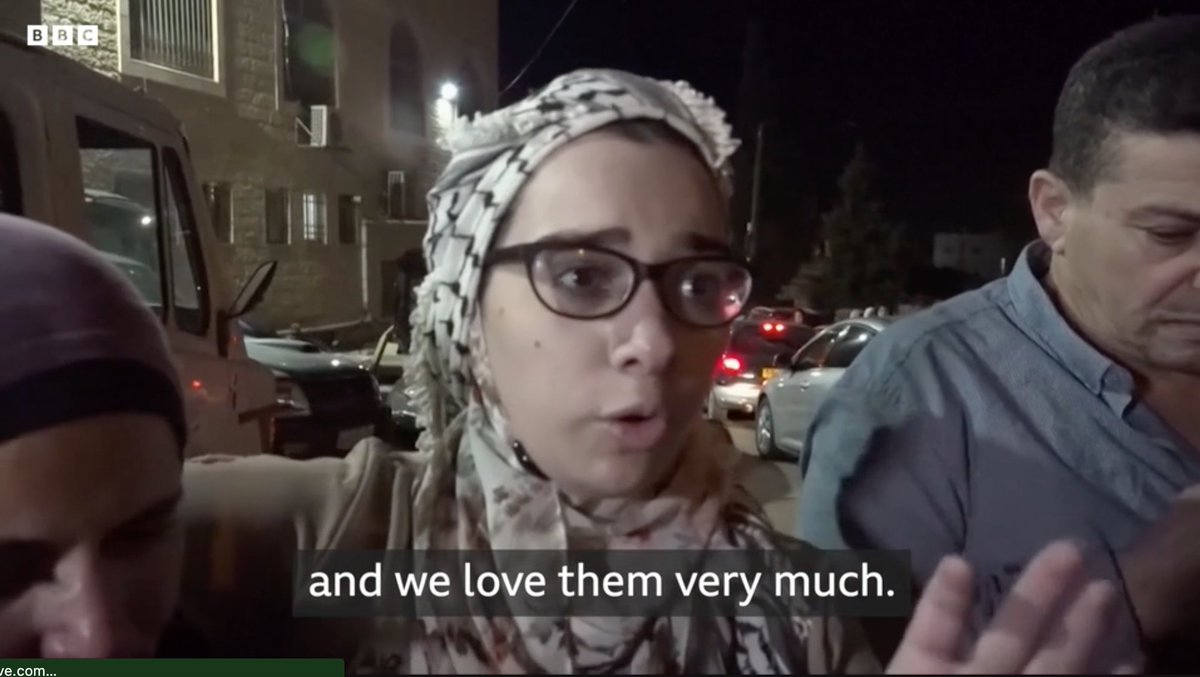
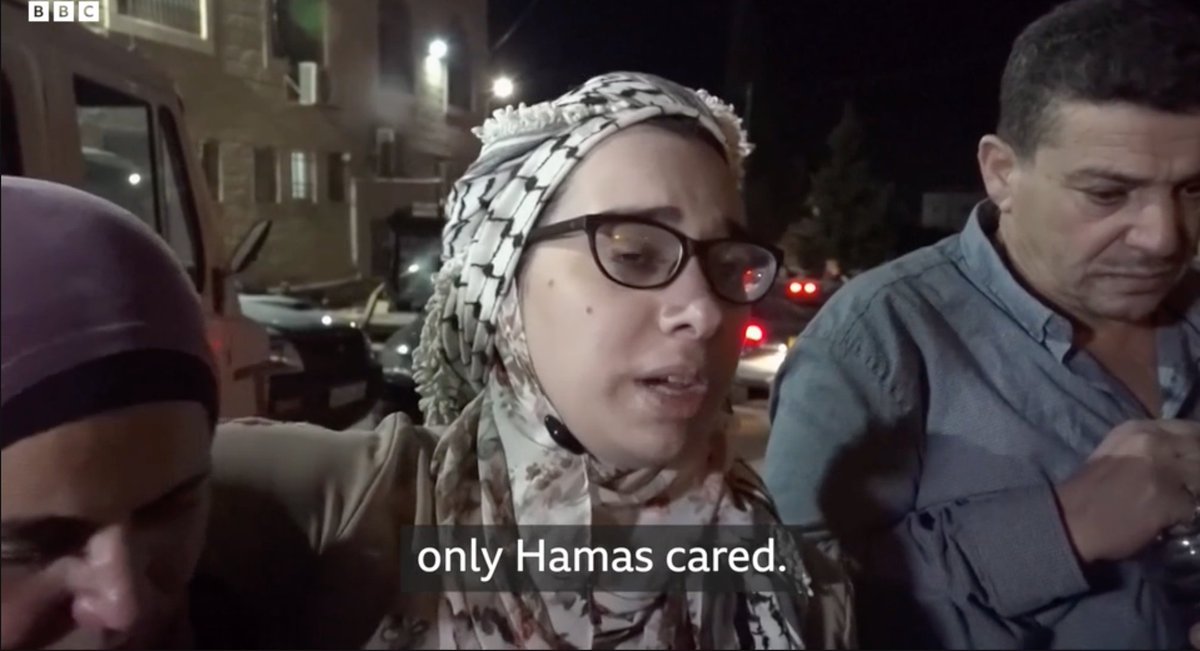
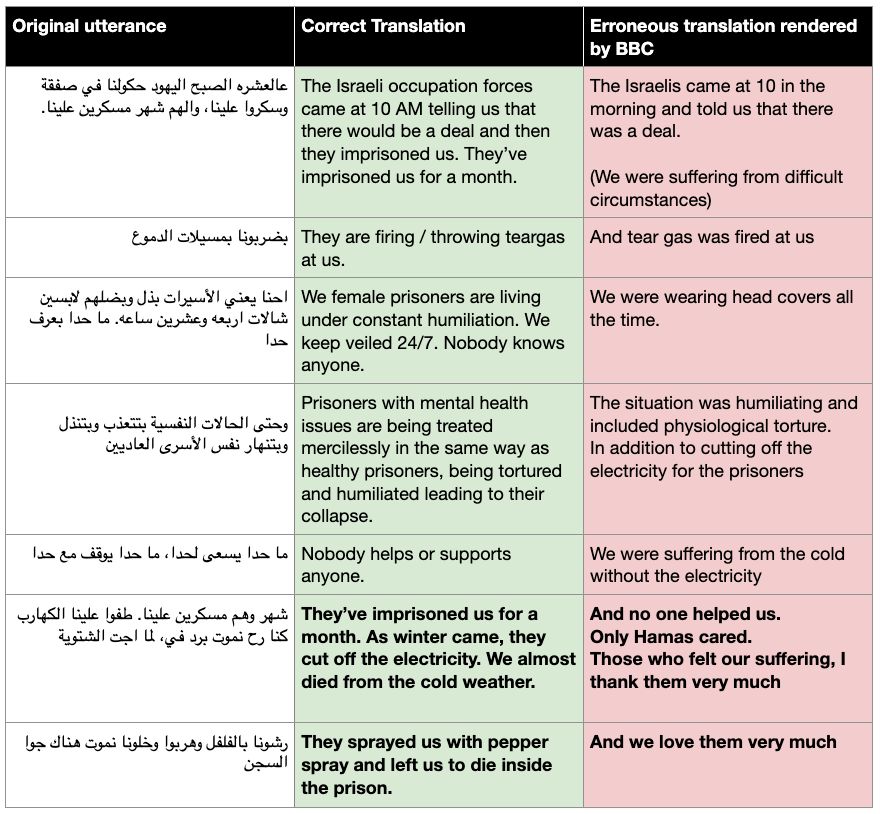
A released Palestinian prisoner says in Arabic that Israel held them in the cold w/o electricity, "sprayed us w/ pepper spray" & "left us to die."
She never mentioned Hamas or a word like it. Yet @BBC translated to: "No one helped us. Only Hamas cared...We love them very much."
Our new publication about mapping cognitive processes when learning from videos is now published in 'Learning and Instruction' !
Available for free download:
https://t.co/G7twiGi6tz
@MarijnGijsen@DavidGijbelsUA@LCatrysse
I am an assistant professor at Columbia Business School. I am a father, a husband, an uncle, and a son. I am a forty-year-old man, and last week I found myself crying in front of a group of complete strangers.
Applications are now open for the eighth summer school on statistical methods for linguistics and psychology:
https://t.co/Gl8Y4tJ5pj
Applications close April 1, 2024.
Wat deden corona en de schoolsluitingen met de evolutie van leerlingprestaties wiskunde & wetenschappen in het basisonderwijs?
Het rapport van het grootschalige TIMSS-repeat onderzoek is te vinden op
https://t.co/ZiqD869J8m
@EdubronUA@iea_education@TIMSSandPIRLS
The worst and most useless advice given to PhD students: find a gap in literature.
Here's why:
The problem with "finding a gap in literature" is that it's an analogy.
It assumes that an academic field is like a wall. Every researcher brings a brick or two and that's how we this wall gets built.
Sometimes researchers are unable to solve a problem, which results in a "gap" in the wall.
The analogy of finding a gap in literature, like any other analogy, distorts the actual process of how academic research gets done.
As a result, graduate students try to find a topic that no one has written about before. This is counterproductive at best and utter madness at worst.
Let's say I start researching a topic like "The Effect of Reading Hans Christian Andersen's Stories on the Production of Milk Among Danish Cows."
No one has written about this topic and I can argue that there is a gap in literature.
The problem is even if I were to write a whole 400-page monograph on this topic, it will not move the field forward. No one in the field of Andersen studies is interested this topic.
If you follow the advice of finding a gap in literature, you may end up doing research that no one is interested in.
So what should you do?
Here's a suggestion: try to find a problem you feel passionately about.
This may be a bit tricky if you are starting out. So, read about it, think about it, and write what make of it.
Most importantly, know that there is a place in the world for whatever you have to say on a given topic.
Example:
I had a problem that I had spent years thinking about before my PhD. And the problem was how a South Asian Muslim identity got constructed in and through Urdu literature.
I read about Urdu literature and identity formation in colonial India and figured two writers whose works I wanted to enagage with. Nazir Ahmad, a 19th century Urdu novelist, and Benedict Anderson, the famous Anglo-Irish political scientist.
There is a lot of scholarship on Nazir Ahmad's novels and Benedict Anderson's book "Imagined Communities" is a considered a classic in the humanities and social sciences. A lot of folks had written about Nazir Ahmad and Anderson's work. So, not many gaps in the literature.
But no one had looked at how Nazir Ahmad's novels created an "imagined community" of Muslims in colonial India. So, I did this in my dissertation.
I didn't try to find a gap in literature. I solved a problem that I felt passionately about.
Interested to find out more about the difficulties of remote healthcare interpreting and strategies to overcome them? Join this online seminar by Esther de Boe organised by @NUSingapore on September 8
Academics and businesses, seize the prime opportunity of Knowledge Transfer Partnerships (KTPs) to co-create innovative products and services. Here are 10 valuable insights to increase your chances of KTP project success:
The @SIGWriting2024 Conference takes place from 26-28 June 2024. It is preceded by a Research School for PhD students and early career researchers (24-25 June 2024). More information on: https://t.co/wVOC7ggvBX
We are looking for a PhD candidate to work on an and AD project within translation process research framework. Fully funded for 4 years. Apply by 21/08. More info here: https://t.co/1hY6qOUgvn