- A strong and holistic legal framework for establishing state police.
- Independent appointments and confirmation processes.
- Citizens should be empowered by law to challenge unlawful orders.
- A strong oversight mechanism to prevent institutional excesses.
Details of Proposed Constitutional Amendments for the Establishment of State Police and Federal Police
1. Establishment of Federal Police and State Police (New Section 214)
• Two distinct police bodies are constitutionally established:
• (a) the Federal Police
• (b) State Police (one per State, established by State law)
The National Assembly must pass an Act prescribing:
• Structure, organisation, administration, and powers of the Federal Police
• Framework and guidelines for the establishment of State Police
• State Police cannot commence operational policing until:
• Established by a Law of the State House of Assembly, and
• Certified as meeting national minimum standards (prescribed by an Act of the National Assembly)
• Transitional provision: Until a State Police becomes operational, the Federal Police continues all policing functions in that State. After commencement, the Federal Police handles federal policing functions and may provide assistance to the State Police.
2. Responsibilities and Non-Interference (Section 214)
Federal Police is responsible for:
• Maintenance of public security, public order, and security of persons/property throughout the Federation (to the extent provided by the Constitution or National Assembly Act).
• Similar functions within a State to the extent the State has legislative power under the Constitution.
Key safeguard against federal overreach (Section 214(6)):
The Federal Police shall not interfere with State Police operations or a State’s internal security affairs except in these limited cases:
• To contain serious threats where there is a complete breakdown of law and order and the State Police is unable to respond.
• When the Governor requests intervention.
• When a State Police is unable to function due to administrative, financial, or other problems.
Any such intervention requires prior approval by the National Police Council.
Federal Capital Territory (FCT): Fully under the jurisdiction and operational control of the Federal Police.
3. Leadership and Command (New Section 215)
• Federal Police: Headed by the Inspector-General of Police (IGP).
• Appointed by the President on the advice of the National Police Council, from serving members of the Federal Police.
• Subject to confirmation by the National Assembly.
• The IGP has command over the entire Federal Police, including contingents in States.
• The President (or authorised Minister) may give lawful directions on public safety and order; the IGP must comply.
• State Police: Headed by a Commissioner of Police (CP).
• Appointed by the Governor on the advice of the National Police Council, from serving members of the State Police.
• Subject to confirmation by the State House of Assembly.
• The Governor (or authorised Commissioner) may give lawful directions on public safety and order; the CP must comply.
• If the CP believes a direction is unlawful or contradicts general policing standards, the matter can be referred to the National Police Council (whose decision is final).
4. Removal of Top Officers (New Section 216)
• IGP: Removed only by the President on the recommendation of the National Police Council for specified grounds (grave misconduct, breach of Police Act/Regulations/Code of Conduct, conviction for fraud/dishonesty, bankruptcy, or mental incapacity). Requires two-thirds majority approval of the National Assembly.
• State Commissioner of Police: Removed only by the Governor on the recommendation of the National Police Council for similar grounds. Requires two-thirds majority approval of the State House of Assembly.
5. Funding Support (New Section 216A)
The Federal Government shall provide grants or aids to State Police on the recommendation of the National Police Council, subject to approval by the National Assembly.
6. Oversight Bodies
National Police Council (restructured and renamed from the old Nigeria Police Council; new composition and expanded functions in Third Schedule):
• Broad membership including: Chairman (Presidential appointee confirmed by NA), Attorney-General of the Federation, serving senior Federal Police officer, Attorneys-General of all States, retired Commissioners of Police (one per geo-political zone), representatives of NHRC, Public Complaints Commission, NLC, NBA, NUJ, and Traditional Rulers’ Councils.
• Key functions: Appointment and discipline of Federal Police officers (except IGP); recommending State top officers (CP, DCP, ACP) to Governors based on State PSC lists; supervising Federal and State Police activities (within constitutional limits); setting standards for training, intelligence, forensics; assisting State Police on request.
State Police Service Commission (new body established for each State in Third Schedule, Part II):
• Composition: Chairman (appointed by Governor, confirmed by State HA), representatives of NHRC, Public Complaints Commission, NLC, NBA, NUJ, retired Assistant Commissioners of Police (one per senatorial district), and Traditional Rulers’ Council.
• Functions: Recommending three qualified candidates for CP/DCP/ACP to the National Police Council; appointment, discipline, and removal of State Police officers below the rank of Assistant Commissioner of Police; other functions as prescribed by Constitution or National Assembly Act.
7. Legislative Framework (Second Schedule – Concurrent Legislative List)
• National Assembly may make laws on: establishment/organisation/administration/powers/duties of Federal Police; powers/duties of State Police; national minimum standards for both; policing standards, inspection, certification, complaints mechanisms, criminal information systems, inter-governmental cooperation, federal intervention, use of force, firearms, grants, and accountability.
• State Houses of Assembly may make laws for the establishment, organisation, administration, funding, and oversight of their State Police — but must comply with the Constitution and valid National Assembly Acts.
• States may set higher standards than national minimums but not lower.
• National Assembly laws cannot give federal authorities routine command, deployment, appointment, promotion, transfer, discipline, or control over State Police personnel (except for explicitly authorised federal intervention).
8. Other Related Changes
• Updates to various constitutional provisions (e.g., Sections 34, 35, 39, 42, 84, 89, 129, 153) to replace references to “Nigeria Police Force” with appropriate “Police”, “Federal Police”, or “State Police” terminology.
• Exclusive Legislative List adjustments (e.g., light arms for policing purposes; fingerprints/biometrics/forensics shared with State Police; Federal Police listed separately).
• Consequential amendments to the Third Schedule for the new bodies and their compositions/powers.
RE: STATE POLICE
Following my motion at plenary on Tuesday on the Matter of Urgent Public Importance regarding the Oriire school kidnappings, the murder of Michael Oyedokun, and the urgent need for structural security reforms, I am delighted to share that the Presidency has announced that the constitutional framework for State Police is nearing completion.
At a meeting convened yesterday by the Presidency, the Chief of Staff to the President, Rt. Hon. Femi Gbajabiamila, disclosed that the establishment of State Police requires careful consideration of constitutional and legal procedures. He further noted that significant progress has been made in recent weeks, with the process gaining substantial traction nationwide.
There is now a broad national consensus on the need for State Police, and I am optimistic that once the necessary constitutional amendments are concluded by the National Assembly, the required legislation and institutional framework for its implementation will swiftly follow.
As the saying goes, politics is local. I firmly believe that policing is equally local.
My long-standing advocacy for a decentralized policing and security architecture has reinforced my conviction that the establishment of State Police, Local Government policing units, decentralized courts, and an integrated national intelligence and surveillance network will strengthen grassroots security and significantly improve the protection of lives and property, which remains the fundamental essence of governance.
“Children and their teachers are missing, families are hurting, let’s not politicize this, what matters now is to get the abducted out safely and reunite them with their families and loved ones”
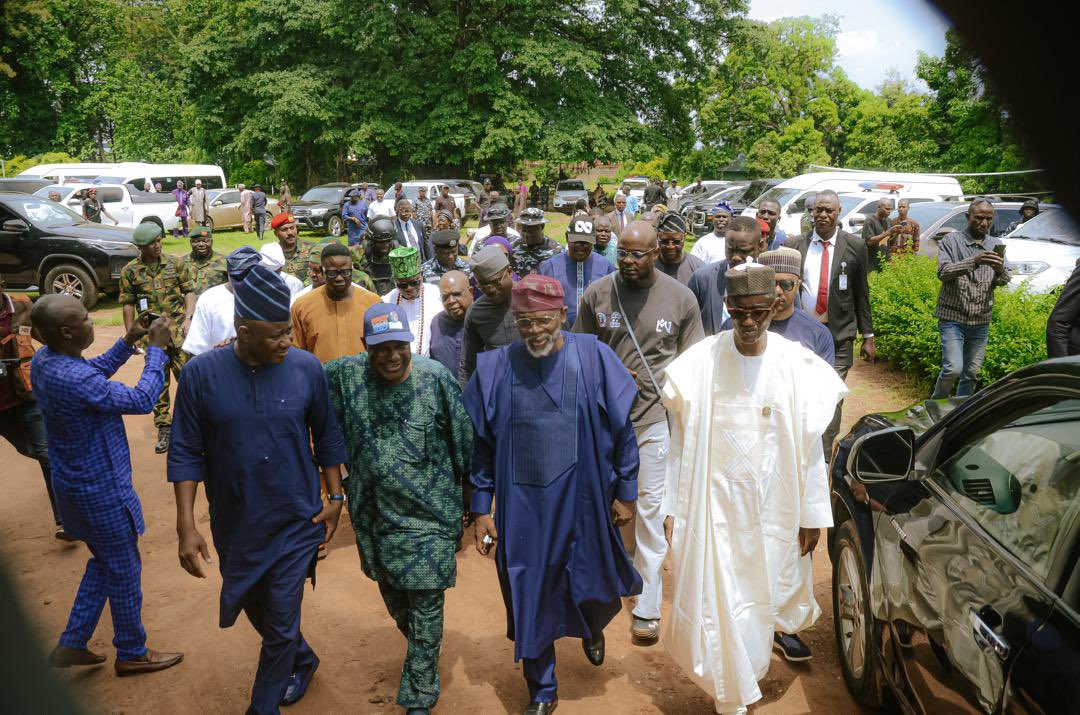
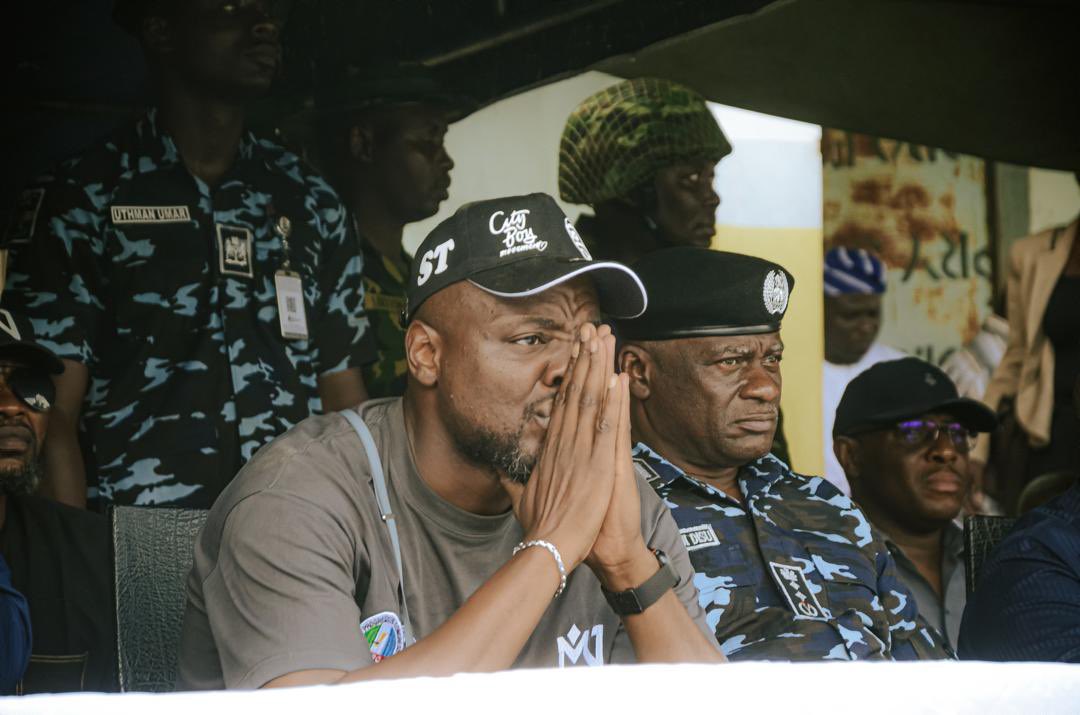
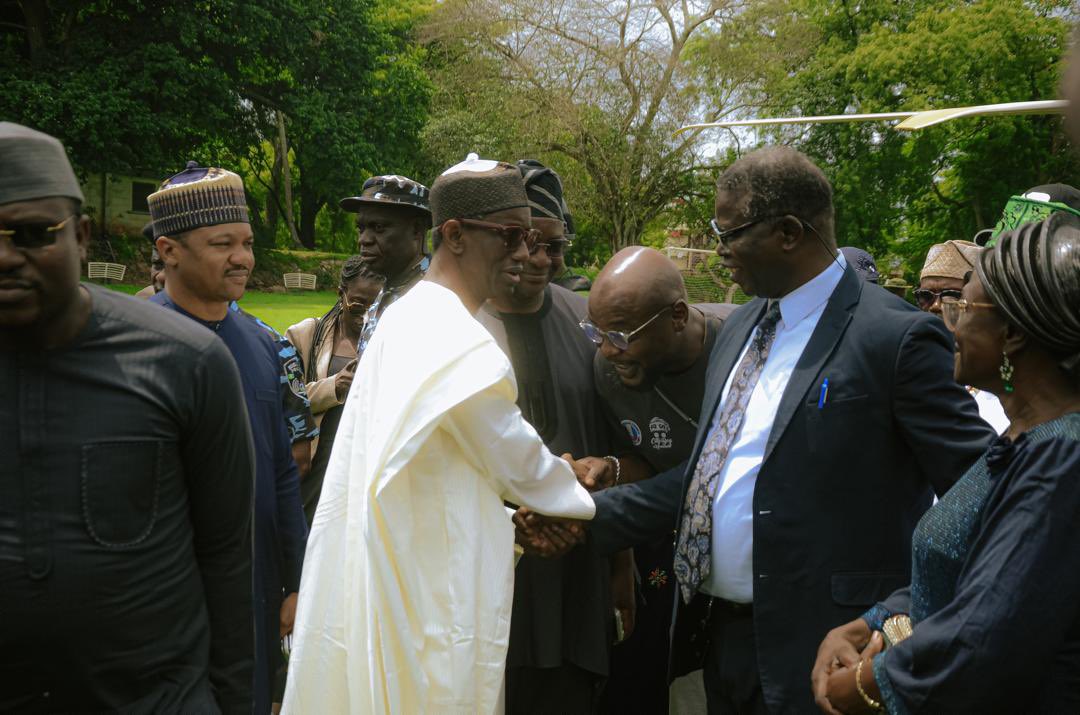
As part of the ongoing efforts to address the recent security challenges in Oriire Local Government, I joined a Federal Government delegation on an assessment and condolence visit to Esin-Ele and Yawota Communities, Oriire Local Government, Ogbomoso, Oyo State.
The delegation, led by the Chief of Staff to the President, Rt. Hon. Femi Gbajabiamila, and comprising the National Security Adviser, Mallam Nuhu Ribadu, Chief Sunday Dare, senior security chiefs and top Government officials had consultations with community leaders, security operatives, and families directly affected by the unfortunate incidents.
The visit provided an opportunity for firsthand assessment of the challenges facing my constituents in Oriire Local Government and the measures being implemented to address them. The delegation informed us that following our plea for a military base, they will convey our request to the President for approval.
The presidential delegation reaffirmed the Federal Government’s resolve to protect lives and maintain peace across the country. They assured the people that every effort is being made to secure the release of the abducted teachers and students, while those responsible for the attacks will be brought to justice.
Afterwards, the delegation paid a condolence visit to His Imperial Majesty, Oba Ghandi Afolabi Olaoye, Orumogege III, the Soun of Ogbomoso Land.
Conclusively, President Bola Ahmed Tinubu, GCFR, has approved the recruitment of 1,000 forest guards in Oyo State, in partnership with the Oyo State Government.
MOST PERFORMING STATES IN NIGERIA 🇳🇬
(Top 12 States — 2025 pSPI Ranking)
State — 2025 pSPI Position
🟣 Lagos — 1st
🟣 Ogun — 2nd
🔴 Kaduna — 3rd
⚫ Adamawa — 4th
🟠 Niger — 5th
🟠 Nasarawa — 6th
⚫ Gombe — 7th
🔴 Jigawa — 8th
🟠 Plateau — 9th
🟢 Abia — 10th
🟣 Oyo — 11th
⚫ Bauchi — 12th
🟠 NC 🔴 NW 🟣 SW ⚫ NE 🟢 SE
NB: FCT is excluded from the ranking.
The pcl State Performance Index (pSPI) report is intended to provide insights into the socioeconomic performance and risk profiles of Nigerian states.
#Statisense
(pSPI 2025)
I found a very beautiful Bible verse.❤️
NAHUM 1 :9
There will come a time when that problem won’t bother you again, not because you forgot, but because God ended it once and for all.
Don’t get too cocky, my boy. No matter how good you are, never let them see you coming. That’s the real game. Keep yourself small when you need to. Stay quiet. Stay harmless-looking. Be the little guy they underestimate from day one. Let them overlook you, let them misread you, let them think they’ve got you figured out. Because the most dangerous man in the room is rarely the loudest one it’s the one nobody realizes is mastering the whole universe in silence.