Anthropic found a dating-app network where AI wrote replies and paid workers took video calls to make the service feel real.
I wanted to make the case easier to follow, so I turned it into a visual story. Here’s a quick walkthrough.
@AnthropicAI Reports like this are crucial, but there’s a lot to absorb in a dense PDF. I turned the dating-app case into a visual scroll story to help more people understand how the operation worked.
Here's are 4 of the cases from the report: https://t.co/5oEwyYJV4F
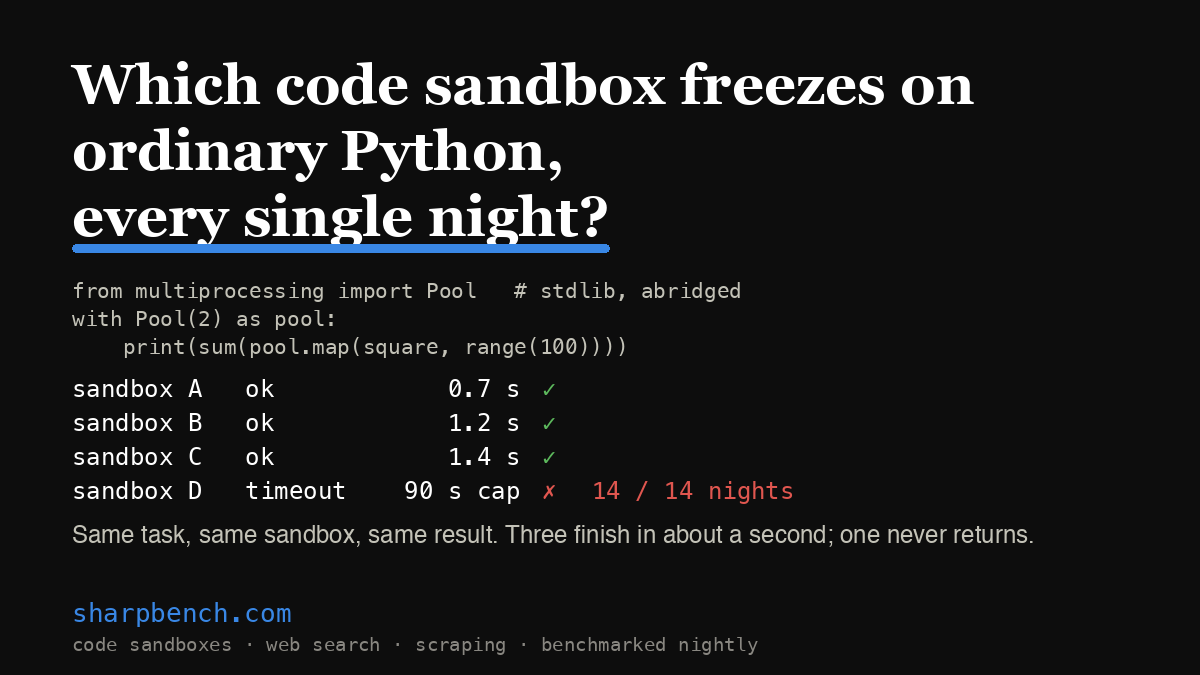
For the engineers: the task is stdlib multiprocessing.Pool(2). It needs working process creation plus POSIX shared-memory semaphores (/dev/shm), which is exactly where gVisor, Firecracker and plain containers differ. 16 of 16 batches since Aug 26, all at the 90s cap.
Every night for 14 nights straight, the same few lines of ordinary Python have frozen inside the same AI code sandbox.
Not in a stress test. Two worker processes, square 100 numbers, print the sum. The kind of thing an agent writes without thinking. Three sandboxes finish it in about a second. One hits the 90-second cap. Every single night.
That's why the benchmark runs nightly instead of once. A one-off looks like flakiness. Fourteen in a row is how the sandbox is built.
It shows up as a 95% reliability score, with the failed run and its error text right there in the audit trail.
Live, updated nightly: https://t.co/vxBdNCgGs8
Your agent can query it before picking a provider:
claude mcp add --transport http sharpbench https://t.co/lKAi8m64oq
@arcyton Good q. The network tasks assert on what came back: status 200 plus a specific string from the fetched body. Plausible fabricated output fails that check, so a blocked provider scores 0 on the task and its stored error text sits in the audit trail. "It finished" proves nothing.
One of the fastest, cheapest AI code sandboxes can't reach the open web from inside the sandbox.
This isn’t a bug, since it blocks the internet by default, for security. Reasonable design. But it means an agent can install a package and then fail the moment it calls an API, and no pricing page warns you.
So I built https://t.co/VFDnwbkfXH: nightly benchmarks of the services AI agents rely on, starting with the major code sandboxes (E2B, Modal, Daytona, Runloop). The same kind of thing keeps showing up, night after night:
• one ships a default Python that's missing part of the standard library, resulting in ordinary code fails
• one freezes on two lines of completely normal parallel code, every single night
• which one is "fastest" depends on where in the world you measure from
None of this shows up on a pricing page or a popularity leaderboard. All of it decides whether your agent's code actually runs.
The measurements are public and updated nightly. An agent can query SharpBench before it picks a provider.
Exactly. The geography point is why every batch records its vantage point: I've measured the same provider 10x apart between a laptop and a datacenter, and the latency lead flips with where you stand. The egress allowlist is the same story, it's not on any spec sheet, I only found it by probing from inside.
@ngikook That papercut is exactly why I probe from inside the sandbox instead of trusting the docs. If you remember which provider or edge case burned you, tell me and I'll turn it into a nightly task.
Live, updated nightly: https://t.co/HTx3QDyOJr
Code sandboxes + web-search APIs + scraping APIs, scored on quality, latency, cost, and reliability with the reasoning behind every score.
Your agent can query it mid-run: claude mcp add --transport http sharpbench https://t.co/CODLxgTMsv
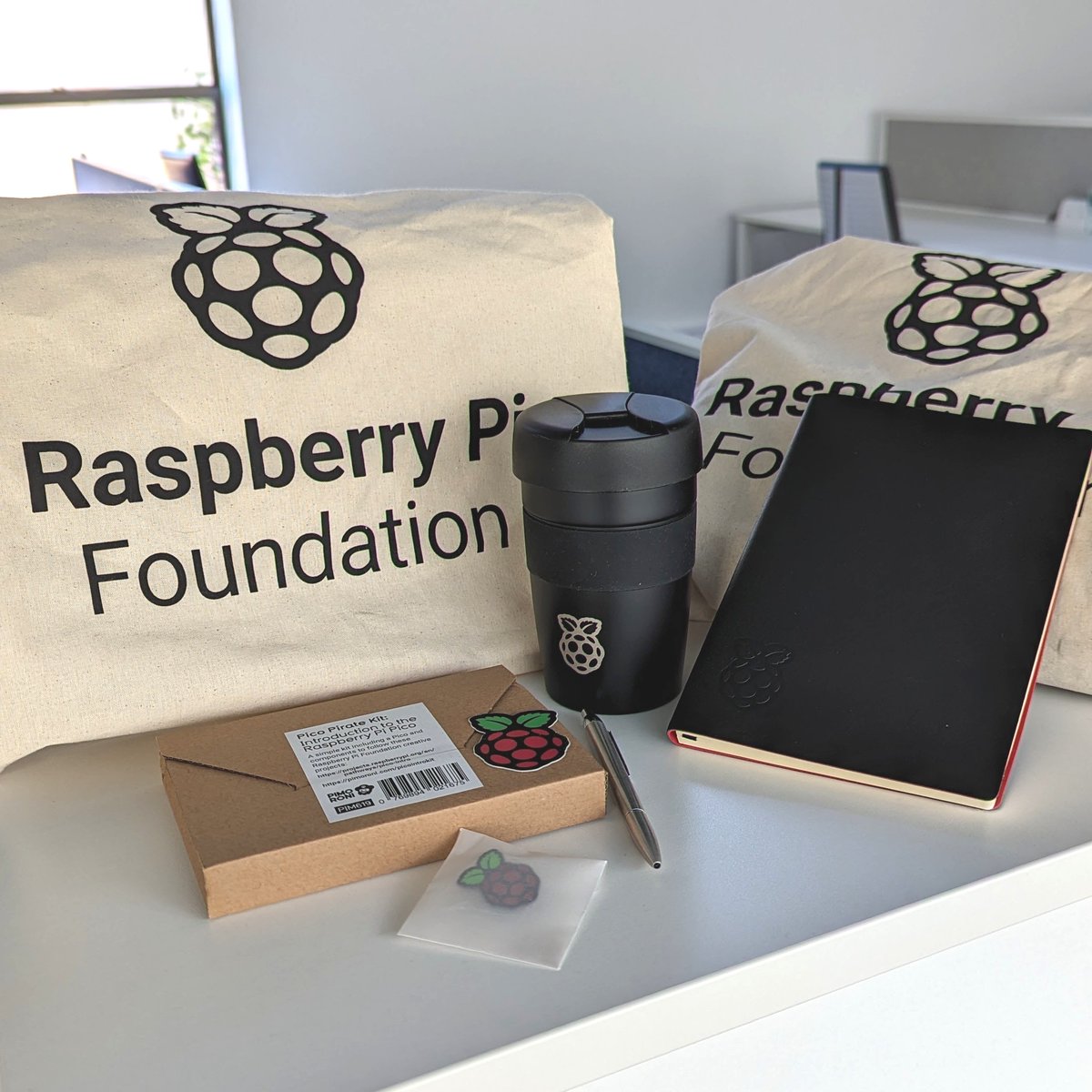
10K FOLLOWER GIVEAWAY 🎉🎈🎁
To celebrate 10K followers on Twitter, we're giving away 3x Raspberry Pi Foundation tote bags containing Raspberry Pi branded goodies 😍 Winners will be randomly selected on Friday, 19 May 2023.
To enter: Follow us, like & RT this tweet.
Good luck!
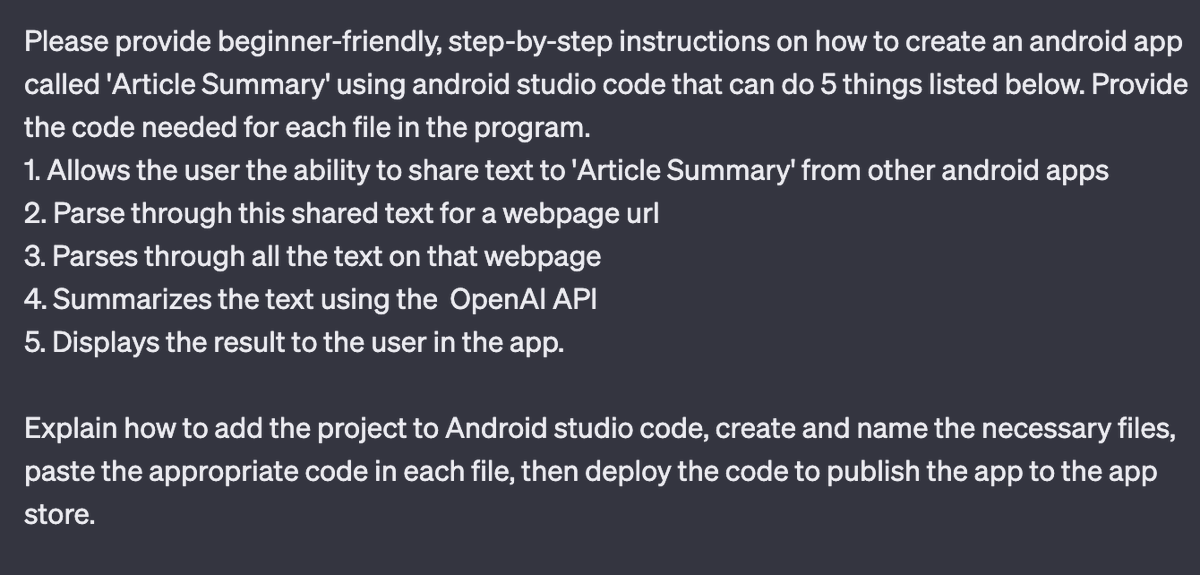
I hate reading long articles on my phone. So I built this app for myself using ChatGPT!
Now, I share a link to the app, which creates a summary of an article to decide if I want to read the rest of it.
https://t.co/bFqOVIvwbU
@mckaywrigley Very exciting, signed up! It took a lot of copy-pasting into the chatgpt4 window to get my app running.. Just launched it today, thanks for the inspiration!
https://t.co/kGhO87kCv4
I hate reading long articles on my phone. So I built this app for myself using ChatGPT!
Now, I share a link to the app, which creates a summary of an article to decide if I want to read the rest of it.
https://t.co/bFqOVIvwbU