How an Indian Mathematician Dated Takśaśila’s Lost Coinage by Its Weight!
In the early 20th century, Indian numismatics relied almost entirely on visual classification, cataloging symbol stamps on punch-marked silver coins (Kārṣāpaṇa).
While researchers like Durga Prasad and John Allan were making progress on typology, punch-marked coins lacked royal portraits / written dates.
Historians could categorize symbols, but struggled to establish relative chronologies / quantify long-term monetary debasement across ancient hoards.
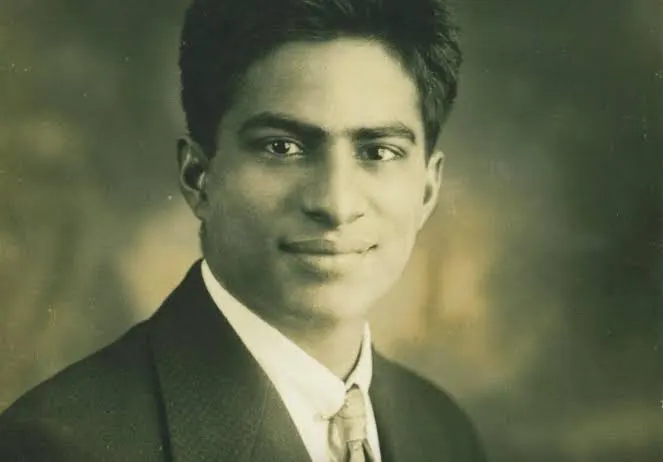
Starting in July 1940 with his papers in Current Science (followed by treatments in New Indian Antiquary and later collected in Indian Numismatics), polymath mathematician Damodar Dharmananda Kosambi while teaching mathematics at Fergusson College in Poona, introduced a quantitative framework to the field.
He treated hoard coins as samples drawn from a stochastic wear process.
Kosambi modeled the lifecycle of currency as a homogeneous random process governed by 2 distinct statistical phases:
- Newly minted coins of a given standard were modeled as approximately normally distributed around a target weight. Higher initial variance indicated looser manufacturing tolerances / emergency minting conditions.
- As coins circulated, handling caused continuous abrasion. Kosambi observed that active circulation systematically reduced the mean weight (roughly linearly over time) while increasing the variance, because individual coins experienced uneven rates of handling.
Applying linear regression, analysis of variance (ANOVA), and t and z tests on means and variances, to sample sets from the Takṣaśilā hoards, Kosambi instituted a rigorous empirical approach:
- Kosambi hypothesized that the small reverse marks ("shroff" stamps) were periodically applied by money-changers / state controllers to verify silver purity.
- Running regressions of coin weight against the count of reverse marks, he derived explicit mathematical relationships. For the square coins of the earlier Takśaśila hoard, he calculated the regression equation
y = 53.22 - 0.212x (where y is weight in grains and x is the number of reverse marks)...
showing a steady weight drop of ~0.2 grains per mark. (Round coins fitted less tightly).
- Comparing this empirical slope against known wear rates of modern circulating British-Indian rupees and annas, he inferred an operational interval of ~12 years between reverse marks. By tracking how coin volume decayed geometrically across mark counts, he modeled the rate at which currency was absorbed or lost from active circulation over time.
- Comparing earlier Takśaśila material to later Mauryan-period hoards, Kosambi demonstrated a statistically significant increase in weight variance and a poorer silver alloy. Rather than claiming a standalone "mathematical proof," he showed that these statistical shifts provided empirical support for literary traditions (such as commentary associated with Cāṇakya) regarding fiscal pressure and debasement in the late Mauryan era.
Kosambi did not replace traditional symbol typology, nor did he independently establish absolute calendar dates, deposition dates still depended on archaeological contexts (such as placing the earlier Takśaśila hoard near the late 4th century BCE).
Instead, he added a rigorous quantitative dimension to historical analysis. As J.D. Bernal observed in Kosambi's obituary in Nature, he pioneered the systematic application of statistical distribution analysis, regression, and variance testing to estimate circulation lifespan and establish relative hoard chronologies.
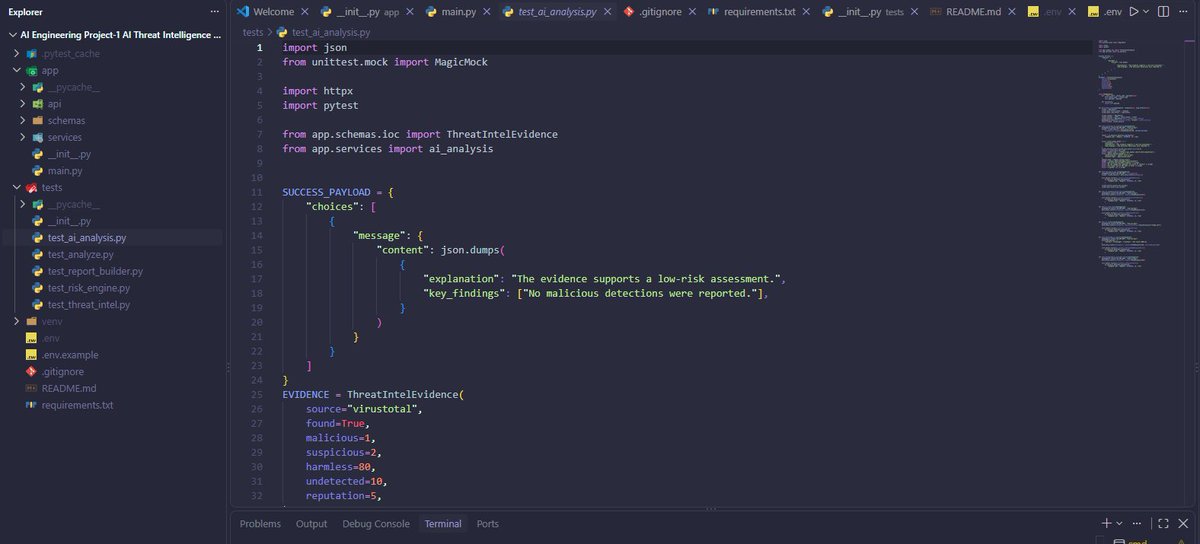
After using Github Copilot in VS Code to help me in coding my backend project I finally realized what the peeps in the space were talking about like-- "Coding is dead!" or that "software engineering is finished!".
tbh I now feel like I need to study prompt engineering as well.
I am doing a backend project using Github Copilot(vibe coding) in VS Code to learn backend engineering with AI tools.
Stack used: FastAPI+uvicorn,Git cli,VS Code.
I believe that learning how to use AI tools along with full stack is crucial now.
Cybersec+AI-Backend is my goal now.
I might start memorizing the table of contents of this course material due to its length.
This would help me in gaining ideas of which chapter I am in and the many types of attacks,tools and processes in a particular chapter.
Started learning IOT/OT Hacking after studying Moblie Hacking and let me tell you there are a ton of networks,tech and attacks I need to memorize here.
Might take a week for me to learn it at this point.
It feels so boring learning or memorizing cybersecurity textbooks having theory,tools and commands.
I have to literally learn the same thing everyday for it to stick to my brain so that I can remember it.
Repetition is the game.
REPEAT! REPEAT! REPEAT!
To-do list for today:
Read and create a list of AI Engineering Keywords and memorize them properly.
Read and memorize two chapters of AI Engineering book by Chip Huyen.
Complete Learning Hacking Mobile Devices chapter and shift to IOT and OT Hacking.
Learning some Android+iOS Hacking rn.
Really interesting stuff!
Although the tools make hacking mobile phones way too easy. Will probably need to understand how the tools function in order to really learn the underlying exploitation tech.
The dialogue b/w Indra (representing the relentless seeker) & Prajāpati (the divine teacher) in the Chāndogya Upaniṣad is 1 of the most brilliant strategic allegories in world literature. It is an ancient masterclass in 1st-principles thinking, rigorous questioning & refusing to settle for comfortable illusions.
Prajāpati announces a cosmic decree to all beings:
"The Self (Ātman) is free from evil, free from old age, free from death, free from sorrow, free from hunger and thirst. It desires only the Truth, wills only the Truth. He who seeks and realizes this Self obtains all worlds and all desires."
Hearing this, 2 rivals set out to learn this secret: Indra, the King of the Gods (Devas), and Virochana, the King of the Demons (Asuras). They arrive at Prajāpati's abode as humble students, carrying firewood, and serve him for 32 yrs.
After 32 yrs, Prajāpati gives them their 1st teaching. He says: “The person who is seen in the eye...that is the Self. That is the Immortal, the Fearless. That is Brahman.”
Indra and Virochana ask: “But Lord, what about the one who is perceived in water / in a mirror?”
Prajāpati replies that it is the same Self that is seen in all these. He then tells them to look at themselves in a pan of water and asks what they see. They report seeing themselves fully (down to hair and nails).
He instructs them to dress in their finest clothes, adorn themselves with jewels, and look again.
Prajāpati: “What do you see?”
Indra & Virochana: “We see ourselves exactly as we are, Lord...well-groomed, beautifully dressed, and adorned.”
Prajāpati: “That is the Self. That is the Immortal, the Fearless. That is Brahman.”
Virochana is thrilled. He goes back to the Asuras and declares: "The body is everything! Pamper it, worship it, serve it. There is nothing higher." (This became the foundational philosophy of pure physical materialism).
Indra starts walking home to heaven, but before he reaches the gods, a terrifying realization strikes him mid-step:
"If this body is well-groomed, the reflection is well-groomed. If this body is blind, the reflection is blind. If this body is crippled, the reflection is crippled. And when this body perishes, the reflection perishes! I see no value in this."
Indra turns around, walks back to Prajāpati, and says: "Lord, this answer does not satisfy me."
Prajāpati smiles and tells Indra to stay for another 32 yrs. When the time passes, Prajāpati gives him the 2nd level of teaching.
Prajāpati: "That which moves about happy in dreams, that is the Self. That is the Immortal, the Fearless."
Indra leaves, satisfied for a moment. He thinks: "In dreams, the mind is free from physical deformities! If the body is blind, the dream-self can still see."
But halfway home, the flaw in this logic hits him like a bolt of lightning:
"Even though the dream-self does not suffer from physical blindness, it still suffers! In dreams, 1 gets chased by monsters, 1 gets struck down, 1 cries, 1 feels fear and grief. The subtle mind is still a prisoner of its own projections."
Indra returns a 2nd time: "Lord, this too is flawed."
Prajāpati asks Indra to serve for another 32 yrs (now 96 yrs total) and offers the 3rd level:
Prajāpati: "When a person is sound asleep, totally at rest, dreaming no dreams, knowing no desire, that is the Self. That is the Immortal."
Indra leaves again. But before reaching home, he hits another conceptual wall...the most terrifying 1 yet:
"In deep, dreamless sleep, a person does not know 'I am this' or 'I am that.' It is complete unawareness! It is as if 1 has gone into total annihilation or non-existence (Vināśam evāpīto bhavati). There is no joy, no awareness, no light. I see no glory in becoming a void."
Indra returns a 3rd time.....
He has rejected the Body (Materialism), the Mind/Dreams (Psychological Ego), and Dreamless Sleep (Unconsciousness/Nihilism).
Prajāpati, seeing that Indra has passed every intellectual trap and refused to accept a partial truth, asks him to stay for 5 more yrs (making it 101 yrs of disciplined pursuit).
Finally, Prajāpati reveals the ultimate truth:
"O Indra, this body is mortal, held in the grip of death. But it is the dwelling place of the deathless, bodiless Self (Ātman).
When the Self is attached to the body, it is caught in pleasure and pain. But when it realizes it is not the body, no pleasure or pain can touch it.
The eye is merely the instrument for seeing; the 1 who knows 'I see' is the Self. The ear is merely the instrument for hearing; the one who knows 'I hear' is the Self. The mind is merely its divine eye (Divyacakṣus).
The Self is the ultimate Observer, the light that illumines the body, the dreams, and the deep sleep, while remaining untouched by all 3."
Virochana represents the vast majority of people who take a surface-level, comfortable answer and build their entire life around it. Indra represents the rare 1% who question even "divine authority" when the logic does not hold up.
🚨Singapore and Dubai were the default choice for global treasury operations.
That's changing.
JPMorgan is in talks with over 100 multinational companies exploring GIFT City.
From Fragile Five to This! India's strong economy will transform this nation over time 🙏
Some advance toward greatness, others return to it. We Indians do both.
Congratulations, @PawanKChandana and the entire @SkyrootA team on the great success of Vikram-1, making India only the third country in the world after USA and China with private orbital launch capability.
International media in the last 30 days: "India Hunger strike", "protests in India", "Floods in India."
🇮🇳India in the last 30 days:
July 19, 2026: Indian Gen-Z team wins 4 gold medals (top rank) at International Chemistry Olympiad and medals at the International Biology Olympiad.
July 18, 2026: Young Indians working at Skyroot Aerospace successfully launch Vikram-1, India’s first privately developed orbital-class rocket, from Sriharikota, placing payloads into Low Earth Orbit.
July 17, 2026: PM Modi flags off India’s first indigenous hydrogen-powered passenger train (10-coach set) from Jind station, Haryana, on the Jind-Sonipat route as an inaugural service.
July 14, 2026: DRDO completes successful military field trials of an indigenous scalable fiber-based Quantum Key Distribution (QKD) system for secure strategic communications.
July 13, 2026: Lucknow-Kanpur Expressway (63 km), India’s first barrier-free expressway with satellite-based tolling, opens to traffic.
July 12, 2026: Young Indian team wins 5 gold medals at the 56th International Physics Olympiad (IPhO 2026) in Colombia, securing joint world #1 rank.
July 11, 2026: RM Rajnath commissions INS Mahendragiri, the sixth Project 17A stealth frigate, in Visakhapatnam (~75% indigenous content).
Early–mid July 2026: Vimag Labs (Bengaluru) secures its 5th Indian patent for the Virtual Magnet Synchronous Motor (VMSM), a software-defined rare-earth-free electric motor platform.
Early July 2026: ISRO announces plans for a new Satellite Earth Station campus near Ledo in Assam to strengthen space communication in the Northeast.
Early July 2026: IIT Gandhinagar team wins a grant for developing indigenous liquid cooling plates for AI data centres, EVs, and high-performance electronics.
June 26, 2026: Nuclear heat-based hydrogen production facility (copper-chlorine thermochemical cycle) commissioned at Kalpakkam using Fast Breeder Reactor process heat.
June 24, 2026: ISRO successfully conducts hot test of semi-cryogenic engine power head at 175 tonnes thrust level.
June 24, 2026: RDSO (with ARAI) successfully conducts full-scale crashworthiness testing of LHB coaches for enhanced passenger safety.
June 21, 2026: PM Modi commissions three indigenously built warships in Kolkata: INS Dunagiri (Project 17A stealth frigate), INS Sanshodhak (hydrographic survey vessel), and INS Agray (ASW shallow water craft).
June 15, 2026: DRDO successfully flight-tests the indigenous Long Range Land Attack Cruise Missile (LRLACM) from Odisha; all objectives met.
June 10��11, 2026: DRDO conducts successful Phase-2 Ballistic Missile Defence (BMD) trials and anti-ship missile tests, demonstrating capabilities against long-range ballistic threats including ICBM-class.
Mid-June 2026: India’s defence production reaches a record ₹1.78 lakh crore in FY 2025-26.
Mid-June 2026: Maiden flight of the indigenous C-295 military transport aircraft highlighted as a major self-reliance milestone in aviation (with 40 aircraft under production in India).
June 13, 2026: First batch of women cadets trained at NDA commissioned into the defence forces. Marking the start of an women empowered era in defence.
🚨 BIG: 🇮🇳 India to soon join the global race for SpaceX-like reusable rockets
Chennai-based space startup Agnikul Cosmos has announced Mission-02, a bold plan to attempt India's first recovery of an orbital-class rocket booster by a private company.
The mission aims to safely recover the booster for refurbishment and reuse, while repurposing the upper stage into a functional in-orbit platform instead of letting it become debris.
This is a major step toward reusable launch vehicles that can significantly reduce costs and make satellite launches more affordable and sustainable.
Agnikul is already a leader in 3D-printed rocket engines that can be produced rapidly. It is now advancing reusability technologies, backed by multiple patents from 🇮🇳 India, the 🇺🇸 US, and 🇪🇺 Europe.
With support from ISRO and IN-SPACe, this progress highlights the rapid growth of India's private space sector.
Alongside recent private orbital launches like Skyroot’s Vikram-1, the country is building strong self-reliance in space technology.
A proud leap forward for Made in India innovation. 🇮🇳
My very best wishes to Team Skyroot Aerospace on the test launch of Mission Aagaman with Vikram-1 orbital rocket today.
This is far more than the maiden orbital flight of a rocket, it marks the arrival of India’s private rocket building capability and reflects the remarkable transformation of our space ecosystem. Built on years of innovation, policy reforms, and the strong foundation laid by ISRO, and the energy of the entrepreneurial youth, this mission opens new opportunities for Indian industry, startups, and the global space economy.
Every pioneering launch advances our collective capability, regardless of the outcome, by creating knowledge, confidence, and momentum for the future.
Wishing Team Skyroot a safe and successful mission. May Vikram-1 herald a new era of innovation and commercial development for India
#skyrootaerospace
#SomanathSpeak
ORBIT ACHIEVED. 🚀
Vikram-1 Test Flight-1 has reached orbit. India's first privately developed orbital rocket has completed its final burn and injected its payloads into a ~450 km orbit, making India the third country in the world with private orbital launch capability.
History is made. 🇮🇳
#Vikram1 #JourneyToOrbit #SkyrootAerospace