Why is it important to prioritize restoring and protecting wetlands?
🚰 Ensure access to clean water
🌎 Mitigate effects of extreme weather
🌾 Protect habitats and biodiversity
https://t.co/xMzHJqHICJ
New paper from my PhD 🧬🐬
Admixture is increasing genetic diversity and adaptive potential in low latitude killer whales promoting an genetic rescue effect.
See more here: https://t.co/YM6aviQz4V
(1/n)
Description of the Sicklefin Redhorse (Catostomidae: Moxostoma) by Robert E. Jenkins, Scott D. Favrot, Byron J. Freeman, Brett Albanese, and Jonathan W. Armbruster
Date of publication: 18 February 2025
OPEN ACCESS DOI link: https://t.co/pDV6mVNFKp
It is always an honor to see the smallest endangered species that is listed. The Tumbling Creek Cavesnail (Antrobia culveri) is found only in one cave and the largest adults tend to be around 2mm.
Early career ecologists: take it easy on your joints. Recovering from shoulder surgery is really tough/painful. Know your limits and don’t push it. You have a long career ahead of you!
This was a fascinating presentation on allopatry, vicariance, dispersal, geomorphology, and their influence on darter evolution. Would be a great supplement to any evolution course discussing these topics. Highly recommend!
1/5 New from the #NearLab, genomics and morphology demonstrate the famous Snail Darter, Percina tanasi, the little fish that swam to the United States Supreme Court is not a distinct species...
@yale_eeb@yalepeabody
Open access at Current Biology
https://t.co/zNLVB7kc6R
Interested in early life stages of fish, hypoxia, and freshwater coastal wetlands? Please join me on 12/16 at 9:00 AM EST for my PhD capstone presentation! Shoot me a DM for the Zoom password if interested!
Most snowy owls that visit Mo. are juveniles that may fly south due to a lack of space for territories after breeding season; these younger owls have extensive black barring on their otherwise white body and head, like this one seen yesterday in northern Mo!
📸Mark Ramsey
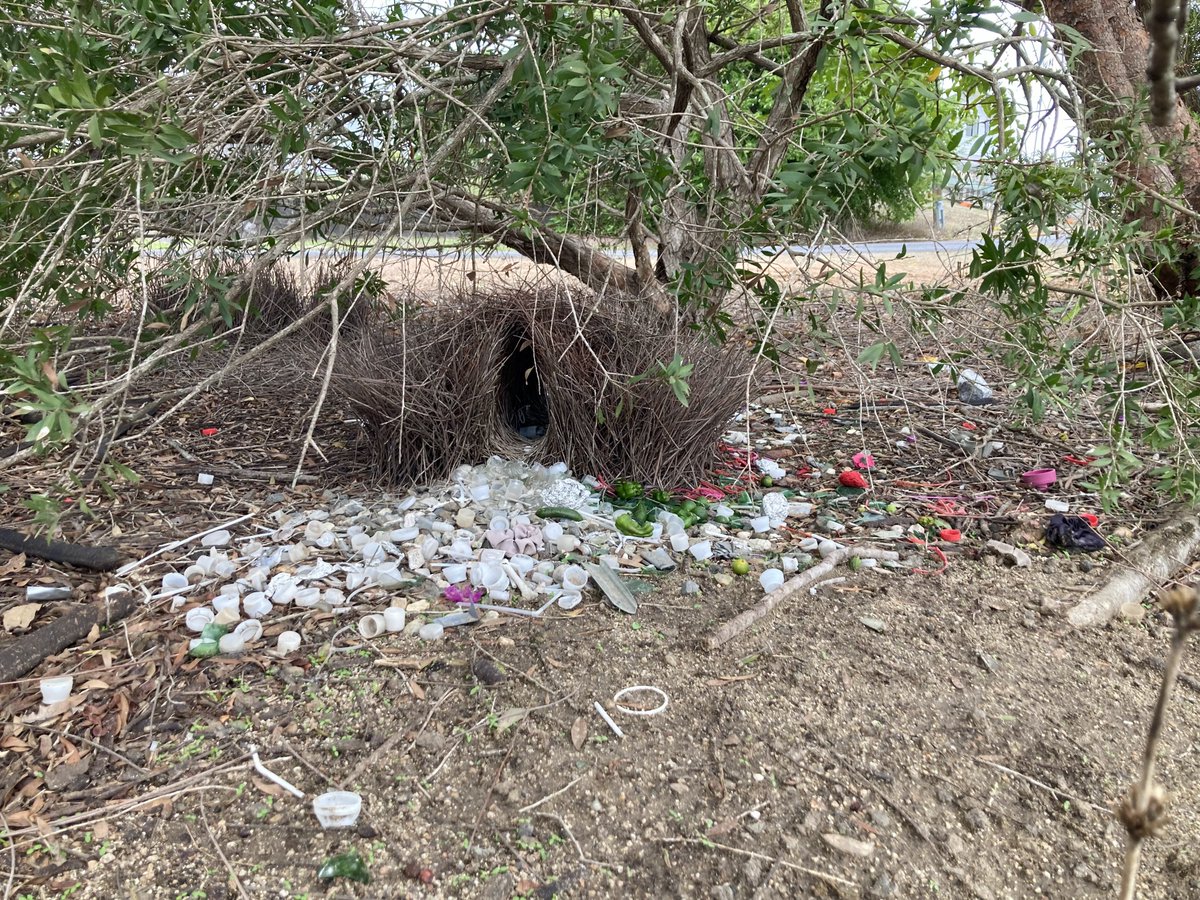
My student Griffin just sent me this profoundly sad photo of a Great Bowerbird bower. The painting on the right depicts what the bower should look like, filled with pebbles, shells, and bones. Nowadays, the birds use what they can most easily find in their surroundings: garbage.