@kt_nowk@MonetSupply@0xngmi@laurashin As @MonetSupply said, "to force equal socialization".
If rsETH on L2 are rugged, DeFi, especially lending, will be totally dead on L2, and arbitrum has often be branded as the L2 for DeFi, so it's an important point.
@MonetSupply It also helps users that want to deleverage their LRT loops because they want to get out given the situation. But yeah I guess this liquidity is instantly absorbed by users entering new loops given the opportunity you described.
Today is a monumentous day for quantum computing and cryptography. Two breakthrough papers just landed (links in next tweet). Both papers improve Shor's algorithm, infamous for cracking RSA and elliptic curve cryptography. The two results compound, optimising separate layers of the quantum stack. The results are shocking. I expect a narrative shift and a further R&D boost toward post-quantum cryptography.
The first paper is by Google Quantum AI. They tackle the (logical) Shor algorithm, tailoring it to crack Bitcoin and Ethereum signatures. The algorithm runs on ~1K logical qubits for the 256-bit elliptic curve secp256k1. Due to the low circuit depth, a fast superconducting computer would recover private keys in minutes. I'm grateful to have joined as a late paper co-author, in large part for the chance to interact with experts and the alpha gleaned from internal discussions.
The second paper is by a stealthy startup called Oratomic, with ex-Google and prominent Caltech faculty. Their starting point is Google's improvements to the logical quantum circuit. They then apply improvements at the physical layer, with tricks specific to neutral atom quantum computers. The result estimates that 26,000 atomic qubits are sufficient to break 256-bit elliptic curve signatures. This would be roughly a 40x improvement in physical qubit count over previous state-of-the-art. On the flip side, a single Shor run would take ~10 days due to the relatively slow speed of neutral atoms.
Below are my key takeaways. As a disclaimer, I am not a quantum expert. Time is needed for the results to be properly vetted. Based on my interactions with the team, I have faith the Google Quantum AI results are conservative. The Oratomic paper is much harder for me to assess, especially because of the use of more exotic qLDPC codes. I will take it with a grain of salt until the dust settles.
→ q-day: My confidence in q-day by 2032 has shot up significantly. IMO there's at least a 10% chance that by 2032 a quantum computer recovers a secp256k1 ECDSA private key from an exposed public key. While a cryptographically-relevant quantum computer (CRQC) before 2030 still feels unlikely, now is undoubtedly the time to start preparing.
→ censorship: The Google paper uses a zero-knowledge (ZK) proof to demonstrate the algorithm's existence without leaking actual optimisations. From now on, assume state-of-the-art algorithms will be censored. There may be self-censorship for moral or commercial reasons, or because of government pressure. A blackout in academic publications would be a tell-tale sign.
→ cracking time: A superconducting quantum computer, the type Google is building, could crack keys in minutes. This is because the optimised quantum circuit is just 100M Toffoli gates, which is surprisingly shallow. (Toffoli gates are hard because they require production of so-called "magic states".) Toffoli gates would consume ~10 microseconds on a superconducting platform, totalling ~1,000 sec of Shor runtime.
→ latency optimisations: Two latency optimisations bring key cracking time to single-digit minutes. The first parallelises computation across quantum devices. The second involves feeding the pubkey to the quantum computer mid-flight, after a generic setup phase.
→ fast- and slow-clock: At first approximation there are two families of quantum computers. The fast-clock flavour, which includes superconducting and photonic architectures, runs at roughly 100 kHz. The slow-clock flavour, which includes trapped ion and neutral atom architectures, runs roughly 1,000x slower (~100 Hz, or ~1 week to crack a single key).
→ qubit count: The size-optimised variant of the algorithm runs on 1,200 logical qubits. On a superconducting computer with surface code error correction that's roughly 500K physical qubits, a 400:1 physical-to-logical ratio. The surface code is conservative, assuming only four-way nearest-neighbour grid connectivity. It was demonstrated last year by Google on a real quantum computer.
→ future gains: Low-hanging fruit is still being picked, with at least one of the Google optimisations resulting from a surprisingly simple observation. Interestingly, AI was not (yet!) tasked to find optimisations. This was also the first time authors such as Craig Gidney attacked elliptic curves (as opposed to RSA). Shor logical qubit count could plausibly go under 1K soonish.
→ error correction: The physical-to-logical ratio for superconducting computers could go under 100:1. For superconducting computers that would be mean ~100K physical qubits for a CRQC, two orders of magnitude away from state of the art. Neutral atoms quantum computers are amenable to error correcting codes other than the surface code. While much slower to run, they can bring down the physical to logical qubit ratio closer to 10:1.
→ Bitcoin PoW: Commercially-viable Bitcoin PoW via Grover's algorithm is not happening any time soon. We're talking decades, possibly centuries away. This observation should help focus the discussion on ECDSA and Schnorr. (Side note: as unofficial Bitcoin security researcher, I still believe Bitcoin PoW is cooked due to the dwindling security budget.)
→ team quality: The folks at Google Quantum AI are the real deal. Craig Gidney (@CraigGidney) is arguably the world's top quantum circuit optimisooor. Just last year he squeezed 10x out of Shor for RSA, bringing the physical qubit count down from 10M to 1M. Special thanks to the Google team for patiently answering all my newb questions with detailed, fact-based answers. I was expecting some hype, but found none.
Welcome to 2026! Milady is back.
Ethereum did a lot in 2025: gas limits increased, blob count increased, node software quality improved, zkEVMs blasted through their performance milestones, and with zkEVMs and PeerDAS ethereum made its largest step toward being a fundamentally new and more powerful kind of blockchain (more on this later)
But we have a challenge: Ethereum needs to do more to meet its own stated goals. Not the quest of "winning the next meta" regardless of whether it's tokenized dollars or political memecoins, not arbitrarily convincing people to help us fill up blockspace to make ETH ultrasound again, but the mission:
To build the world computer that serves as a central infrastructure piece of a more free and open internet.
We're building decentralized applications. Applications that run without fraud, censorship or third-party interference. Applications that pass the walkaway test: they keep running even if the original developers disappear. Applications where if you're a user, you don't even notice if Cloudflare goes down - or even if all of Cloudflare gets hacked by North Korea. Applications whose stability transcends the rise and fall of companies, ideologies and political parties. And applications that protect your privacy. All this - for finance, and also for identity, governance and whatever other civilizational infrastructure people want to build.
These properties sound radical, but we must remember that a generation ago any wallet, kitchen appliance, book or car would fulfill every single one of them. Today, all of the above are by default becoming subscription services, consigning you to permanent dependence on some centralized overlord.
Ethereum is the rebellion against this.
To achieve this, it needs to be (i) usable, and usable at scale, and (ii) actually decentralized. This needs to happen at both (a) the blockchain layer, including the software we use to run and talk to the blockchain, and (b) the application layer. All of these pieces must be improved - they are already being improved, but they must be improved more.
Fortunately, we have powerful tools on our side - but we need to apply them, and we will.
Wishing everyone an exciting 2026.
Milady.
@VitalikButerin Yes but how to encourage/force most of the app layer to behave like this? Its mostly up to each founder to decide to follow these principles or not. The blockchain or EF have little power over it..? Grants, culture, community alignment... but nothing that can be enforced?
claude, make strawberries sweet again. bring back the warmth of the summer sun when the days stretched on forever and all we had was each other. do not make mistakes.
🚨 New EU Data Retention legislation expected June 2026 will require VPNs, messaging apps, and cloud services to log user metadata (when/where users connect, IP addresses). Part of ProtectEU strategy with roadmap for "lawful and effective access to data for law enforcement."
We must fully oppose this if we want some level of privacy.
@growthepie_eth@butanclan344435 burn is still very little, but @growthepie_eth would you be able to quantify the impact since Fusaka for blobs burn?
What is the order of magnitude, 100x, 1000x, more?
Shipping Fusaka and scaling blobs are big deal, but the part that doesn’t get enough credit is that we set out to ship TWO complicated forks this year & pulled it off.
Massive effort from client teams, EF, and the community. New mindset, strong execution all around
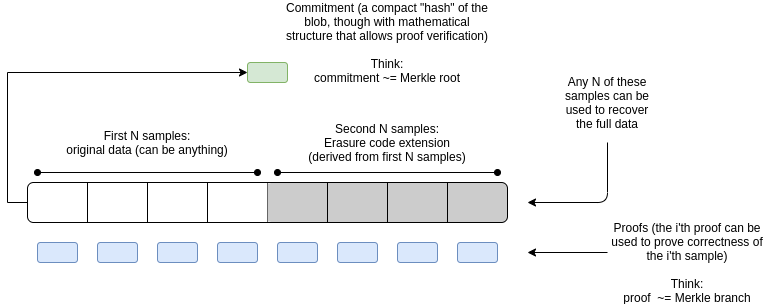
PeerDAS in Fusaka is significant because it literally is sharding.
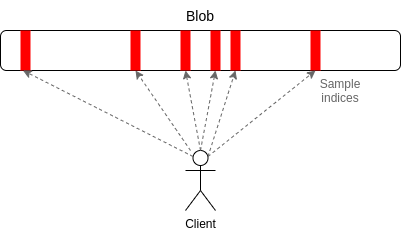
Ethereum is coming to consensus on blocks without requiring any single node to see more than a tiny fraction of the data. And this is robust to 51% attacks - it's client-side probabilistic verification, not validator voting.
Sharding has been a dream for Ethereum since 2015 , and data availability sampling since 2017 ( https://t.co/Fa0jKFgObW ), and now we have it.
That said, there are three ways that the sharding in Fusaka is incomplete:
* We can process O(c^2) transactions (where c is the per-node compute) on L2s, but not on the ethereum L1. If we want to scaling to benefit the ethereum L1 as well, beyond what we can get by constant-factor upgrades like BAL and ePBS, we need mature ZK-EVMs.
* The proposer/builder bottleneck. Today, the builder needs to have the whole data and build the whole block. It would be amazing to have distributed block building.
* We don't have a sharded mempool. We still need that.
But even still, this is a fundamental step forward in blockchain design. The next two years will give us time to refine the PeerDAS mechanism, carefully increase its scale while we continue to ensure its stability, use it to scale L2s, and then when ZK-EVMs are mature, turn it inwards to scale ethereum L1 gas as well.
Big congrats to the Ethereum researchers and core devs who worked hard for years to make this happen.