@Davidimel Absolutely love how the EU is pushing for image authenticity standards but is making Apple unable to implement theirs because it would be against the law…
This could be a big deal. Sure, you can run Qwen3.8 27B locally but if you do, practically nothing else can happen on your computer, so we need smaller models like this one to make local inference practical
Given that agents still need high level supervision. And given that the human review of code is a bottleneck. And given that the models have gotten good enough that strict deterministic harnesses are suboptimal.
Then how should we supervise their output.
My current solution is to use an interrogation tool coupled with an agent. The tool displays the structure of the system in a UML-like diagram, color coded with crap and mutation scores. The diagram is dynamic, allowing the user to click on element and drill down through the architecture -- all the way to code.
The user can detect structures that need improvement and tell the associated agent to make the appropriate changes. These changes can range from high level architectural changes, to the lowest level code refactorings. The associated agent will make those changes and cause them to be redisplayed.
The tool I'm using is custom made for me, but you can point an agent at it and use it as a template to build your own custom tool.
It's a work in progress, so don't be surprised if it changes a lot over the next few weeks. But then you probably won't care because by then you'll be deep in customizing it for yourself. And anyway, you can always point an agent back at mine, or someone else's, and integrate improvements into your own.
https://t.co/tu0Dsc9Vta.
I published my work about DeepSeek v4.1-Flash in a 24GB Macbook on Github.
The code, the tricks, the brainstorming with agents, everything.
I hope this can be a start for many people with limited resources.
https://t.co/XmMZw8Yr6G
I finally merged in DwarfStar a great feature from @rowantrollope where the agent can provide you hints and make the programmer a more active part of the process that learns new things in the process. /hints on
Forty years ago the first worm "escaped" containment and breached systems on the brand new Internet. It was illegal then and it's illegal now. If Anthropic and OpenAI are creating worms, labeling it "AI" doesn't let them off the hook. It's not Doom, it's Malware. Prosecute the creators, don't ban AI. "Oops" wasn't a defense for Robert Tappan Morris and it's not a defense now.
My contribution to DwarfStar is continuing! I use it in my "Production" AI Lab so I keep pushing it.
- PR 953: GLM 5.3 Flash +3.5% prefill and improved mathematical accuracy on M5 (TensorOps) kernel
- PR 954: DeepSeek V4 Flash +4% prefill & +6.5% decode
- Upcoming... support for Qwen 3.8 Flash Next model following @antirez suggestions on the kernel architecture! And I know the mythical @kernelpool is working on this too and he is another level, so it will be great combining ideas to get best out of it 🚀
Links:
- PR 953 https://t.co/QiKsy08n1l
- PR 954 https://t.co/1puoxqDeE8
- Qwen 3.8 Flash Next brancn (only the braves! WIP): https://t.co/4qBQr3R8jv
- HuggingFace Qwen 3.8 Model Experimental (Q4_0 routed experts) https://t.co/z2ya24ci2f
GLM 5.2 flash Q2 (generated by myself with similar recipe of DS4 Flash of DwarfStar GGUF) running on an M5 Max with 128GB. The Q4 weights also work on tensor parallel inference in two M5 Max systems. Soon on GitHub. Still testing + CUDA + ROCm ...
In case it's not clear:
I will spend the next several months making as many parts of the Apple app ecosystem work well with agents and frontier AI.
There's momentum at @macstoriesnet and I can't be stopped. 💪
The web is searchable. Podcasts should be too.
Introducing Radar by @particlepro_.
Radar lets you search and spot trends in over 130,000 actively transcribed podcasts, with ~20k new episodes added daily.
Millions of hours, billions of lines: all fully searchable, entity extracted, and rich with metadata.
Set up alerts to your Slack, email, or webhook, to get notified when the entities or people you're tracking are mentioned.
Radar is powered by the Particle Podcast Intelligence API. With Radar, we're now bringing this suite of services to humans, too.
https://t.co/LqgoTuUWSc absolute banger of a repo. told my clanker to help me set it up. now i have tiling navigation etc on mac and it's SO FKN DOPE (it just takes 2hrs to get used to it and then you're flying)
im just mad it's not called o-mac-y
Nothing says Open Source Leadership like shitting on volunteers that have spent decades donating their time and effort and then hijacking their work with some scripts.
What an absolute dipshit.
L’AI sta dando a tutti un potere che fino a pochi anni fa era riservato a pochi: creare.
Quello che 10 anni fa avrebbe richiesto mesi o anni, oggi può essere fatto in giorni.
Ma c’è un’altra cosa che mi interessa ancora di più.
Quasi tutto ciò che lo Stato pubblica è già pubblico per legge.
Il problema è che spesso è pubblicato in formati che il 99% delle persone non riesce davvero a leggere, capire o utilizzare.
Ed è qui che l’AI può cambiare le cose.
Può prendere informazioni pubbliche, metterle in ordine, renderle comprensibili, collegarle tra loro e permettere a chiunque di interrogarle.
In altre parole: può trasformare la trasparenza da un principio formale in qualcosa di realmente utilizzabile.
E forse può persino contribuire a creare più fiducia nelle istituzioni.
La cosa interessante è che non serve necessariamente un grande team o un enorme budget.
Con un po’ di AI, quello che abbiamo fatto recentemente sulla spesa pubblica italiana avrebbe potuto farlo chiunque.
E questo, per me, è il punto.
Il prossimo passo è espandere il concetto: rendere comprensibile tutto ciò che è già pubblico, ma oggi è di fatto illeggibile.
E creare insights azionabili.
Se avete idee, critiche o feedback, questo è il posto giusto.
The datacenter backlash is a referendum on sociopathic tech CEO’s, income inequality, AI concerns, algorithmic inefficiency, surveillance tech, and geopolitical instability. The public has called bullshit on the singularity.
In 1988, a grad student published a thesis on virtual memory that almost no one cared about.
Today it runs inside two billion devices.
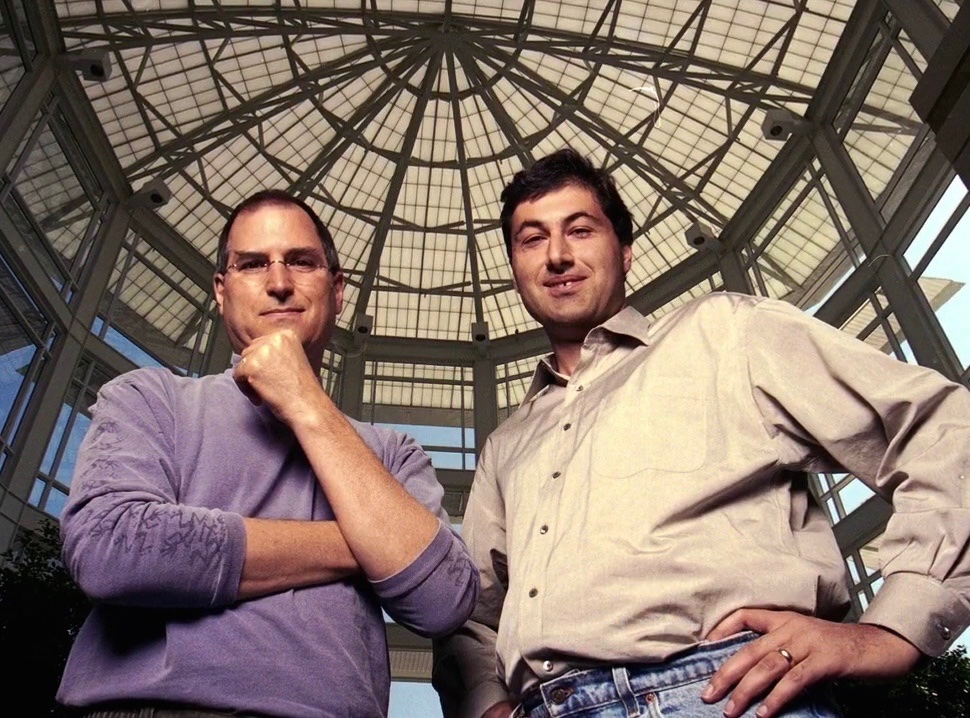
His name was Avie Tevanian. In 1984, he was working on a kernel to replace Unix's at Carnegie Mellon in Pittsburgh.
The project was called "Mach." It allowed you to run the same OS on different hardware, without having to rewrite the entire OS.
When Steve Jobs was starting NeXT, his team chose Mach as the foundation for their computers.
But Mach was just a kernel, they needed an entire operating system. So Jobs recruited Avie in 1988 to join NeXT and build NeXTSTEP.
You know the rest of the story.
NeXT was acquired by Apple in 1997.
NeXTSTEP became the foundation of MacOS.
MacOS became the foundation of iOS.
That thesis from 1988 is still running in your pocket.
My take on MLX:
(long rant/perspective ahead)
I think there are several overlapping problems, each of them is holding local AI back on Apple devices.
1) Lack of real investment by Apple (as usual).
Apple doesn’t even host the MLX repo under their own namespace. It is the primary method of running local inference on Mac devices but MLX has been essentially abandoned since the start of the year when Awni joined Anthropic, with no real hand off. It is frankly shameful Apple would let such an important project lie dormant, in maintenance mode with minor commits and no real innovation being worked on.
When I brought MTP to Macs even before GGUF in April, there was someone else (AirRunner) who tried porting a simple version of MTP to MLX LM.
TILL THIS DAY! It has not been merged to the repo. 3 months of work went into that branch and it has not been merged.
Nvidia is not beloved because of the hardware. It is CUDA which is so good.
On pure hardware maths, DeepSeek V4 flash should be able to run at 80+ TPS without D-Spark on an M3 Ultra.
It is currently in the 30-40 range. Why? Because their aren’t mature kernels, MLX is the Wild West where people like me are left to do custom kernels (that never get merged) and become separate projects.
Nvidia heavily contributed and incentivised the development of CUDA. Which is why two GARBAGE DGX sparks can run DeepSeek V4 flash faster than an M3 Ultra! The aggregate bandwidth of two sparks, no three sparks, NOT EVEN INCLUDING the latency of RDMA TP is less than an M3 ultra. It’s ridiculous.
A parallel can be made with gaming, MacBooks could be absolute MONSTERS for gaming. Efficient ARM and a decent GPU.
But Apple has done an abysmal job getting studios to port games to arm.
When Nvidia made the spark laptop? He had Bond, Fortnite and several games ON LAUNCH. Because Jensen understands the importance of partnerships, which Apple has historically been terrible at and ignored.
If Apple were to properly take over MLX, assign engineers to it, incentivise developers, accept and review contributions. MLX would be much better than it is now.
It amazes me how Apple underestimates the importance of software and firmware nowadays. The BEST price/hardware for local AI inhibited only by poor developer relations and implementation.
2.) Hardware. The lack of floating point.
Apple devices don’t hardware support low bit floating point precision, which is vastly superior for retaining accuracy at low quants. This has been available for years on Nvidia with FP8 and now NVFP4. This will change next year with the release of the M7.
Right now developers are forced to hand tune individual layers from INT4, to INT8 or BF16 to retain quality and speed and avoid the emulation tax. But their are also people out there which release slop quants not caring about accuracy. I made this mistake by using an MLX community 4 bit flat quant with terrible KLD as the base of 3.6 Optimized Speed which has forever tarnished the reputation of MTPLX as “worse quality”.
It’s a lack of resources too, it is not easy to learn these things. Nvidia publishes guides to NVFP4 and their own NVFP4 models while Apple does nothing.
Final Notes:
It will be very interesting to see where the local AI space goes in the coming years. Apple and Nvidia have separate weaknesses.
Apple: amazing memory bandwidth and hardware for AI but poor firmware, software and kernels.
Nvidia: great sheer compute, amazing firmware and kernels, stingy and cheap with hardware saving a bunch on the memory bus destroying bandwidth.
Either Apple steps up their developer relations game, and invests in improvements to the ecosystem.
Or Nvidia stops being cheap. 512 bit memory bus and/or newer unified memory.
Whoever does one or the other wins local AI.