Blue skies
Smiling at me
Nothing but blue skies
Do I see
Bluebirds
Singing a song
Nothing but bluebirds
All day long
Never saw the sun shining so bright…
Blue days
All of them gone
Nothing but blue skies
From now on
A 4-year-old boy’s simple habit of waving to his neighbors transformed an entire neighborhood, and helped him find the community he needed. @SteveHartmanCBS is On the Road in North Carolina.
Continuing our baseball movie theme, here are some Bull Durham Bull Facts:
-In the meeting at the pitcher's mound, Robert Wuhl ad-libbed his line about getting candlesticks as a wedding present. He said it was based on a real conversation he had with his wife.
-Both Jeff Bridges and Don Johnson turned down the role of 'Crash'.
-Both Carrie Fisher and Debra Winger auditioned for the role of Annie but backed out.
-Ron Shelton cast Tim Robbins over the strong objections of the studio, who wanted Anthony Michael Hall instead.
-Kurt Russell helped Ron Shelton develop the script and was originally penciled in to play Crash, the part that went to Kevin Costner.
-In their confrontation outside the bar, Crash tells Nuke, "I hear you couldn't hit water if you fell out of a fucking boat." Dodgers manager Tommy Lasorda said this in 1984, in reference to weak-hitting San Diego Padres infielder Kurt Bevacqua.
-Although Kevin Costner plays the 'older', more experienced ball player, in real life he's only three years older than Tim Robbins (33 and 30, respectively during filming), and Susan Sarandon was actually 42.
-The "rainout" scene was based on actual event. In the late 1960s, Ron Shelton played minor-league ball in the Texas League. Shelton's team was in Amarillo, Texas for a season-ending series. The night before the final game, Shelton, some teammates and some Amarillo players were out partying and decided to go to the stadium and turn on the sprinkler system, thereby flooding the field and ensuring a "rainout". However, the Amarillo team owner rented a helicopter, dried the field, and the game was played.
-The bull billboard offering a "free steak" if it gets tagged by a home run was created for the film. The real-life team kept it, even after moving to a newer, bigger stadium, Durham Bulls Athletic Park. Even today, if a player hits the bull on the fly with a home run, he wins a free steak from a local restaurant, and if the player hits the grass that the bull stands on, he wins a free salad.
-Kevin Costner is a switch hitter; he is shown hitting both left and right-handed at different points in the film.
-The note that Crash writes to Annie actually reads "Let's f#ck sometime" not "I want to make love to you". It can be seen over Crash's right shoulder when he writes the note in the dugout.
-As the credits are rolling at the end of the film, there is a picture (which is made to be a shrine) of Yankee great Thurman Munson, who died in a plane crash.
-Originally, after Annie and Crash have their argument in Crash's apartment, there was a scene in which Annie and Crash go to a bar and have a heart-to-heart talk. In the talk, Crash asks Annie why she loves baseball so much. She explains that several years before, her estranged father passed away and that the funeral took place in Florida. She was so distraught after the funeral that she wandered off and ended up at the New York Yankees spring training facility where she met the legendary Munson (thus explaining her shrine to Munson seen in the film). From then on, she developed a deep-rooted love of the game. According to Ron Shelton in the DVD commentary, he cut that scene out when it was received poorly during a test screening.
Bruce Springsteen’s “Born In The U.S.A.” has jumped into the Top 10 on the U.S. iTunes Song Chart, the 42nd consecutive year of people not listening to the lyrics.
On the night of June 5, 1944, Eisenhower stood on a tarmac in England and watched 13,000 paratroopers board their planes.
He already knew what Air Marshal Leigh-Mallory had told him in private: up to half of them might not survive the night. 6,500 men. Dead before a single soldier touched the beach. Eisenhower had approved the mission anyway, called the decision "soul-wracking," and said nothing to the men.
Instead he drove out and visited them.
He chatted. Laughed. Asked where they were from. Shook hands. Cracked jokes. Not one of them knew their general had just signed what might be their death warrant.
When the last plane disappeared into the dark sky, his driver Kay Summersby looked over at him.
There were tears running down his face.
He drove back to Telegraph Cottage in silence. Then he sat down, picked up a pencil, and wrote a note he prayed no one would ever read.
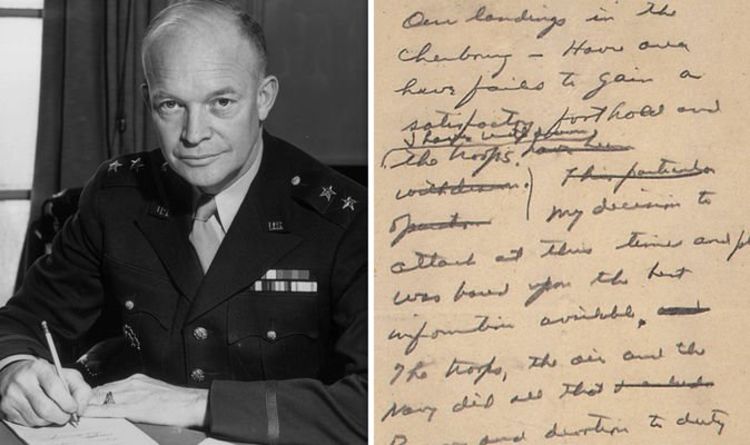
"Our landings in the Cherbourg-Havre area have failed to gain a satisfactory foothold and I have withdrawn the troops. My decision to attack at this time and place was based upon the best information available. The troops, the air and the Navy did all that bravery and devotion to duty could do. If any blame or fault attaches to the attempt it is mine alone."
Look at what he edited.
He had first written "This particular operation." He crossed it out and replaced it with "My decision to attack." Then he pressed the pencil down hard and drew a long, firm line under the words "mine alone."
He misdated it July 5 instead of June 5.
He was so consumed with dread he had forgotten what month it was.
He folded the note and put it in his wallet. He carried it there as 156,000 men stormed the beaches of Normandy. When word came back that the beachhead had held, he took it out, crumpled it, and threw it in the trash.
An aide quietly pulled it out and saved it.
That note is now behind glass at the Eisenhower Presidential Library in Abilene, Kansas. You can still see where the pencil pressed hardest.
Right under the words "mine alone."
82 years ago tonight.
On the night of June 5, 1944, Eisenhower stood on a tarmac in England and watched 13,000 paratroopers board their planes.
He already knew what Air Marshal Leigh-Mallory had told him in private: up to half of them might not survive the night. 6,500 men. Dead before a single soldier touched the beach. Eisenhower had approved the mission anyway, called the decision "soul-wracking," and said nothing to the men.
Instead he drove out and visited them.
He chatted. Laughed. Asked where they were from. Shook hands. Cracked jokes. Not one of them knew their general had just signed what might be their death warrant.
When the last plane disappeared into the dark sky, his driver Kay Summersby looked over at him.
There were tears running down his face.
He drove back to Telegraph Cottage in silence. Then he sat down, picked up a pencil, and wrote a note he prayed no one would ever read.
"Our landings in the Cherbourg-Havre area have failed to gain a satisfactory foothold and I have withdrawn the troops. My decision to attack at this time and place was based upon the best information available. The troops, the air and the Navy did all that bravery and devotion to duty could do. If any blame or fault attaches to the attempt it is mine alone."
Look at what he edited.
He had first written "This particular operation." He crossed it out and replaced it with "My decision to attack." Then he pressed the pencil down hard and drew a long, firm line under the words "mine alone."
He misdated it July 5 instead of June 5.
He was so consumed with dread he had forgotten what month it was.
He folded the note and put it in his wallet. He carried it there as 156,000 men stormed the beaches of Normandy. When word came back that the beachhead had held, he took it out, crumpled it, and threw it in the trash.
An aide quietly pulled it out and saved it.
That note is now behind glass at the Eisenhower Presidential Library in Abilene, Kansas. You can still see where the pencil pressed hardest.
Right under the words "mine alone."
82 years ago tonight.