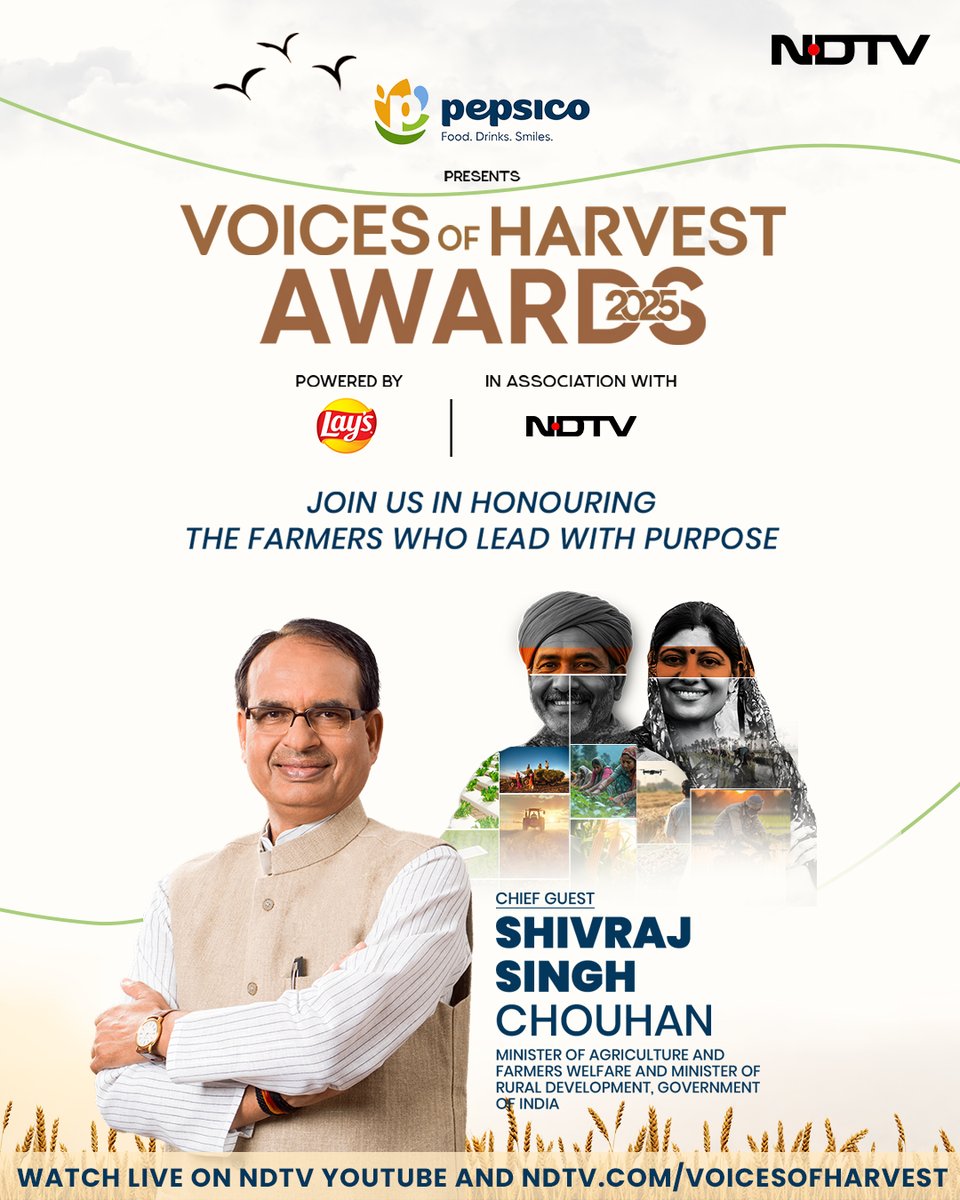
Join Shivraj Singh Chouhan, Minister of Agriculture and Farmers Welfare and Minister of Rural Development, Government of India, on November 18 at the Voices of Harvest Awards 2025. Celebrate alongside farmers, entrepreneurs, and leaders gathered to honour India’s farmers who demonstrate outstanding innovation, sustainability, leadership, and community impact.
Watch LIVE on November 18, 10:00 am onwards, on NDTV 24x7 YouTube channel and https://t.co/FE36NhY4YU, and witness the celebration of India’s agricultural heroes!
#VoicesOfHarvestAwards #PepsiCoIndia
Powered by Lay’s @LAYS@Pepsicoindia
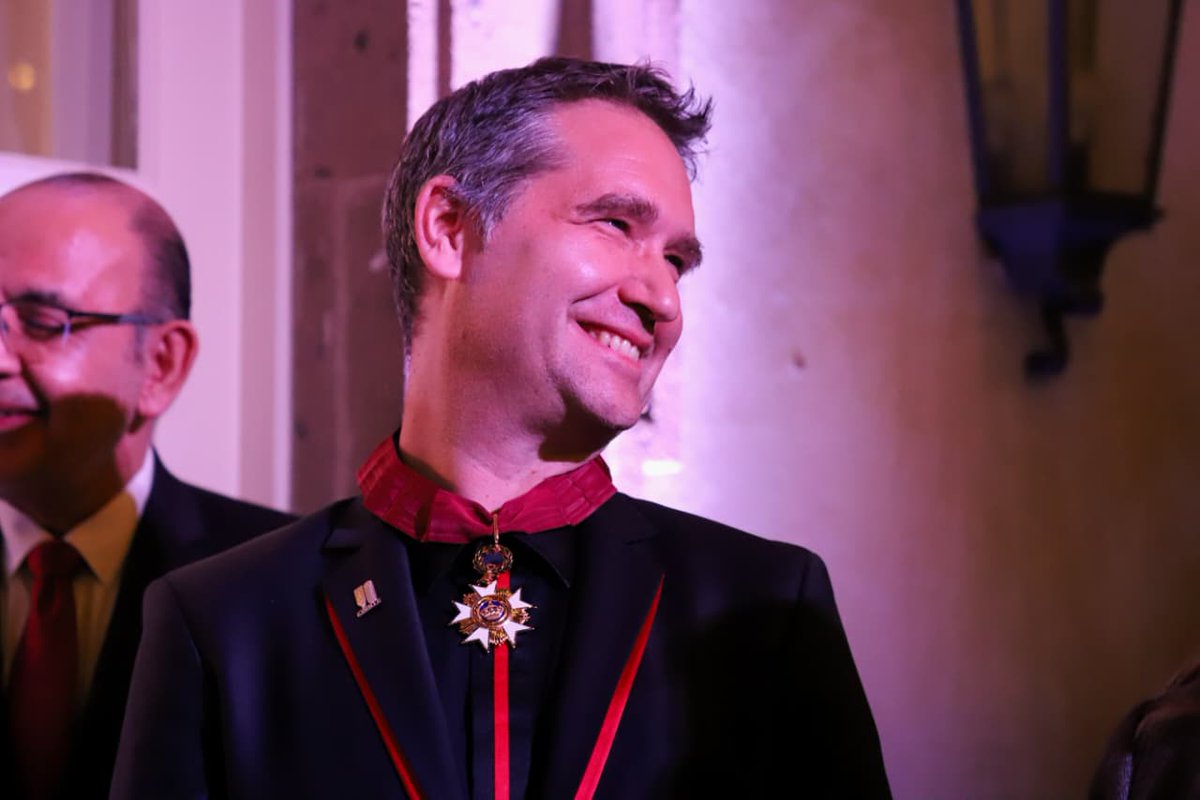
Good news for global agriculture🌍 #Belgium has honored our Director General @bramaccimmyt, highlighting #CIMMYT’s impact and global reach. Our research connects to 63% of Europe’s wheat, showing how science strengthens food security worldwide🌾 https://t.co/BDiAR4bC6L
On #WorldScienceDay, we reaffirm that science is essential to transform agrifood systems, strengthen resilience and tackle the climate crisis. We must scale up science-based solutions to safeguard our planet and ensure a sustainable future for all. #COP30
📰 @CNN featured CIMMYT:
Behind every resilient harvest in Africa, there’s a CIMMYT seed.
CIMMYT innovation is helping farmers turn drought into resilience.
Read the story: https://t.co/jMb9l4Zfok
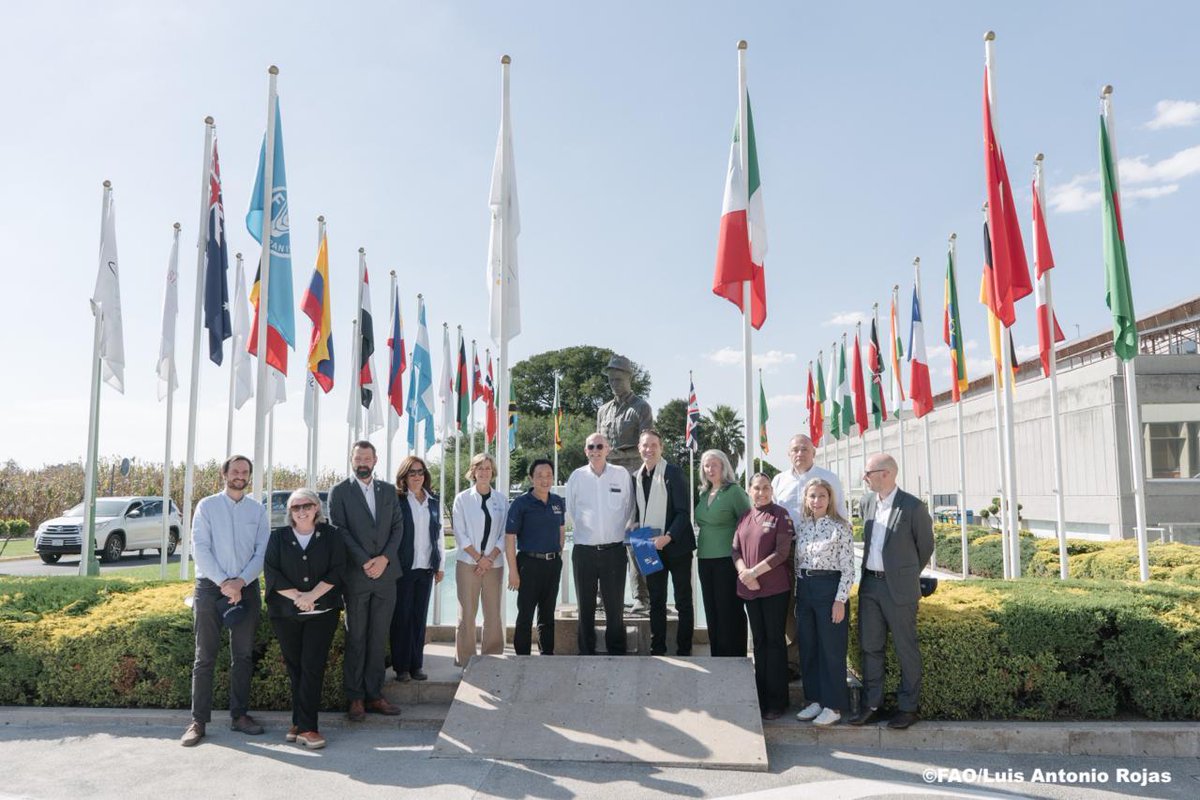
During my visit to @CIMMYT, I met with @bramaccimmyt & his team for an inspiring exchange on how #AgInnovation, research & partnerships can accelerate the transformation of agrifood systems. Together, we can build a better future for all. #FAO80#4Betters
Thanks, Mark Holderness, expert in agri-food R&I4Dev, for reminding us that scientists are apprentices who must listen to farmers, ask the right questions, & collaborate. Farmers have valuable experience & knowledge from which we can learn.
📺 https://t.co/V0xfojUi6k @CIMMYT
🌱 Recently, #CIMMYT’s Dr. Mahesh Gathala participated in @icarindia's Viksit Krishi Sankalp Abhiyan, held under the #ViksitBharat2047 initiative in Ludhiana, #Punjab. Hon’ble Agri Minister Shivraj Singh Chouhan, ICAR DG Dr. M.L. Jat, and other dignitaries also attended.🤝
'In that sense an artichoke is a flower that never happened. It’s a vegetable whose highest utility lies in not fulfilling its purpose.'
Will never eat an artichoke without thinking of this. ;)
Artichokes are one of those things the French love and serve with the conviction of a people who’ve spent centuries convincing themselves they invented pleasure.
An artichoke is an aborted flower. What you want from an artichoke is arrested development. You’re not after the flower. You want the bud. In its infancy. You want the fleshy pulp in the base of the petals of that infant bud. So you interrupt it (and cut it off its stalk) before it blossoms into something utterly useless.
Artichokes don’t grow in India. Well, technically, they can. But not for the plate. Not for pleasure. In hot or unsuitable climates, the artichoke panics. It bolts. Prematurely. Which is a botanical way of saying: it flowers too soon. Skips the long business of being a ripe bud. It’s a survival response. It’s too hot or dry here; let me flower and reproduce before I die. Also, you can’t curry it, can’t put it in a tandoor. You can bury it in masala, but it remains unconverted. It cannot absorb.
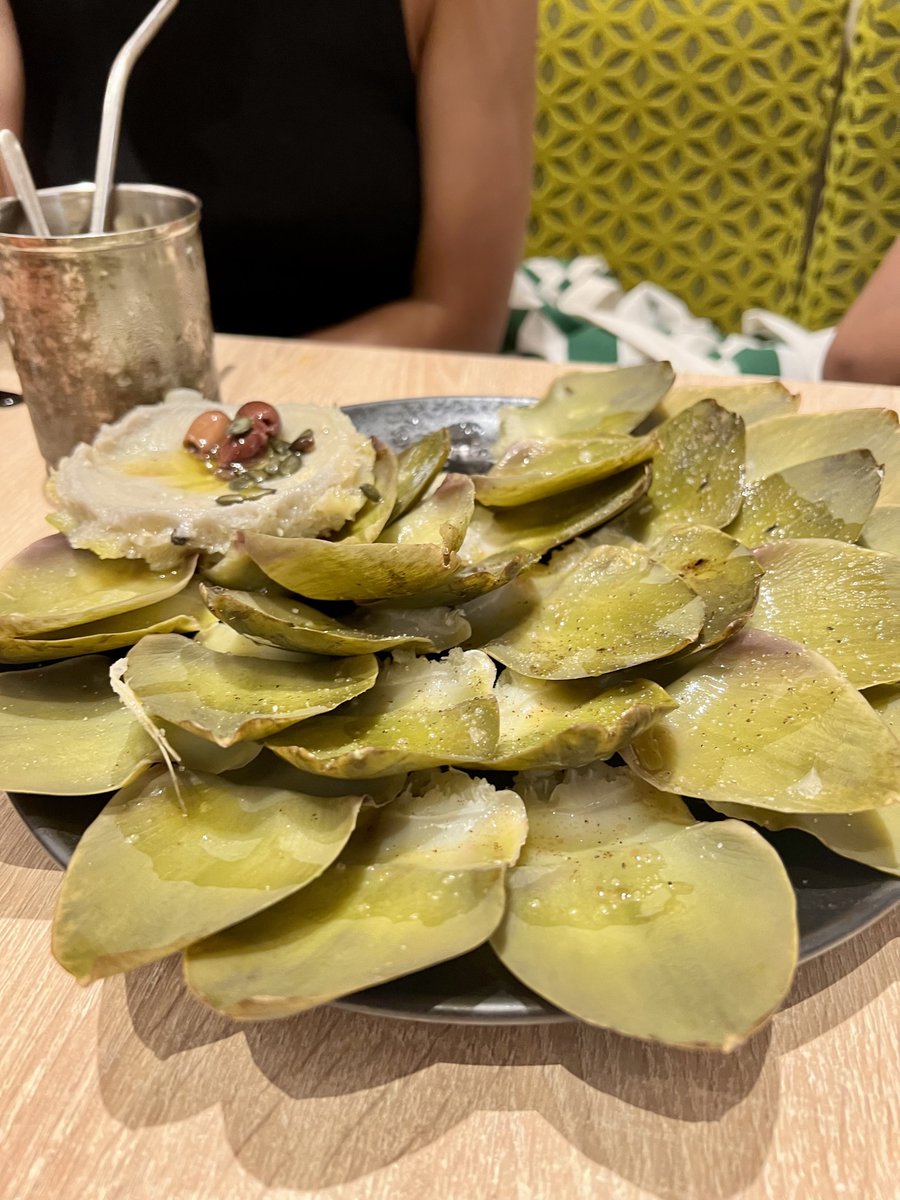
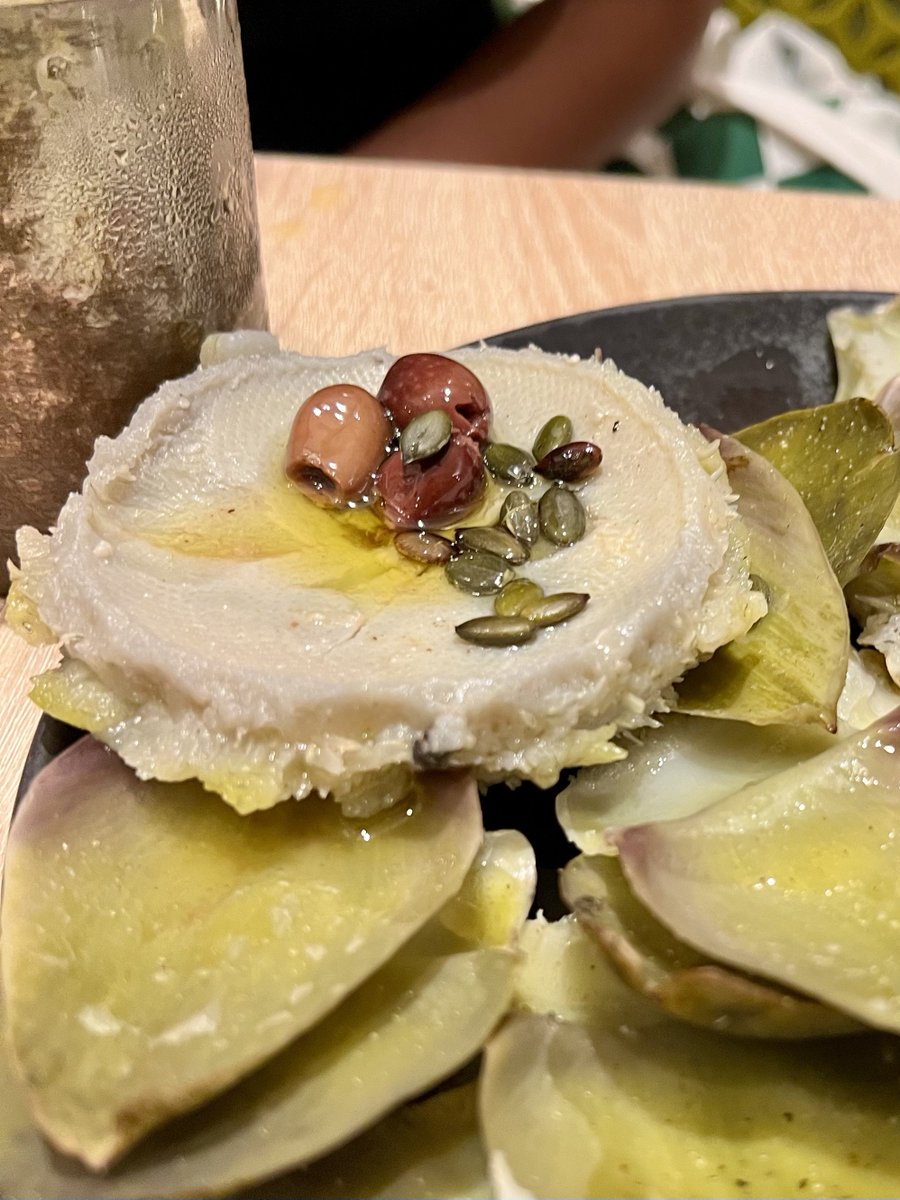
What you see in the pictures below is the Camus artichoke, from the fields of Brittany, the size of a child’s head. Now sedate and sublime on a plate in Nice. Taken apart and dressed in nothing more than a drizzle of olive oil, a scattering of olives and seeds, some salt, and a squeeze of lemon. At a Michelin starred restaurant called Olive and Artichaut. It was the sort of artichoke that makes other artichokes want to change careers.
It had been steamed perfectly, withdrawn from the brink by someone who had learned to listen to the murmur of vegetables whispering, “Now.”
Each leaf was soft, submissive. It was our first artichoke ever. There was a tutorial. You pluck one off, take it to your mouth with the concavity facing down, and scrape it between your upper and lower incisors. Not bite. Not chew. Scrape. And squeeze the flesh out from the base of the leaf.
What comes off is a blur of vegetal matter. Just a little smear of cellulose. It’s not enough to chew. Barely enough to register. But you do it again. And again. Till you come to the heart (the little disc in the pic, with the seeds). Which is the prize. Seven times more of the little smear. That’s the artichoke’s trick: it offers almost nothing, and makes you grateful for it. It doesn’t feed you. It slows you down just enough to notice the absurdity of hunger. (1/2)
Artichokes are one of those things the French love and serve with the conviction of a people who’ve spent centuries convincing themselves they invented pleasure.
An artichoke is an aborted flower. What you want from an artichoke is arrested development. You’re not after the flower. You want the bud. In its infancy. You want the fleshy pulp in the base of the petals of that infant bud. So you interrupt it (and cut it off its stalk) before it blossoms into something utterly useless.
Artichokes don’t grow in India. Well, technically, they can. But not for the plate. Not for pleasure. In hot or unsuitable climates, the artichoke panics. It bolts. Prematurely. Which is a botanical way of saying: it flowers too soon. Skips the long business of being a ripe bud. It’s a survival response. It’s too hot or dry here; let me flower and reproduce before I die. Also, you can’t curry it, can’t put it in a tandoor. You can bury it in masala, but it remains unconverted. It cannot absorb.
What you see in the pictures below is the Camus artichoke, from the fields of Brittany, the size of a child’s head. Now sedate and sublime on a plate in Nice. Taken apart and dressed in nothing more than a drizzle of olive oil, a scattering of olives and seeds, some salt, and a squeeze of lemon. At a Michelin starred restaurant called Olive and Artichaut. It was the sort of artichoke that makes other artichokes want to change careers.
It had been steamed perfectly, withdrawn from the brink by someone who had learned to listen to the murmur of vegetables whispering, “Now.”
Each leaf was soft, submissive. It was our first artichoke ever. There was a tutorial. You pluck one off, take it to your mouth with the concavity facing down, and scrape it between your upper and lower incisors. Not bite. Not chew. Scrape. And squeeze the flesh out from the base of the leaf.
What comes off is a blur of vegetal matter. Just a little smear of cellulose. It’s not enough to chew. Barely enough to register. But you do it again. And again. Till you come to the heart (the little disc in the pic, with the seeds). Which is the prize. Seven times more of the little smear. That’s the artichoke’s trick: it offers almost nothing, and makes you grateful for it. It doesn’t feed you. It slows you down just enough to notice the absurdity of hunger. (1/2)
Every year @CIMMYT's #wheat breeders send out the new nurseries with high yield potential and resistance to biotic and abiotic stresses for testing to many collaborators in the world both in the public and private sector. Rendered in R with #rayrender by @tylermorganwall
.
🌾 CIMMYT, with support from #ACIAR, works across #India, #Bangladesh & #Bhutan to help smallholders boost yields, improve nutrition & strengthen #climateresilience through #intercropping innovations. Launched in 2023.
Learn more: https://t.co/27raMONtPb
It's all about framing. Why is a street, a bridge, a highway dubbed as 'infrastructure' but we don't take the definition to its logical conclusion and add ' safe streets', 'safe and sturdy bridges and highways'? What's the point of a street if it's not well- maintained or safe?
Yaks play a pivotal role in the lives and livelihoods of high mountain communities in the Asian highlands. They hold significant cultural and economic importance and are revered as symbols of resilience in the harsh terrain of the Himalaya.
However, yak pastoralism is threatened by climate and environmental change, socioeconomic change, and extreme weather events.
Nepal’s first National Yak Day provides an opportunity to reflect on the importance of yak for mountain communities, economy and ecology, and address the challenges that yak herding communities are facing. The event will focus on building solidarity, encouraging discussions on critical issues, and promoting meaningful actions toward solutions.
@NepalHeifer, @FAONepal
Scoop from #CGIARScienceWeek!
Dr. @ManuelOteroIICA, Director General of @IICA_oficial and I have signed a strategic MoU to boost agricultural innovation, sustainability, and resilience across the Americas. 🌎🌱
This is more than a partnership—it’s a platform for impact. See 👇
📣 Today at #CGIARScienceWeek I highlighted how science scales for real-world impact.
CIMMYT’s contribution?
✅ Drought-resilient crops
✅ Public-private scaling
✅ Government partnerships
✅ Millions of lives improved
📊 Impact stats in the comments 👇
#cimmyt