Many things in the world move, and can be occluded. When will the dogs reappear? Remembering their speed will help predict this. But... how do people remember something like speed, which is defined by displacement over both (🤯) space and time? TWEEPRINT ALERT! 🚨🧵1/n
@gmGiuliana All in all, we characterize human memory for speed & show speed is better recalled for spatiotemporally bound than texture-like stimuli (the added dimension of space helps!). Tnx for reading & stay tuned for Giuliana’s next work linking speed memory to motion extrapolation! 9/9
Many things in the world move, and can be occluded. When will the dogs reappear? Remembering their speed will help predict this. But... how do people remember something like speed, which is defined by displacement over both (🤯) space and time? TWEEPRINT ALERT! 🚨🧵1/n
@gmGiuliana We looked at hysteresis effects (they're in the data!), the role of eye movements (they can't explain the findings), and more. But importantly, people are MUCH BETTER recalling the speed of a single dot moving around fixation, then the speed of more texture-like dot motion!! 8/n
🚀🎓We have exciting opportunities at the PhD and Postdoc level, including in the new Simons Collaboration on Ecological Neuroscience, a 10-year initiative spanning a powerful international network of labs working across species and disciplines!
https://t.co/4JNztU5NCF
Why can we decode visual mental contents from primary visual cortex when there’s little evidence for sustained spiking in this part of the brain? Today at #CCN25 poster C104, Noa will present a tentative answer from her work with attractor models. https://t.co/hh4cdY7tAy
We have an open PhD position in an exciting DFG-AEI project to further develop continuous psychophysics in collaboration with Joan-Lopez Moliner. More info:
https://t.co/XXagwuPYL7
Can we draw conclusions about orientation tuning from EEG data? And… exactly how inhomogeneous is decoding across the visual field? What started as a “quick analysis” of some EEG data is now out in #naturecommunications. See the tweeprint below or check https://t.co/YhT2WiqmMe.
Who doesn’t like a good model of the brain? Yet, from simple regression to artificial networks, some limitations keep popping up (eg, overfitting). @mijowolff & I saw some cool but puzzling data, ran a quick analysis, and found 1 such limitation: model mimicry. Tweeprint ��� 1/N
Curious about the visual human brain, computation, and pursuing a PhD in a vibrant and collaborative lab located in the heart of Europe? My lab is offering a 3-year PhD position! More details: https://t.co/4cftfZACXO
Now out in NatComms: Mice and monkeys spontaneously shift through comparable cognitive states - and it's written all over their faces! (1/7)
https://t.co/NYeMSriq6m
📢 Register for the #BernsteinConference 2025 now!
🗓️ Take advantage of the early-bird registration fee before July 30
All info here 👉 https://t.co/DPNjjLrhZ0
Can't make it to Amsterdam for CCN2025? Join a local meetup!
Watch the livestream with colleagues at institutions worldwide. On our website we host a map with existing meetups near you & you can also register to host your own!
📍 View meetups & register: https://t.co/FN9eCNHM1i
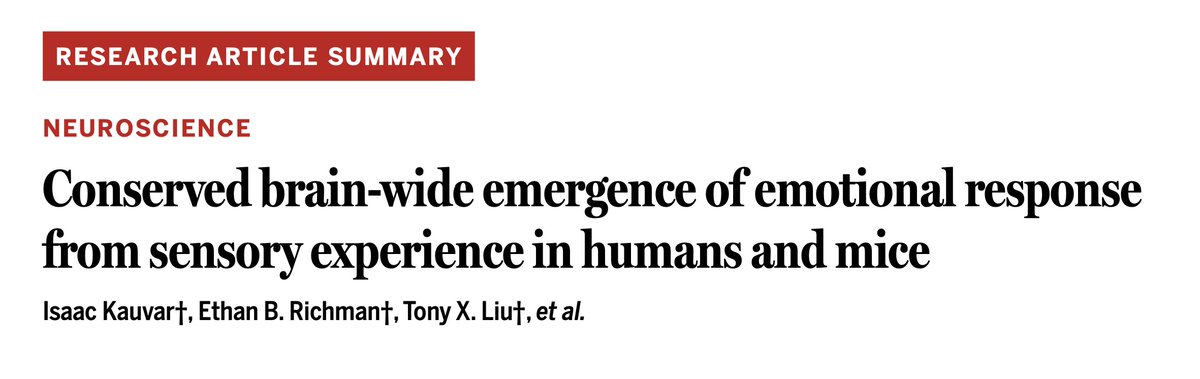
💥Emotions are central to the human experience 😠😳😃☺️😔😕😮🙂
Our Human Neural Circuitry team just took a step towards understanding how they arise–using brain-wide electrical ⚡recordings in humans and mice @ScienceMagazine
Read on for more… 1/n
From a bear catching a fish to a tennis player hitting a ball - extrapolating the trajectory of an object is critical to know its future location. Giuliana will talk about the mechanisms that underlie such motion extrapolation at #VSS2025 this next session in Talk Room 2!!
Welcome #VSS2025! For those attending the sunny beaches and science at this years Florida conference, make sure not to miss the awesome talks and posters from our lab!
Welcome #VSS2025! For those attending the sunny beaches and science at this years Florida conference, make sure not to miss the awesome talks and posters from our lab!