For anyone looking to make adjustments to their assessment and grading practices going into next year, this is how I have recorded my journey towards more meaningful assessment practices. I always find it helpful to see the steps, not just the end goal.
https://t.co/qByvdJj4at
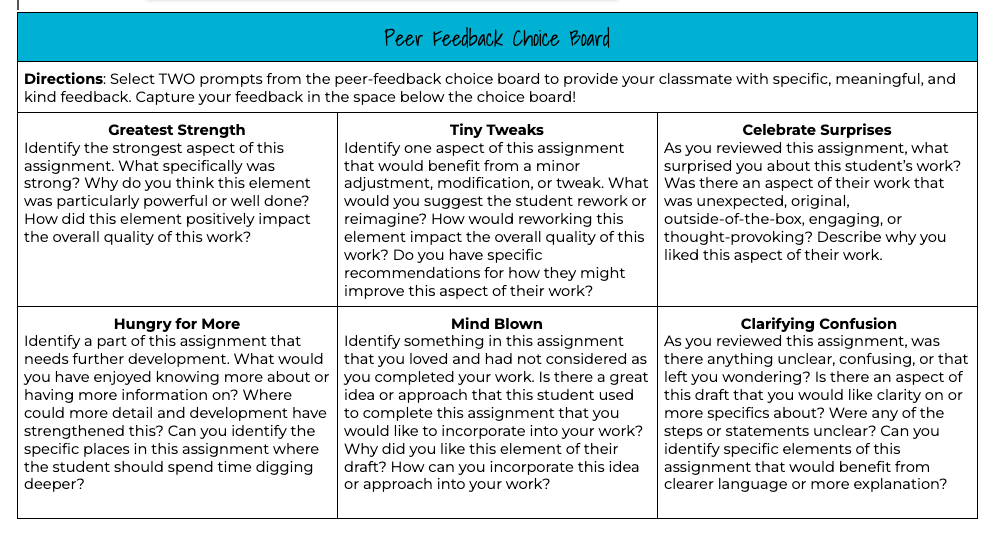
Peer feedback is most effective when it is focused and comes with clear guidelines. A choice board, like this one below helps to provide students with a sense of agency.
Make a copy to make it work for you!
https://t.co/IgtktANE8Z
#StudentLed#Feedback
As you're thinking about classroom assessments next year, remember that we grade against criteria for standards, outcomes, learning goals, i.e., evidence of learning, NOT the vehicle used to deliver that evidence. So, unless we're teaching the assessment format itself, whether or not students do a project, test, paper, demonstration, etc is irrelevant: It's whether or not they presented evidence of their proficiency. This blows the hinges off the doors on the way to success as it opens new and meaningful ways to demonstrate mastery. There's a lot of agency here, which leads to students owning their learning. For some units of study, teachers can even ask students for proposals for how they will demonstrate the evidence of the standard. Then, as with most assessments, ask students to prove their evidence, to explain how the standard is manifested in their presentation. Gosh, this makes learning -- and teaching -- way more fun, and for students, more substantive.
The single most important first step to designing for equity and inclusion is deep, sustained work on the instruction that all students get in every classroom--UDL. #LeadInclusion#EdChat#UDL#Inclusion
Intervention is systematically moving a student to mastery on a critical skill using a research-based practice. (Homework help doesn't count.) #LeadInclusion#EdChat#UDL#Inclusion
So many times we make guesses at what is going to work for a student when planning the IEP. Involve the student and ask them. Let them drive the IEP. #LeadInclusion. #SpedChat
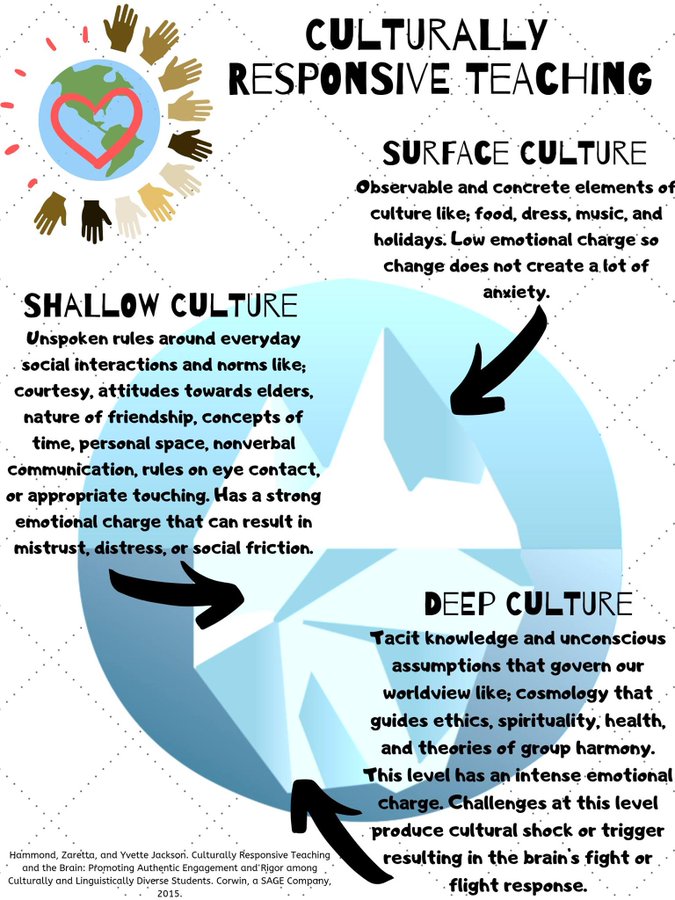
How to go beyond surface and shallow culture to get at the deep stuff in your culturally responsive classroom.
Ideas via @Ready4rigor#Sketchnote via @carlota_holder
1 of the problems w/ Science of Reading:"What’s happening in NYC reflects broader trend where teachers are expected to negotiate contradictory pressures to teach reading in culturally relevant way but assess reading in ways that strips it of all relevance"
https://t.co/YXfVxbbw3A
When designing student projects, it’s important to be clear about the goals of the project.
Employ this proposal form from The Complete Guide to Blended Learning to give students the agency to decide how they want to approach a project. @Catlin_Tucker https://t.co/X3orkyoFYX