Sadly this happens all the time.
Has happened to me 4 times in the past two months. @airindia reply is always the same. Have stopped tagging them. And also avoid late night flights with them now.
@ShekharGupta
Some day Air India @airindia will resolve its arrival issue at New Delhi. AI-2408 touched down 2145. All still locked in as buses aren’t available. Already 45 minutes added to travel time. Bad enough to be delayed at departure. To be delayed at arrival is so chaotic.
Anthropic just showed a 24-minute workshop on how to actually prompt Claude.
Taught by the people who built it.
Free. No signup. No paywall.
I've watched $300 courses that don't cover what they teach in the first 8 minutes.
Flipkart's new ad for its SASA LELE Sale features Kodinhi, a town in Kerala's Malappuram district.
Known as India's "Twin Town", it has a high twin birth rate, about 400 pairs among 2000 families.
Very creative, with genuinely good jokes. They hit a home run with this concept.
A key finding from AIIMS New Delhi research highlights that increased screen time in children under one year of age is associated with a higher risk of autism by the age of three.
The study suggests that greater screen exposure may increase the likelihood of autism-related concerns. Experts recommend keeping children below 18 months away from screens.
Dr. Shefali Gulati, Professor, Department of Pediatrics, #AIIMS
#ChildHealth #ScreenTime #ParentingTips #AutismAwareness @aiims_newdelhi
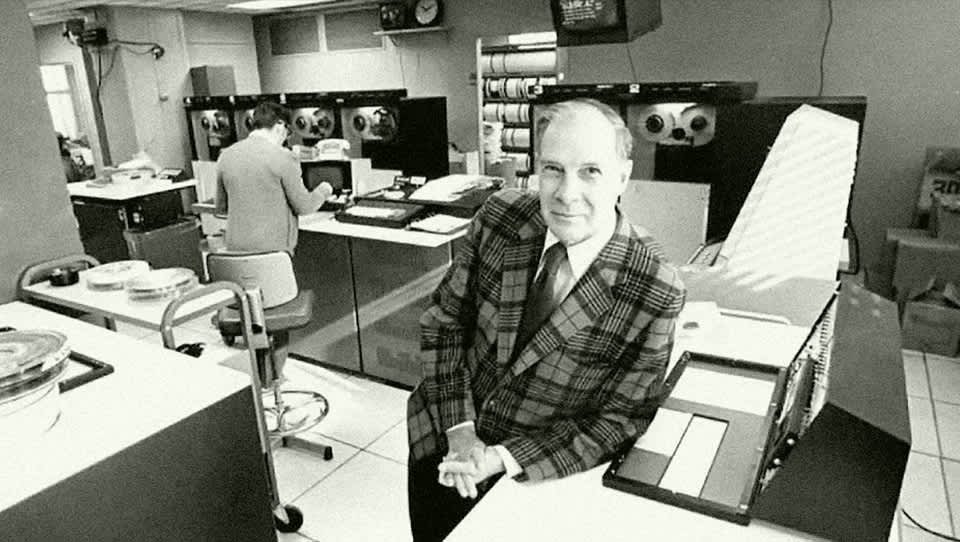
A mathematician who shared an office with Claude Shannon at Bell Labs gave one lecture in 1986 that explains why some people win Nobel Prizes and other equally smart people spend their whole lives doing forgettable work.
His name was Richard Hamming. He won the Turing Award. He invented error-correcting codes that made modern computing possible. And he spent 30 years at Bell Labs sitting in a cafeteria at lunch watching which scientists became legendary and which ones faded into nothing.
In March 1986, he walked into a Bellcore auditorium in front of 200 researchers and told them exactly what he had seen.
Here's the framework that has been quoted by every serious scientist for the last 40 years.
His opening line landed like a punch. He said most scientists he worked with at Bell Labs were just as smart as the Nobel Prize winners. Just as hardworking. Just as credentialed. And yet at the end of a 40-year career, one group had changed entire fields and the other group was forgotten by the time they retired.
He wanted to know what the difference actually was. And he said it wasn't luck. It wasn't IQ. It was a specific set of habits that almost nobody is willing to follow.
The first habit was the one that hurts the most to hear. He said most scientists deliberately avoid the most important problem in their field because the odds of failure are too high. They pick a safe adjacent problem, solve it cleanly, publish it, and move on. And because they never swing at the hard problem, they never hit it. He said if you do not work on an important problem, it is unlikely you will do important work. That is not a motivational line. That is a logical one.
The second habit was about doors. Literal doors. He noticed that the scientists at Bell Labs who kept their office doors closed got more done in the short term because they had no interruptions. But the scientists who kept their doors open got more done over a career. The open-door scientists were interrupted constantly. They also absorbed every new idea passing through the hallway. Ten years in, they were working on problems the closed-door scientists did not even know existed.
The third habit was inversion. When Bell Labs refused to give him the team of programmers he wanted, Hamming sat with the rejection for weeks. Then he flipped the question. Instead of asking for programmers to write the programs, he asked why machines could not write the programs themselves. That single inversion pushed him into the frontier of computer science. He said the pattern repeats everywhere. What looks like a defect, if you flip it correctly, becomes the exact thing that pushes you ahead of everyone else.
The fourth habit was the one that hit me the hardest. He said knowledge and productivity compound like interest. Someone who works 10 percent harder than you does not produce 10 percent more over a career. They produce twice as much. The gap doesn't add. It multiplies. And it compounds silently for years before anyone notices.
He finished the lecture with a line I have never been able to shake.
He said Pasteur's famous quote is right. Luck favors the prepared mind. But he meant it literally. You don't hope for luck. You engineer the conditions where luck can land on you. Open doors. Important problems. Inverted questions. Compounded hours. Those are not traits. Those are choices you make every single day.
The transcript has been sitting on the University of Virginia's computer science website for almost 30 years. The video is free on YouTube. Stripe Press reprinted the full lectures as a book in 2020 and Bret Victor wrote the foreword.
Hamming died in 1998. He gave his final lecture a few weeks before. He was 82.
The lecture that explains why some careers become legendary and others disappear is still free. Most people who could benefit from it will never open it.
Murmurations of Rosy starlings animate the sky at dusk. The heart of the Wild Capital. At India gate, old Jamun, Semal trees & open spaces are precious both for people & birds.
Starlings have been migrating to India for generations & will now head back to Central Asia. #indiaves
Murmurations of Rosy starlings animate the sky at dusk. The heart of the Wild Capital. At India gate, old Jamun, Semal trees & open spaces are precious both for people & birds.
Starlings have been migrating to India for generations & will now head back to Central Asia. #indiaves
Why doesnt @airindia manage to get its complete act together. 30 mins and waiting, no sign of aerobridge or stairs. What’s the point of getting from Point A to Point B 15 mins early if you are going to keep the passengers locked up because the ground staff forgot to turn up.
Show me a more beautiful love story than this on #ValentinesDay. The male #Hornbill feeding the female, who has locked herself in nest to raise the kids. This he will do for few months, daily.
Hornbills have partners for lifetime. When they are expecting they search for a cavity or old nest. After finding one, the female enters into the nest and seal from inside with whatever material is available.
Now the time tests them. Male keep searching for food and keep bringing that to the nest. While female remains locked in the nest for next 3-4 months. As the kid is growing the male has to increase the frequency. With this he has to feed himself and also need to protect the nest from predators.
If the male is poached on the way the family dies waiting in the nest.
Isn’t it the loveliest love story !!
10-minute delivery in India isn't magic. It's really good engineering.
@albinder and @letsblinkit built tech that most people never see.
We went deep on how it works.