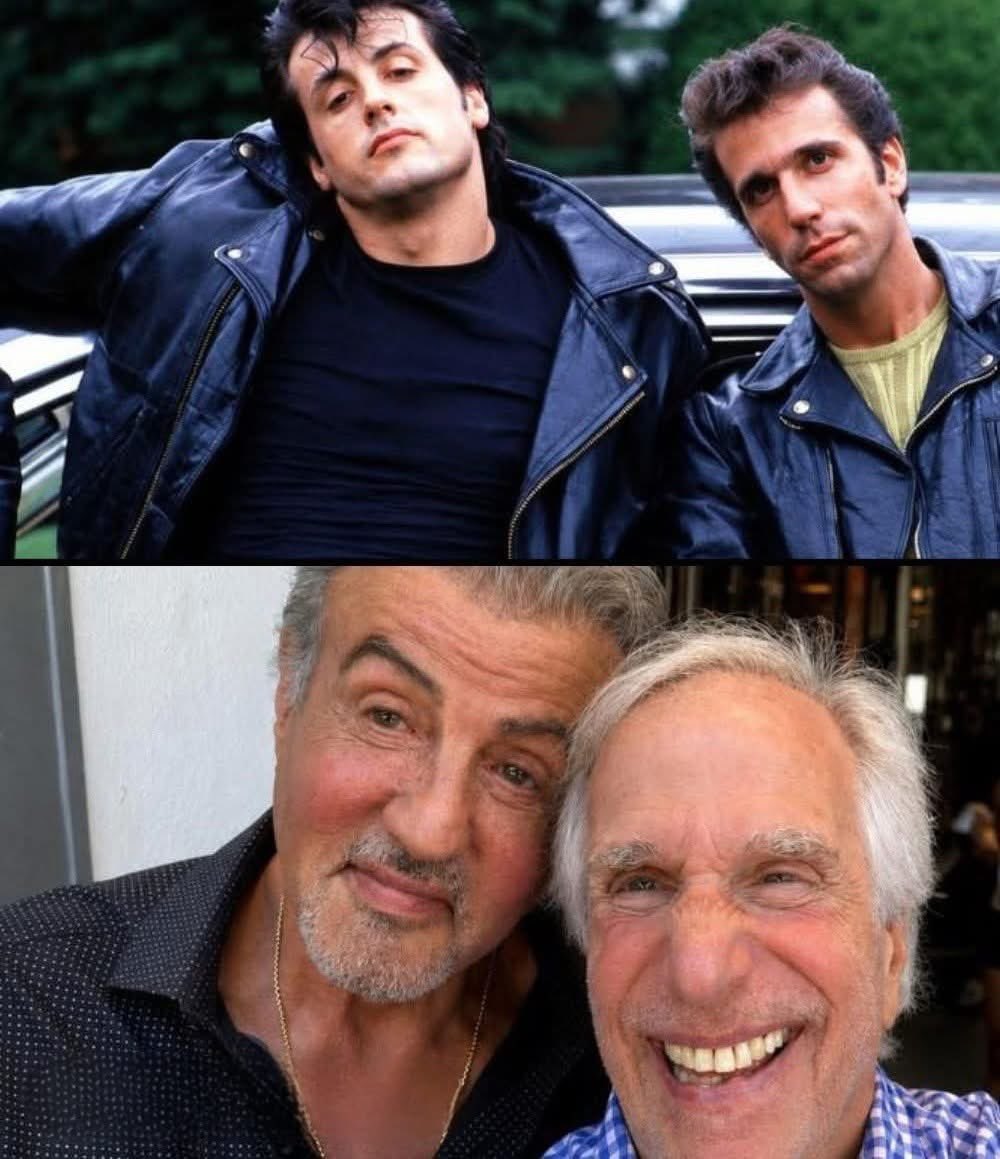
In 1974, Sylvester Stallone was walking around Hollywood with a worn script under his arm and almost no one willing to listen. It was Henry Winkler, then a rising star from Happy Days, who stopped and believed in him when everyone else had already dismissed him.
At the time, Stallone was in a difficult situation. He was going from audition to audition without success, had very little money, and was desperately trying to sell a handwritten screenplay he considered his only real chance.
That script was called Rocky.
He had written it in just a few days after watching the fight between Muhammad Ali and Chuck Wepner. Inside that story was much of his own life: struggle, rejection, and the feeling of constantly being underestimated.
Film studios read the script and recognized its power, but they all had one condition: the lead role had to go to an established actor.
Stallone refused every time.
He would rather stay broke than see another actor play Rocky Balboa.
One day, after yet another failed audition, he found himself in a casting office with the tired expression of someone who had been fighting too long without success. Henry Winkler noticed him almost by chance.
At the time, Winkler was becoming famous for his role as Fonzie in Happy Days. He could have ignored Stallone like so many others did.
Instead, he stopped to talk to him.
Years later, Winkler said Stallone looked like one of those actors Hollywood had already decided to discard. But when Stallone began talking about the plot of Rocky, something completely changed. He spoke with a conviction that felt impossible to fake.
Winkler asked to read the script.
He took it home and finished it overnight.
The next day, he called his agent, Jackie Lewis, telling her that this young man had something authentic and that she absolutely needed to meet him.
It was a decisive phone call.
Jackie Lewis agreed to represent him, and the script finally began circulating among influential people in the industry. It eventually reached producers Irwin Winkler and Robert Chartoff, who immediately understood the story’s potential.
Even then, however, studios wanted a big star in the lead role. Major names such as Ryan O’Neal and James Caan were considered.
But Stallone kept saying no.
He would only sell the film if he could play Rocky himself.
In the end, the producers convinced United Artists to take the risk. They reduced the budget and agreed to give the lead role to an almost unknown actor.
The rest is cinema history.
Rocky won three Academy Awards and turned Stallone into a global star.
In later years, Stallone often recalled how important Henry Winkler’s support had been at that moment in his life. He said that that trust came precisely when he was beginning to lose hope.
And Winkler never publicly took credit for it.
He simply saw something in a man that everyone else had stopped seeing.
“Fue, por encima de todas las cosas, un ser humano raro y único y no volveremos a ver a alguien igual”
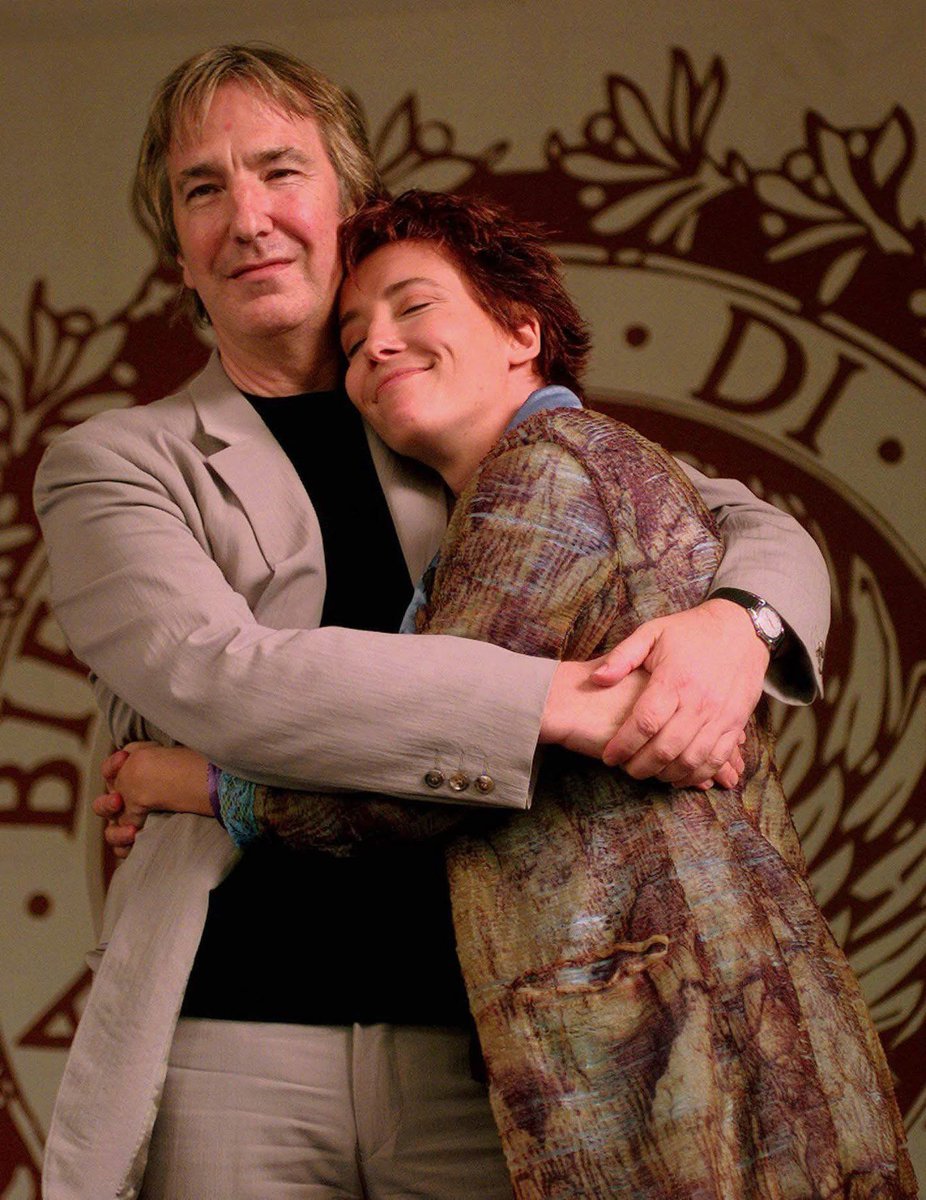
La amistad que tuvieron Alan Rickman y Emma Thompson sigue siendo inmortal, pero no fue cosa de un día, ni de dos, sino de años de trabajo. La química que ambos desprendían en “Sentido y sensibilidad”, o en “Love actually”, fue el fruto de largas y largas conversaciones sinceras de situaciones que ellos vivieron en la vida real.
Se cuenta que cuando el matrimonio de Emma Thompson con Kenneth Branagh terminó, fue Rickman quien apareció con una botella de vino y se sentó con ella toda la noche, hablando muy poco, preguntando aún menos. No le ofreció ningún consejo a menos que ella se lo pidiera. Ella no necesitaba ser fuerte con él, y él no le exigía que se mostrara valiente. Años después, ella le escribió una carta diciendo: “Me salvaste sin intentarlo. Y ese es el tipo de amor en el que más confío”
Su vínculo era inquebrantable incluso cuando Rickman mantuvo en secreto su enfermedad. Durante mucho tiempo, optó por contárselo a muy poca gente. Thompson, sin embargo, supo que algo andaba mal, y una tarde, durante el rodaje de un cortometraje benéfico, se lo contó. Guardaron silencio durante un rato. Ella solo dijo: “De acuerdo. Entonces, lo superaremos juntos”.
Sus conversaciones en esos últimos años fueron más vulnerables, más abiertas que nunca. Rickman, conocido por su reserva, comenzó a compartir recuerdos, arrepentimientos y esperanzas con Thompson. Ella le dijo que lo había amado desde el principio, aunque nunca habían cruzado la línea de la amistad. Él rió y dijo: “Me habrías arruinado”, a lo que Emma respondió: “No, Alan. Te habría curado”.
Cuando Rickman falleció en 2016, Thompson publicó una carta que revelaba la profunda emotiva amistad que mantenían, e incluso, visita cada año la mesa del café donde se sentaba con Alan Rickman, pidiendo dos tés y hablando como si todavía estuviera escuchando.
Sin duda, esta es una de las historias más bonitas sobre la amistad que haya leído nunca, y por eso he decidido compartirla con ustedes🥹💔
The tragic story of Robert Plant’s son is one of the most heartbreaking in rock history. Robert Plant, the charismatic lead singer of Led Zeppelin, suffered a devastating loss in July 1977 that forever changed his life and that of his family.
Karac Pendragon Plant was born on January 9, 1972. His name reflected Robert’s passion for British mythology and folklore: “Karac” evoked strength, and “Pendragon” was the surname of King Arthur’s legendary father. He was the second child of Robert and his wife Maureen, whom he had married in 1968. They had an older daughter named Carmen, and Karac was, without a doubt, the apple of his father’s eye. Father and son adored each other. The little boy was cheerful, curious, and very close to Robert, who was already a global superstar. Despite the touring and fame, Robert always tried to spend time with his family at their home in England.
In the summer of 1977, Led Zeppelin was in the midst of a U.S. tour, one of the biggest and most successful of their career. The band was filling massive stadiums and was, without a doubt, the biggest group on the planet. Robert was in New Orleans when he received a phone call from Maureen. At first, they told him that Karac was sick. Hours later, the second call came: the boy had passed away. He was only five years old.
The cause was an acute gastrointestinal infection, severe enteritis caused by a stomach virus that progressed with terrifying speed. An autopsy confirmed it was due to natural causes, but that didn’t change anything. Just a week earlier, his sister Carmen had suffered something similar and recovered. The difference in this case was brutal and devastating. Robert, thousands of miles away, found out in a hotel room, completely helpless. The tour was canceled immediately. Tour manager Richard Cole described the calls as a devastating blow from which Robert would never fully recover.
Plant returned to England devastated. He shut himself away at home with Maureen and Carmen, seeking answers and comfort in the midst of a deep depression. Led Zeppelin practically ground to a halt. Jimmy Page, John Paul Jones, and John Bonham gave him all the space he needed, like true brothers. That tragedy nearly broke up the band for good. Robert has spoken in a few interviews about that dark period, describing how music became his only outlet. He said that, from time to time, Karac “appears” in his songs simply because he misses him so much. The family had another son years later, Logan, but the wound of Karac’s loss never fully healed.
On Led Zeppelin’s final album, In Through the Out Door (1979), Robert included the ballad “All My Love,” a direct and heart-wrenching tribute to his son. The song speaks of eternal love, loss, and the celebration of a shared life. It is one of the most emotional and personal pieces in the band’s entire catalog, with an arrangement unusual for Zeppelin (prominent keyboards and without the characteristic heavy guitar). Plant has performed it solo for decades as a living memorial to Karac.
Karac Pendragon Plant is buried in England. His death reminds us how fragile life is, even for rock’s brightest stars. A child full of energy and joy, taken from us by something as common as a stomach infection at a time when medical advances were not what they are today. Robert Plant, now in his seventies, went on to have a successful solo career and has always been very private about his personal life. That loss gave him a different perspective on fame: the excesses of rock ’n’ roll took a back seat to the real pain of a father.
It is a deeply human and moving story that shows that, behind the stages, the lights, and the music, Robert Plant was simply a father who lost his young son in the most unexpected and cruel way.