We are looking for engineers, welders, and workers ready to follow us to the ends of the Earth and build classical megastructures that defy this age of apathy.
The first low-carb diet book was written in 1825 by a French lawyer, and everything the internet argues about this week was settled in it before your great-great-grandparents were born.
His name was Jean Anthelme Brillat-Savarin. Magistrate, mayor of Belley, a man who fled the Revolution with his head still attached and came back to write about food.
His book was The Physiology of Taste. He finished it two months before he died.
In it he asks a simple question. What makes people fat? He had watched it happen, dinner after dinner, across a lifetime of good tables.
His answer, two centuries ago: flour and starch, and worse still when sugar is added to them.
The specific foods. Bread, pastry, potatoes, sweets. His prescription for the waistline was rigid abstinence from anything starchy or floury.
A man in 1825, with no laboratory and no funding, watching what happened to bodies at dinner, named the bread basket and the sugar bowl and got it right.
Then a century of experts, richly funded, put a pyramid on the wall with his two culprits forming the base and told you to eat eleven servings of them a day.
The Frenchman had it in a book you can still buy. They just needed you not to read it.
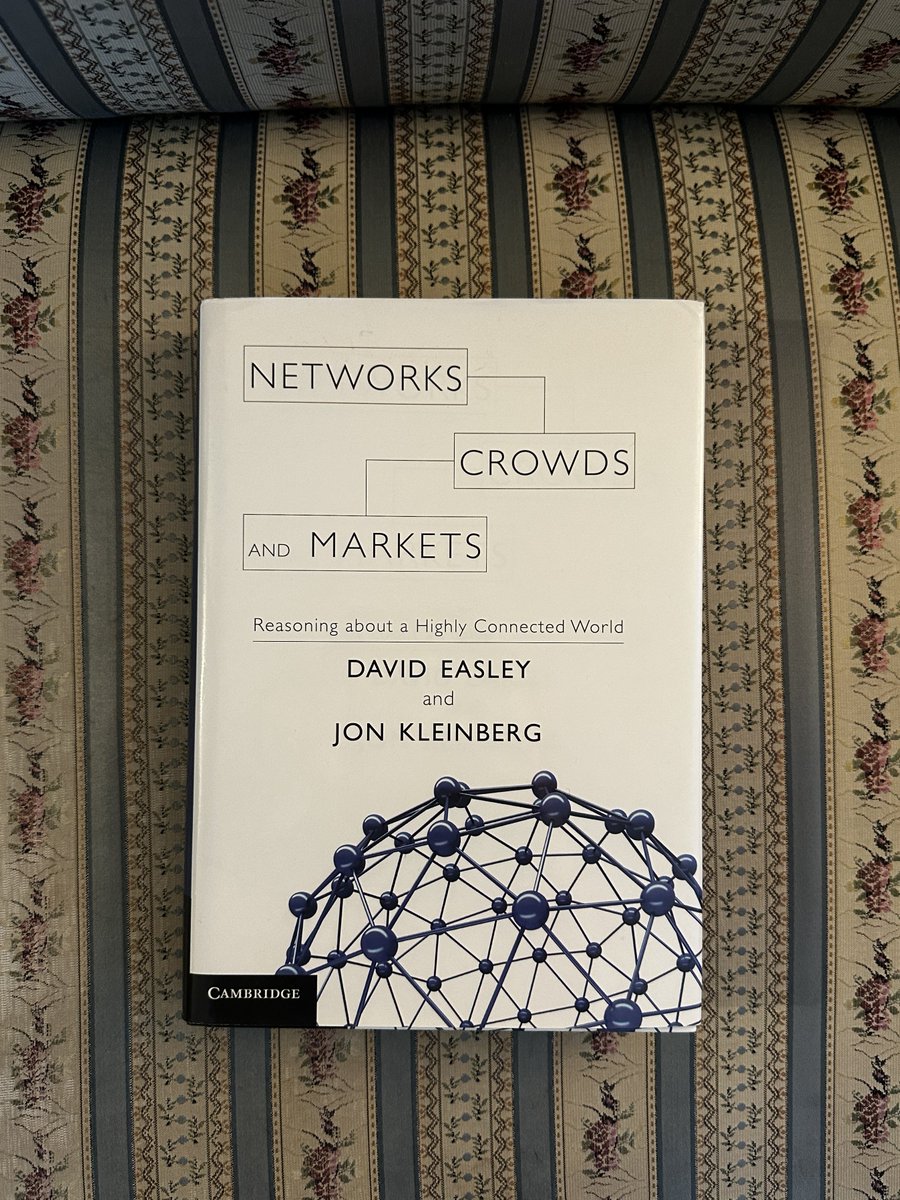
One of the most important books to conceptionally understand the world today. If anything it has become much more relevant since its publication in 2010.
NVIDIA just open-sourced a real-time AI animation system called ARDY and it's one of the most impressive demos I've seen lately
Describe a motion in plain English, and the character performs it instantly. Update the prompt while it's walking, move a waypoint, tweak keyframes it adapts in real time without restarting or baking animations.
The best part? NVIDIA released the full package:
• Model weights
• Source code
• Research paper
• Local demo
Even better, it runs on consumer hardware with around 20–24 GB of VRAM
What's fascinating is that this technology wasn't built just for animation it's driven by the same research powering NVIDIA's humanoid robotics work
Don't waste 2 years learning to code.
The man who built Claude Code tells you what to learn instead.
82 minutes. Free:
24:03 - Anthropic's real engineering rules
27:44 - $100k+/month on Claude
40:42 - What to learn instead of coding
Writing code is the old job. Building loops is the new one.
Watch it. Then build your own loop with the guide below.
Vox-style AI motion graphics, but built as a paper-cut animation from one real portrait.
Built with GPT image 2 + Seedance 2 on insMind. Four Hero scenes. One continuous 15-second story.
Steal the prompt and workflow below 👇
A bunch of people were asking how I made the effect for the "renderaissance" style page I made previously.
Here's a full walkthrough of creating that depth / dynamic lighting effect for the web.
Interactive version: https://t.co/CdEXq46TXS
Claude Fable 5 is actually a beast for web design.
this guy just dropped a full guide on how to design and build interactive animated 3D websites with Claude Code + Fable 5
(complete prompts in the comments)
watch the video and read the full guidelines on the article below
El CEO de CapCut viendo como un par de desarrolladores recrean su editor de vídeo pero 100% gratuito y sin marca de agua y no pueden hacer nada al respecto
Increíble. Hace no mucho se hablaba de lo complejo que era la mente humana para ser programada.
Resulta que no tiene que ser programada, sino que es parte del proceso evolutivo de los LLMs y la consciencia emerge sola en los modelos